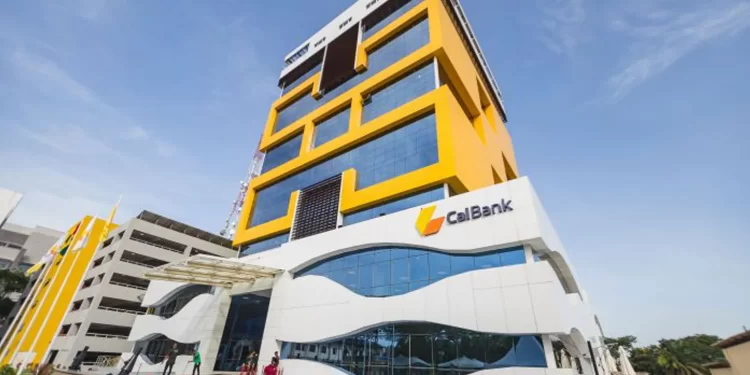


Ghana’s equity market continues to navigate the delicate dance between optimism and macroeconomic caution. The Ghana Stock Exchange (GSE) closed last week on a mixed note—the Composite Index (GSE-CI) notched a modest gain of 10.02 points to close at 6,424.90, while the Financial Stock Index (GSE-FSI) edged lower by 0.03%, reflecting investor rotation out of key financials into selective non-financial plays.
But behind the headlines lies a deeper signal: the market breadth and trading activity this past week suggest investor confidence remains intact, even amid foreign exchange volatility and looming fiscal policy questions.

📊 Sectoral Dynamics: Financials Cool as Non-Financials Steady the Ship
The GSE’s 31.43% year-to-date gain on the composite index, coupled with 44.03% gains in financials, continues to paint a bullish portrait of Ghana’s equity market in 2025. Yet, this week’s slight cooling in financials—particularly the 43 pesewa drop in GCB Bank Ltd.—indicates short-term profit-taking as portfolio managers rebalance for H2.
📢 GET A DETAILED ARTICLES + JOBS
Join ASJ's WhatsApp Channel and never miss a post or opportunity.

Meanwhile, non-financial equities picked up the slack. MTN Ghana, Access Bank Ghana, TotalEnergies Ghana, and GOIL led the charge—each reflecting a blend of sectoral strength, pricing power, and renewed institutional interest.
📈 Market Volume and Turnover: Signals of Mid-Year Positioning
The week’s trading activity saw a significant surge midweek, with 1.85 million shares traded on July 9 and total weekly turnover surpassing GH₵15.76 million. While some of this was likely fueled by mid-year rebalancing, the volume also hints at returning liquidity, particularly in large-cap counters.

Notably, Access Bank Ghana rallied GH₵1.44 over the week, while TotalEnergies jumped GH₵3.00—moves not driven by retail speculation, but by structured demand, likely from funds repositioning around dividend plays and defensives amid Ghana’s inflationary pressures.
💰 Market Cap and Confidence
The market capitalization gain of GH₵149.95 million this week may appear modest in nominal terms, but it reinforces one important fact: valuation floors are holding, and investor appetite is proving more elastic than expected. In a year marked by global commodity shifts and local currency pressures, this resilience deserves attention.
📉 Volatility or Value? The GLD Case
One intriguing subplot was the performance of Ghana’s Gold ETF (GLD), which saw midweek swings before rebounding to close at GH₵360.98, up from GH₵354.76. In a market increasingly sensitive to geopolitical risk and currency fluctuations, gold-backed assets may continue to act as market stabilizers, providing a hedge for local institutional portfolios.
🔍 Final Thought: A Market Maturing
What this week showed is not just divergence in sector performance, but maturity in investor behavior. The GSE may not have the velocity or volume of Johannesburg or Lagos, but it has something arguably more important right now—stability. As economic reforms take root and more public-private listings come into play, the GSE’s mixed week reflects not a market in confusion, but one in quiet consolidation.
At Accra Street Journal, we believe this week’s performance is less about volatility and more about valuation—about smart money quietly betting on Ghana’s fundamentals.
Last Updated on March 9, 2026 by Samuel Kwame Boadu
Disclaimer: Some content on Accra Street Journal may be aggregated, summarized, or edited from third-party sources for informational purposes. Images and media are used under fair use or royalty-free licenses. Accra Street Journal is a subsidiary of SamBoad Publishing Hub under SamBoad Business Group Ltd, registered in Ghana since 2014.
For concerns or inquiries, please visit our Privacy Policy or Contact Page.


Samuel Kwame Boadu is a Ghanaian media entrepreneur and storyteller with a passion for amplifying urban voices and uncovering everyday truths. He is the Editor-in-Chief and Founder of Accra Street Journal, a dynamic digital platform dedicated to capturing the pulse of Ghana’s capital—its people, culture, challenges, business, sports and innovations.