










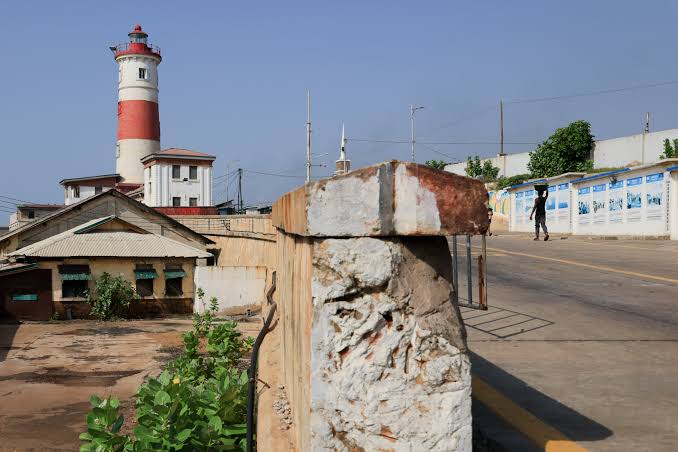
Beyond the headlines about traffic and flooding, Accra is being reshaped by powerful but less visible forces: the quiet language of status, the persistence of community solidarity, the adaptation of informal economies, and the slow transformation of leisure. Understanding these hidden forces is essential to understanding the city itself.
The Changing Language of Status
Something has shifted in Accra. The old markers of success—a certain car, a particular neighbourhood, a job title at a well-known company—still matter, but they no longer carry the same authority they once did. Status in Accra is being quietly rewritten, and the people doing the rewriting are mostly young, mostly urban, and very online.

Today, the passport stamp has become a serious form of social currency. People who travel regularly are seen as worldly, ambitious, and aspirational. Weekend trips to Nairobi, holidays in Dubai, short stays in Lisbon or London—these signal something specific: that you have access to experiences beyond the ordinary. A well-travelled person carries a kind of credibility in social settings that a person with a bigger salary but no stamps cannot easily match.
📢 GET A DETAILED ARTICLES + JOBS
Join ASJ's WhatsApp Channel and never miss a post or opportunity.

Food has become another arena for status signalling. A generation ago, eating out in Accra was largely reserved for special occasions or business lunches. Now, where you eat and what you eat says a great deal about who you are. Knowing which chef just opened a new spot in Labone, which kitchen is doing interesting things with local ingredients, or simply having the vocabulary to talk about food with confidence—all of this reads as cultural sophistication. The dinner table has become a stage, and the audience is usually watching on Instagram.
Wellness has also entered the conversation loudly. Gym memberships at better facilities, therapy sessions, clean eating, cold plunges, morning routines—people who invest visibly in their health are signalling that they have both the time and the money to do so. Mental health awareness has shifted in meaning. In certain social circles, saying you see a therapist no longer carries the stigma it once did. It signals self-awareness, emotional intelligence, and seriousness about oneself.

Perhaps the most interesting new status symbol is completely invisible: remote work, flexible hours, the ability to open a laptop from anywhere in the world and continue earning. These things cannot be photographed or displayed, but they are deeply envied. Freedom has become the new luxury, and unlike a car or a house, it is much harder to acquire simply by spending money.
None of this means that money has stopped mattering. But the way money is translated into status is changing. The new language of status is about experience, taste, freedom, and knowledge. It is a language being written in real time, and Accra’s young professional class is both the author and the audience.
The Persistence of Community: Solidarity in the Neighbourhood
Beneath the glossy surface of Accra’s status-conscious elite, older, deeper forces continue to shape daily life. In communities across the city, the social infrastructure of neighbourhood solidarity remains remarkably resilient.
In Nima, a vibrant urban neighbourhood, community labour is organised to solve problems that the state has failed to address. When a young boy was injured by a motorbike while crossing the street, residents collectively mobilised to secure government investment for a pedestrian bridge. When boys’ football games in the lungu (open space) disturbed neighbours, the community constructed a football pitch. These are not isolated acts of charity—they are expressions of a deeply embedded ethic of mutual responsibility.
This ethic is rooted in the Ga tradition of akutsei (quarters), where obligations for ordinary townspeople were organised around residence in one of the neighbourhood quarters. While colonialism and modernisation have transformed these structures, the underlying principle—that community members have obligations to one another—has persisted. In today’s Accra, this solidarity manifests in neighbourhood watchfulness, collective action, and the creation of “good eyes” and “listening ears” that protect vulnerable members of the community.
The persistence of community is not just about practical problem-solving. It is also about the creation of shared meaning. During the Homowo festival, which literally means “hooting at hunger” in the Ga language, the community comes together to remember famine, pray for rain, and give thanks for harvest. What began centuries ago as a response to drought has become a defining marker of Ga identity in a fast-changing city. In today’s Accra, where skyscrapers rise beside fishing villages, Homowo reminds Ghanaians that culture is not lost in modernity—it adapts and thrives. The iconic dish, kpekpele (fermented cornmeal served with palm-nut soup and smoked fish), is prepared and sprinkled in the community as an offering to ancestors.
This is not simply nostalgia. It is a form of resistance against cultural erasure and urban chaos. The Accra Inter-City Homowo Marathon now draws athletes from across West Africa, merging tradition with modern fitness culture. Visitors from the diaspora flock to Accra to witness the rituals. Homowo has become soft power—a window into Ga history and African resilience.
The Hidden Economy of the Night
If you think Accra sleeps after midnight, you have been sleeping while the city works overtime. As one Bolt driver doing night shifts explained, after 10 pm, the city changes management.
At almost every major junction—from Pokuase to Amasaman, Achimota to Dome, Lapaz to Madina, and Tema to Ashaiman—young women are waiting for their next customers. Osu is the headquarters of this underground economy. Drivers hear conversations passengers do not know they are listening to. What they witness is not just about nightlife. It points to a deeper social challenge: unemployment, financial hardship, family pressure, exploitation, and a lack of better opportunities.

Another worrying trend is the presence of women from other West African countries—including Nigeria and other neighbouring countries—participating in the commercial sex trade. Some may be acting independently, while others may be victims of trafficking, deception, coercion, or organised exploitation. The real question, as one driver put it, is: “Who recruited them, who transported them, who controls them, and who is making money from their vulnerability?
There is also a serious public-health dimension that cannot be ignored. Unregulated and high-risk sexual activity can increase exposure to sexually transmitted infections, including HIV. Without proper awareness, protection, testing, and access to healthcare, both those involved and their clients may face long-term health consequences. This does not affect only individuals; it can also place additional pressure on families, communities, and the healthcare system.
This underground economy is not a moral failing to be condemned. It is a symptom of deeper structural issues: high youth unemployment (32% among those aged 15–24), limited access to finance and land, inflation, and a lack of formal economic opportunities. As the driver concluded, “Accra deserves to be known for opportunities and not desperation”.
The Persistence of Informal Economies
The night economy is just one part of Accra’s vast informal sector. In the e-waste hubs of Accra, another hidden force is at work: the persistence of repair, dismantling, and resale economies that sustain thousands of livelihoods.
The demolition of the Agbogbloshie scrapyard in 2021 disrupted Accra’s central hub of electronic waste processing, displacing thousands of workers. But the informal economy did not disappear. It adapted. Workers moved to other sites, combined roles, and relied more heavily on intermediaries to secure scrap, buyers, and income through new circuits of access. The demolition triggered the emergence of 26 new e-waste clusters across Accra, alongside environmental risks and weakened regulatory capacity.
What is remarkable about this adaptation is the hybridity of livelihoods. In the e-waste hubs, some workers combine e-waste recycling with animal herding, thereby diversifying incomes and reducing risks. This reflects a pragmatic blending of rural practices with urban market opportunities—what researchers call “rurban livelihoods”. The profitability of dual-activity actors after the demolition demonstrates the viability of these strategies.
Yet this resilience comes at a cost. The workforce in these hubs is predominantly young, male, and with limited formal education, making them vulnerable to exploitation and hazardous working conditions. The organisation of labour is guided more by informal institutions—kinship ties, customary norms, and local arrangements—than by formal state regulation. Formal policies like the Hazardous and Electronic Waste Control and Management Act (Act 917, 2016) and the National E-Waste Strategy (2021) are “scarcely felt in the day-to-day practices of workers”. This disjuncture between formal policy and lived practice highlights the need for integrative approaches that engage with, rather than bypass, the informal systems that already sustain these economies.
The Transformation of Leisure
Technology is quietly transforming how Accra residents spend their free time. The change has not been dramatic or sudden. It has been gradual, cumulative, and now unmistakable.
Ghanaian television was, for generations, a shared and scheduled experience. Families arranged their evenings around fixed broadcast times. Today, that logic is dissolving. Streaming platforms have found a receptive audience in Ghana’s cities, where a growing middle class has the data to support them and the urban lifestyle that makes on-demand content genuinely useful. YouTube remains the dominant streaming presence across income levels, but subscription services have gained meaningful traction among younger professionals.
The trotro has become an unlikely gaming venue. Commutes that once meant idle waiting are now filled with mobile games. Casual gaming has grown sharply among the 18 to 35 age group, driven by free-to-play titles that require nothing more than a functional handset and a reasonable data connection. What makes this shift culturally significant is the socialisation around it. Mobile gaming in urban Ghana is rarely a solitary pursuit. WhatsApp groups coordinate multiplayer sessions. Friends compare progress. The social infrastructure of Ghanaian life has simply extended itself into digital spaces.
Alongside casual gaming, regulated online platforms have established a foothold among urban players. Blackjack, sports betting, and slot-format games are accessed through mobile browsers and apps, with MTN Mobile Money and Vodafone Cash enabling seamless deposits without the friction of traditional banking.

Social media has become entertainment infrastructure. TikTok has absorbed hours that once went to television. Twitter debates about local football, politics, and celebrity carry the same cultural weight that talk radio once held. Instagram has given Accra’s creative economy a storefront and a stage simultaneously. What is less often observed is how this shift has created a new kind of cultural participant. Young Ghanaians are not passive consumers of entertainment. They are producing it, curating it, and sharing it at a speed that traditional media institutions are still learning to match. The creator is now often the same age as the audience.
The Ethics of Uncertainty
Finally, there is a hidden force that shapes not just what Accra residents do, but how they think: the ethics of uncertainty. In neighbourhoods like Nima, a customary practice called “folding” governs how people communicate in situations of tension or mistrust.
“Folding” is a form of indirect, incomplete talk that allows people to navigate relationships without permanently severing ties. As one resident explained: “It is the kind of talk that is not full. It is broken. You only have half. Then, it is up to you to think about what is being said”. The underlying message is: “Up to now, we have been getting along. But you did something to betray my trust. Let us tread carefully. I might not trust you as I did before, but let us get back in sync with one another’s movements. We all make mistakes. Let’s try to ‘think far’ again and understand one another’s points of view. There are two sides to everything”.
This practice reflects a deep awareness of human incompleteness and the uncertainty of the world. As another resident put it: “Nothing stays the same in this world. Only Allah knows what will happen tomorrow”. The goal is not to resolve conflict definitively, but to delay judgment, sustain relationships, and prepare for the unknown.
This ethical sensibility is not just about talk. It is also about the material world. A herbalist in Nima, practicing a form of Islamic spiritualism called Istikhara, urged a client seeking to patch up his marriage to throw 14 kola nuts—seven red and seven white—into a nearby river. When asked why both colours were necessary, he explained: “You need those things that do not go together. You never know which colour nut the water spirits will understand and accept. You need to do everything in twos”. This reflects a belief that human knowledge is always partial and incomplete, and that the convergence of oppositions generates a power that exceeds each on its own.
These hidden forces—the ethics of uncertainty, the language of status, the persistence of community, the adaptation of informal economies—are not just academic curiosities. They are the lived realities that shape how Accra residents navigate their city, sustain relationships, and imagine their futures.
Quick Facts
| Topic | Details |
|---|---|
| Youth Unemployment Rate (2024) | 32% (ages 15–24) |
| Overall Unemployment Rate (2024) | 13.1% |
| Inflation Rate (March 2025) | 22.4% |
| Agbogbloshie Demolition | 2021; triggered 26 new e-waste clusters |
| E-waste Workforce | Predominantly young male migrants |
| Homowo Festival | Ga tradition, “hooting at hunger” |
| Streaming Dominance | YouTube across income levels |
| Night Economy | Women waiting at major junctions from 10 pm |
Frequently Asked Questions
1. How is Accra’s culture changing?
Accra’s culture is shifting toward experience-based status symbols: travel, food knowledge, wellness, and remote work. Young, urban, and online professionals are rewriting the language of status.
2. Why is community solidarity still important in Accra?
In neighbourhoods like Nima, community solidarity persists because residents rely on collective action to solve problems the state has failed to address—from building pedestrian bridges to creating football pitches.
3. What is the night economy in Accra?
After 10 pm, Accra hosts an underground economy of commercial sex work, involving young women and some foreign nationals. This points to deeper issues of unemployment, exploitation, and trafficking.
4. What happened to Agbogbloshie after the demolition?
The 2021 demolition displaced thousands, but informal e-waste workers adapted by moving to other sites, combining roles, and relying on intermediaries. The demolition triggered 26 new e-waste clusters.
5. How is technology changing leisure in Accra?
Streaming, mobile gaming, and social media have transformed how Accra residents unwind. YouTube remains dominant, but subscription services have gained traction. Gaming now happens in trotros, and young Ghanaians are both consumers and creators of content.
6. What is Homowo?
Homowo is a Ga festival meaning “hooting at hunger.” It commemorates famine and celebrates harvest through rituals, the iconic kpekpele dish, street parades, and drumming. It now also serves as cultural tourism and soft power.
7. What does “folding” mean in Accra’s social life?
“Folding” is an indirect, incomplete way of communicating in tense situations. It allows people to navigate mistrust without permanently breaking ties, reflecting an ethics of uncertainty and patience.
8. How do informal e-waste workers survive?
They adapt through mobility, role-combination, and reliance on intermediaries. Some combine e-waste recycling with herding to diversify incomes. But they remain vulnerable to exploitation and hazardous conditions
Source: Accra Street Journal
Last Updated on September 2, 2026 by Samuel Kwame Boadu
Disclaimer: Some content on Accra Street Journal may be aggregated, summarized, or edited from third-party sources for informational purposes. Images and media are used under fair use or royalty-free licenses. Accra Street Journal is a subsidiary of SamBoad Publishing Hub under SamBoad Business Group Ltd, registered in Ghana since 2014.
For concerns or inquiries, please visit our Privacy Policy or Contact Page.

Samuel Kwame Boadu is a Ghanaian media entrepreneur and storyteller with a passion for amplifying urban voices and uncovering everyday truths. He is the Editor-in-Chief and Founder of Accra Street Journal, a dynamic digital platform dedicated to capturing the pulse of Ghana’s capital—its people, culture, challenges, business, sports and innovations.





