







Ghana has emerged as a global leader in women’s economic participation, ranking first among 145 economies in the World Economic Forum’s Global Gender Gap Report 2026, with a score of 85.9% in the Economic Participation and Opportunity subindex.
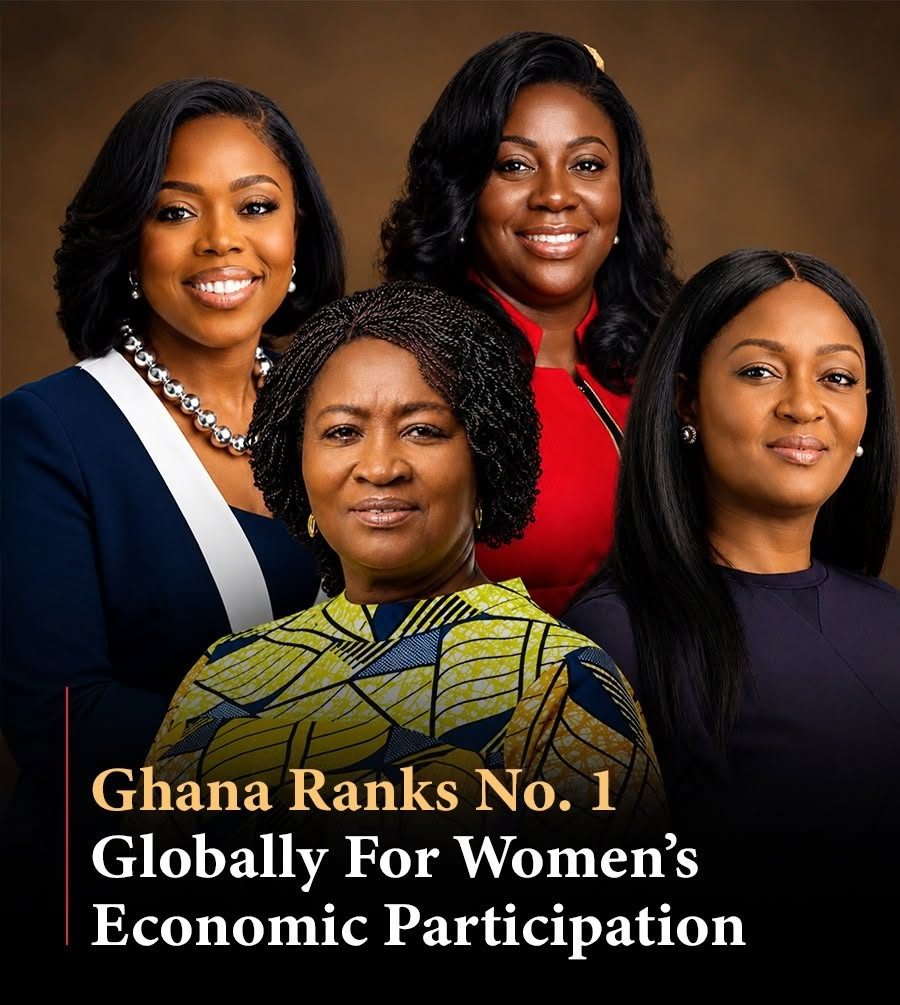
Ghana has emerged as a global leader in women’s economic participation, ranking first among 145 economies in the World Economic Forum’s Global Gender Gap Report 2026, with a score of 85.9% in the Economic Participation and Opportunity subindex.

The ranking highlights Ghana’s progress in creating economic opportunities for women, from workforce participation to access to professional and leadership roles.
📢 GET A DETAILED ARTICLES + JOBS
Join ASJ's WhatsApp Channel and never miss a post or opportunity.

Women Outnumber Men in Employment
Data from the Ghana Statistical Service show that women outnumbered men in employment throughout the first three quarters of 2025, with approximately 7.2 million women employed compared with 6 million men.
But participation is only part of the story.
The Next Challenge: From Participation to Wealth
Ghana’s next challenge is translating women’s economic contributions into greater financial security, wealth creation and decision-making power.
The country’s Affirmative Action (Gender Equity) Act, 2024, sets a target of at least 30% women’s representation in decision-making positions by 2026, extending across both the public and private sectors.
The challenge is particularly significant in a labour market where approximately eight in ten employed Ghanaians work in the informal sector, often facing irregular earnings, limited social protection and fewer opportunities for long-term financial security.
Beyond Employment Participation
The bigger opportunity for Ghana lies in moving beyond employment participation towards an economy where more women can accumulate assets, build businesses, access capital and secure leadership positions.
Ghana’s global ranking signals progress in women’s economic opportunity. Turning that progress into sustainable wealth, financial independence and lasting economic influence will be the next test.
Key Figures at a Glance
| Metric | Detail |
|---|---|
| WEF Ranking | 1st of 145 economies |
| Subindex | Economic Participation and Opportunity |
| Score | 85.9% |
| Women Employed (2025, Q1-Q3) | ~7.2 million |
| Men Employed (2025, Q1-Q3) | ~6 million |
| Affirmative Action Target | 30% women in decision-making by 2026 |
| Informal Sector Share | ~8 in 10 employed Ghanaians |
Source: Accra Street Journal
Last Updated on October 5, 2026 by Samuel Kwame Boadu
Disclaimer: Some content on Accra Street Journal may be aggregated, summarized, or edited from third-party sources for informational purposes. Images and media are used under fair use or royalty-free licenses. Accra Street Journal is a subsidiary of SamBoad Publishing Hub under SamBoad Business Group Ltd, registered in Ghana since 2014.
For concerns or inquiries, please visit our Privacy Policy or Contact Page.

Samuel Kwame Boadu is a Ghanaian media entrepreneur and storyteller with a passion for amplifying urban voices and uncovering everyday truths. He is the Editor-in-Chief and Founder of Accra Street Journal, a dynamic digital platform dedicated to capturing the pulse of Ghana’s capital—its people, culture, challenges, business, sports and innovations.