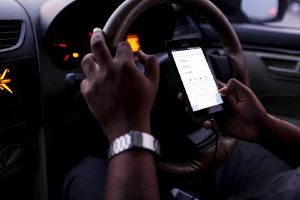






Ten years after Uber’s arrival, the ride-hailing market in Accra has become a three-way race defined less by innovation than by price pressure. Bolt leads on satisfaction, Yango competes on cost, and Uber trades on the familiarity of its global brand. The winner, for most riders, depends on the time of day and the app they open first.
The State of Play
Uber launched in Ghana in June 2016, introducing upfront pricing and app-based tracking to a market that had previously relied on negotiated taxi fares. Bolt (then Taxify) followed, undercutting prices aggressively. Yango entered in 2019 with base fares reported as low as GH₵2.00 for an entire trip .

A decade later, the market has matured into something closer to a commodity. A 2026 survey placed Bolt highest among user satisfaction in Ghana’s ride-hailing sector, followed by Uber . Yango, the relative newcomer, has gained traction primarily on price and promotional offers.
📢 GET A DETAILED ARTICLES + JOBS
Join ASJ's WhatsApp Channel and never miss a post or opportunity.

How They Compare on Fares
There is no single “cheapest” app. The fare depends on distance, time of day, traffic, and surge conditions. But the data points to a consistent pattern.
Minimum Fares
Driver reports suggest Uber’s minimum fare sits around GH₵10–12, while Bolt’s minimum is around GH₵9 . Yango’s aggressive entry pricing has historically undercut both, though its fares have risen as the platform scaled.

Typical Trip Costs
For a 5 km urban trip (e.g., Circle to Osu), ride-hailing typically costs GH₵20–30 without surge, compared to GH₵50–70 for a negotiated street taxi . For a 10 km trip (Legon to Airport), ride-hailing ranges GH₵40–60, while a taxi would cost around GH₵110 .
Bolt’s own route estimator for a Circle to Airport trip (8.9 km) quoted approximately GH₵24.30 for a standard ride, with Comfort at GH₵48.70 . A separate estimate for a 4 km Airport to Accra Mall trip quoted about GH₵15.90 .
The Surge Factor
All three apps use surge pricing during high demand—rain, evening rush, airport arrivals. Reddit users reported a Legon to Accra Mall trip costing GH₵85 in the evening on Bolt or Uber . During surge, the cost advantage of ride-hailing over taxis can disappear entirely.
The practical rule: Open all three apps before booking. The fare difference on a given route, at a given moment, can be significant. The app that was cheapest yesterday may not be cheapest today.
The Driver’s Perspective: Why It Matters to Riders
The fare you pay is only half the story. The other half is the driver’s economics, and that directly affects the quality of your ride.
A June 2026 analysis from a Ghanaian driver described the industry as a “race to the bottom.” When Uber held a functional monopoly, the base fare was GH₵1.70 plus GH₵1.30 per kilometre and GH₵0.30 per minute, with a GH₵5 cancellation fee. Fuel was GH₵4.12 per litre. Bolt undercut those prices, and Yango pushed them lower still .
The result: drivers now face commission rates that effectively reach 30% once hidden platform fees and booking fees are tallied. Fuel prices have risen sharply, but the per-kilometre rate paid to drivers has been suppressed. Drivers who reject unprofitable trips on Bolt face acceptance-rate penalties and app blocks .
The consequence for riders is visible: vehicles that are less well maintained, drivers who arrive resentful, and a higher risk of fatigue-related incidents. As the driver put it: “You cannot build a sustainable service on the backs of broken, angry workers” .
Availability and Coverage
Uber and Bolt have the widest driver networks and coverage in Accra . They are the most reliable options in central areas and along major corridors.

Yango is improving but may have fewer drivers in less central zones or during off-peak hours . Its coverage in outer suburbs and late at night is less consistent than the two larger platforms.
For riders in areas like East Legon, Airport Residential, Osu, and Labone, all three apps generally have supply. For riders in peri-urban areas or travelling late at night, Uber and Bolt are the safer bets.
Payment Options
All three apps support in-app payment, but local practice varies.
Some Uber users report that drivers prefer cash, despite the app’s card option . Bolt often supports mobile money, and Yango supports in-app payments. Cash remains common across all platforms, particularly for shorter trips or when drivers want to avoid the platform’s payment processing delays.
For riders who want to avoid cash entirely, confirming mobile money or card acceptance in the app before booking is advisable.
What Each App Is Best For
Bolt is the best all-rounder for most Accra riders. It has the highest user satisfaction rating, competitive fares, and wide coverage. It is the default choice for daily commuting.
Uber is the best choice for international visitors and those who value brand familiarity. Its interface is recognisable, and its global support infrastructure is more robust. Fares may be slightly higher than Bolt on some routes .
Yango is the best choice for price-sensitive riders who are flexible on wait times. Its promotional offers and historically lower base fares make it attractive for short trips in well-covered areas. It is less reliable in outer suburbs or during peak demand.
ASJ Bottom Line
The ride-hailing market in Accra is functional but strained. The price war that benefited riders in the early years has squeezed drivers, and the quality of the service has suffered as a result.
For riders, the practical advice is simple: compare all three apps before every booking. The fare differences are real, and the cheapest option changes with time and demand. Bolt is the most consistent performer, Uber is the most familiar, and Yango is the most aggressive on price when it has supply.
But the cheapest fare is not always the best ride. A driver who is earning enough to maintain their vehicle and drive safely is worth a few extra cedis.

Quick Facts
| App | Minimum Fare (Reports) | Key Strength | Key Weakness |
|---|---|---|---|
| Uber | ~GH₵10–12 | Global familiarity, wide coverage | Fares may be higher than rivals |
| Bolt | ~GH₵9 | Highest user satisfaction, competitive fares | Surge pricing can be steep |
| Yango | Historically lowest | Aggressive pricing, promotions | Fewer drivers in outer areas |
Frequently Asked Questions
1. Which is cheaper in Ghana: Uber, Bolt or Yango?
It depends on the route and time. Bolt generally has a lower minimum fare (~GH₵9) than Uber (~GH₵10–12). Yango has historically undercut both with promotional pricing. Compare all three apps before booking .
2. Which ride-hailing app has the best user satisfaction in Ghana?
A 2026 survey placed Bolt highest among user satisfaction, followed by Uber .
3. Are Uber and Bolt available in Accra?
Yes. Both operate widely in Accra and Kumasi, with broad driver networks and coverage across central and suburban areas .
4. Does Yango have fewer drivers in Accra?
Yango’s driver network is smaller than Uber and Bolt, particularly in outer suburbs and during off-peak hours. Coverage is improving but less consistent .
5. How much does a typical 5 km ride cost in Accra?
Ride-hailing for a 5 km urban trip typically costs GH₵20–30 without surge, compared to GH₵50–70 for a negotiated street taxi .
6. Why do ride-hailing drivers in Ghana seem unhappy?
Drivers face commission rates that effectively reach 30% once hidden fees are added, while fuel prices have risen and per-kilometre rates have been suppressed. Drivers who reject unprofitable trips face app penalties .
7. Can I pay with mobile money on these apps?
Bolt and Yango support in-app payments including mobile money. Some Uber drivers prefer cash despite the app’s card option. Confirm payment method before booking .
8. Are ride-hailing apps safer than street taxis in Accra?
Ride-hailing apps offer driver identification, route tracking, and trip history, which street taxis do not. For late-night travel or solo riders, they are generally considered safer .
9. What happens during surge pricing?
Fares spike during high demand—rain, rush hour, airport arrivals. A ride that normally costs GH₵20–30 can jump to GH₵80 or more. Compare apps or wait for demand to ease .
10. Which app is best for airport transfers in Accra?
Bolt and Uber are generally cheaper than airport taxis, with fares from the airport to central Accra typically in the GH₵25–50 range. During surge or late at night, a pre-booked transfer may offer better certainty .
Source: Accra Street Journal
Last Updated on October 31, 2026 by Samuel Kwame Boadu
Disclaimer: Some content on Accra Street Journal may be aggregated, summarized, or edited from third-party sources for informational purposes. Images and media are used under fair use or royalty-free licenses. Accra Street Journal is a subsidiary of SamBoad Publishing Hub under SamBoad Business Group Ltd, registered in Ghana since 2014.
For concerns or inquiries, please visit our Privacy Policy or Contact Page.

Samuel Kwame Boadu is a Ghanaian media entrepreneur and storyteller with a passion for amplifying urban voices and uncovering everyday truths. He is the Editor-in-Chief and Founder of Accra Street Journal, a dynamic digital platform dedicated to capturing the pulse of Ghana’s capital—its people, culture, challenges, business, sports and innovations.