




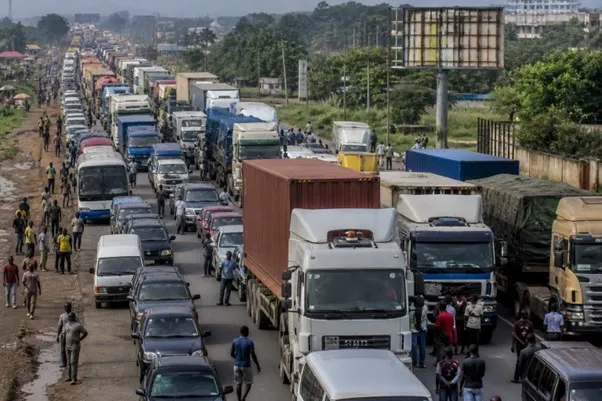
Traffic congestion in Accra is not just an inconvenience that makes you late for work. It is a direct, measurable cost that is baked into the price of every trotro fare, every item you buy at the market, and every service you pay for. When the city grinds to a halt, the economy does not just lose time—it loses money, and that money is ultimately recovered from the pockets of ordinary commuters and consumers.
The Direct Hit: Why Your Trotro Fare Keeps Rising
The most immediate way congestion makes travel more expensive is through the fares you pay. Commercial drivers do not absorb the cost of sitting in gridlock—they pass it on.

The Ghana Private Road Transport Union (GPRTU) has been explicit about this. The National Chairman, Nana Nimako Asiamah, stated plainly: “The problem is the traffic in Accra is affecting the transport business... The situation is worse in the mornings and evenings because drivers are not able to return to the stations on time to pick more passengers” . When a driver cannot complete as many trips, the fare for each trip must cover the lost income.
📢 GET A DETAILED ARTICLES + JOBS
Join ASJ's WhatsApp Channel and never miss a post or opportunity.

Drivers themselves have explained the math. One trotro driver noted that because of traffic, he and his colleagues now prefer short trips to make up for fuel costs. Instead of a direct Circle-to-Odorkor trip for GH₵5, they might split it: Circle to Kaneshie for GH₵3, then Kaneshie to Odorkor for GH₵3.50. The passenger pays GH₵6.50 for the same journey, and the driver recovers his fuel and time .
The GPRTU has also pointed out that congestion prevents drivers from returning to terminals on time, which creates the long queues and vehicle shortages that commuters experience. That scarcity then drives fares even higher .

The Hidden Multiplier: Short-Loading and “Tot-Tot”
When congestion makes a full journey unprofitable, some drivers resort to practices that directly inflate your cost. The most common is “short-loading” or the “tot-tot” system, where a driver takes you only part of the way, forcing you to join another queue and pay another fare.
A Citi Newsroom report documented this clearly on the Accra–Amasaman route. A direct trip normally costs about GH₵7.00. During peak periods, however, drivers operate in segments—Accra to Circle, Circle to Abeka, Abeka to Achimota, and so on. By the time the passenger reaches Amasaman, they may have spent as much as GH₵20 for the same destination. The driver extracts an extra GH₵13 through this fragmented system .
This is not an isolated incident. In June 2026, The Ghanaian Times reported that on the Kaneshie–Kasoa route, some passengers were paying GH₵15 instead of the approved GH₵8.50, while Circle–Kasoa passengers paid more than GH₵20 during peak periods . Drivers attributed the situation partly to heavy traffic, which reduces the number of trips they can make each day .
The government has attempted enforcement. National Security operatives were deployed to major terminals in January 2026 to clamp down on arbitrary fare increases, intercepting vehicles charging above the gazetted rates . But the underlying problem—congestion—remains.
The Macro Cost: GH¢4.5 Billion a Year
The fare increases are a symptom of a much larger economic drain. A 2026 study by Glima Research estimated that traffic congestion costs Ghana’s economy approximately GH¢4.5 billion every year .
The breakdown is telling:
-
GH¢3.2 billion (71%) is lost time—productive hours spent sitting in traffic instead of working or spending .
-
GH¢434 million (10%) is wasted fuel from vehicles idling in gridlock .
-
GH¢815 million (18%) is productivity lost to the stress and fatigue that congestion causes .
The study found that congestion-induced stress and fatigue reduce effective productivity by about 30 minutes per commuter per day. On the Madina–37 corridor alone, this translates to an annual loss of GH¢72.8 million in reduced work output .
The World Bank has also weighed in, estimating that Ghana loses approximately US$200 million annually due to congestion, stemming from lost productivity, excessive fuel consumption, and delayed business operations .
The Ripple Effect: Why Market Prices Are Higher
Congestion does not just make your commute expensive. It makes everything you buy more expensive.

The Accra Street Journal has documented how transport costs shape market prices. Accra’s chronic traffic—especially on corridors like Spintex Road, Mallam–Kasoa, Madina–Adenta, and Circle–Kaneshie—increases the time spent on the road, the fuel burned, and the wear and tear on vehicles. This translates directly into higher pricing for all transported goods .
When a truck carrying tomatoes from Techiman to Makola Market spends hours stuck in traffic, the trader who receives those tomatoes has to recover that cost. When a delivery van fighting through Spintex traffic finally reaches a shop in East Legon, the shop owner adjusts the price to cover the delivery fee. The consumer pays for the gridlock, whether they commute or not .
The Root Cause: Too Many Cars, Too Few Roads
The congestion is not a mystery. It is the predictable result of population growth outpacing infrastructure.
The Ghana Statistical Service notes that Accra’s population has grown by 35 per cent over the past two decades, while road infrastructure has remained largely unchanged . The World Bank’s 2021 report found that 70 per cent of major roads in Accra are congested during rush hours, with vehicle speeds dropping below 20 km/h .
The consequences are visible daily. A journey from Nsawam to Circle, which would ordinarily take less than one and a half hours, now takes more than three hours . Commuters in areas like Lashiki, Nungua, Teshie, Kasoa, and Pokuase report waiting between one and three hours just to secure transport, before the journey even begins .
ASJ Bottom Line
Traffic congestion is not a neutral inconvenience. It is a cost multiplier that operates at every level of Accra’s economy.
For the commuter, it means higher fares, fragmented journeys, and hours of lost time. For the trader, it means higher transport costs that must be passed on to customers. For the economy, it means billions of cedis in lost productivity and wasted fuel every year.
Until the city addresses the structural causes—the lack of dedicated bus lanes, the unimplemented transport master plans, the inadequate road network—the cost of moving through Accra will continue to rise. And that cost will continue to be paid by the people who can least afford it.
Quick Facts
| Topic | Details |
|---|---|
| Annual Economic Cost of Congestion | GH¢4.5 billion |
| Time Lost (Share of Cost) | GH¢3.2 billion (71%) |
| Fuel Waste | GH¢434 million (10%) |
| Stress/Fatigue Productivity Loss | GH¢815 million (18%) |
| World Bank Estimate | US$200 million annually |
| Accra Road Congestion Rate | 70% of major roads during rush hour |
| Example Fare Inflation (Circle–Kasoa) | Approved GH₵8.50; peak paid GH₵15–20 |
Frequently Asked Questions
1. How much does traffic congestion cost Ghana every year?
A 2026 study by Glima Research estimated the annual cost at GH¢4.5 billion, with time lost in traffic accounting for GH¢3.2 billion (71%) and wasted fuel adding GH¢434 million .
2. Why do trotro fares increase when there is traffic?
Drivers cannot complete as many trips when stuck in gridlock, so they must charge more per trip to cover fuel and lost income. The GPRTU has stated that traffic prevents drivers from returning to terminals on time to pick more passengers .
3. What is “short-loading” or “tot-tot”?
It is a practice where drivers take passengers only part of the way, forcing them to join another queue and pay another fare. On the Accra–Amasaman route, a GH₵7 direct trip can cost GH₵20 when broken into segments .

4. How does congestion affect market prices in Accra?
Transport costs are a major driver of market prices. When trucks spend hours in traffic, the cost of fuel, time, and vehicle wear is passed on to traders, who then adjust their prices. Consumers ultimately pay for the gridlock .
5. How many major roads in Accra are congested?
The World Bank found that 70 per cent of major roads in Accra are congested during rush hours, with vehicle speeds dropping below 20 km/h .
6. What causes traffic congestion in Accra?
Accra’s population has grown by 35 per cent over two decades while road infrastructure has remained largely unchanged. The result is more vehicles competing for the same limited road space .
7. Are there dedicated bus lanes to ease congestion?
Not yet. The AMA has proposed dedicated lanes for Aayalolo buses during peak hours, which could reduce operating costs by 30% and increase revenue by 45% . The proposal has not been fully implemented.
8. What can commuters do to manage the cost of congestion?
Compare ride-hailing apps before booking, consider hybrid routes using trotros for longer stretches, and avoid travelling during peak periods where possible. The GPRTU has also called for the implementation of long-delayed transport master plans
Source: Accra Street Journal
Last Updated on October 31, 2026 by Samuel Kwame Boadu
Disclaimer: Some content on Accra Street Journal may be aggregated, summarized, or edited from third-party sources for informational purposes. Images and media are used under fair use or royalty-free licenses. Accra Street Journal is a subsidiary of SamBoad Publishing Hub under SamBoad Business Group Ltd, registered in Ghana since 2014.
For concerns or inquiries, please visit our Privacy Policy or Contact Page.

Samuel Kwame Boadu is a Ghanaian media entrepreneur and storyteller with a passion for amplifying urban voices and uncovering everyday truths. He is the Editor-in-Chief and Founder of Accra Street Journal, a dynamic digital platform dedicated to capturing the pulse of Ghana’s capital—its people, culture, challenges, business, sports and innovations.