







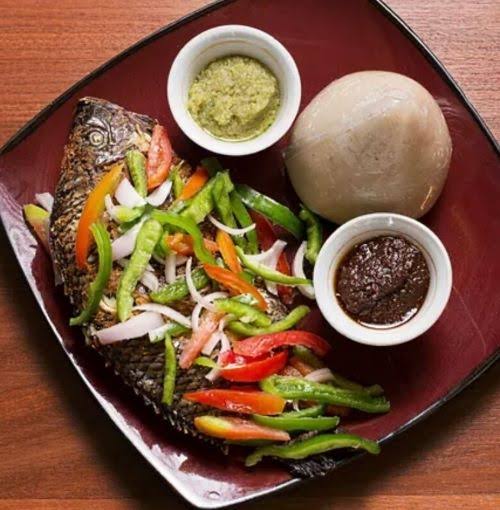
Banku and grilled tilapia is the quintessential Accra food experience—fermented corn and cassava dough served with a whole grilled fish and spicy pepper sauce. In 2026, you can find this beloved meal for as little as 14.50 cedis at a local chop bar, or for over 100 cedis at a premium restaurant.
The Price Range: From Chop Bar to Restaurant
In 2026, the price of banku and tilapia in Accra varies widely. Here is a breakdown of what you can expect to pay in different settings:

| Setting | Price Range |
|---|---|
| Local chop bar (base only) | GHS 14.50–30 |
| Street vendor / takeout | GHS 30–50 |
| Casual restaurant | GHS 50–100 |
| Premium restaurant / buffet | GHS 120–250 |
Local Chop Bars and Street Vendors: The Affordable Core
The cheapest banku and tilapia is found at local chop bars and street vendors across Accra.
📢 GET A DETAILED ARTICLES + JOBS
Join ASJ's WhatsApp Channel and never miss a post or opportunity.

At African Cho’bar in Abelemkpe, the menu lists a ball of banku at 2.50 cedis and grilled tilapia at 12 cedis—so a full meal of banku with tilapia costs just 14.50 cedis .
A food guide from March 2026 notes that street food like banku with tilapia runs about 30–50 Ghanaian cedis ($2–$4 USD) .

Casual and Mid-Range Restaurants
For a sit-down experience, the price increases.
A takeout window at Buka Restaurant in Osu offers banku with grilled tilapia for 50–80 cedis for two people, which works out to about 25–40 cedis per person .
Most local meals at non-touristy spots cost between 40–120 cedis ($3–$9 USD) in 2026, with banku and tilapia falling in the lower to middle part of this range .
Premium Dining and Buffets
At the higher end, the cost can be significantly more.
Fellows Restaurant in Adenta charges 250 cedis per head for their lunch or dinner buffet, which includes banku and tilapia alongside other dishes . This premium price reflects the “all-you-can-eat” format and the higher overheads of a sit-down restaurant.
Why Prices Vary: Ingredient Costs and the ‘Angry Food’ Crisis
The price of banku and tilapia is directly affected by the cost of its ingredients, especially fish, vegetables, and maize.
The Cost of Fish
The price of tilapia is a major cost driver. A whole grilled tilapia is the centrepiece of the meal, and when fish prices rise, the meal price rises with it. The price of fish can vary significantly by season and location.
The Cost of Maize and Vegetables
Banku is made from fermented corn and cassava dough. In June 2026, some positive news emerged: the price of maize fell by 32.1% year-on-year, and kontomire (a leafy vegetable used in soups) fell by 38% . This should have eased the cost of making banku and its accompanying soups.
However, the broader picture remains challenging. An April 2026 opinion piece in MyJoyOnline described the rise of “Angry Food” —food that is expensive, scarce, or of such low quality that it breeds frustration rather than satisfaction . The article noted that the humble tomato has become a luxury item, logistics failures and currency depreciation have hit the food system hard, and post-harvest losses exceed 30% for vegetables and roots .
The ‘Hungry Man’ Reality
The article also highlighted the reality of the “Hungry Man”—someone who is underfed in the midst of relative abundance. Nearly 30% of Ghanaians are moderately to severely food insecure, reducing portion sizes, eating fewer meals per day, or relying on less nutritious foods . The price of a staple meal like banku and tilapia is a daily reminder of these pressures.
Conclusion: A Staple Under Pressure
In 2026, a plate of banku and tilapia in Accra can still be found for as little as 14.50 cedis at a local chop bar, making it one of the city’s most affordable and satisfying meals. However, the price can rise significantly to 50–100 cedis or more at a restaurant, and the quality can be inconsistent due to the pressures of Ghana’s food system. As the “Angry Food” crisis shows, the meal that should nourish is increasingly a source of frustration for many Ghanaians.
Quick Facts
| Topic | Details |
|---|---|
| Local Chop Bar | GHS 14.50–30 (base) |
| Street Vendor / Takeout | GHS 30–50 |
| Casual Restaurant | GHS 50–100 |
| Premium Restaurant / Buffet | GHS 120–250 |
| Maize Price (June 2026) | -32.1% year-on-year |
| Kontomire Price (June 2026) | -38.0% year-on-year |
| Food Inflation (June 2026) | 3.9% year-on-year |
| Food Insecurity Rate | ~30% of Ghanaians |
Frequently Asked Questions
1. How much is a plate of banku and tilapia in Accra in 2026?
The price ranges from GHS 14.50 at a local chop bar to over GHS 100 at a premium restaurant. A standard street meal costs between GHS 30 and GHS 50 .
2. Where can I get affordable banku and tilapia in Accra?
Local chop bars and street vendors offer the cheapest options, especially in markets and busy neighborhoods. At African Cho’bar in Abelemkpe, a ball of banku costs 2.50 cedis and grilled tilapia costs 12 cedis .
3. Why do banku and tilapia prices vary so much?
Prices vary due to location, setting, quality of ingredients, and the cost of fish and vegetables .
4. Is banku and tilapia expensive in Accra?
For a local staple, it is considered relatively affordable. However, prices have been under pressure due to broader economic factors, including inflation and currency depreciation .
5. What is ‘Angry Food’?
‘Angry Food’ is a term used to describe food that is expensive, scarce, or of low quality, resulting in consumer frustration. It reflects the pressures of Ghana’s food system, including logistics failures, currency depreciation, and high post-harvest losses .
6. How have ingredient costs changed in 2026?
Maize prices dropped 32.1% in June 2026, and kontomire dropped 38%, easing some costs. However, overall food inflation rose 3.9% year-on-year, meaning relief has been uneven
Source: Accra Street Journal
Last Updated on August 23, 2026 by Samuel Kwame Boadu
Disclaimer: Some content on Accra Street Journal may be aggregated, summarized, or edited from third-party sources for informational purposes. Images and media are used under fair use or royalty-free licenses. Accra Street Journal is a subsidiary of SamBoad Publishing Hub under SamBoad Business Group Ltd, registered in Ghana since 2014.
For concerns or inquiries, please visit our Privacy Policy or Contact Page.

Samuel Kwame Boadu is a Ghanaian media entrepreneur and storyteller with a passion for amplifying urban voices and uncovering everyday truths. He is the Editor-in-Chief and Founder of Accra Street Journal, a dynamic digital platform dedicated to capturing the pulse of Ghana’s capital—its people, culture, challenges, business, sports and innovations.