







13 min read
Introduction: The Narrow Core of Ghana’s Inflation
Ghana’s headline inflation fell to 3.2 per cent in March 2026—the lowest level in nearly three decades. Yet beneath this headline figure lies a more complex story. According to data from the Ghana Statistical Service (GSS) , inflation remains highly concentrated, with a small group of essential items accounting for the bulk of price increases, even as other goods record sharp declines .
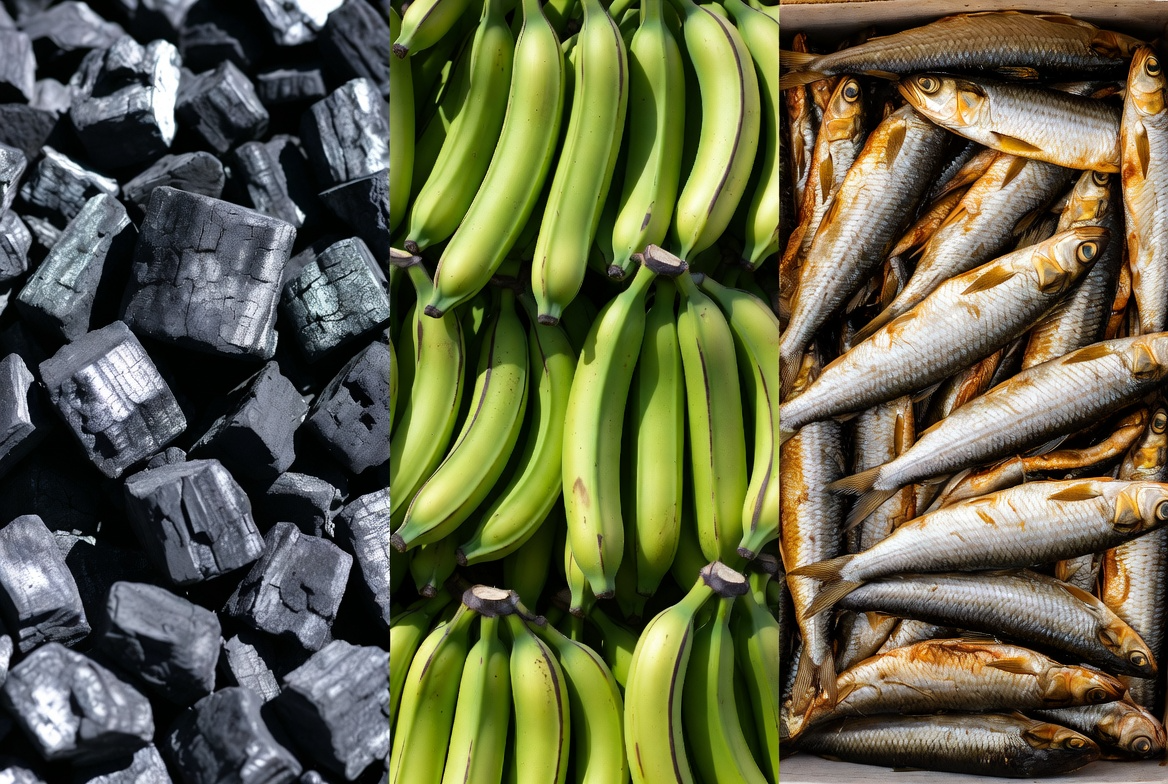
Five items—charcoal, green plantain, smoked herring (kako), senior secondary school fees, and onions—accounted for approximately 61.5 per cent of total inflation . This concentration means that while the average Ghanaian may feel relief in some categories, households that rely heavily on these specific goods are still facing significant cost pressures.
Key Takeaways
- Five items—charcoal, green plantain, smoked herring (kako), senior secondary school fees, and onions—accounted for approximately 61.5 per cent of total inflation .
- Green plantain, a staple food in many Ghanaian households, recorded 59 per cent inflation.
- These five lowest-inflation items collectively reduced overall inflation by about 18.3 per cent , demonstrating how falling food prices in some categories are cushioning consumers against increases elsewhere .
This ASJ article analyses the GSS data on concentrated inflation, the fastest-rising items, the steepest price declines, and the policy implications for households and businesses.
The Top Five Inflation Drivers: 61.5% of Total Inflation
According to the GSS report, a narrow set of essential goods and services drove the majority of price increases in March 2026 :
| Item | Contribution to Total Inflation |
|---|---|
| Charcoal | Significant |
| Green Plantain | Significant |
| Smoked Herring (Kako) | Significant |
| Senior Secondary School Fees | Significant |
| Onions | Significant |
| Total | Approximately 61.5% |
This concentration suggests that overall price pressures are being driven by a narrow segment of the consumption basket rather than broad-based increases . For households, this means that while overall inflation is low, the cost of certain everyday essentials continues to rise sharply, particularly for items linked to cooking and food preparation .
The persistence of these items at the top of inflation drivers is notable. The report shows that charcoal, green plantain, and smoked herrings have remained among the top contributors to inflation since November 2025 , indicating persistent price pressures in a narrow set of essential goods despite an overall decline in inflation .
Fastest-Rising Items: Ginger Leads at 61%
Among the fastest-rising items, several food and energy-related products recorded extraordinary year-on-year price increases :
| Item | Year-on-Year Inflation | Key Driver |
|---|---|---|
| Ginger | 61% | Supply constraints / seasonality |
| Green Plantain | 59% | Persistent pressure since Nov 2025 |
| Charcoal | 53% | Persistent pressure since Nov 2025 |
| Cashew | 47% | Export demand / supply constraints |
| Palm Fruits | 39.6% | Processing costs / seasonal factors |
These five high-inflation items together contributed about 38.3 per cent of the overall inflation rate , highlighting the significant impact of food and energy-related products on consumer prices .
Charcoal: The Persistent Energy Pressure
Charcoal remains a critical cooking fuel for millions of Ghanaian households, particularly those without access to LPG or electricity. The 53 per cent year-on-year price increase reflects:
-
Deforestation and supply constraints: Limited access to wood resources in some regions
-
Transportation costs: Rising fuel prices affecting distribution
-
Seasonal factors: Production typically slows during rainy seasons
Green Plantain: A Staple Under Pressure
Green plantain, a staple food in many Ghanaian households, recorded 59 per cent inflation. The persistence of plantain at the top of inflation drivers since November 2025 suggests:

-
Supply chain disruptions: Post-harvest losses, poor road networks
-
Seasonal variations: Plantain production cycles affect availability
-
Export competition: Some produce directed to export markets
Smoked Herring (Kako): Protein Inflation
Smoked herring, a key source of affordable protein for many Ghanaians, has remained among the top inflation drivers since November 2025. The price pressure reflects:
-
Fish stock depletion: Overfishing and environmental factors
-
Processing costs: Fuel for smoking, labour costs
-
Import dependence: Some supply relies on imported fish
Senior Secondary School Fees: Education Costs Rise
The inclusion of senior secondary school fees among the top five inflation drivers highlights the burden of education costs on households. With inflation at 3.2 per cent overall, the fact that school fees remain a major driver suggests that education costs are not moderating at the same pace as other goods .

Onions: A Cooking Essential
Onions, a fundamental ingredient in Ghanaian cooking, remain a persistent inflation driver. The price pressure reflects:
-
Storage challenges: High post-harvest losses
-
Import dependence: Ghana imports significant quantities of onions
-
Transport costs: Fuel prices affecting distribution from northern growing regions
Steepest Price Declines: Garden Eggs Down 60.3%
While some items saw sharp price increases, others recorded significant declines, helping to offset upward pressure and contributing to the low headline inflation figure :
| Item | Year-on-Year Decline | Contribution to Inflation |
|---|---|---|
| Garden Eggs | -60.3% | Significant |
| Fried Fish | -50.1% | Significant |
| Pawpaw | -49.6% | Significant |
| Cocoyam Leaves | -46.7% | Significant |
| Fresh Okra | -44.7% | Significant |
| Total | — | Reduced inflation by approx. 18.3% |
These five lowest-inflation items collectively reduced overall inflation by about 18.3 per cent , demonstrating how falling food prices in some categories are cushioning consumers against increases elsewhere .
Garden Eggs: From Bumper Harvest to Lower Prices
The dramatic 60.3 per cent decline in garden egg prices likely reflects:
-
Bumper harvests: Favourable growing conditions in key producing regions
-
Improved distribution: Better market access for farmers
-
Reduced export demand: More supply available for domestic consumption
Fried Fish: A Complex Picture
The 50.1 per cent decline in fried fish prices appears contradictory given the rise in smoked herring prices. This divergence may reflect:
-
Different fish species: Fried fish may use different varieties
-
Processing methods: Alternative preservation techniques
-
Local availability: Some fish species may be in abundant supply
Fresh Produce Declines
The sharp declines in pawpaw (-49.6%), cocoyam leaves (-46.7%), and fresh okra (-44.7%) reflect seasonal abundance and improved agricultural conditions in specific regions. These declines demonstrate the potential for targeted agricultural interventions to reduce consumer prices.
The Divergence: A Tale of Two Inflations
The GSS data reveals a key feature of the current inflation trend: it is not widespread but concentrated . While some goods are becoming significantly cheaper, others—often critical to daily consumption—are driving the remaining price pressures .
| Category | Trend | Examples |
|---|---|---|
| High-Inflation Items | Prices rising sharply | Charcoal (53%), Plantain (59%), Ginger (61%) |
| Low/Deflation Items | Prices falling | Garden eggs (-60%), Fried fish (-50%), Pawpaw (-50%) |
This divergence has important implications:
-
For low-income households: Those who rely heavily on charcoal for cooking and plantain as a staple face disproportionate hardship
-
For households with diverse diets: Those who can substitute between food categories may feel less impact
-
For policymakers: The concentration suggests that targeted interventions could have meaningful impact
Persistent Pressures Since November 2025
The GSS report notes that charcoal, green plantain, and smoked herrings have remained among the top contributors to inflation since November 2025 . This persistence indicates:
-
Structural supply constraints: Not merely seasonal fluctuations
-
Policy-resistant pressures: Standard monetary policy tools may have limited effect
-
Need for sector-specific interventions: Addressing these items requires targeted measures
The persistence of these specific items suggests that Ghana’s low headline inflation masks ongoing hardship for households dependent on these essential goods .

What This Means for Households
For Cooking Fuel-Dependent Households
With charcoal inflation at 53 per cent, households that rely on charcoal for cooking face significant cost pressures. The GSS data suggests that these households are experiencing much higher effective inflation than the 3.2 per cent headline figure .
For Plantain-Dependent Households
Green plantain at 59 per cent inflation means that families who rely on this staple are seeing their food budgets stretch significantly thinner. The persistence of this pressure since November 2025 suggests no quick relief.
For Protein-Consuming Households
The divergence between smoked herring (rising) and fried fish (falling) offers some substitution possibilities. Households that can switch between protein sources may find some relief.
For Households with Children in School
Senior secondary school fees remain a top inflation driver, meaning education costs are not moderating at the same pace as other goods. This poses particular challenges for families with multiple children in secondary school.
What This Means for Businesses
For Producers and Traders in High-Inflation Items
Businesses dealing in charcoal, plantain, and smoked herring may face:
-
Supply constraints: Difficulty sourcing products
-
Increased input costs: Rising production expenses
-
Potential demand destruction: Customers may reduce consumption
For Businesses in Declining-Price Categories
Those in garden eggs, pawpaw, and okra may face:
-
Margin pressures: Falling prices squeezing profitability
-
Potential oversupply: Bumper harvests may exceed demand
-
Export opportunities: Excess supply could be directed to regional markets
For Food Supply Chain Businesses
The data points to uneven cost dynamics across the food supply chain. Businesses should:
-
Monitor which categories are driving price pressures
-
Adjust sourcing strategies accordingly
-
Consider substitution opportunities
Policy Implications
Targeted Interventions Could Yield Results
The concentration of inflation in a limited number of items suggests that targeted interventions could have a meaningful impact on overall price stability . Potential measures include:
-
Improving supply chains for charcoal, plantain, and smoked herring
-
Stabilising input costs for producers
-
Addressing market bottlenecks that restrict supply
-
Investing in storage infrastructure to reduce post-harvest losses
Monetary Policy Limitations
The persistence of inflation in specific essential goods—driven by supply constraints rather than demand pressures—suggests that monetary policy tools may have limited effectiveness . The Bank of Ghana’s interest rate cuts, while appropriate for broad-based inflation, may not directly address the supply-side factors driving charcoal and plantain prices.
Need for Structural Interventions
The GSS report implicitly calls for sector-specific, structural interventions rather than relying solely on macroeconomic policy. These could include:
-
Energy transition support: Accelerating LPG and electric cooking adoption
-
Agricultural extension services: Improving plantain production and post-harvest management
-
Fish stock management: Addressing overfishing and promoting sustainable practices
-
Market infrastructure: Reducing transportation and storage losses
Key Takeaways
| Item | Inflation/Deflation | Trend | Contribution |
|---|---|---|---|
| Ginger | +61% | Fastest-rising | Major |
| Green Plantain | +59% | Persistent since Nov 2025 | Major |
| Charcoal | +53% | Persistent since Nov 2025 | Major |
| Smoked Herring | Elevated | Persistent since Nov 2025 | Major |
| Senior Secondary Fees | Elevated | Top 5 driver | Major |
| Onions | Elevated | Top 5 driver | Major |
| Top 5 Items | — | — | 61.5% of total inflation |
| Top 5 High-Inflation Items | — | — | 38.3% of total inflation |
| Garden Eggs | -60.3% | Fastest-declining | -18.3% to inflation |
| Fried Fish | -50.1% | Significant decline | Cushioning effect |
| Bottom 5 Items | — | — | Reduced inflation by 18.3% |
Source: Ghana Statistical Service
Frequently Asked Questions (FAQs)
1. What items are driving Ghana’s inflation in March 2026?
Five items—charcoal, green plantain, smoked herring, senior secondary school fees, and onions—accounted for approximately 61.5 per cent of total inflation .
2. Which items recorded the highest price increases?
Ginger recorded the highest inflation at 61 per cent, followed by green plantain (59 per cent), charcoal (53 per cent), cashew (47 per cent), and palm fruits (39.6 per cent) .
3. Which items saw the steepest price declines?
Garden eggs recorded the largest drop at -60.3 per cent, followed by fried fish (-50.1 per cent), pawpaw (-49.6 per cent), cocoyam leaves (-46.7 per cent), and fresh okra (-44.7 per cent) .
4. Why are charcoal, plantain, and smoked herring persistently driving inflation?
These items have remained among the top contributors since November 2025, indicating structural supply constraints rather than seasonal fluctuations. Factors include deforestation (charcoal), post-harvest losses (plantain), and fish stock depletion (smoked herring) .
5. How much did the five lowest-inflation items reduce overall inflation?
The five lowest-inflation items collectively reduced overall inflation by about 18.3 per cent, demonstrating how falling food prices in some categories cushion consumers against increases elsewhere .
6. Is inflation broad-based or concentrated?
The GSS report describes inflation as highly concentrated in a narrow set of essential goods, rather than being widespread across the consumption basket .
7. What does this mean for households?
While overall inflation is low, households that rely heavily on charcoal, plantain, and smoked herring face significant cost pressures. The headline figure of 3.2 per cent masks ongoing hardship for these households .
8. What does this mean for businesses?
The data points to uneven cost dynamics across food supply chains. Producers and traders dealing in high-inflation items may face supply constraints, while those in declining-price categories could experience margin pressures .
9. What policy interventions could help?
The concentration suggests that targeted interventions—improving supply chains, stabilising input costs, addressing market bottlenecks, and investing in storage infrastructure—could have meaningful impact on price stability .
10. Why is senior secondary school fees among the top inflation drivers?
The inclusion of school fees highlights that education costs are not moderating at the same pace as other goods, posing particular challenges for families with children in secondary school .
Conclusion: A Narrow Core Beneath a Low Headline
Ghana’s headline inflation of 3.2 per cent in March 2026 is a remarkable achievement—the lowest in nearly three decades. Yet the Ghana Statistical Service’s detailed data reveals a more nuanced picture: inflation is not broad-based but highly concentrated in a narrow set of essential goods .
Five items—charcoal, green plantain, smoked herring, senior secondary school fees, and onions—drive 61.5 per cent of total inflation . Ginger, plantain, and charcoal have recorded extraordinary year-on-year increases of 61 per cent, 59 per cent, and 53 per cent respectively . And crucially, charcoal, plantain, and smoked herring have remained among the top contributors since November 2025 , indicating persistent structural pressures rather than seasonal fluctuations .
At the same time, sharp declines in garden eggs (-60.3%), fried fish (-50.1%), and other fresh produce have cushioned the headline figure, reducing inflation by 18.3 per cent . This divergence means that while the average Ghanaian may feel relief in some categories, households that rely heavily on specific essential goods are still facing significant hardship .
For policymakers, the concentration of inflation suggests that targeted, sector-specific interventions could yield meaningful results . Improving supply chains for charcoal, stabilising plantain production, addressing fish stock depletion, and reducing post-harvest losses could directly address the persistent drivers of inflation.
For households and businesses, the data offers a roadmap for navigating the current environment. Substitution between categories—where possible—can provide relief. But for those dependent on charcoal for cooking, plantain as a staple, or smoked herring for protein, the headline figure of 3.2 per cent offers little comfort.
The story of Ghana’s March 2026 inflation is not one number—it is two stories: one of falling prices in some categories and persistent hardship in others. Understanding this divergence is essential for effective policy and informed household budgeting.
Frequently Asked Questions (FAQs)
1. What items are driving Ghana’s inflation in March 2026?
Five items—charcoal, green plantain, smoked herring, senior secondary school fees, and onions—accounted for approximately 61.5 per cent of total inflation .
2. Which items recorded the highest price increases?
Ginger (61%), green plantain (59%), charcoal (53%), cashew (47%), and palm fruits (39.6%) .
3. Which items saw the steepest price declines?
Garden eggs (-60.3%), fried fish (-50.1%), pawpaw (-49.6%), cocoyam leaves (-46.7%), and fresh okra (-44.7%) .
4. Why are charcoal, plantain, and smoked herring persistently driving inflation?
These items have remained among the top contributors since November 2025, indicating structural supply constraints .
5. How much did the five lowest-inflation items reduce overall inflation?
They collectively reduced overall inflation by about 18.3 per cent .
6. Is inflation broad-based or concentrated?
It is highly concentrated in a narrow set of essential goods .
7. What does this mean for households?
Households reliant on charcoal, plantain, and smoked herring face significant cost pressures despite low headline inflation .
8. What does this mean for businesses?
Uneven cost dynamics across food supply chains; high-inflation items face supply constraints; declining-price items face margin pressures .
9. What policy interventions could help?
Targeted interventions: improving supply chains, stabilising input costs, addressing market bottlenecks, investing in storage infrastructure .
10. Why is senior secondary school fees among the top drivers?
Education costs are not moderating at the same pace as other goods, posing challenges for families with children in secondary school .
Last Updated on April 2, 2026 by Samuel Kwame Boadu
Ghana Market Watch
Track Ghana’s economy and financial markets with exchange rates, bank rates, fuel prices, food and commodity prices, economic indicators and financial market updates.
Explore Ghana Market Watch →Disclaimer: Some content on Accra Street Journal may be aggregated, summarized, or edited from third-party sources for informational purposes. Images and media are used under fair use or royalty-free licenses. Accra Street Journal is a subsidiary of SamBoad Publishing Hub under SamBoad Business Group Ltd, registered in Ghana since 2014.
For concerns or inquiries, please visit our Privacy Policy or Contact Page.

Samuel Kwame Boadu is a Ghanaian media entrepreneur and storyteller with a passion for amplifying urban voices and uncovering everyday truths. He is the Editor-in-Chief and Founder of Accra Street Journal, a dynamic digital platform dedicated to capturing the pulse of Ghana’s capital—its people, culture, challenges, business, sports and innovations.
Use the following reference when citing or referencing this article.
Your feedback helps us improve our journalism.
Report an Error
Help us maintain accuracy. Let our editorial team know if you spot an issue in this article.
Report a problem with this article