Monetary policymakers in Ghana begin a closely watched meeting this week as financial markets search for clues about the country’s interest-rate path at a time when global geopolitical tensions are threatening to complicate the inflation outlook.
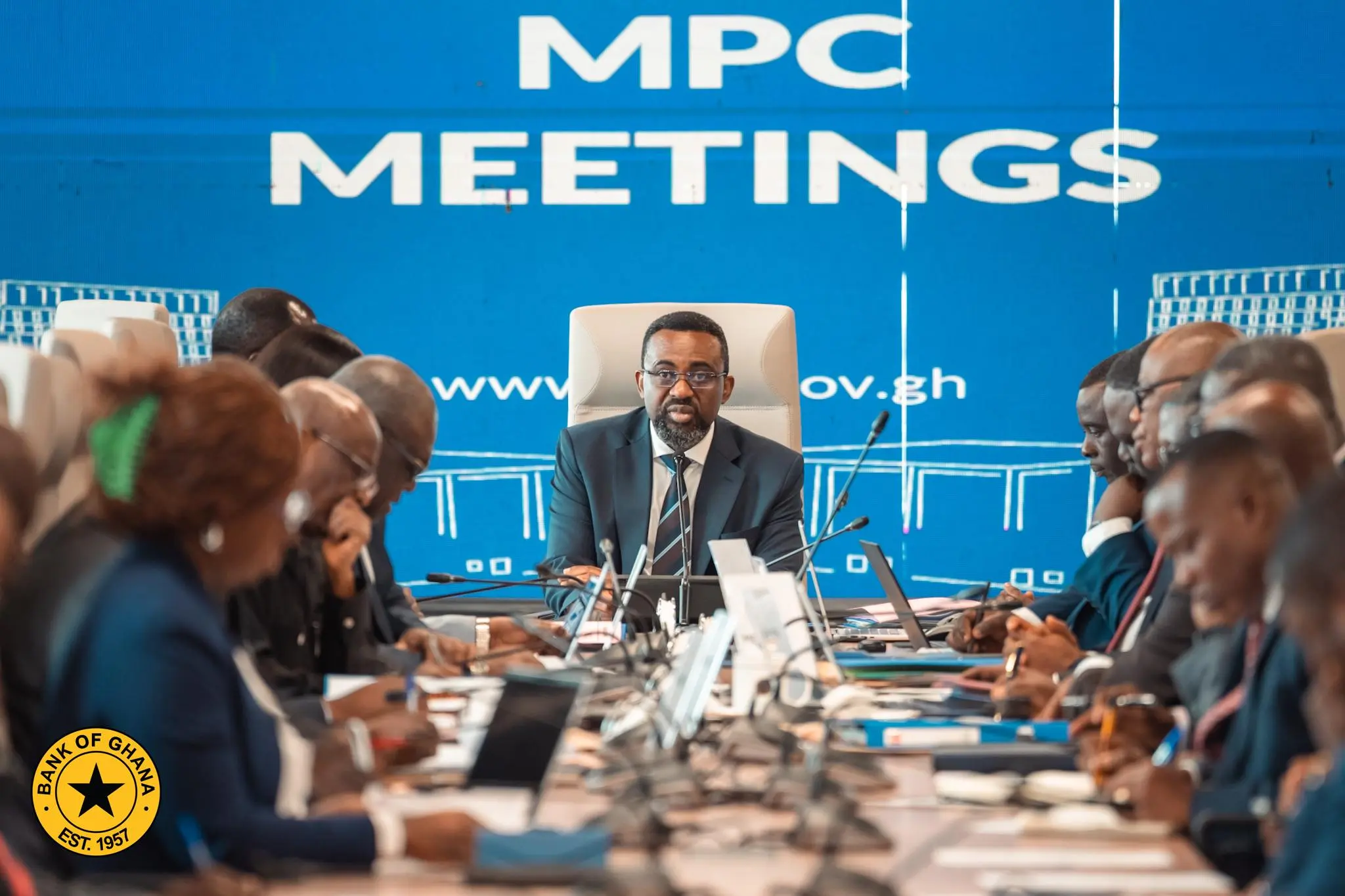
The Bank of Ghana’s Monetary Policy Committee (MPC) opened its 129th regular meeting on March 16, launching three days of deliberations that will shape borrowing costs, investment sentiment and currency stability in the months ahead.

The decision—expected on March 18—comes at a moment when domestic economic conditions are improving but external shocks are rapidly reshaping the global environment.
📢 GET A DETAILED ARTICLES + JOBS
Join ASJ's WhatsApp Channel and never miss a post or opportunity.

A Policy Easing Cycle Underway
Earlier this year, the central bank signaled a clear shift toward monetary easing.
In January, Policymakers reduced the Monetary Policy Rate (MPR) from 18 percent to 15.5 percent, marking one of the most notable adjustments in the country’s interest-rate environment since inflation began moderating.

The easing cycle also filtered through to the Ghana Reference Rate, which dropped to 15.68 percent before falling further to 11.71 percent by March, its lowest level in years.
Lower Treasury bill yields, declining interbank rates and improved liquidity in the banking system have all contributed to the downward trend.
For businesses and households, the change has translated into cheaper borrowing costs and a more favorable credit environment.
Companies seeking financing for expansion and consumers refinancing existing loans have begun to feel the impact of the shift in policy.
A Complicating Global Shock
Yet just as Ghana’s monetary conditions began stabilizing, global events introduced a new layer of uncertainty.
Rising oil prices—linked to escalating tensions in the Middle East—are emerging as one of the most significant external risks confronting policymakers.
The intensifying conflict between Israel and Iran has rattled global energy markets, sending crude prices higher and raising concerns about inflation across oil-importing economies.
For Ghana, the implications are particularly significant.
As a net importer of petroleum products, higher oil prices directly translate into increased import costs, greater pressure on foreign exchange reserves and the potential return of inflationary pressures that policymakers have worked hard to contain.

Political Warnings About Economic Risks
The geopolitical crisis has not gone unnoticed among Ghana’s political leadership.
John Dramani Mahama has warned that sustained conflict in the Middle East could ripple through African economies, including Ghana’s, by increasing fuel prices and tightening external balances.
Higher transport and logistics costs could cascade through the economy, affecting everything from food prices to manufacturing expenses.
Economists say such shocks often carry a broader macroeconomic impact, placing pressure on currencies and complicating monetary policy decisions.
Balancing Growth and Stability
The MPC therefore faces a delicate balancing act.
On one side lies the argument for continuing the easing cycle. Lower interest rates can stimulate investment, expand access to credit and support the country’s still-recovering economy.
On the other side lies the risk that external shocks—particularly rising energy prices—could reignite inflation and weaken the cedi.
If oil prices continue climbing, policymakers may feel compelled to adopt a more cautious stance, slowing or pausing the pace of monetary easing.
The decision ultimately depends on how the committee evaluates the balance between domestic recovery and external vulnerability.
The Gold Factor
There is also another global dynamic working in Ghana’s favor.
Periods of geopolitical uncertainty often drive investors toward precious metals, particularly gold, which is widely considered a safe-haven asset.

As one of the world’s significant gold producers, Ghana benefits from rising global gold prices through increased export earnings and stronger foreign exchange inflows.
However, economists caution that the gains from gold may not fully offset the costs associated with surging oil imports.
The difference between the two price movements could determine whether Ghana’s external balances improve or deteriorate in the months ahead.
A Signal for Markets
For investors, businesses and financial institutions, the MPC meeting represents more than just a routine policy gathering.
It offers a critical signal about how Ghana’s central bank intends to navigate a rapidly changing economic landscape.
The outcome will influence borrowing costs, currency expectations and financial market sentiment across the country.
Market participants will be watching closely for clues about whether policymakers intend to continue easing, pause the cycle or adopt a more cautious tone in response to external pressures.
A Defining Moment for Policy Direction
The decisions made during this meeting could set the tone for Ghana’s monetary policy throughout the rest of the year.
If inflation remains under control and global conditions stabilize, the central bank may continue its gradual move toward lower interest rates.
But if oil prices surge further and inflation risks intensify, policymakers may have little choice but to prioritize stability over stimulus.
For now, the outcome remains uncertain.
What is clear is that the Bank of Ghana’s 129th MPC meeting arrives at a pivotal moment, when global geopolitics and domestic economic recovery are colliding in ways that will shape Ghana’s financial outlook for months to come.
Source: Accra Street Journal
Last Updated on March 16, 2026 by Samuel Kwame Boadu
Disclaimer: Some content on Accra Street Journal may be aggregated, summarized, or edited from third-party sources for informational purposes. Images and media are used under fair use or royalty-free licenses. Accra Street Journal is a subsidiary of SamBoad Publishing Hub under SamBoad Business Group Ltd, registered in Ghana since 2014.
For concerns or inquiries, please visit our Privacy Policy or Contact Page.

Samuel Kwame Boadu is a Ghanaian media entrepreneur and storyteller with a passion for amplifying urban voices and uncovering everyday truths. He is the Editor-in-Chief and Founder of Accra Street Journal, a dynamic digital platform dedicated to capturing the pulse of Ghana’s capital—its people, culture, challenges, business, sports and innovations.