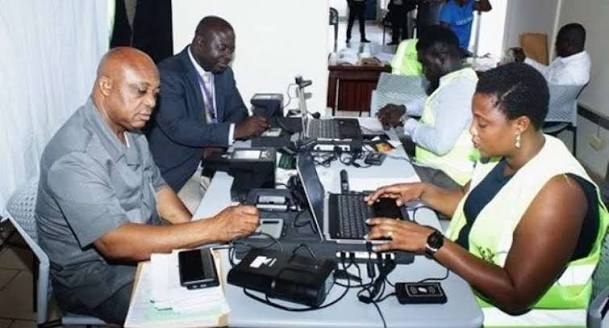
The rules linking your Ghana Card to your SIM card are being rebuilt from the ground up. A new registration exercise is coming—one the government promises will be the last—built on real-time biometric verification against the NIA database. The old system, which allowed unverified identities onto the network, is being replaced. Here is what you need to know.
Why a New Registration Exercise?
The previous SIM registration exercise, which ran from 2021 to 2023, did not fully achieve its goal of reducing fraud. A validation exercise conducted between 17 and 26 June 2025, in collaboration with the NIA, revealed several discrepancies: SIM records that could not be verified against the NIA database, incorrect identity information, unverifiable biometric data, and inconsistencies between datasets .

In the previous exercise, biometric data captured during SIM registration was not fully validated against the NIA database. This created opportunities for individuals to register SIM cards using false or unverifiable identities, contributing to fraudulent activities such as SIM swap fraud and other forms of cybercrime .
📢 GET A DETAILED ARTICLES + JOBS
Join ASJ's WhatsApp Channel and never miss a post or opportunity.

The new exercise will ensure that all SIM registrations are biometrically verified in real time against the NIA database .
Who Must Register?
Every user of a mobile number in Ghana must ensure their number is properly registered and validated. This includes :

-
Ghanaian citizens
-
Foreign residents
-
Refugees
-
Visitors and tourists
-
Diplomats
-
Corporate organisations and institutions
What ID Is Required?
The identification document depends on your category :
| Category | Required ID |
|---|---|
| Ghanaian | Ghana Card |
| Foreign Resident | Non-Citizen Ghana Card |
| Refugee | Refugee Non-Citizen ID |
| Visitor/Tourist | Passport + proof of entry |
| Diplomat | Ministry of Foreign Affairs Diplomatic ID |
| Corporate Body | Certificate of incorporation + signatory’s Ghana Card |
What Happens During Registration?
The biometric data of a subscriber will be validated in real time against the NIA database. A SIM will only be activated after successful biometric verification. This ensures every active number in Ghana is linked to a verified and traceable identity .
The Primary Number
Subscribers will be required to select one SIM card as their “Primary Number.” This number will :
-
Receive One-Time Passwords (OTPs) for any new SIM registrations linked to the subscriber’s Ghana Card
-
Serve as a control mechanism to prevent unauthorised or fraudulent SIM registrations
This measure is designed to stop agents or third parties from registering numbers without the knowledge or consent of the rightful subscriber.
What’s New
The new platform introduces several enhancements :
-
Real-time biometric verification against the NIA database
-
Support for both Android and iOS devices
-
Self-registration capability for eSIM and physical SIM cards
-
Remote SIM delinking where necessary
-
Real-time verification of diplomatic and corporate records
-
Device verification through the Central Equipment Identity Register (CEIR)
The Liveness Test
The exercise will incorporate advanced biometric verification, including a “liveliness test” that captures facial features to authenticate users against the NIA database. This prevents the use of photocopied or fraudulently acquired Ghana Cards.
The Central Equipment Identity Register (CEIR)
The CEIR is a national database that identifies mobile devices using their unique IMEI number. It enables regulators and mobile network operators to :
-
Block stolen phones across all mobile networks
-
Detect and block counterfeit or smuggled mobile devices
-
Identify devices linked to fraudulent activities
Subscribers do not need to register their devices. The details are captured automatically once the device connects to the network .
The Cost
The registration exercise is free for all citizens. Mobile Network Operators will not pass any registration-related costs onto subscribers .

The Minister for Communication, Digital Technology and Innovations, Samuel Nartey George, indicated that the consumer would not bear any cost, as services rendered by the NIA would be paid for by the telecommunications companies .
Problems from the Previous Exercise
The old system had significant flaws that the new exercise is designed to fix.
Unverified Identities
The most serious problem was that biometric data was not fully validated against the NIA database. This allowed SIM cards to be registered with false or unverifiable identities, undermining efforts to trace criminals and fraudsters .
Blocked SIMs
When the previous exercise ended on 31 May 2023, network operators blocked SIM cards that had not completed the required registration. MTN Ghana alone blocked about 5.4 million unregistered SIM cards .
By October 2022, about 28.96 million SIM cards had been linked to Ghana Cards (67.28% of all SIM cards issued). However, only 18.93 million (44.28%) had completed the full registration process.
No Wholesale Migration
The government has ruled out automatically migrating existing SIM data into the new system. The Minister explained that such a move would only transfer existing flaws: “You are not cleaning up. You are actually migrating the viruses. You have infected files, and you are migrating them onto a new system” .
What to Do Now
Ensure your Ghana Card is active and linked. The Ghana Card is the only accepted ID for Ghanaians. If you have not registered for one, do so at an NIA office.
Watch for the official start date. The rollout will commence only after the legal framework is completed and laid before Parliament. The start date will be announced in due course .
Do not register SIMs for others. The Minister cautioned the public against registering SIM cards on behalf of others, as this undermines the integrity of the system .
Prepare for biometric capture. Whether you self-register via an app or visit an agent, you will need to capture your fingerprints and facial image for real-time verification.
Quick Facts
| Topic | Details |
|---|---|
| Governing Framework | New LI replacing LI 2006 (in progress) |
| ID for Ghanaians | Ghana Card |
| Verification Method | Real-time biometric against NIA database |
| Cost | Free |
| Primary Number | Required for OTPs and control |
| CEIR | Blocks stolen and counterfeit devices |
| Self-Registration | Available for eSIM and physical SIMs |
| Previous Exercise Blocked SIMs | 5.4 million (MTN alone) |
Frequently Asked Questions
1. Is the new SIM registration exercise free?
Yes. The government has assured that the exercise will be free for all citizens. Mobile Network Operators will not pass any registration-related costs onto subscribers .

2. What ID do I need for SIM registration?
Ghanaians need their Ghana Card. Foreign residents need a Non-Citizen Ghana Card. Visitors need a passport with proof of entry. Corporate bodies need a certificate of incorporation and the signatory’s Ghana Card .
3. What is biometric verification in SIM registration?
Your biometric data—fingerprints and facial image—will be validated in real time against the NIA database. A SIM will only be activated after successful verification .
4. What is the “Primary Number” rule?
Subscribers must select one SIM as their Primary Number. This number receives OTPs for any new SIM registrations linked to the Ghana Card, preventing unauthorised registrations by agents or third parties.
5. What is the CEIR?
The Central Equipment Identity Register is a national database that identifies mobile devices by their IMEI. It allows the blocking of stolen or counterfeit phones across all networks .
6. Why did the previous SIM registration fail?
The previous exercise did not fully validate biometric data against the NIA database, allowing false or unverifiable identities onto the network. This contributed to fraud and SIM swap scams.
7. Will I need to re-register my existing SIM?
Yes. The government has ruled out automatic migration of existing SIM data because it would transfer the flaws of the old system into the new one .
8. What happens to unregistered SIMs?
Inactive or non-compliant SIMs, particularly those issued to foreign nationals, will be subject to a 90-day validity period or aligned with the holder’s legal stay, with automated controls to deactivate non-compliant lines
Source: Accra Street Journal
Last Updated on October 22, 2026 by Samuel Kwame Boadu
Disclaimer: Some content on Accra Street Journal may be aggregated, summarized, or edited from third-party sources for informational purposes. Images and media are used under fair use or royalty-free licenses. Accra Street Journal is a subsidiary of SamBoad Publishing Hub under SamBoad Business Group Ltd, registered in Ghana since 2014.
For concerns or inquiries, please visit our Privacy Policy or Contact Page.

Samuel Kwame Boadu is a Ghanaian media entrepreneur and storyteller with a passion for amplifying urban voices and uncovering everyday truths. He is the Editor-in-Chief and Founder of Accra Street Journal, a dynamic digital platform dedicated to capturing the pulse of Ghana’s capital—its people, culture, challenges, business, sports and innovations.