
Accra — Ghana’s financial markets presented a mixed picture in the past week, with the government missing its Treasury bill target for the fourth consecutive auction while the Ghana Stock Exchange continued its historic rally, pushing market capitalisation to a new high of GH¢266.4 billion.
The contrasting developments reflect the complex dynamics shaping Ghana’s economy in 2026. On one hand, rising interest rates are increasing the government’s cost of borrowing and dampening demand for short-term debt. On the other, equity investors are piling into banking stocks, driving double-digit gains for some of the country’s largest lenders.

Meanwhile, the Bank of Ghana absorbed a record volume of excess liquidity in the first quarter of 2026, a move aimed at managing rising liquidity pressures that could otherwise fuel inflation or destabilise the cedi. And remittance inflows reached approximately $7.8 billion in 2025, surpassing Foreign Direct Investment as a primary driver of foreign exchange inflows.
📢 GET A DETAILED ARTICLES + JOBS
Join ASJ's WhatsApp Channel and never miss a post or opportunity.

Here is a detailed Accra Street Journal breakdown of the week’s key financial market developments.
Treasury Bill Undersubscription: Fourth Consecutive Miss
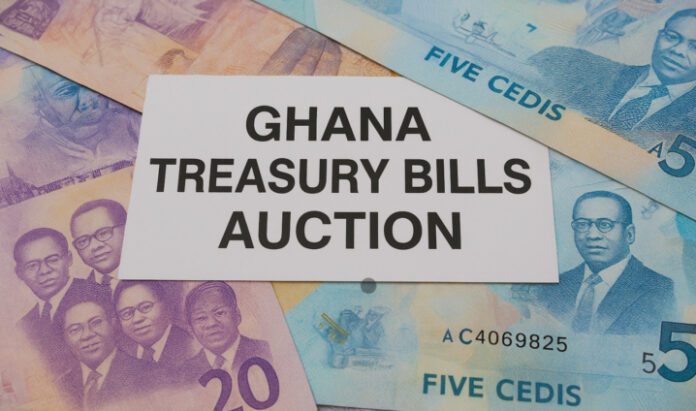
The government’s latest Treasury bill auction recorded an 8.2 per cent undersubscription, marking the fourth consecutive auction in which the government failed to meet its borrowing target. The shortfall comes as interest rates on short-term government paper continued to rise, reflecting investor demand for higher yields amid persistent fiscal and monetary uncertainty.

Treasury bills are the government’s primary tool for short-term borrowing to finance budget shortfalls and manage cash flow. Consistent undersubscription is a concern for fiscal managers because it signals that investors are either demanding higher returns, shifting capital to alternative assets, or reducing their exposure to government paper.
Rising interest rates on T-bills increase the government’s debt servicing costs, putting additional pressure on an already constrained fiscal budget. Each percentage point increase in borrowing costs translates into millions of cedis in additional interest payments.
The Bank of Ghana’s monetary policy committee has maintained a tight policy stance to anchor inflation expectations, but the resulting high interest rates create a challenging environment for fiscal authorities. The government must balance the need to attract T-bill investors with the imperative to contain borrowing costs.
Ghana Stock Exchange: Market Cap Hits GH¢266.4 Billion
In stark contrast to the weakness in the primary debt market, the Ghana Stock Exchange ended the previous week strongly, with market capitalisation reaching a new record of GH¢266.4 billion.
The milestone continues a remarkable run for the GSE, which has seen its market cap more than double in recent years. The exchange has benefited from strong investor interest in banking and insurance stocks, as well as the broader economic recovery following the domestic debt exchange programme.
The rally has been broad-based, but banking stocks have been particularly strong. Investors appear to be betting that Ghana’s banks are well-positioned to benefit from the high interest rate environment, which typically expands net interest margins. Additionally, improved asset quality following the government’s debt restructuring has reduced provisions for loan losses, boosting reported profits.
The GSE’s performance stands out in a challenging macroeconomic environment. While the government struggles to attract T-bill investors, equity investors are showing strong appetite for Ghanaian stocks, particularly in the financial sector.
Top Gainers: Banking Stocks Lead the Rally
Three banking stocks recorded double-digit or near-double-digit gains, leading the GSE’s advance.
GCB Bank (+9.97%)
GCB Bank, Ghana’s largest indigenous bank, led the gainers with a 9.97 per cent increase. The bank has been a favourite among investors due to its strong deposit base, conservative lending practices, and consistent dividend payments. The proposed dividend of GH¢1.00 per share for the 2025 fiscal year, announced ahead of the bank’s upcoming Annual General Meeting, has also supported investor sentiment.

Ecobank Transnational (+9.38%)
Ecobank Transnational, the pan-African banking group with listings across multiple West African exchanges, gained 9.38 per cent. The bank’s cross-border operations and diversified revenue streams have made it attractive to investors seeking exposure to the broader West African recovery.
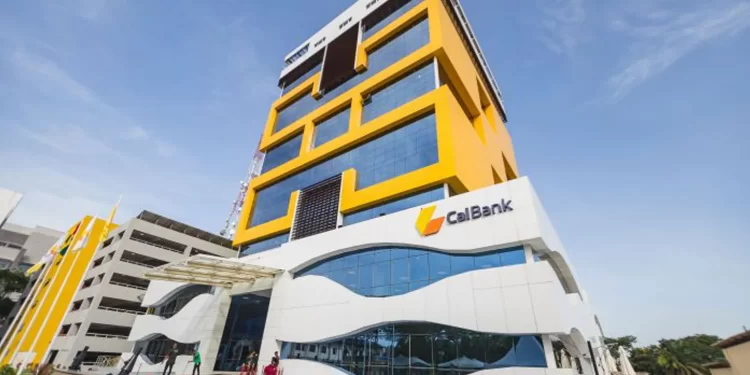
CalBank (+8.86%)
CalBank rounded out the top three gainers with an 8.86 per cent increase. The bank has been executing a turnaround strategy following capital raising and restructuring efforts, and investors appear to be rewarding its progress.
The strong performance of banking stocks reflects broader investor confidence in the sector. Higher interest rates, improved asset quality, and a stabilising macroeconomic environment have all contributed to the rally.
Top Loser: Access Bank Ghana (-9.93%)
While most banking stocks gained, Access Bank Ghana was the exception. The stock recorded a price depreciation of 9.93 per cent, making it the top loser on the exchange.
The sharp decline contrasts with the positive performance of its peers. Access Bank Ghana is a subsidiary of Nigeria’s Access Holdings, and the depreciation may reflect company-specific factors rather than broader sector weakness. Possible explanations include profit-taking following previous gains, investor concerns about specific exposures, or repositioning ahead of the bank’s upcoming financial results.
The divergence between Access Bank Ghana’s performance and that of GCB, Ecobank, and CalBank underscores the importance of company-specific analysis in the current market. Not all banking stocks are moving in the same direction.
Bank of Ghana Absorbs Record GH¢389.1 Billion in Excess Liquidity
In a significant monetary policy development, the Bank of Ghana absorbed a record GH¢389.1 billion in excess liquidity during the first quarter of 2026. The move was aimed at managing rising liquidity pressures that could otherwise fuel inflation or put downward pressure on the cedi.
Excess liquidity refers to the amount of money in the banking system beyond what banks need to meet reserve requirements and transaction demand. When excess liquidity is high, banks have more money to lend, which can stimulate economic activity but also risk fueling inflation if it outpaces productive capacity.
The Bank of Ghana has been using open market operations—selling its own bills to banks—to mop up excess liquidity. By absorbing GH¢389.1 billion in the first quarter alone, the central bank demonstrated its commitment to maintaining a tight monetary stance.
The record absorption is significant for several reasons:
-
Inflation containment: By removing excess liquidity from the system, the BoG reduces the risk that money supply growth will outpace economic output, which could reignite inflation.
-
Cedi stability: Excess liquidity can put downward pressure on the cedi if it leads to increased demand for foreign currency. Absorption helps support the exchange rate.
-
Policy credibility: The BoG’s willingness to absorb record volumes signals its commitment to its inflation-targeting framework, which should anchor inflation expectations.
The absorption also has implications for banks. When the BoG sells its bills, banks use their excess reserves to purchase them. This reduces the funds available for lending to the private sector, potentially constraining credit growth. However, it also provides banks with a safe, interest-bearing asset.

Remittances Reach $7.8 Billion, Surpass FDI as Primary Investment Driver
In a structural shift with long-term implications, remittance inflows to Ghana reached approximately $7.8 billion in 2025, surpassing Foreign Direct Investment as a primary driver of foreign exchange inflows and investment.
Remittances—money sent home by Ghanaians living abroad—have been growing steadily for years, driven by a large and active diaspora, particularly in the United States, United Kingdom, Germany, and other European countries. The $7.8 billion figure represents a significant source of foreign currency that does not come with the conditionality or profit repatriation pressures associated with FDI.
Why Remittances Matter
Remittances are different from other types of capital inflows in several important ways:
-
Stability: Remittances tend to be more stable than portfolio flows or even FDI, which can be withdrawn or delayed during periods of global uncertainty.
-
Direct impact: Remittances go directly to households, supporting consumption, education, healthcare, and small business investment.
-
No repayment obligation: Unlike loans or bond issuances, remittances do not create future repayment obligations.
-
Cedi support: Remittances provide a steady source of foreign currency, supporting the cedi’s exchange rate.
Surpassing FDI
The fact that remittances have surpassed FDI is a significant milestone. FDI has traditionally been viewed as the most desirable form of capital inflow because it brings not just money but also technology, expertise, and long-term commitment. However, FDI flows can be volatile and are often concentrated in extractive sectors like mining and oil, which have limited direct impact on household welfare.
Remittances, by contrast, are broadly distributed and have a direct impact on the living standards of millions of Ghanaians. They are also counter-cyclical—tending to increase during economic downturns when diaspora members send more money home to support struggling relatives.
Policy Implications
The growing importance of remittances has policy implications. The government and the Bank of Ghana have an incentive to make remittance transfers as cheap, fast, and convenient as possible. Reducing transfer costs, promoting formal channels, and integrating remittance data into economic planning are all priorities.
Fintech companies have been playing an increasingly important role in the remittance market, offering lower-cost alternatives to traditional money transfer operators. Mobile money interoperability has also made it easier for recipients to access funds without needing a bank account.
Interconnections: How the Pieces Fit Together
While each of these developments stands alone, they are interconnected.
Rising T-bill rates and bank profitability: Higher interest rates on government securities increase bank profitability because banks hold significant portfolios of T-bills. This helps explain why banking stocks have been performing well even as the government struggles to attract T-bill investors.
Liquidity absorption and bank lending: The BoG’s record liquidity absorption reduces the funds available for bank lending. This could constrain credit growth to the private sector, even as banks report strong profits.
Remittances and exchange rate stability: The $7.8 billion in remittances provides a steady source of foreign currency, supporting the cedi. This reduces pressure on the BoG to intervene in the foreign exchange market, allowing it to focus on domestic liquidity management.
T-bill undersubscription and fiscal pressures: The government’s difficulty in raising T-bills increases pressure on the fiscal budget. Higher interest rates on government borrowing could crowd out spending on infrastructure, health, and education.
Outlook From ASJ
The coming weeks and months will reveal whether the trends observed in the past week continue or reverse.
Treasury bills: The government will need to address the persistent undersubscription. Options include accepting higher interest rates, extending maturities, or reducing the borrowing requirement through fiscal consolidation.
Stock market: The GSE’s rally has been impressive, but sustainability depends on continued economic recovery, stable interest rates, and strong corporate earnings. Banking stocks, which have led the rally, may be vulnerable to a reversal if interest rates peak and begin to decline.
Liquidity management: The BoG’s record liquidity absorption demonstrates its commitment to tight monetary policy. However, the central bank will need to balance inflation containment with the need to support credit growth for economic expansion.
Remittances: The $7.8 billion milestone is likely to be exceeded in 2026 as diaspora engagement continues to grow. Policy efforts to reduce transfer costs and promote formal channels could further boost recorded remittance inflows.
For investors, policymakers, and market participants, the past week’s developments offer both reasons for optimism and grounds for caution. The stock market is booming, but the government’s borrowing costs are rising. Remittances are surging, but FDI remains subdued. The BoG is managing liquidity effectively, but credit growth may suffer.
Ghana’s financial markets are at an interesting crossroads. How the various forces balance out will determine the trajectory of the economy in the months ahead.
Frequently Asked Questions (FAQs)
1. Why did the Treasury bill auction record an 8.2% undersubscription?
The undersubscription reflects rising interest rates on government paper and investor demand for higher yields. It marks the fourth consecutive auction in which the government has missed its borrowing target. Consistent undersubscription increases the government’s debt servicing costs and signals potential investor concerns about fiscal sustainability.
2. What drove the GSE’s market capitalisation to GH¢266.4 billion?
The GSE’s rally was driven by strong investor interest in banking stocks, including GCB Bank (+9.97%), Ecobank Transnational (+9.38%), and CalBank (+8.86%). Higher interest rates have expanded bank net interest margins, while improved asset quality following the government’s debt restructuring has boosted reported profits.
3. Why did Access Bank Ghana depreciate while other banks gained?
Access Bank Ghana recorded a 9.93 per cent depreciation, making it the top loser on the exchange. The decline may reflect company-specific factors such as profit-taking, investor concerns about specific exposures, or repositioning ahead of financial results. Unlike its peers, Access Bank Ghana is a subsidiary of Nigeria’s Access Holdings, which may face different market dynamics.
4. What does the BoG’s GH¢389.1 billion liquidity absorption mean?
The Bank of Ghana absorbed a record GH¢389.1 billion in excess liquidity during Q1 2026 using open market operations (selling its own bills to banks). This removes money from the banking system, reducing the risk that excess liquidity fuels inflation or puts downward pressure on the cedi. It demonstrates the central bank’s commitment to its tight monetary policy stance.
5. How significant is the $7.8 billion remittance inflow?
Remittance inflows of approximately $7.8 billion in 2025 surpassed Foreign Direct Investment as a primary driver of foreign exchange inflows. Remittances are more stable than other capital flows, go directly to households, create no future repayment obligations, and provide steady support for the cedi. The milestone reflects the growing economic importance of Ghana’s diaspora.
6. Are the stock market rally and T-bill undersubscription connected?
Yes, they are connected through the banking sector. Banks are major holders of T-bills. Higher interest rates on T-bills increase bank profitability, which supports bank stock prices. Even as the government struggles to attract T-bill investors, banks benefit from the higher yields. The BoG’s liquidity absorption, however, reduces the funds available for bank lending, creating a complex trade-off.
Source: Accra Street Journal
Last Updated on April 20, 2026 by Samuel Kwame Boadu
Disclaimer: Some content on Accra Street Journal may be aggregated, summarized, or edited from third-party sources for informational purposes. Images and media are used under fair use or royalty-free licenses. Accra Street Journal is a subsidiary of SamBoad Publishing Hub under SamBoad Business Group Ltd, registered in Ghana since 2014.
For concerns or inquiries, please visit our Privacy Policy or Contact Page.

Samuel Kwame Boadu is a Ghanaian media entrepreneur and storyteller with a passion for amplifying urban voices and uncovering everyday truths. He is the Editor-in-Chief and Founder of Accra Street Journal, a dynamic digital platform dedicated to capturing the pulse of Ghana’s capital—its people, culture, challenges, business, sports and innovations.