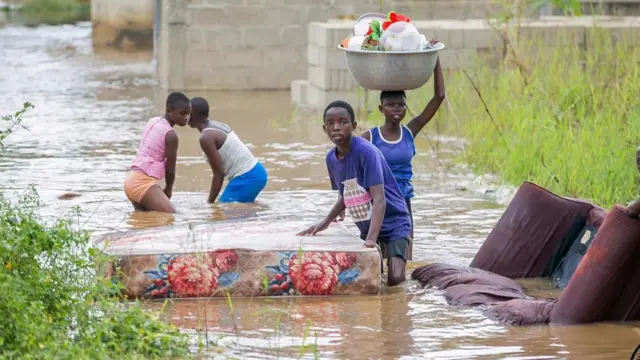
While official messaging has heavily leaned on climate change to explain the historic 140mm downpour that submerged Greater Accra, prominent local climate scientists have publicly pushed back against the “climate-only” narrative.
Experts from the Institute for Environment and Sanitation Studies at the University of Ghana and the Ghana Space Science and Technology Institute point out that rainfall records alone do not support attributing the disaster solely to global warming. They argue that the disaster is predominantly a man-made failure driven by gross urban planning negligence and obsolete, heavily choked drainage designs.
📢 GET A DETAILED ARTICLES + JOBS
Join ASJ's WhatsApp Channel and never miss a post or opportunity.
📲 Join ASJ Channel Now
The scientists’ critique comes as the death toll from the catastrophic flooding reaches 13 and over 70,000 residents remain displaced. The Ghana Meteorological Agency has issued additional severe weather warnings for the coastal zone, with intermittent heavy downpours and high tides expected to worsen conditions in low-lying areas.
The Ghana Revenue Authority has officially adjusted its calendar, pushing the mid-year filing deadline for Corporate Income Tax, PIT, and VAT from June 30 to Monday, July 6, 2026, to shield paralyzed local businesses from late penalties. Higher education facilities, including the Ghana Communication Technology University, have officially canceled all physical and online lectures until next week due to the severe displacement of their student populace.
Emergency dispatch logs from ReliefWeb reveal that a massive chemical fire broke out at a prominent rubber factory in the city during the peak of Monday’s deluge. The Ghana National Fire Service had to split its heavily strained resources, battling intense chemical flames while wading through waist-deep, fast-moving floodwaters.
According to a report by Accra Street Journal, the disaster has exposed the persistent vulnerability of Accra’s drainage infrastructure and the consequences of unchecked development on waterways. The scientific backlash against the “climate-only” narrative has intensified calls for a comprehensive review of urban planning regulations and drainage infrastructure investment.