







5 min read
A dramatic fall in Ghana’s Treasury bill yields is quietly reshaping the country’s banking industry, forcing financial institutions to reconsider a long-standing strategy that delivered strong profits with minimal risk.
For years, banks operating in Ghana relied heavily on government securities as a dependable source of income. But as short-term interest rates decline sharply, the once-lucrative trade of investing customer deposits in Treasury bills is rapidly losing its appeal.
Key Takeaways
- A dramatic fall in Ghana’s Treasury bill yields is quietly reshaping the country’s banking industry, forcing financial institutions to reconsider a long-standing strategy that delivered strong profits with minimal risk.
- For years, banks operating in Ghana relied heavily on government securities as a dependable source of income.
- At the beginning of 2025, the rate hovered around 28 percent, reflecting the high interest environment created by inflation and aggressive government borrowing.
Analysts say the shift could ultimately benefit the broader economy—particularly small businesses that have long struggled to access affordable credit.
A Rapid Fall in Treasury Bill Yields
Recent auction data shows that Ghana’s benchmark 91-day Treasury bill yield has dropped dramatically within a year.
At the beginning of 2025, the rate hovered around 28 percent, reflecting the high interest environment created by inflation and aggressive government borrowing.
By March 2026, the yield had fallen to roughly 4.7 percent, representing a drop of more than 22 percentage points.
The steep decline signals improving macroeconomic conditions as inflation moderates and government borrowing needs ease.
For the government, lower yields translate into cheaper debt financing. For banks, however, the change represents a sharp reduction in one of their most reliable income streams.
Banks’ Long Dependence on Government Debt
The scale of the banking sector’s reliance on government securities has become increasingly clear.
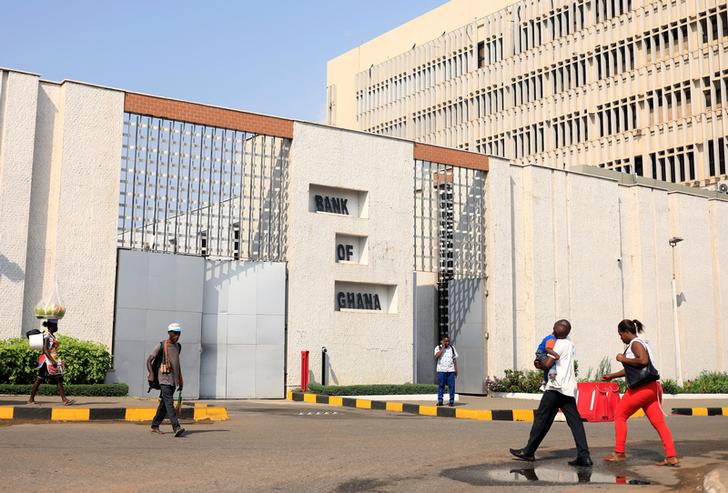
According to the governor of the Bank of Ghana, government securities accounted for about 62 percent of banks’ total investments in 2025.
That figure underscores how deeply financial institutions depended on Treasury bills rather than extending credit to businesses.

The strategy was simple and profitable. Banks could mobilize deposits from customers and invest a significant share in government paper, earning strong returns without the complexities associated with lending.
When yields were above 25 percent, the trade generated substantial profits with relatively little operational risk.

Why Treasury Bills Were So Attractive
From a risk management perspective, Treasury bills offered several advantages.
Government securities are widely considered safe assets. They are also liquid, easy to trade and require minimal administrative oversight compared with corporate lending.
Lending to businesses, by contrast, involves detailed credit assessments, ongoing monitoring of borrowers and potential legal action in the event of loan defaults.
For many banks, allocating deposits to government securities became the easiest way to generate consistent returns.
But economists have long argued that the practice came at a cost to the broader economy.
The Crowding-Out Problem
When banks channel large volumes of deposits into government debt rather than lending to businesses, economists describe the effect as financial crowding out.
Government borrowing absorbs the available liquidity in the financial system, leaving fewer resources available for private sector growth.
In Ghana, this dynamic has been a recurring concern for entrepreneurs and policymakers alike.
Many small businesses—especially in manufacturing, agriculture and services—have struggled to secure affordable financing, often citing high interest rates and limited credit availability.
A Structural Shift in Banking Incentives
The collapse in Treasury bill yields may now force banks to reconsider that strategy.

With returns on government securities falling sharply, institutions that once relied heavily on those investments must begin searching for alternative sources of income.
For many analysts, that search is likely to push banks back toward their core function: lending to the private sector.
If sustained, the shift could represent a structural change in how capital flows through Ghana’s financial system.
What It Could Mean for Small Businesses
Small and medium-sized enterprises—commonly known as SMEs—could be the biggest beneficiaries.
Across Ghana, SMEs consistently rank access to finance as one of the largest obstacles to growth.
Many businesses with viable expansion plans struggle to obtain credit, while others face borrowing costs that make long-term investment difficult.
If banks redirect more funds toward lending rather than government securities, entrepreneurs in sectors such as manufacturing, agribusiness, retail and technology could see improved access to financing.
Greater credit availability could allow businesses to expand production, hire more workers and invest in innovation.
Broader Economic Implications
The implications extend beyond individual companies.
Private sector lending plays a crucial role in economic growth by supporting entrepreneurship, job creation and productivity improvements.
If the shift in interest rates encourages banks to allocate more capital to productive sectors, it could help accelerate Ghana’s broader economic recovery.
Lower government borrowing costs, combined with stronger business investment, could also improve fiscal sustainability and stimulate domestic economic activity.
A Turning Point for the Financial System
For Ghana’s banking sector, the falling Treasury bill yields represent more than just a change in investment returns.
They may signal the end of a period during which government securities dominated banks’ portfolios.
As that era fades, financial institutions may be compelled to return to a more traditional role—financing businesses, supporting innovation and driving economic expansion.
For small businesses long starved of credit, that shift could mark a turning point.
The real test will be whether banks adapt quickly enough to seize the opportunity created by Ghana’s rapidly changing interest rate environment.
Source: Accra Street Journal
Last Updated on March 16, 2026 by Samuel Kwame Boadu
Disclaimer: Some content on Accra Street Journal may be aggregated, summarized, or edited from third-party sources for informational purposes. Images and media are used under fair use or royalty-free licenses. Accra Street Journal is a subsidiary of SamBoad Publishing Hub under SamBoad Business Group Ltd, registered in Ghana since 2014.
For concerns or inquiries, please visit our Privacy Policy or Contact Page.

Samuel Kwame Boadu is a Ghanaian media entrepreneur and storyteller with a passion for amplifying urban voices and uncovering everyday truths. He is the Editor-in-Chief and Founder of Accra Street Journal, a dynamic digital platform dedicated to capturing the pulse of Ghana’s capital—its people, culture, challenges, business, sports and innovations.
Use the following reference when citing or referencing this article.
Your feedback helps us improve our journalism.
Report an Error
Help us maintain accuracy. Let our editorial team know if you spot an issue in this article.
Report a problem with this article