

5 min read
Education has received GH¢48.0 billion in Ghana’s 2027 Budget — about 12.3 per cent of total projected expenditure — making it the single largest sectoral allocation, though the credibility of the increase will depend on whether Treasury releases capital funds on schedule.
The GH¢48.0 billion allocation makes Education the single largest sectoral envelope in Ghana’s 2027 Budget, representing roughly 12.3% of the government’s total projected expenditure of GH¢389.2 billion.
Key Takeaways
- The GH¢48.0 billion allocation makes Education the single largest sectoral envelope in Ghana's 2027 Budget, representing roughly 12.3% of the government's total projected expenditure of GH¢389.2 billion.
- For parents and students, it guarantees that core fee-relief programmes — Free SHS, BECE registration and first-year university fee waivers — remain funded without new tuition charges returning in 2027.
- The 2027 budget raises baseline allocations across GETFund (+GH¢1.3 billion) and double-track elimination (+GH¢270 million) to accelerate physical classroom completion.
Up from the GH¢39.2 billion total education envelope in 2026, this figure is an “all-sources” envelope — meaning it combines central government payroll, statutory funds and targeted social interventions rather than just cash sitting in one ministry office.
That distinction matters for interpretation. A large share of the envelope is committed before a single cedi reaches a classroom: teacher salaries, trainee allowances and statutory transfers are fixed obligations, not discretionary programme spending.
What the GH¢48.0 Billion Covers
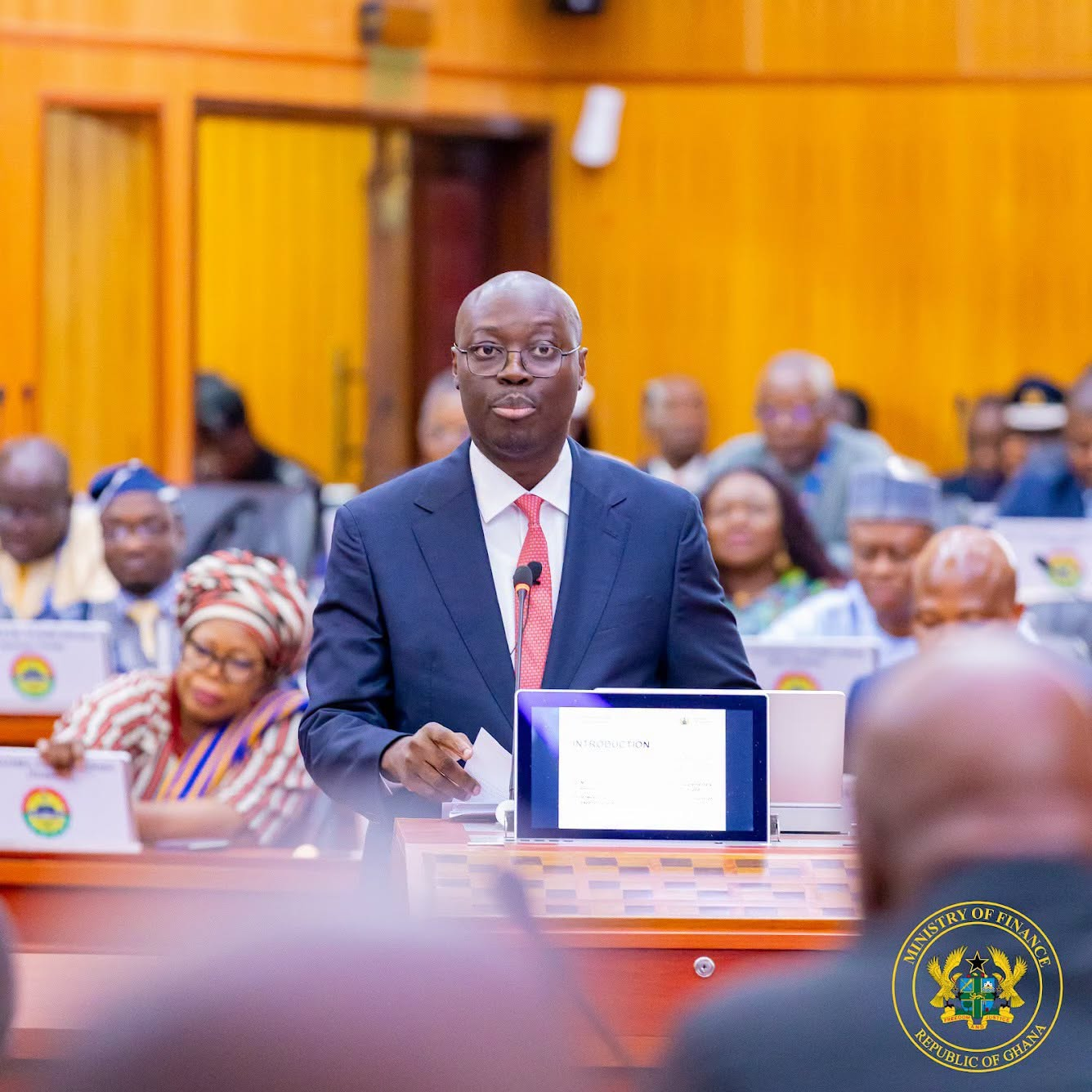
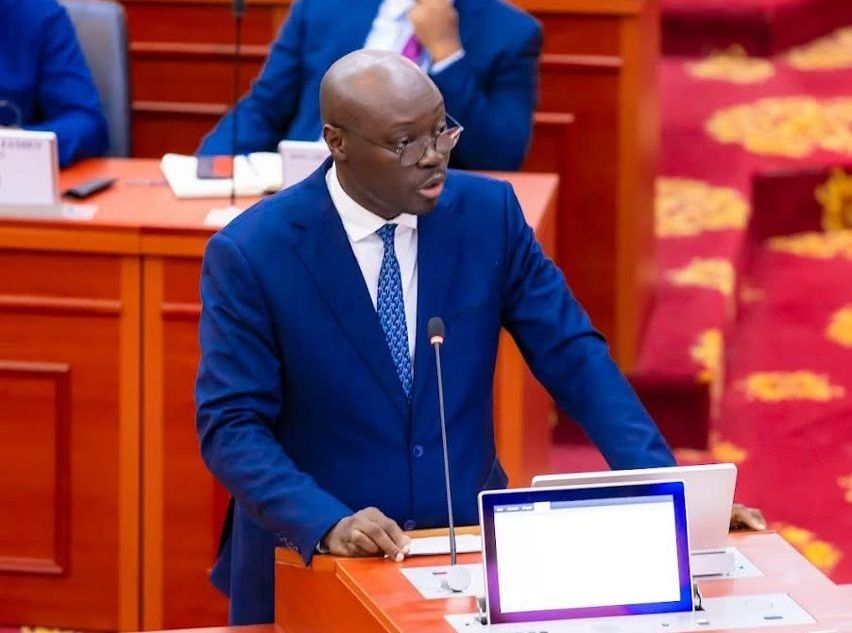
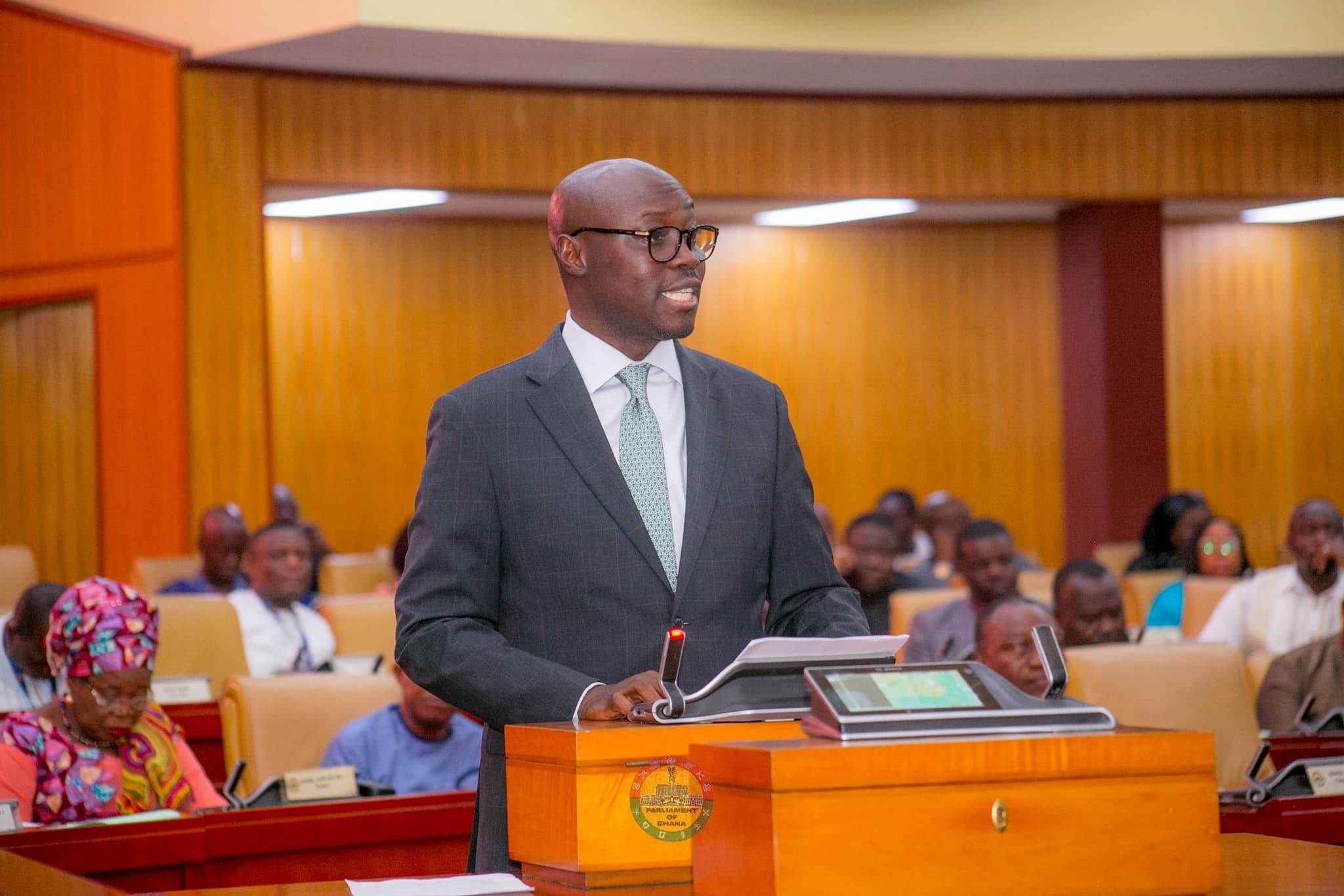
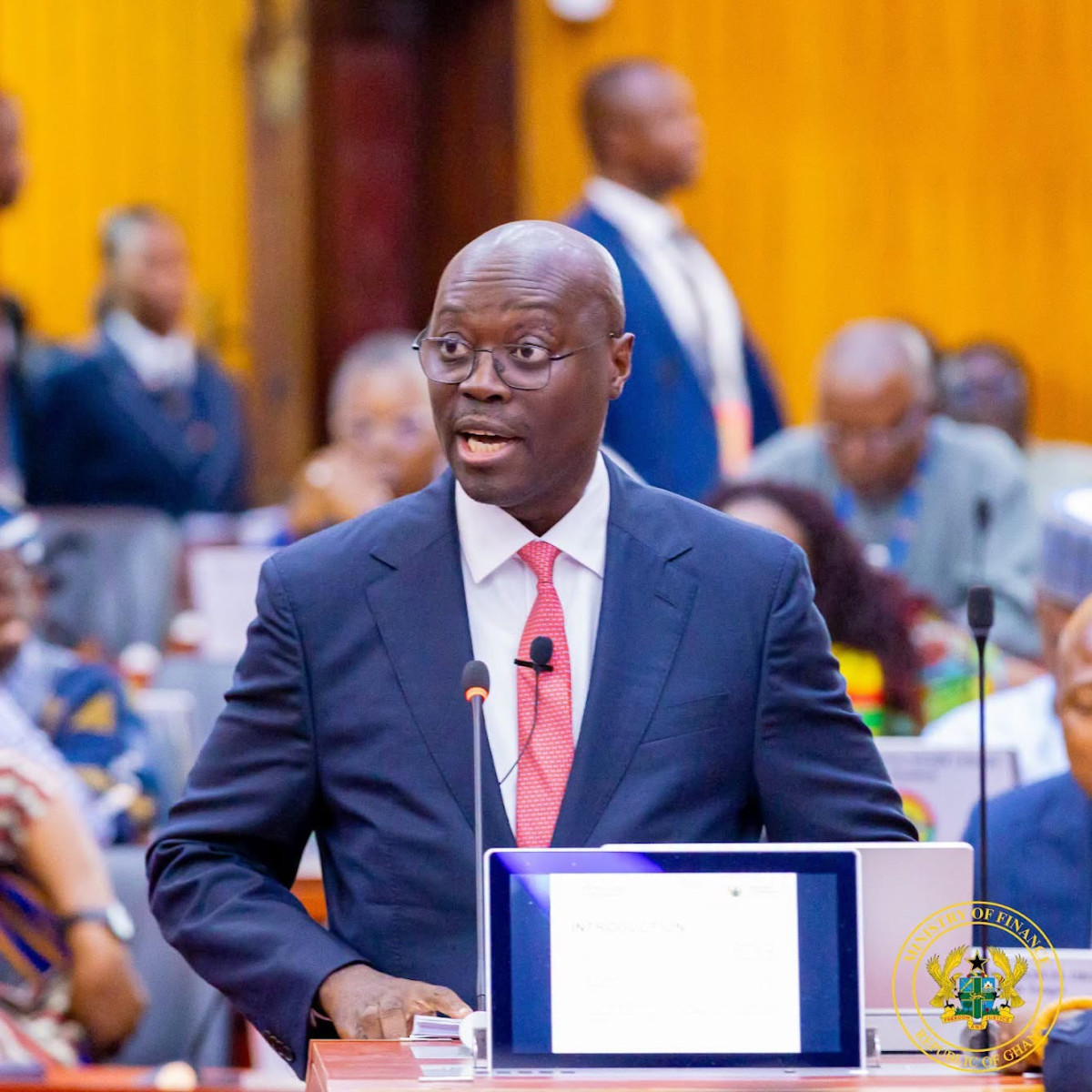
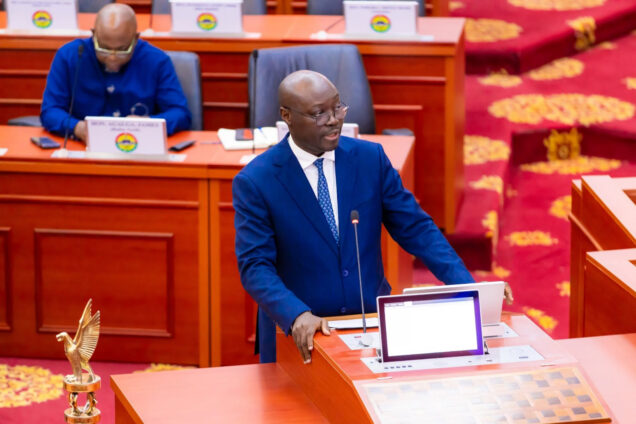
Based on Finance Minister Dr Cassiel Ato Forson’s presentation to Parliament, the allocation breaks down into four main pillars.
Ministry Operations and Payroll
The largest share covers recurring operational costs across the Ghana Education Service (GES), Ghana TVET Service and public universities. It pays the salaries and allowances of hundreds of thousands of teachers and administrative staff, alongside running costs including:
-
GH¢166 million for the Capitation Grant (used by basic schools for day-to-day administration)
-
GH¢227 million for teacher trainee allowances
-
GH¢169 million for BECE registration fees
-
GH¢537 million for the “No Fees Stress” policy covering first-year public tertiary students
Free Senior High School
This funds the ongoing implementation of fee-free secondary and TVET education nationwide, covering tuition, textbooks, utility bills and boarding/feeding subsidies for senior high school students.
GH¢292 million is earmarked to distribute free sanitary pads to schoolgirls — a provision that connects directly to school retention and attendance outcomes for adolescent girls.
Ghana Education Trust Fund — GH¢11.2 Billion
A dedicated GH¢11.2 billion is carved out for GETFund, up from GH¢9.9 billion in 2026.
Because the government uncapped GETFund statutory revenues, this money goes directly into funding capital projects, student scholarships, STEM resources and clearing arrears owed to school contractors.
Infrastructure and Ending Double-Track — GH¢1.37 Billion
Beyond general GETFund projects, GH¢1.37 billion is specifically earmarked to transform secondary education and eliminate the double-track system.

This funds the construction of new classroom blocks, dormitories and science labs, and the completion of abandoned E-blocks so all SHS students can attend school at the same time rather than in alternating shifts.
An additional GH¢50 million is dedicated to upgrading special schools for learners with disabilities.

What This Means Practically
For parents and students, it guarantees that core fee-relief programmes — Free SHS, BECE registration and first-year university fee waivers — remain funded without new tuition charges returning in 2027.
For schools and teachers, dedicating GH¢1.37 billion to ending double-track aims to relieve severe overcrowding in secondary schools and reduce teacher burnout caused by year-round academic calendars.
For the economy and budget, because wages and fixed social subsidies consume the bulk of the GH¢48.0 billion, actual capital expansion depends heavily on whether the Ministry of Finance releases the GH¢11.2 billion GETFund allocation on time rather than delaying disbursements.
The 2026 Comparison and the Execution Question
Because the 2026 fiscal year is still active as of November 2026, full-year audited actuals are not yet published. Available figures rely on the 2026 Mid-Year Budget Review and subsequent Treasury updates.
The pattern they reveal is instructive.
In 2026, the Ministry of Finance achieved a 94% mid-year disbursement rate on the “No-Fees-Stress” tertiary policy — GH¢505 million released out of GH¢537 million.
Conversely, statutory GETFund releases stood at GH¢4.2 billion, or 42.4% of its GH¢9.9 billion target, by mid-year — reflecting a pattern where cash releases for construction lag behind payroll and fee subsidies.
Free SHS releases reached GH¢1.8 billion out of GH¢4.2 billion, and Capitation Grants GH¢64.6 million out of GH¢157 million — both below 50% at the half-year mark.
A notable portion of 2026 disbursements also went toward clearing inherited debts, including GH¢17.59 million to settle 2023 Capitation Grant arrears.
The 2027 budget raises baseline allocations across GETFund (+GH¢1.3 billion) and double-track elimination (+GH¢270 million) to accelerate physical classroom completion. Whether that happens depends on a disbursement pattern that has historically favoured recurrent spending over capital.

Education think tanks will therefore watch whether the Treasury actually releases the expanded GH¢48.0 billion in 2027 — or leaves funds unspent at the Bank of Ghana.
Quick Facts
Education receives GH¢48.0 billion in Ghana’s 2027 Budget, the largest sectoral envelope at about 12.3% of GH¢389.2 billion in total projected expenditure — up from GH¢39.2 billion in 2026, a rise of GH¢14.7 billion (44.1%) over the GH¢33.3 billion Ministry of Education allocation.
The envelope covers ministry operations and payroll including GH¢166 million Capitation Grant, GH¢227 million teacher trainee allowances, GH¢169 million BECE registration and GH¢537 million No Fees Stress; Free SHS including GH¢292 million for free sanitary pads; GH¢11.2 billion for GETFund, up from GH¢9.9 billion, now uncapped; and GH¢1.37 billion to end double-track, plus GH¢50 million for special schools.
The 2026 mid-year record shows 94% disbursement on No-Fees-Stress (GH¢505 million of GH¢537 million) but only 42.4% on GETFund (GH¢4.2 billion of GH¢9.9 billion), with Free SHS at GH¢1.8 billion of GH¢4.2 billion and Capitation at GH¢64.6 million of GH¢157 million — and GH¢17.59 million used to clear 2023 Capitation arrears.
Source: Accra Street Journal
Last Updated on November 12, 2026 by Samuel Kwame Boadu
Disclaimer: Some content on Accra Street Journal may be aggregated, summarized, or edited from third-party sources for informational purposes. Images and media are used under fair use or royalty-free licenses. Accra Street Journal is a subsidiary of SamBoad Publishing Hub under SamBoad Business Group Ltd, registered in Ghana since 2014.
For concerns or inquiries, please visit our Privacy Policy or Contact Page.

Samuel Kwame Boadu is a Ghanaian media entrepreneur and storyteller with a passion for amplifying urban voices and uncovering everyday truths. He is the Editor-in-Chief and Founder of Accra Street Journal, a dynamic digital platform dedicated to capturing the pulse of Ghana’s capital—its people, culture, challenges, business, sports and innovations.
Use the following reference when citing or referencing this article.
Your feedback helps us improve our journalism.
Report an Error
Help us maintain accuracy. Let our editorial team know if you spot an issue in this article.
Report a problem with this article