








Ghana once again finds itself at a familiar crossroads.

Rising global gold prices have delivered a new wave of export revenue and fiscal breathing space for the country, reinforcing the nation’s reputation as one of the world’s historic gold producers. But while the current rally presents clear economic benefits, analysts are increasingly warning that the real story will not be written during the boom itself—it will be written after the boom ends.
A recent analysis by C-NERGY highlights the fundamental question confronting policymakers today: Will Ghana use the current gold windfall to transform its economy, or will it repeat the familiar cycle where commodity booms finance short-term spending but fail to build lasting resilience?
📢 GET A DETAILED ARTICLES + JOBS
Join ASJ's WhatsApp Channel and never miss a post or opportunity.
For a country whose relationship with gold stretches back more than two centuries, the stakes are not merely economic. They are structural.
Ghana’s Long History with Gold
Gold has been central to the economic identity of Ghana long before the modern state emerged.
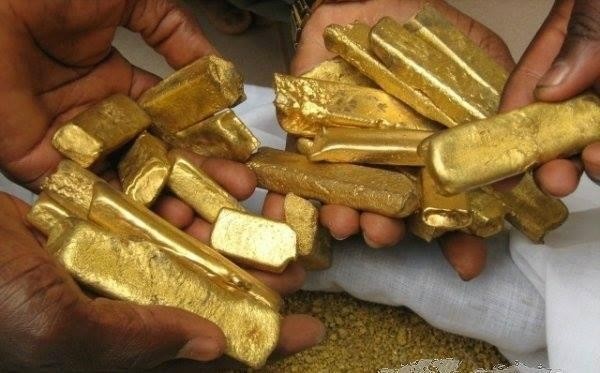
The country—once known globally as the Gold Coast—has remained one of the largest producers of the precious metal in Africa. Today, gold exports remain one of the most important pillars of Ghana’s foreign exchange earnings and government revenue.
Yet history shows that gold booms rarely translate automatically into sustainable development.
According to C-NERGY’s analysis, previous surges in gold prices often resulted in increased fiscal spending rather than investments capable of strengthening the country’s long-term economic foundations.
When commodity prices inevitably fell, the economy was left exposed.
The pattern reflects a broader phenomenon known in economic circles as the resource cycle dilemma, where nations rich in commodities experience alternating periods of prosperity and vulnerability depending on global price movements.
The Cyclical Nature of Commodity Markets
The current surge in gold prices is driven by several global factors: geopolitical uncertainty, inflation concerns, and investor demand for safe-haven assets.
While these conditions have pushed prices to historically strong levels, commodity markets rarely remain elevated indefinitely.
As analysts frequently remind policymakers, what rises quickly in global markets can also decline rapidly.
That reality lies at the heart of C-NERGY’s warning: Ghana’s real challenge is not managing the boom itself but preparing for the inevitable downturn that will eventually follow.
Turning Windfalls into Economic Buffers
One of the most important recommendations emerging from the analysis is the need for Ghana to build stronger financial buffers while prices remain high.
This means increasing foreign reserves and strengthening fiscal stability during good times rather than relying on commodity revenue to finance recurrent expenditure.
A stronger reserve position can provide a powerful stabilizing effect on the local currency, improve investor confidence and reduce vulnerability to external shocks.
In an economy where exchange rate volatility has periodically affected businesses and households, building such buffers could significantly enhance macroeconomic stability.
Moving Beyond Raw Gold Exports
Another key issue raised in the analysis is Ghana’s continued dependence on exporting raw or semi-processed gold.
Although mining generates substantial export revenue, the country captures only a fraction of the full value chain when precious metals are shipped abroad for refining and manufacturing.
Developing domestic refining capacity and expanding downstream industries could transform the economic impact of the sector.
Value-added processing would not only increase export earnings but also create skilled employment opportunities and stimulate industrial development.
In other words, Ghana’s future prosperity may depend not just on how much gold it produces, but on how much value it creates from that gold domestically.
Environmental Governance Remains Crucial
The discussion around gold wealth cannot be separated from the environmental challenges associated with mining.
Illegal and unregulated mining activities have caused widespread damage to rivers, forests and farmland across the country.
C-NERGY therefore stresses the importance of consistent enforcement of environmental regulations alongside economic reforms.
If the current boom encourages responsible mining practices and stronger oversight, Ghana could protect its natural resources while maintaining the long-term viability of the mining industry.
Failure to address environmental concerns, however, could undermine both ecological sustainability and investor confidence.
The Opportunity of a Rare Economic Window
Commodity cycles rarely present clear windows of opportunity—but when they do, the decisions taken during those periods can shape a nation’s economic future for decades.
The present gold rally may be one such moment.
If the proceeds are used to strengthen reserves, invest in industrial capacity, support productive sectors and enforce environmental standards, the boom could become a foundation for broader economic transformation.
If the opportunity is missed, Ghana risks repeating a cycle that has defined much of the commodity-driven history of resource-rich economies.
A Test of Economic Strategy
The broader lesson is that resource wealth alone does not determine economic success.
What ultimately matters is how governments manage that wealth.
Countries that convert commodity windfalls into infrastructure, industrial capacity and financial stability often emerge stronger when prices fall. Those that spend windfalls primarily on short-term consumption often struggle when the cycle turns.
For Ghana, the difference between these two outcomes may lie in the policy choices made today.
Gold prices will eventually decline—just as they always have.
The question now confronting policymakers is simple but profound: When that day arrives, will Ghana’s economy be stronger than it is today?
The answer will depend not on the boom itself, but on what the country builds while the boom lasts.
Source: Accra Street Journal
Last Updated on March 16, 2026 by Samuel Kwame Boadu
Disclaimer: Some content on Accra Street Journal may be aggregated, summarized, or edited from third-party sources for informational purposes. Images and media are used under fair use or royalty-free licenses. Accra Street Journal is a subsidiary of SamBoad Publishing Hub under SamBoad Business Group Ltd, registered in Ghana since 2014.
For concerns or inquiries, please visit our Privacy Policy or Contact Page.

Samuel Kwame Boadu is a Ghanaian media entrepreneur and storyteller with a passion for amplifying urban voices and uncovering everyday truths. He is the Editor-in-Chief and Founder of Accra Street Journal, a dynamic digital platform dedicated to capturing the pulse of Ghana’s capital—its people, culture, challenges, business, sports and innovations.