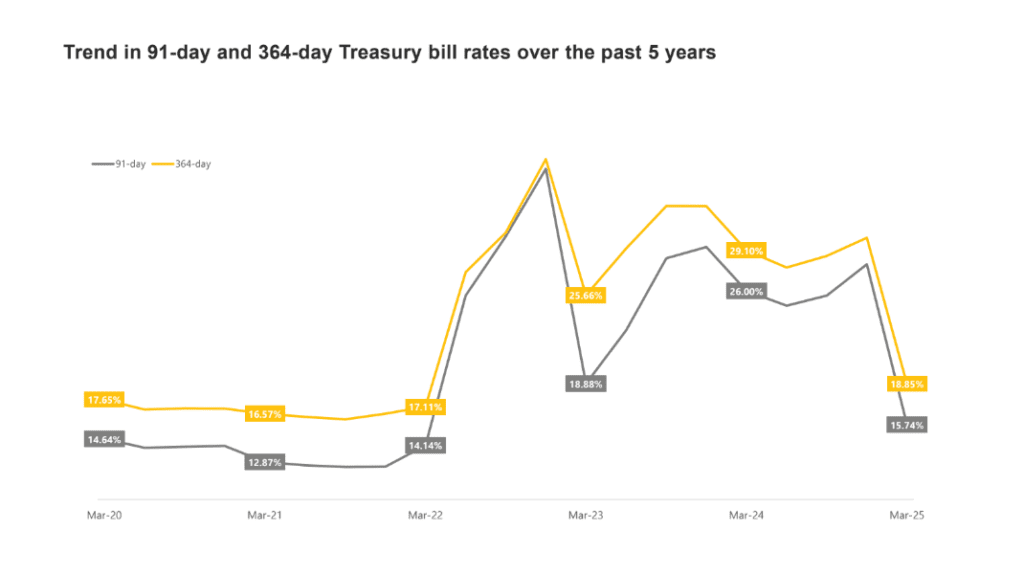
In an environment of tightening liquidity, cautious investor sentiment, and fluctuating government borrowing needs, Ghana’s Treasury bill market has become a focal point for both institutional and retail investors. After four straight weeks of rising yields, the question on the minds of many market watchers is simple: Where are T-bill rates headed next?
According to Mac Jordan Nartey, Senior Research Analyst at Laurus Africa, the answer is more nuanced than a simple rise or fall. His analysis suggests that this week may bring a temporary decline in Treasury bill rates, but the relief is likely to be short-lived. Once the government steps back into the market with heavier borrowing requirements, investors should expect yields to head north again.

This editorial by Accra Street Journal breaks down why T-bill rates may fall this week, the mechanics behind the expected rebound, and what this means for investors navigating Ghana’s evolving fixed-income landscape.
📢 GET A DETAILED ARTICLES + JOBS
Join ASJ's WhatsApp Channel and never miss a post or opportunity.

1. The Four-Week Climb: Why Yields Have Been Rising
Before examining why yields might drop, it is important to understand what pushed them upward in the first place. Treasury bill rates have been increasing over the past month due to:
a. Tight Liquidity in the Market
Commercial banks, pension funds, and other major buyers have been managing liquidity cautiously as they rebalance portfolio exposures. When markets are tight, investors demand higher returns to part with their cash, pushing yields upward.

b. Investor Desire for Higher Compensation
Periods of macroeconomic uncertainty—characterized by inflationary pressure and exchange rate volatility—naturally lead investors to seek higher compensation for risk, even when T-bills are considered among the safest assets.
c. Increased Government Borrowing
The government’s recent borrowing appetite has added upward pressure on yields. When borrowing levels rise, the government must make T-bills more attractive by offering higher rates to secure bids.
These three converging forces have fueled a month-long rise in yields across the 91-day, 182-day, and 364-day bills.
2. Why Yields May Dip This Week: Two Key Catalysts
Mac Jordan Nartey predicts this week will break the upward trend and deliver a rare moment of rate decline. His forecast is grounded in two pivotal developments.
a. A Possible Policy Rate Cut from the Bank of Ghana
The Monetary Policy Committee (MPC) is widely expected to trim the policy rate. If this happens, it will immediately influence money market behavior.
-
Makes borrowing cheaper
-
Eases liquidity constraints
-
Reduces short-term interest rate expectations
-
Encourages lower yields across government securities
Investors typically react quickly to policy rate decisions, and the mere expectation of a cut often shifts yield patterns even before the announcement.
b. A Sharp Drop in Government Borrowing Requirements
Perhaps even more significant is the dramatic reduction in the government’s funding needs. This week, the state is targeting GH¢2.86 billion, a 55% decrease compared to recent auctions.
When the government’s funding appetite drops:

-
Competition for investor funds decreases
-
Demand-side pressure on yields eases
-
Investors adjust their expectations downward
Nartey notes that this combination—a lighter borrowing slate and a dovish monetary policy outlook—makes a dip in T-bill yields almost inevitable.
3. Why the Relief Won’t Last: Yields Expected to Rise Again Soon
Although this week may offer momentary relief in rates, Nartey warns that investors should prepare for yields to rise again in the coming weeks.
a. Government Funding Needs Will Return to Normal Levels
Ghana’s borrowing patterns typically intensify toward the end of the month and at the end of each quarter. When these periods arrive:
-
Borrowing volumes spike
-
The government must compete more aggressively for investor funds
-
Yields climb again to attract participation
This cyclical pattern is deeply entrenched in the structure of Ghana’s fiscal calendar.
b. Liquidity Conditions Are Still Tight
Even with a potential policy rate cut, liquidity in the banking system remains relatively constrained. Lending priorities, reserve requirements, and uncertain macroeconomic conditions will continue shaping investor behavior and pushing yields upward in subsequent auctions.
c. Market Sentiment Is Still Cautious
Investor appetite for fixed-income securities has been increasing, but it is driven largely by concerns about inflation, currency pressures, and global interest rate movements. These macro risks will continue to influence yield direction.
d. Historical Patterns Indicate Temporary Dips
In previous cycles, when government demand dipped sharply, yields tended to fall temporarily—only to rebound once borrowing levels normalized. Analysts expect the same pattern to repeat.
4. What This Means for Investors
Both individual and institutional investors should interpret this forecast with a balanced strategy.
Short-Term Opportunity
The expected dip may create a narrow window for investors to secure T-bills at slightly lower rates. Savers and pension fund managers might view this as a chance to diversify maturities or rebalance risk.
Medium-Term Caution
Since yields are forecasted to rise again soon, investors seeking higher returns may prefer to stagger purchases or target future auctions for potentially improved returns.
Long-Term Consistency Matters
For fixed-income investors—notably pension funds, insurance firms, and asset managers—the broader strategy remains endurance and consistency. T-bills continue to offer:

-
Low default risk
-
Predictable returns
-
Strong liquidity
-
A hedge against uncertainty
But yield movements should guide timing, allocation, and reinvestment choices.
5. The Analyst’s Final Word
Nartey summarized the forecast clearly:
“We’re expecting a policy rate cut from the MPC, and government demand for funds this week has declined significantly—by about 55%. This gives us reason to believe yields could dip this week. But once demands pick up again, we’ll likely see yields rising in subsequent auctions.”
His assessment reflects a broader reality: Ghana’s T-bill market is entering a phase where volatility, rather than stability, will define rate movements. This places greater responsibility on investors to monitor weekly auction trends and macroeconomic signals closely.
Ghana’s Treasury bill market is poised for a delicate balance between short-term relief and medium-term upward pressure. A potential policy rate cut and reduced government borrowing will likely bring a temporary decline in yields—but this is not a structural shift. As borrowing ramps up in future weeks, rates will almost certainly rise again.
For investors, this means one thing: strategy matters more than ever. Understanding where yields are headed—both this week and beyond—will determine how well portfolios perform in Ghana’s evolving economic climate.
FAQs
1. Why are Treasury bill rates expected to fall this week?
A possible policy rate cut and a sharp decline in government borrowing needs are expected to push yields downward.
2. Will the lower rates last?
No. Yields are projected to rise again once government funding pressures return in subsequent weeks.
3. What caused T-bill rates to rise over the past month?
Tight liquidity, higher investor return expectations, and elevated government borrowing levels.
4. Is this a good week to invest in T-bills?
It may offer an opportunity to secure slightly lower rates, depending on investor strategy.
5. What should investors watch out for next?
Upcoming government borrowing announcements, MPC policy decisions, and weekly auction results.
Source: Accra Street Journal
Last Updated on November 26, 2025 by Samuel Kwame Boadu
Disclaimer: Some content on Accra Street Journal may be aggregated, summarized, or edited from third-party sources for informational purposes. Images and media are used under fair use or royalty-free licenses. Accra Street Journal is a subsidiary of SamBoad Publishing Hub under SamBoad Business Group Ltd, registered in Ghana since 2014.
For concerns or inquiries, please visit our Privacy Policy or Contact Page.

Samuel Kwame Boadu is a Ghanaian media entrepreneur and storyteller with a passion for amplifying urban voices and uncovering everyday truths. He is the Editor-in-Chief and Founder of Accra Street Journal, a dynamic digital platform dedicated to capturing the pulse of Ghana’s capital—its people, culture, challenges, business, sports and innovations.