



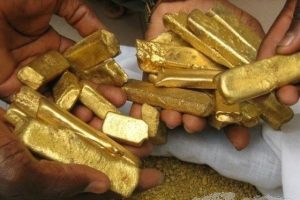


From Accra to Beijing to Lagos, central banks are accelerating their purchases of gold, turning the age-old asset into a modern shield against mounting economic and geopolitical risks.
Financial analyst Dr. Richmond Atuahene says the phenomenon is not a passing trend but a structural shift reshaping the global financial system. Inflation, geopolitical instability, declining confidence in the US dollar, and the need for diversification are among the key drivers of what he calls the “mad rush for gold.”

“Central banks are actively seeking assets that preserve purchasing power. Gold has historically proven its mettle as an effective inflation hedge, outperforming many asset classes during periods of rising prices,” Dr. Atuahene noted in a paper shared with Accra Street Journal.
📢 GET A DETAILED ARTICLES + JOBS
Join ASJ's WhatsApp Channel and never miss a post or opportunity.

Gold as an Inflation Hedge
With inflation proving stubborn across advanced and emerging economies, gold remains one of the few assets trusted to maintain value when currencies weaken. Unlike bonds or equities, gold has a centuries-long record of protecting wealth in turbulent times.
Safe Haven in an Unstable World
Wars, trade conflicts, and sanctions have injected volatility into global financial markets. From the Russia-Ukraine conflict to escalating trade tensions between Washington and its rivals, geopolitical uncertainty is driving central banks to gold.
For policymakers, gold represents a neutral, globally recognized asset—a safe haven immune to the political risks tied to any single nation.
De-Dollarization and Diversification
While the US dollar remains the dominant global reserve currency, more countries are seeking to reduce overdependence on it. Sanctions and political risks have accelerated the trend of de-dollarization, with gold offering a tangible alternative.
“In the current climate, allocating a greater share of reserves to gold allows central banks to diversify beyond traditional foreign exchange holdings like government bonds,” Dr. Atuahene explained.
Securing Supply Chains
Another factor behind the rush is supply chain resilience. By sourcing directly from domestic initiatives such as Ghana’s GoldBoD (Gold Board) program, central banks can reduce exposure to vulnerable international transport routes and sanctions-related risks.
Buying locally also supports national mining sectors, strengthening the link between natural resource wealth and financial stability.
A Regional Trend
Ghana has aggressively boosted its gold reserves under its Domestic Gold Purchase Programme, ensuring more of its mineral wealth remains within national control. Nigeria, Namibia, and Rwanda are pursuing similar strategies, while Zimbabwe has relaunched a gold-backed currency.
This points to a wider African and global recognition of gold as not just an economic tool but also a symbol of financial sovereignty.
The Bigger Picture From Accra Street Journal
The global gold rush reflects a deeper erosion of trust in the old financial order. Inflation chips away at paper money, currencies are increasingly weaponized, and fragile supply chains threaten economic security.
In this environment, central banks are rediscovering an enduring truth: gold does not rust, default, or devalue overnight.
Source: Accra Street Journal
Last Updated on September 24, 2025 by Samuel Kwame Boadu
Disclaimer: Some content on Accra Street Journal may be aggregated, summarized, or edited from third-party sources for informational purposes. Images and media are used under fair use or royalty-free licenses. Accra Street Journal is a subsidiary of SamBoad Publishing Hub under SamBoad Business Group Ltd, registered in Ghana since 2014.
For concerns or inquiries, please visit our Privacy Policy or Contact Page.

Samuel Kwame Boadu is a Ghanaian media entrepreneur and storyteller with a passion for amplifying urban voices and uncovering everyday truths. He is the Editor-in-Chief and Founder of Accra Street Journal, a dynamic digital platform dedicated to capturing the pulse of Ghana’s capital—its people, culture, challenges, business, sports and innovations.