







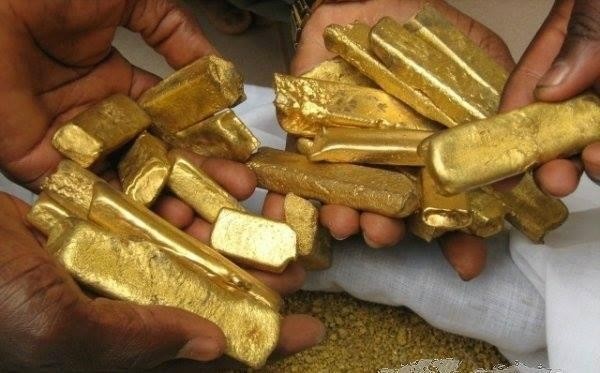

Ghana is Africa’s largest gold producer, yet for decades ordinary Ghanaians have watched the country’s mineral wealth leave its shores without ever holding a piece of it. That is changing. From the Bank of Ghana’s Gold Coin to new digital platforms and a planned commodity exchange listing, there are now more ways than ever for Ghanaians to own gold. Here is how to get started.

Introduction: The Gold Ownership Gap
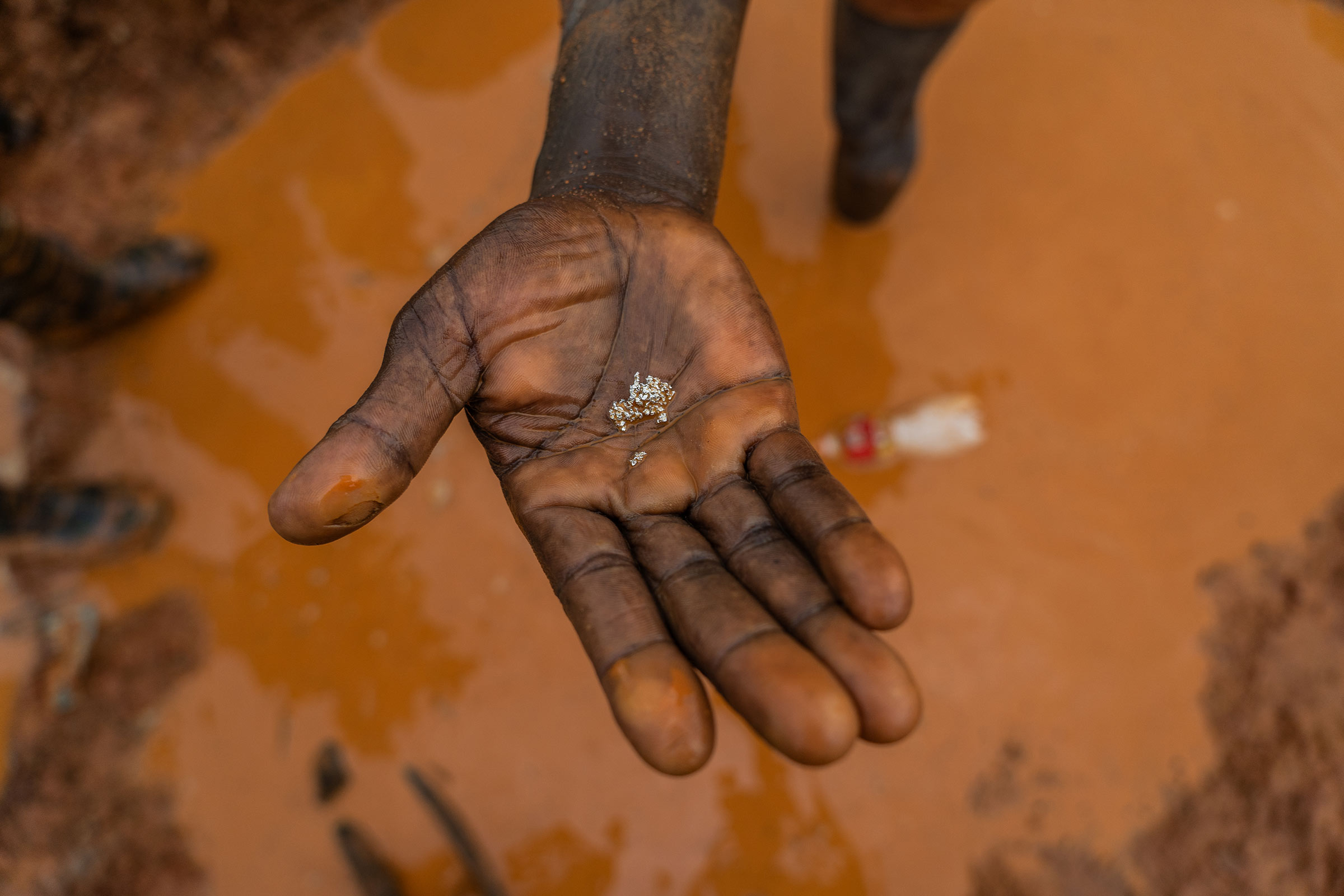
Ghana earned approximately US$11.6 billion from gold exports in 2024, accounting for about 57% of total export revenue . Yet very few Ghanaians actually own gold as an investment. The wealth beneath the soil has enriched others far more than it has empowered citizens .
This is beginning to shift. The Bank of Ghana introduced the Ghana Gold Coin in 2024, the Ghana Gold Board (GoldBod) is working to formalize domestic gold trading, and plans are underway to list gold on the Ghana Commodity Exchange. For the first time, ordinary Ghanaians have real pathways to hold gold.
📢 GET A DETAILED ARTICLES + JOBS
Join ASJ's WhatsApp Channel and never miss a post or opportunity.
Option 1: The Ghana Gold Coin (GGC)
What It Is
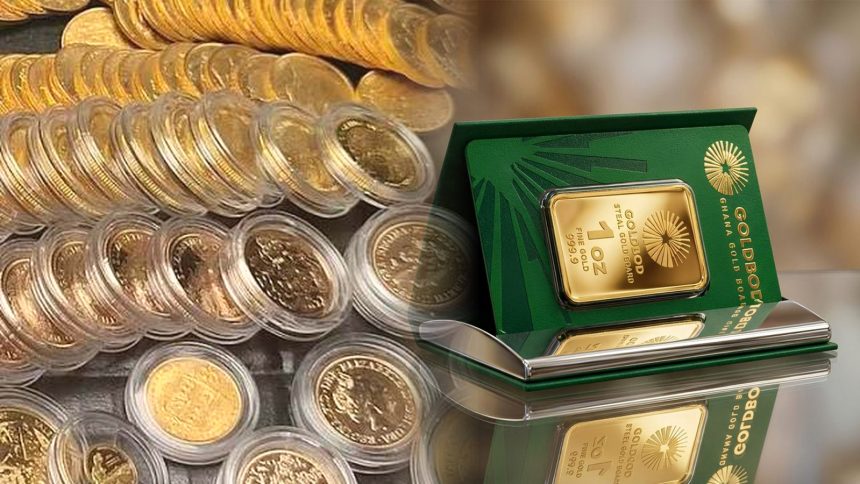
The Ghana Gold Coin is an official investment-grade gold product issued and guaranteed by the Bank of Ghana. It is manufactured from responsibly mined Ghanaian gold, refined to 99.99% purity .
The coin is available in three sizes :
-
1 oz (34mm)
-
1/2 oz (27mm)
-
1/4 oz (22mm)
Each coin features the Ghana Coat of Arms on the front and the Independence Arch on the back. It comes in a wooden storage box with a transparent holder and a certificate of ownership .
How to Buy
You cannot buy the GGC directly from the Bank of Ghana. The process runs through commercial banks :
-
Visit your commercial bank and place an order specifying the weight and quantity
-
Ensure you have sufficient funds in your account to cover the purchase
-
Pay in Ghana Cedis through your bank account or mobile money—cash is not accepted
-
Complete identity verification (KYC) and prove the source of your funds
-
The bank places a buy order with the Bank of Ghana on your behalf
How the Price Is Determined
The GGC price is not fixed. It is based on the previous day’s London Bullion Marketing Association (LBMA) afternoon price, converted to cedis using the previous day’s Bloomberg rate. The Bank of Ghana publishes the official price on its website daily by 9:00 am .
How to Resell
To sell your coin, you must :
-
Check the current price on the Bank of Ghana website
-
Place a sale order with your bank
-
Have the coin authenticated at the bank or a Bank of Ghana-authorised institution
-
Pay any transaction fee charged by the commercial bank
The Bank of Ghana guarantees the GGC. If a commercial bank is unable to buy it back, the Bank of Ghana stands ready to buy it back, though some discounts may apply .
Verifying Authenticity
To protect against counterfeits, the GGC includes security features. You can verify your coin through :
-
Physical checks – dimensions, weight, and design details
-
Magnet test – pure gold is not magnetic; any attraction indicates a counterfeit
-
Veriscan technology – download the “VERISCAN – Bullion Security” app to scan and authenticate
Option 2: Goldbod Jewellery Tablets
What They Are
Goldbod Jewellery Ltd, a state-backed entity, has launched Gold Board Jewellery Tablets—investment-grade gold available in 1g, 5g, 10g, and 31g sizes .
The tablets are designed for both first-time buyers and experienced investors seeking flexible gold ownership. Every piece is 100% crafted by Ghanaian artisans .
How to Buy
Goldbod launched an e-commerce platform at jewelry.goldboard.gov.gh, described as Ghana’s first 24-hour digital gold showroom .
Key features:
-
Real-time pricing
-
Secure mobile money and card payments
-
Nationwide pickup at Goldbod showrooms
-
International customers can browse and purchase from anywhere
The initiative supports Ghana’s National Value Addition Agenda, helping retain foreign exchange and create jobs. As Managing Director Gertrude Emefa Donkor put it: “The gold is bought from Ghanaian miners, crafted by Ghanaian hands and the revenue stays here” .
Option 3: Gold Trading on the Ghana Commodity Exchange (Coming)
What Is Being Planned
GoldBod is partnering with the Ghana Commodity Exchange (GCX) to introduce gold trading on the exchange’s platform . This would give both institutional and retail investors direct access to gold through a regulated market.
The collaboration is exploring innovative models including tokenisation and Exchange-Traded Funds (ETFs) . GoldBod is also engaging the Securities and Exchange Commission (SEC) to ensure regulatory compliance and investor protection .
What This Means for Investors
If successful, this would create a structured, transparent market for gold investment in Ghana. Instead of buying physical coins or tablets, investors could potentially buy gold-backed securities through a regulated exchange—similar to how stocks are traded .
Analysts note that a successful rollout could position Ghana as one of Africa’s leaders in structured gold investment, diversifying the economy and creating wealth opportunities for everyday citizens .
Option 4: Gold Mining Stocks on the Ghana Stock Exchange
The Reality
The mining sector’s presence on the Ghana Stock Exchange is minimal. Between January and May 2026, mining accounted for only GH¢2.91 million, or 0.09% of total value traded .
Only four mining-linked securities are actively listed :
-
AngloGold Ashanti – primary listing on NYSE/JSE; GSE listing is secondary
-
AngloGold Ashanti Depository Shares (AGADS)
-
Asante Gold Corporation – recorded no share-price movement despite strong gold prices
-
Atlantic Lithium – gained 38.2% year-to-date but is lithium, not gold
The challenge: AngloGold’s primary price discovery happens on the New York and Johannesburg exchanges. Trading on the GSE is residual, limiting local investors’ ability to participate meaningfully .
What This Means
Buying gold mining stocks on the GSE is possible but offers limited exposure to gold price movements. The stocks often trade without reflecting the strong global gold market.
Option 5: Buying Physical Gold from Licensed Dealers
The Legal Framework
All gold trading in Ghana is regulated by the Ghana Gold Board (GoldBod), established under the Ghana Gold Board Act, 2025 (Act 1140) . GoldBod licenses aggregators, buyers, refiners, smelters, manufacturers, storage providers, and transporters .
Foreign nationals were required to exit the local gold trading market by April 30, 2025. They can now only purchase gold directly from GoldBod .
How to Verify a Licensed Dealer
Before buying gold from any dealer, confirm they can provide :
-
Valid business registration documents
-
Gold trading or export authorization
-
Gold assay certificates from recognized laboratories
-
Certificate of origin and proof of legal sourcing
-
Commercial invoice and sales agreement
-
Secure payment and shipping arrangements
Warning Signs of Fraud
Avoid :
-
Sellers offering gold at prices far below the international market
-
Informal brokers and hotel meetings
-
Requests to send money to personal accounts
-
Large advance payments without legal safeguards
Why Gold Matters for Ghanaian Investors
Protection Against Currency Depreciation
The Ghanaian cedi has lost significant value over the past decade. Gold prices have steadily climbed. Holding gold provides a hedge against inflation and currency weakness .
A Universal Store of Wealth
An ounce of gold retains its worth whether you are in Accra, Dubai, or London. It is a borderless form of money .
Portfolio Diversification
For professionals and investors, gold serves as a stabilizing asset that balances riskier holdings such as stocks, crypto, or real estate.
Wealth Preservation Across Generations
Unlike cash savings that erode over time, gold maintains and often appreciates in value. It is an ideal medium for transferring wealth to future generations .
Quick Facts
| Topic | Details |
|---|---|
| Ghana Gold Production (2024) | Approximately 130 tonnes |
| Gold Export Earnings (2024) | US$11.6 billion (57% of total export revenue) |
| Ghana Gold Coin Purity | 99.99% |
| GGC Sizes | 1 oz, 1/2 oz, 1/4 oz |
| GGC Purchase Channel | Commercial banks only |
| Goldbod Jewellery Tablets | 1g, 5g, 10g, 31g |
| Goldbod E-commerce | jewelry.goldboard.gov.gh |
| GCX Gold Trading | In development with SEC engagement |
| Mining Sector GSE Share | 0.09% of total value traded |
| GoldBod Act | Act 1140 of 2025 |
Frequently Asked Questions
1. How can I buy the Ghana Gold Coin?
You cannot buy directly from the Bank of Ghana. You must place an order at a commercial bank, pay in Ghana Cedis through your bank account or mobile money, and complete identity verification. The bank then places a buy order with the Bank of Ghana on your behalf .
2. What sizes is the Ghana Gold Coin available in?
The GGC comes in three sizes: 1 oz, 1/2 oz, and 1/4 oz. Each coin is refined to 99.99% purity and comes with a certificate of ownership .
3. How is the Ghana Gold Coin priced?
The price is based on the previous day’s London Bullion Marketing Association afternoon price, converted to cedis using the previous day’s Bloomberg rate. The Bank of Ghana publishes the official price daily by 9:00 am .
4. Can I sell my Ghana Gold Coin back?
Yes. You can place a sale order with your bank. The coin must be authenticated before the sale is finalized. The Bank of Ghana guarantees the GGC and stands ready to buy it back if a commercial bank is unable .
5. What are Goldbod Jewellery Tablets?
They are investment-grade gold tablets available in 1g, 5g, 10g, and 31g sizes, crafted by Ghanaian artisans. They can be purchased through the Goldbod e-commerce platform at jewelry.goldboard.gov.gh .
6. Can I buy gold on the Ghana Commodity Exchange?
Not yet. GoldBod and GCX are in advanced discussions to introduce gold trading on the exchange, including possible tokenisation and ETFs. GoldBod is engaging the SEC for regulatory compliance .
7. Are there gold mining stocks on the Ghana Stock Exchange?
Only four mining-linked securities are actively listed: AngloGold Ashanti, AGADS, Asante Gold, and Atlantic Lithium. Mining accounts for just 0.09% of total value traded, and local price discovery is limited because AngloGold’s primary listing is on foreign exchanges .
8. How do I verify a licensed gold dealer in Ghana?
Ask for valid business registration documents, gold trading or export authorization, assay certificates from recognized laboratories, certificate of origin, and proof of legal sourcing. GoldBod licenses all legitimate dealers .
9. Why should Ghanaians invest in gold?
Gold protects against inflation and currency depreciation, serves as a universal store of wealth, diversifies portfolios, and preserves wealth across generations. The cedi has lost significant value over the past decade while gold prices have climbed .
10. Can foreign nationals buy gold in Ghana?
Foreign nationals were required to exit the local gold trading market by April 30, 2025. They can now only purchase gold directly from GoldBod .
11. What is GoldBod’s role in gold trading?
GoldBod regulates and organizes gold trading in Ghana, particularly in the artisanal and small-scale mining sector. It licenses aggregators, buyers, refiners, and other service providers to ensure gold entering the formal market is properly verified and documented .
12. Is gold a good investment in Ghana right now?
Gold prices have reached record highs, supported by geopolitical uncertainty and central bank purchases. For Ghanaians seeking a hedge against cedi depreciation and inflation, gold offers a tangible store of value. However, like all investments, it carries risk and should be part of a diversified portfolio
Source: Accra Street Journal
Last Updated on September 17, 2026 by Samuel Kwame Boadu
Disclaimer: Some content on Accra Street Journal may be aggregated, summarized, or edited from third-party sources for informational purposes. Images and media are used under fair use or royalty-free licenses. Accra Street Journal is a subsidiary of SamBoad Publishing Hub under SamBoad Business Group Ltd, registered in Ghana since 2014.
For concerns or inquiries, please visit our Privacy Policy or Contact Page.

Samuel Kwame Boadu is a Ghanaian media entrepreneur and storyteller with a passion for amplifying urban voices and uncovering everyday truths. He is the Editor-in-Chief and Founder of Accra Street Journal, a dynamic digital platform dedicated to capturing the pulse of Ghana’s capital—its people, culture, challenges, business, sports and innovations.