





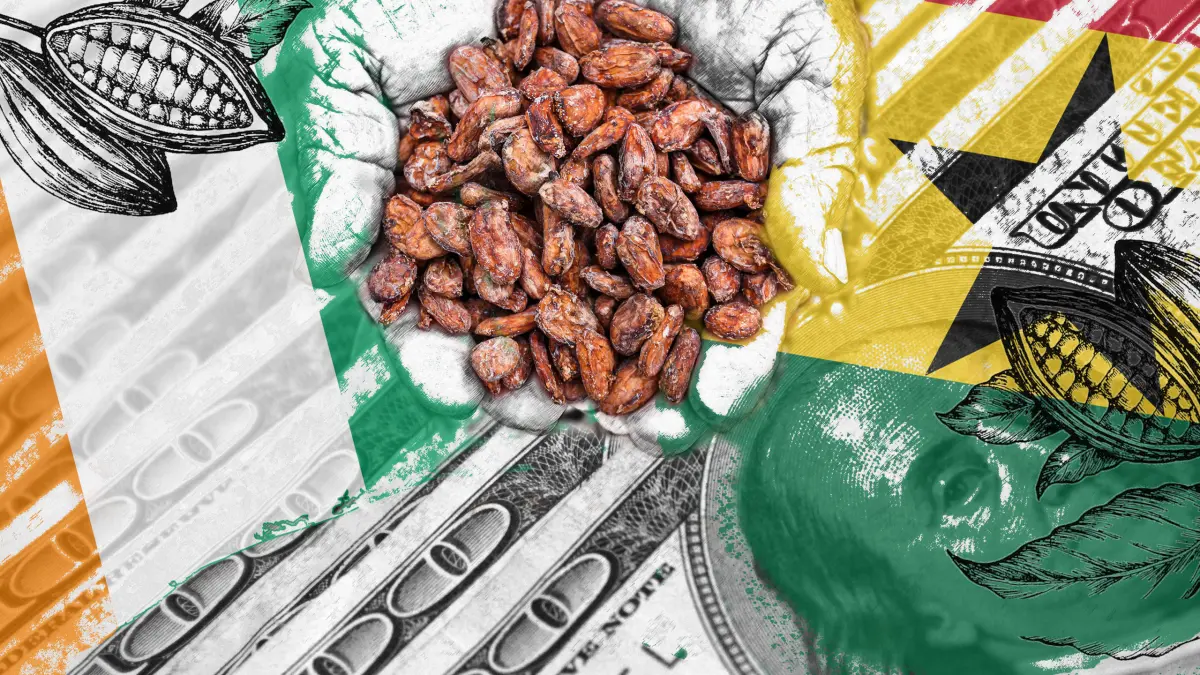

Cocoa is Ghana’s second-largest export earner after gold, contributing about 12% of total export revenue in 2025 . When global cocoa prices move, the effects ripple through the Ghana Stock Exchange, government finances, and the broader economy. For investors, understanding this connection is essential—because cocoa price movements carry information that can shape equity returns, volatility, and risk across the market.

The Scale: Why Cocoa Matters to Ghana’s Economy
Cocoa is not a small sector. In 2025, gold, crude oil, and cocoa together accounted for about 88% of Ghana’s total export earnings, with cocoa beans and products contributing 12% . Cocoa paste alone generated $789.3 million in export revenue in 2025, making it Ghana’s single largest export earner in the processed category .
The sector supports hundreds of thousands of farming households and remains a critical source of foreign exchange. When cocoa prices fall, the effects are felt not just by farmers but by the entire economy—and by investors who hold Ghanaian assets.
📢 GET A DETAILED ARTICLES + JOBS
Join ASJ's WhatsApp Channel and never miss a post or opportunity.
How Cocoa Prices Affect the Ghana Stock Exchange
This is where the story gets interesting for investors. Academic research published in the Journal of Risk and Financial Management in 2026 examined how global commodity price movements—including cocoa—affect Ghanaian equity returns .
The Key Finding: Cocoa Exposure Is Negative
The study found that cocoa price exposure is negatively associated with returns on both the Ghana Stock Exchange Composite Index (GSECI) and the Financial Sector Index (GSEFSI) .
What this means in plain language: When global cocoa prices rise, Ghanaian equity returns tend to fall. When cocoa prices fall, equity returns tend to rise.
This is counterintuitive at first glance. One might expect higher cocoa prices to boost the economy and lift stocks. But the research suggests that cocoa market information is reflected broadly across Ghanaian equities in a way that creates an inverse relationship.
Why this might happen: The study does not offer a definitive explanation, but several factors could be at play. Higher cocoa prices increase costs for domestic processors and chocolate manufacturers. They can also strengthen the cedi, making exports less competitive in other sectors. And the volatility that accompanies cocoa price spikes can create uncertainty that weighs on investor sentiment .
Cocoa Volatility Spills Over to Financial Stocks
The research also found that volatility spillovers from cocoa affect the financial sector index . This means that when cocoa prices become more volatile, the stocks of Ghanaian banks and financial institutions experience greater volatility.
For investors holding bank stocks, this is important. The financial sector is not insulated from cocoa market turbulence. The study notes that “commodity volatility transmission is not uniformly volatility-amplifying and is specific to the financial sector” .
The 2026 Cocoa Price Crash: What Happened
To understand the impact on investors, it helps to understand what happened in 2026.
The Price Collapse
Global cocoa prices fell sharply during the 2025/26 season. The average price dropped from $7,200 per tonne** to about **$4,100 per tonne . This was driven by several factors:
Higher Ghanaian Output: Ghana’s cocoa board reported 750,000 MT harvested for the 2025/26 season, up 25.6% from 597,000 MT in the previous season . Increased supply pushed prices lower.
Weaker Global Demand: Demand from chocolate makers softened, and global buyers slowed purchases of Ghanaian beans .
Competitiveness Concerns: Ghana’s farmgate price, set at 58,000 cedis per tonne, became “uncompetitive and very expensive” relative to the falling world market price, leaving beans unsold and farmers unpaid .
The Policy Response
In February 2026, the government cut the farmgate price from GH¢3,625 per bag to GH¢2,587 per bag—a reduction of GH¢1,038 per bag . The Finance Minister explained that the adjustment was necessary to reflect “current international price realities” and to ensure “the injection of immediate liquidity for expedited payment of farmers” .
The government also introduced a new financing model based on domestic cocoa bonds, aiming to reduce reliance on external borrowing and tie repayments to sales proceeds within the same crop year .
Why This Matters for Investors
1. Cocoa Is a Macroeconomic Signal
Cocoa prices are not just a sector-specific concern. They feed into Ghana’s foreign exchange earnings, fiscal revenues, and sovereign risk perceptions . When cocoa earnings fall, the government has less foreign exchange to stabilise the cedi, which can affect inflation, interest rates, and ultimately equity valuations.
2. COCOBOD’s Financial Health Affects the Bond Market
The Ghana Cocoa Board (COCOBOD) is a major issuer of debt. It used cocoa bills to finance annual bean purchases for over three decades before the 2023 Domestic Debt Exchange Programme (DDEP) restructured those obligations .
COCOBOD has been working to stabilise its finances. In 2026, it settled GH¢2.3 billion to DDEP bondholders and GH¢162 million to non-DDEP Cocoa Bill holders . It also plans to float 270-day commercial bonds to finance cocoa purchases for the next five years .
For investors holding COCOBOD-related debt or Ghanaian sovereign bonds, the health of the cocoa sector directly affects repayment capacity.
3. The Processing Push Creates New Opportunities
Ghana is pushing to process at least 50% of its cocoa locally by the 2026/27 season . This is a significant shift from the historical model of exporting raw beans.
The government has directed that the remainder of the 2025/26 crop be allocated to domestic processors, and it plans to revive state-owned processing company CPC to support the goal . The Cocoa Marketing Company (CMC) has secured offtake commitments from buyers in the UAE and Saudi Arabia for semi-finished products including cocoa liquor, butter, cake, and powder .
For investors, this creates opportunities in:
-
Local processing companies and their suppliers
-
Logistics and infrastructure supporting the value chain
-
Export-oriented businesses targeting Gulf and other new markets
4. Traceability and Sustainability Are Becoming Investment Criteria
Global buyers are increasingly demanding traceability, compliance, and sustainability . Ghana has made progress in farm mapping and traceability, giving it a competitive advantage as markets tighten due diligence requirements.
For investors, this reduces reputational risk and improves Ghana’s attractiveness as a responsible sourcing destination .
The Risks Investors Must Weigh
Price volatility: Cocoa prices are highly volatile, driven by weather, disease, supply shocks, and demand cycles. The 2026 crash from $7,200 to $4,100 per tonne shows how quickly conditions can change .
Production uncertainty: COCOBOD projects Ghana’s 2026/27 production could fall to 450,000–550,000 MT from 750,000 MT, due to swollen shoot disease, aging farms, and El Niño weather patterns .
Farmer payment arrears: Payment delays have left thousands of farmers without money for basic needs, and cooperatives report arrears extending up to six months . This creates social and political risk.
Illegal mining encroachment: Ghana lost 19,000 hectares of cocoa farmland to illegal mining in 2021, illustrating the scale of land diversion when cocoa profitability falls below competing activities .
What This Means for You as an Investor
If you hold Ghanaian equities, particularly in the financial sector, cocoa price movements affect your portfolio. The research shows that cocoa exposure is negative for both the broad market and financial stocks, and cocoa volatility spills over into financial sector volatility .
If you hold Ghanaian bonds, COCOBOD’s fiscal health and the government’s ability to manage cocoa sector finances matter. The restructuring of cocoa bills under the DDEP and the ongoing settlement of obligations are relevant to your risk assessment .
If you are looking for opportunities, the push toward local processing, new export markets in the Gulf, and the formalisation of the cocoa value chain create potential entry points .
The bottom line is simple: cocoa is not just a farmer’s concern. It is a macroeconomic force that shapes Ghana’s currency, fiscal position, and equity market. Understanding how cocoa prices affect these channels is essential for any serious Ghanaian investor.
Quick Facts
| Topic | Details |
|---|---|
| Cocoa Share of Export Earnings (2025) | 12% |
| Cocoa Paste Export Revenue (2025) | $789.3 million |
| Farmgate Price Cut (Feb 2026) | GH¢3,625 to GH¢2,587 per bag |
| Global Price Fall | $7,200 to ~$4,100 per tonne |
| 2025/26 Harvest | 750,000 MT (+25.6%) |
| 2026/27 Production Forecast | 450,000–550,000 MT |
| COCOBOD DDEP Settlement (2026) | GH¢2.3 billion |
| Local Processing Target | 50% by 2026/27 |
Frequently Asked Questions
1. How do cocoa prices affect the Ghana Stock Exchange?
Research shows cocoa price exposure is negatively associated with returns on both the GSE Composite Index and the Financial Sector Index. When cocoa prices rise, Ghanaian equity returns tend to fall, and vice versa .
2. Why did cocoa prices fall in 2026?
Global cocoa prices fell from an average of $7,200 per tonne to about $4,100 per tonne, driven by higher Ghanaian output (750,000 MT, up 25.6%), weaker global demand, and Ghana’s farmgate price becoming uncompetitive .
3. What happened to Ghana’s farmgate cocoa price in 2026?
The government cut the farmgate price from GH¢3,625 per bag to GH¢2,587 per bag in February 2026, a reduction of GH¢1,038 per bag, to align with falling world market prices .
4. How does COCOBOD affect Ghanaian bond investors?
COCOBOD is a major debt issuer. Its cocoa bills were restructured under the 2023 DDEP. In 2026, COCOBOD settled GH¢2.3 billion to DDEP bondholders and GH¢162 million to non-DDEP Cocoa Bill holders, demonstrating its commitment to meeting obligations .
5. What is Ghana’s cocoa processing target?
Ghana aims to process at least 50% of its cocoa locally by the 2026/27 season, up from the current 30–40%. The government plans to revive state-owned CPC and allocate beans to domestic processors .
6. What are the risks of investing in Ghana’s cocoa sector?
Key risks include price volatility, production uncertainty (2026/27 forecast of 450,000–550,000 MT), farmer payment arrears, illegal mining encroachment, and the sector’s vulnerability to weather and disease .
7. How does cocoa affect Ghana’s currency and foreign reserves?
Cocoa is a major source of foreign exchange. When cocoa earnings fall, foreign exchange inflows decline, which can pressure the cedi and affect inflation and interest rates .
8. Are there investment opportunities in Ghana’s cocoa value chain?
Yes. The push toward local processing, new export markets in the UAE and Saudi Arabia, and the formalisation of the value chain create opportunities in processing, logistics, and export-oriented businesses
Source: Accra Street Journal
Last Updated on September 17, 2026 by Samuel Kwame Boadu
Disclaimer: Some content on Accra Street Journal may be aggregated, summarized, or edited from third-party sources for informational purposes. Images and media are used under fair use or royalty-free licenses. Accra Street Journal is a subsidiary of SamBoad Publishing Hub under SamBoad Business Group Ltd, registered in Ghana since 2014.
For concerns or inquiries, please visit our Privacy Policy or Contact Page.

Samuel Kwame Boadu is a Ghanaian media entrepreneur and storyteller with a passion for amplifying urban voices and uncovering everyday truths. He is the Editor-in-Chief and Founder of Accra Street Journal, a dynamic digital platform dedicated to capturing the pulse of Ghana’s capital—its people, culture, challenges, business, sports and innovations.