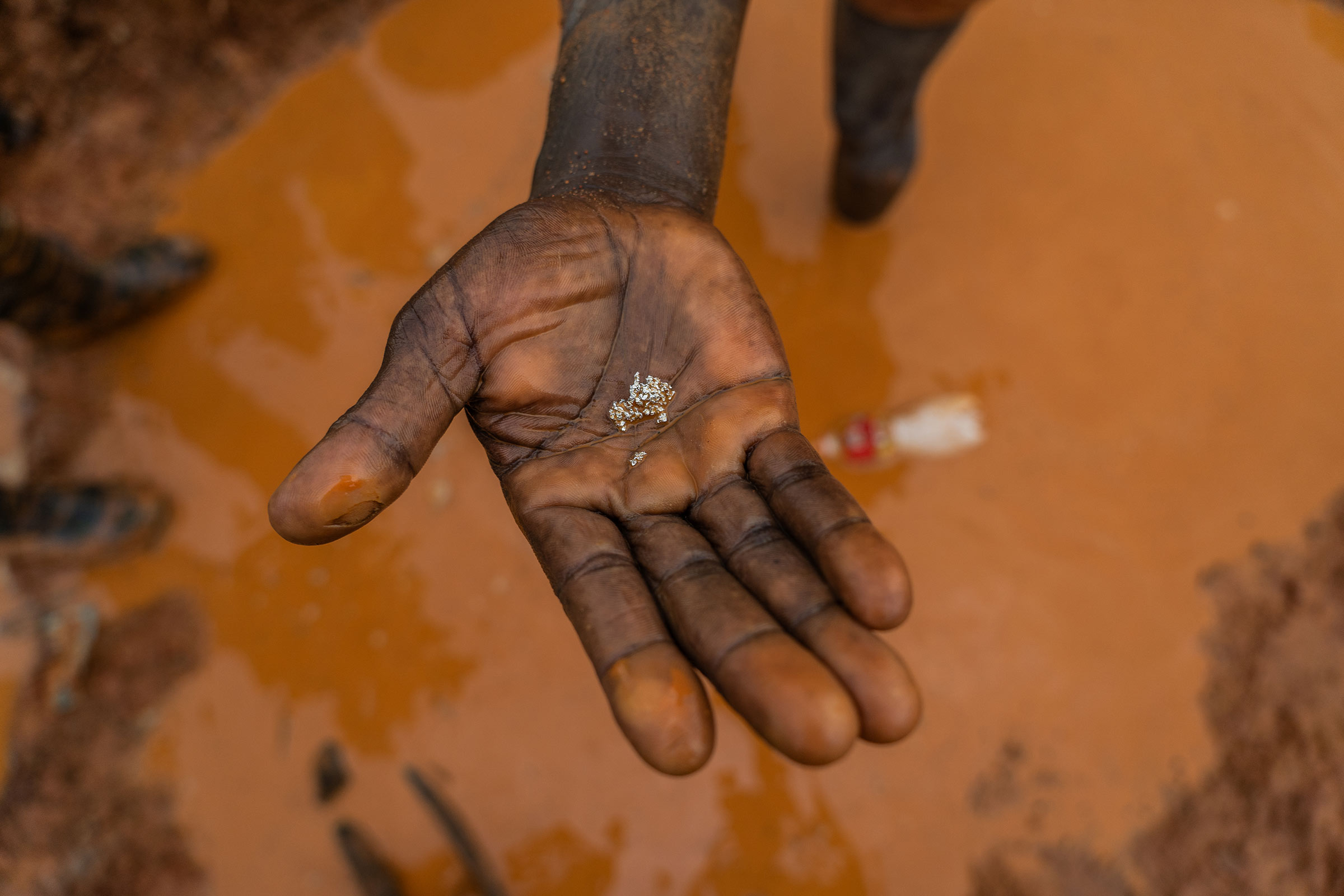










Gold mining is a capital-intensive business with high risks and high rewards. Mining companies make money by extracting gold from the ground and selling it at the global market price. But the real story is in the margins—the difference between what it costs to get the gold out and what the world is willing to pay for it.

The Simple Formula
Gold mining companies make money through a straightforward calculation:
Revenue = Gold Sold × Price per Ounce
Profit = Revenue − Total Production Costs
📢 GET A DETAILED ARTICLES + JOBS
Join ASJ's WhatsApp Channel and never miss a post or opportunity.
When gold prices are high and production costs are low, mining companies generate enormous profits. When prices fall or costs rise, margins shrink quickly.
In 2026, with gold trading above $4,000 per ounce, many mining companies are generating record margins . But the picture is more complicated than the headline price suggests.
Revenue: Selling Gold on the World Market
The Global Price
Gold is a globally traded commodity. The price is determined on international markets—primarily the London Bullion Market Association (LBMA)—and is quoted in US dollars per troy ounce.
Mining companies have no control over the price they receive. They are price takers, not price makers. As Caledonia Mining explained in its 2025 annual report: “The gold prices obtained may fluctuate widely and are influenced by factors beyond the control of the Company” .
How the Price Has Moved
The gold price has surged dramatically in recent years:
-
2024 Average: Around $2,347 per ounce
-
2025 Average: Around $3,383 per ounce
-
February 2026: $5,278.93 per ounce
For mining companies, this has been transformative. Caledonia Mining’s revenue increased from $183 million in 2024 to $267.7 million in 2025, driven almost entirely by the higher gold price .
The Cedi Factor for Ghanaian Miners
For mining companies operating in Ghana, the exchange rate adds another layer. Gold is sold in US dollars, but costs are often incurred in Ghana cedis. When the cedi weakens, the dollar revenue converts into more cedis—but imported inputs like fuel, equipment, and reagents become more expensive.
This dynamic can work in miners’ favour or against them, depending on how the currency moves relative to their cost structure.
Costs: The Other Half of the Equation
Revenue is only part of the story. What determines whether a mining company actually makes money is the cost of getting gold out of the ground. The industry uses a standard metric called All-In Sustaining Cost (AISC) to measure this.
What AISC Includes
AISC aims to reflect the full cost of keeping a mine in business. It includes :
-
Production costs – salaries and wages, consumable materials, electricity, and other direct costs
-
Royalties – payments to the government based on revenue
-
Sustaining capital – spending to maintain the mine’s infrastructure and equipment
-
Exploration costs – finding new gold deposits
-
Reclamation costs – restoring the land after mining
AISC in Practice
For Ghanaian mines, AISC varies significantly depending on the operation’s scale, grade, and efficiency:
| Company/Mine | AISC (per ounce) | Period |
|---|---|---|
| Asante Gold (Bibiani/Chirano) | $3,200 – $3,600 (guidance) | 2026 |
| Perseus Mining (Edikan) | $1,662 | FY26 YTD |
| Newcore Gold (Enchi PFS) | $1,967 (early years) | PFS |
| AngloGold Ashanti (Iduapriem) | ~$2,079 | Q4 2025 |
| Industry Average (Global) | Below $2,000 | 2026 |
What Drives Costs Up
Several factors are pushing Ghanaian mining costs higher:
Declining Gold Grades: A tonne of ore today yields significantly less gold than it did one or two decades ago. Companies now spend the same or more on energy, equipment, and chemicals to extract smaller quantities .
Rising Royalties: Ghana’s new royalty regime, effective March 2026, increased costs by approximately US$216 per ounce for some producers . Industry players have warned that rising royalties could make some gold reserves economically unviable .
Input Cost Inflation: Labour, fuel, electricity, reagents, and mining contractors’ costs all increased in 2025 . Asante Gold’s Acting CEO noted that “cost inflation in diesel, labour, supply chains has eaten into margins across West Africa’s gold belts” .
Capital Intensity: Developing a single mine can require between $500 million and $600 million in capital. Investors expect stable returns, and even small shifts in cost structures can determine whether a project proceeds .
The Margin: Where Profits Live
The difference between the gold price and AISC determines the profit margin. In 2026, with gold above $4,000 and global AISC below $2,000, margins are wide .
A Practical Example
Consider a mine with an AISC of $2,000 per ounce and a gold price of $4,200 per ounce:
-
Revenue per ounce: $4,200
-
Cost per ounce: $2,000
-
Margin per ounce: $2,200
-
Margin percentage: 52%
For a mine producing 200,000 ounces per year, that translates to $440 million in gross margin.
But not all mines are equal. Asante Gold, for example, guided to an AISC of $3,200–$3,600 per ounce for 2026. At a $4,200 gold price, that leaves a margin of $600–$1,000 per ounce—much thinner than the industry average .
The Bank of Ghana’s Role in the Value Chain
In Ghana, the Bank of Ghana has become a major intermediary in the gold market. Through its Domestic Gold Purchase Programme (DGPP), the central bank purchases gold from artisanal and small-scale miners and exports it for foreign exchange.
In 2025, the Bank of Ghana purchased and exported around 104 tons of ASGM gold for $10.9 billion, essentially all domestic output from that sector . This has made the central bank a crucial buyer for small-scale miners, providing them with a reliable market and foreign exchange.
However, the programme has also generated losses. In 2025, the DGPP recorded losses of over $1.7 billion, almost entirely related to purchasing gold at a premium over international prices . This highlights the complex economics of state intervention in the gold market.
Types of Mining Companies
Large-Scale Producers
Companies like AngloGold Ashanti, Gold Fields, and Newmont operate large mines with significant production volumes. They benefit from economies of scale but face high capital requirements and regulatory scrutiny.
Newmont’s Ahafo North mine, which opened in October 2025, represents an investment of over $1 billion and is expected to contribute significantly to Ghana’s gold output .
Mid-Tier and Junior Producers
Companies like Asante Gold and Perseus Mining operate mid-sized mines. They are more agile than the majors but have less cushion against cost increases and price volatility.
Asante Gold’s 2026 guidance of 275,000–300,000 ounces at an AISC of $3,200–$3,600 illustrates the tightrope these companies walk .
Artisanal and Small-Scale Miners
The ASM sector employs about one million people directly in Ghana and accounts for about one-third of total gold output . These operations are labour-intensive, often informal, and have lower barriers to entry—but also lower safety standards and environmental compliance.
The Risks: What Can Go Wrong
Gold mining is inherently risky. Several factors can turn a profitable operation into a loss-making one:
Gold Price Volatility: A sharp decline in the gold price can wipe out margins overnight. At $2,500 per ounce, many Ghanaian mines would struggle to break even .
Cost Inflation: Rising fuel, labour, and reagent costs directly reduce margins. The industry has seen significant cost increases in 2025 .
Regulatory Changes: Ghana’s new royalty regime added $216 per ounce to some producers’ costs. Further increases could render some reserves uneconomic .
Operational Challenges: Mine wall failures, equipment breakdowns, and grade declines can disrupt production and increase costs .
Financing Risk: Building a mine requires hundreds of millions of dollars. If financing dries up, projects stall.
What This Means for Ghana
Gold mining companies make money by selling a globally traded commodity at prices they cannot control, while managing costs that are rising. When prices are high—as they are in 2026—the industry generates record profits, contributing significantly to government revenue and foreign exchange.
In 2024, the gold sector contributed GH¢88.1 billion to Ghana’s GDP . Gold exports reached US$11.2 billion by August 2025 .
But the industry’s profitability is not guaranteed. Declining grades, rising royalties, and cost inflation are squeezing margins, particularly for smaller producers. As one industry executive warned: “If the economics do not support it, the gold remains in the ground” .
For Ghana, the challenge is balancing the desire for higher revenue from mining with the need to keep the industry competitive and attractive to investment. Gold mining companies will continue to make money—but how much, and for how long, depends on forces beyond any single company’s control.
Quick Facts
| Topic | Details |
|---|---|
| Gold Price (Feb 2026) | $5,278.93/oz |
| Global Industry AISC | Below $2,000/oz |
| Asante Gold AISC Guidance (2026) | $3,200–$3,600/oz |
| Perseus Edikan AISC (FY26 YTD) | $1,662/oz |
| Newcore Enchi AISC (PFS) | $1,967/oz (early years) |
| Ghana Royalty Impact (March 2026) | +$216/oz |
| DGPP ASGM Purchases (2025) | 104 tons for $10.9 billion |
| Gold Sector GDP Contribution (2024) | GH¢88.1 billion |
| ASM Direct Employment | ~1 million |
Frequently Asked Questions
1. How do gold mining companies make money?
They make money by extracting gold from the ground and selling it at the global market price. Their profit is the difference between the gold price and their total production costs, measured by All-In Sustaining Cost (AISC) .
2. What is AISC in gold mining?
AISC stands for All-In Sustaining Cost. It measures the full cost of keeping a mine in business, including production costs, royalties, sustaining capital, exploration, and reclamation. It is the industry standard for measuring profitability .
3. What is the current gold price?
As of February 2026, gold was trading at $5,278.93 per ounce. In 2025, the average realized price for some producers was around $3,383 per ounce .
4. How much does it cost to produce an ounce of gold in Ghana?
Costs vary by mine. Perseus Mining’s Edikan mine had an AISC of $1,662 per ounce in FY26 YTD . Asante Gold guided to $3,200–$3,600 per ounce for 2026 . AngloGold Ashanti’s Iduapriem mine had an AISC of about $2,079 per ounce in Q4 2025 .
5. How do royalties affect gold mining profitability?
Ghana’s new royalty regime, effective March 2026, increased costs by approximately $216 per ounce for some producers. Industry players warn that rising royalties could make some gold reserves economically unviable .
6. Why are gold mining costs rising in Ghana?
Costs are rising due to declining gold grades (more ore needed for the same gold), higher royalties, and input cost inflation in labour, fuel, electricity, and reagents .
7. What is the Bank of Ghana’s role in gold mining?
The Bank of Ghana operates the Domestic Gold Purchase Programme (DGPP), purchasing gold from artisanal and small-scale miners and exporting it for foreign exchange. In 2025, it purchased 104 tons of ASGM gold for $10.9 billion .
8. How much does gold mining contribute to Ghana’s GDP?
The gold sector contributed GH¢88.1 billion to Ghana’s GDP in 2024, approximately 7.5% of total GDP. Gold exports reached a record US$11.2 billion by August 2025
Source: Accra Street Journal
Last Updated on September 17, 2026 by Samuel Kwame Boadu
Disclaimer: Some content on Accra Street Journal may be aggregated, summarized, or edited from third-party sources for informational purposes. Images and media are used under fair use or royalty-free licenses. Accra Street Journal is a subsidiary of SamBoad Publishing Hub under SamBoad Business Group Ltd, registered in Ghana since 2014.
For concerns or inquiries, please visit our Privacy Policy or Contact Page.

Samuel Kwame Boadu is a Ghanaian media entrepreneur and storyteller with a passion for amplifying urban voices and uncovering everyday truths. He is the Editor-in-Chief and Founder of Accra Street Journal, a dynamic digital platform dedicated to capturing the pulse of Ghana’s capital—its people, culture, challenges, business, sports and innovations.