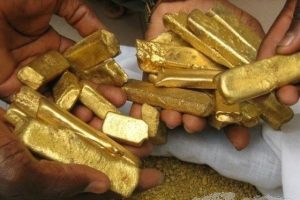









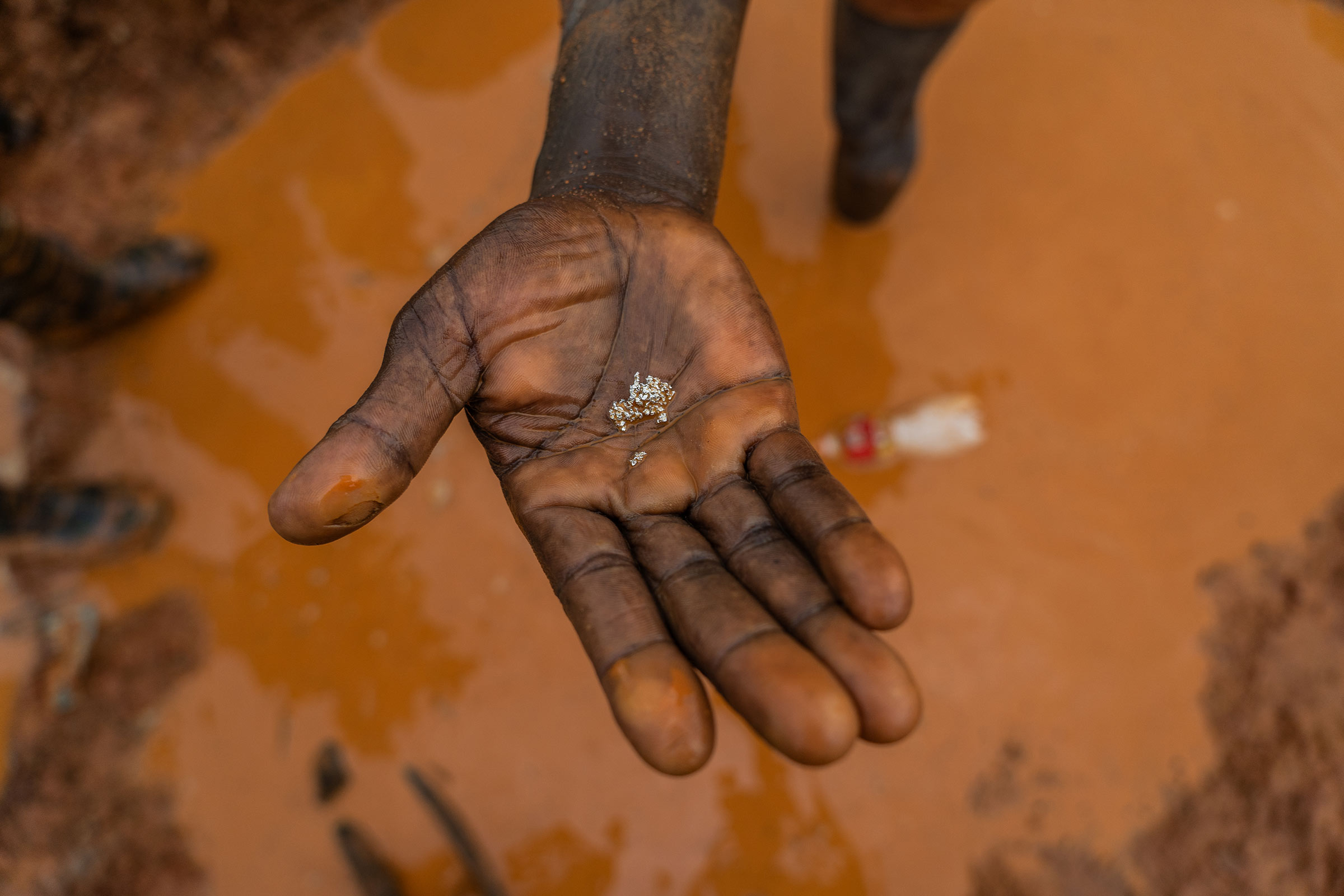

Gold is no longer just a mineral in Ghana’s soil. It has become the backbone of the country’s financial stability, the single largest source of foreign exchange, and a critical buffer against economic crisis. When gold prices rise, Ghana breathes easier. When they fall, the pressure builds quickly. This ASJ article explains the powerful connection between global gold prices and everyday life in Ghana.

Gold’s Dominance in Ghana’s Economy
Ghana is Africa’s largest gold producer, and gold has become the single most important driver of the country’s external sector. In 2025, gold export earnings surged to approximately **US$20 billion**, nearly double the US$10.3 billion recorded in 2024 .
This is not a small shift. Gold now accounts for about 63% of all exports in 2025, up from just 39% in 2004 . The country earns more from gold than from cocoa and crude oil combined.
📢 GET A DETAILED ARTICLES + JOBS
Join ASJ's WhatsApp Channel and never miss a post or opportunity.
The result was a trade surplus of about **US$13.6 billion** in 2025, compared to US$3.8 billion in 2024 . This surplus has been critical to stabilizing the cedi and rebuilding Ghana’s foreign reserves.
The Bank of Ghana’s Gold Purchase Programme
The most important institutional development in recent years is the Domestic Gold Purchase Programme (DGPP), launched in 2021 during the debt crisis .
The programme was designed to rebuild Ghana’s foreign reserves by purchasing gold from local miners and exporting it for foreign exchange. It has rapidly scaled up. In 2025, the Bank of Ghana purchased and exported around 104 tons of artisanal and small-scale mining (ASM) gold for **US$10.9 billion**, plus another US$1.26 billion of gold bullion from large-scale mines .
The impact on reserves has been dramatic. Annual gold-related inflows increased from US$1.7 billion in 2023** to **US$12.7 billion in 2025 . Gross international reserves grew eightfold to US$11.9 billion by the end of 2025, covering about four months of imports .
As Governor Johnson Asiama noted in March 2026, the rise in global gold prices “could cushion the blow” for Ghana as the Middle East conflict threatened to push oil prices higher and tighten global financial conditions .
How Gold Prices Affect the Cedi
The relationship between gold prices and the cedi is direct and powerful.
When gold prices rise, Ghana earns more dollars from its exports. This increases the supply of foreign exchange in the economy. With more dollars available, the cedi is more stable or even appreciates. When the cedi is stable, imports cost less, and inflation is lower.
When gold prices fall, the opposite happens. Foreign exchange earnings drop. The supply of dollars shrinks. The cedi comes under pressure and depreciates. Imported goods become more expensive, and inflation rises.
This is not just theory. In 2025, the cedi appreciated to around GHC12 to the dollar from GHC17, partly due to strong gold inflows . The appreciation meant that miners received fewer cedis for their gold, even as global prices rose. As GoldBod explained, “the same international price multiplied by 12 yields less” than when multiplied by 17 .
For ordinary Ghanaians, this matters because a stable cedi means more predictable prices for fuel, food, and other imported goods. A weak cedi means those prices rise.
The Risks: What Happens If Gold Prices Fall
The International Monetary Fund (IMF) has conducted stress tests to assess how Ghana’s financial system would handle a severe and persistent gold price shock .
The findings are sobering. While banks remain broadly resilient at the aggregate level, weaker institutions remain vulnerable . The IMF stressed that “Ghana’s dependence on gold exports exposes the financial system to commodity price volatility through exchange rate, inflation, fiscal, sovereign risk, and bank balance-sheet channels” .
Fitch Solutions has also warned that Ghana’s recent macroeconomic stability “remains highly vulnerable to fluctuations in global commodity prices, especially gold” . If gold prices fall significantly:
-
Foreign exchange earnings would drop
-
International reserves would shrink
-
The cedi would depreciate
-
Import costs would rise
-
Inflation would rebound
-
The central bank might need to raise interest rates to contain the pressure
This is the “resource curse” paradox. Ghana’s wealth in gold can become a source of instability if the country depends too heavily on it.
Gold’s Impact on Government Revenue
Gold also contributes directly to government revenue. In 2024, the mining sector paid over GH¢10.3 billion in corporate tax alone . The Ghana Chamber of Mines reported that producing member companies injected over US$5.5 billion into the economy through procurement, social investment, and fiscal payments .
The Bank of Ghana also earns income from its gold trading operations. However, there have been concerns about the financial performance of the programme. Former Finance Minister Mohammed Amin Adam claimed the programme “lost money” in 2025 despite a 62.9% rise in gold prices, due to exchange-rate differences, discounts given to foreign buyers, and transaction fees .
The GoldBod has since reformed the programme under the Ghana Accelerated National Reserve Accumulation Programme (GANRAP). The new framework purchases gold at the interbank rate instead of the higher forex bureau rate, reducing the cost of the programme from about 16% to 7.25% .
The Artisanal Mining Boom
One of the most significant developments has been the rise of artisanal and small-scale mining (ASM). In 2025, the ASM sector outperformed large-scale mining for the first time in both volume and value of exports .
ASM exported 103 tonnes of gold, generating about **US$10.8 billion**, compared to 96.6 tonnes and US$9.2 billion from large-scale mining . This was driven by the removal of the withholding tax on ASM gold and the formalization efforts of GoldBod.
The ASM sector now employs about one million people directly and supports several million downstream dependents . It accounts for about one-third of Ghana’s total gold output .
However, this boom comes with costs. Environmental degradation, water pollution, and health risks from mercury exposure are serious concerns. Estimates indicate that approximately 60% of the country’s freshwater bodies are contaminated by ASM-related operations .
What Gold Means for Ordinary Ghanaians
For the average Ghanaian, the connection between gold prices and daily life may not be obvious. But it is real.
When gold prices are high:
-
The cedi is more stable, keeping import prices down
-
Government revenue is higher, supporting public spending
-
Jobs in the mining sector are more secure
-
The country’s foreign reserves grow, providing a buffer against external shocks
When gold prices fall:
-
The cedi weakens, making imports more expensive
-
Inflation rises, eroding purchasing power
-
Government revenue falls, putting pressure on budgets
-
The country’s ability to pay for essential imports is reduced
The Bank of Ghana Governor captured the stakes in March 2026: “Today there is a threat to the disinflation trajectory… our communication must reflect both the progress that has been achieved and the risks that remain” .
Quick Facts
| Topic | Details |
|---|---|
| Gold Export Earnings (2025) | ~US$20 billion |
| Share of Total Exports (2025) | 63% |
| Trade Surplus (2025) | US$13.6 billion |
| DGPP Gold Purchases (2025) | 104 tonnes ASM gold for US$10.9 billion |
| Gross Reserves (End-2025) | US$11.9 billion (4 months of imports) |
| ASM Export Volume (2025) | 103 tonnes (US$10.8 billion) |
| ASM Employment | ~1 million direct workers |
| Mining Sector Corporate Tax (2024) | GH¢10.3 billion |
Frequently Asked Questions
1. How much does Ghana earn from gold exports?
Ghana earned approximately **US$20 billion** from gold exports in 2025, nearly double the US$10.3 billion recorded in 2024 .
2. What percentage of Ghana’s exports is gold?
Gold accounted for about 63% of all exports in 2025, up from 39% in 2004 .
3. How does gold affect the cedi?
When gold prices rise, Ghana earns more dollars, increasing foreign exchange supply and stabilizing or strengthening the cedi. When gold prices fall, dollar inflows drop, the cedi weakens, and import costs rise .
4. What is the Domestic Gold Purchase Programme?
It is a Bank of Ghana initiative launched in 2021 to purchase gold from local miners and export it for foreign exchange, rebuilding Ghana’s reserves .
5. What happens if gold prices fall significantly?
Fitch Solutions warns that a gold price crash would reduce foreign exchange earnings, shrink reserves, pressure the cedi, raise import costs, and cause inflation to rebound. The central bank might need to raise interest rates in response .
6. How much gold does Ghana produce?
Total production rose to 151 tonnes in 2024, with the artisanal and small-scale mining sector contributing about one-third of total output .
7. What is the role of GoldBod?
The Ghana Gold Board (GoldBod) formalizes the gold trade, sources gold from miners, and supports the Bank of Ghana’s reserve accumulation programme .
8. How does gold mining benefit ordinary Ghanaians?
The mining sector paid over GH¢10.3 billion in corporate tax in 2024 and injected over US$5.5 billion into the economy through procurement, social investment, and fiscal payments. It also directly employs over 11,000 people in large-scale mining and about one million in ASM
Source: Accra Street Journal
Last Updated on September 17, 2026 by Samuel Kwame Boadu
Disclaimer: Some content on Accra Street Journal may be aggregated, summarized, or edited from third-party sources for informational purposes. Images and media are used under fair use or royalty-free licenses. Accra Street Journal is a subsidiary of SamBoad Publishing Hub under SamBoad Business Group Ltd, registered in Ghana since 2014.
For concerns or inquiries, please visit our Privacy Policy or Contact Page.

Samuel Kwame Boadu is a Ghanaian media entrepreneur and storyteller with a passion for amplifying urban voices and uncovering everyday truths. He is the Editor-in-Chief and Founder of Accra Street Journal, a dynamic digital platform dedicated to capturing the pulse of Ghana’s capital—its people, culture, challenges, business, sports and innovations.