








Ghana is Africa’s largest gold producer, yet for decades ordinary citizens had no structured way to own the metal that drives the economy. That is changing fast. Today, Ghanaians can choose between holding physical gold—coins, tablets, and bars—or investing in financial products that track the gold price. Each option has different costs, risks, and levels of protection. Here is a clear breakdown of how they compare.

Option 1: Physical Gold
Physical gold means you actually hold the metal in your hands. In Ghana, this is now possible through official channels backed by the state.
The Ghana Gold Coin
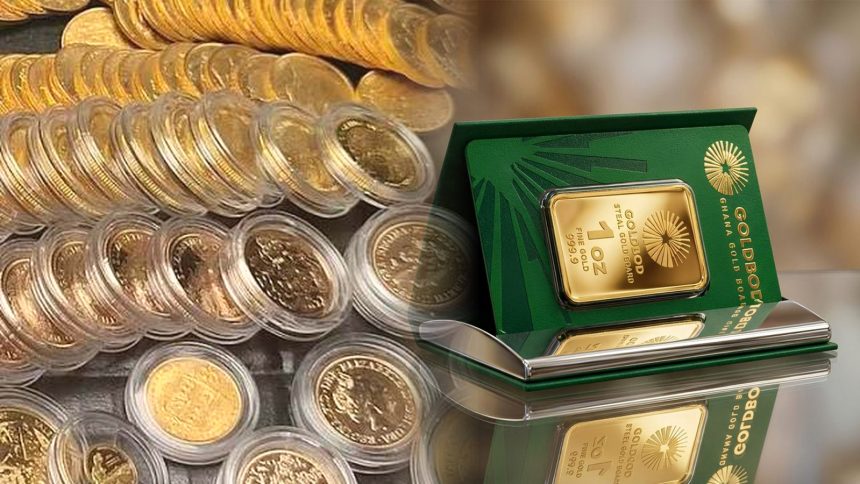
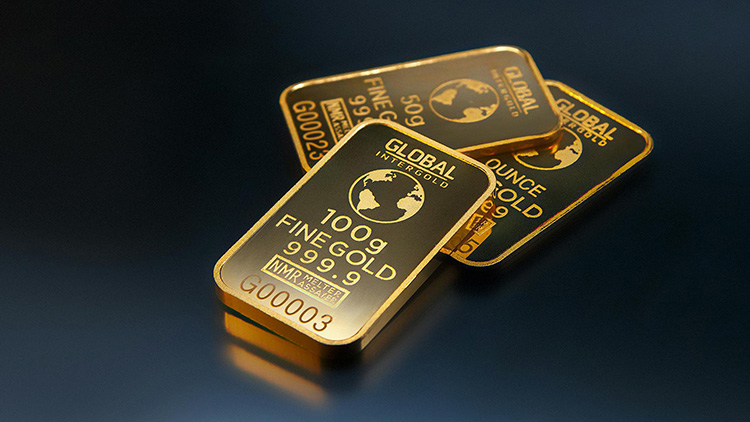
The Bank of Ghana introduced the Ghana Gold Coin (GGC) in 2024 as an official investment product for Ghanaians . The coins are minted from locally sourced gold, refined to 99.99% purity, and issued in three sizes: 1 oz, 1/2 oz, and 1/4 oz .
📢 GET A DETAILED ARTICLES + JOBS
Join ASJ's WhatsApp Channel and never miss a post or opportunity.
How it works: You cannot buy directly from the central bank. You must place an order through a commercial bank, pay in Ghana Cedis via your account or mobile money, and complete identity verification. The bank then places a buy order with the Bank of Ghana on your behalf.
Pricing: The price is based on the previous day’s London Bullion Market Association (LBMA) afternoon price, converted to cedis. As of August 2026, the 1 oz coin was priced at GH¢49,788.33, the 1/2 oz at GH¢25,241.12, and the 1/4 oz at GH¢12,989.74 . Prices change daily.
Reselling: You can sell the coin back through a commercial bank. The Bank of Ghana guarantees the coin, so if a bank cannot buy it back, the central bank stands ready to do so, though some discounts may apply.
Goldbod Jewellery Tablets
The Ghana Gold Board (GoldBod) has launched Gold Board Jewellery Tablets in sizes of 1g, 5g, 10g, and 31g . These are investment-grade gold pieces crafted by Ghanaian artisans.
How to buy: GoldBod operates an e-commerce platform at jewelry.goldboard.gov.gh, described as Ghana’s first 24-hour digital gold showroom. The platform offers real-time pricing, secure mobile money and card payments, and nationwide pickup.
The value proposition: Every piece is crafted locally. As GoldBod’s Managing Director put it: “The gold is bought from Ghanaian miners, crafted by Ghanaian hands and the revenue stays here” .
Physical Gold: The Pros and Cons
| Pros | Cons |
|---|---|
| Tangible asset you physically hold | Storage and security concerns |
| No counterparty risk (you own the metal) | Dealer premiums above spot price |
| Sovereign guarantee for GGC | Limited resale channels compared to financial products |
| Protects against cedi depreciation | No passive income (dividends or interest) |
| Privacy | Potential for counterfeits if buying from unlicensed dealers |
Option 2: Financial Gold Investments
Financial gold products let you gain exposure to the gold price without holding the metal. In Ghana, this market is still developing but moving quickly.
Gold-Backed Securities and Tokenised Gold (In Development)
The Securities and Exchange Commission (SEC) is working with GoldBod to pilot gold-backed securities and tokenised gold assets . GoldBod has been admitted into the SEC’s Virtual Asset Sandbox as the sole custodian of physical gold underlying these financial instruments .
What this means: GoldBod will handle the assaying, verification, and vaulting of the gold that backs these digital or financial products, and will report periodically to the SEC . The pilot will run through a special purpose vehicle, allowing regulators to test the concept before full rollout .
The promise: SEC Deputy Director-General Mensah Thompson explained that tokenisation could allow “ordinary Ghanaians with GH¢10, GH¢15, GH¢20” to buy fractional gold, because the asset can be broken into one-gramme units . He also hinted that holders of gold tokens could eventually collateralise them to secure bank loans .
Status: This is not yet available to the public. The pilot began in March 2026 and will run for 12 months .
Gold Trading on the Ghana Commodity Exchange (In Development)
GoldBod and the Ghana Commodity Exchange (GCX) are in discussions to list gold on the exchange, exploring models including tokenisation and Exchange-Traded Funds (ETFs) . This would create a regulated market where investors could buy and sell gold-backed instruments.
Gold Mining Stocks on the GSE
The Ghana Stock Exchange has minimal mining representation. Only four mining-linked securities are actively listed, and mining accounts for just 0.09% of total value traded . The primary price discovery for major miners like AngloGold Ashanti happens on foreign exchanges, limiting local investors’ exposure.
Financial Gold: The Pros and Cons
| Pros | Cons |
|---|---|
| No storage or security concerns | Not yet available to the public in Ghana |
| Easy to buy and sell (once available) | Counterparty risk (you rely on the custodian) |
| Fractional ownership possible | Regulatory framework still being developed |
| Potential for use as loan collateral | Management or custody fees may apply |
| Lower transaction costs than physical | Limited options currently on the GSE |
How They Compare at a Glance
| Feature | Physical Gold (GGC & Tablets) | Financial Gold (In Development) |
|---|---|---|
| Availability | Available now | Pilot phase; not yet public |
| Minimum Investment | 1/4 oz GGC or 1g GoldBod tablet | Potentially as low as GH¢10–20 |
| Storage | You store it (or bank vault) | GoldBod vaults the underlying gold |
| Liquidity | Sell back to bank or GoldBod | Trade on exchange (once live) |
| Counterparty Risk | Low (sovereign guarantee for GGC) | Moderate (custodian risk) |
| Price Transparency | Daily BoG pricing based on LBMA | Market-determined (once trading begins) |
| Best For | Long-term wealth preservation | Future flexibility and smaller investors |
What This Means for You
If you want to hold something real: The Ghana Gold Coin and GoldBod Jewellery Tablets are your best options today. The GGC carries the central bank’s guarantee, making it the safest physical gold product in Ghana. The tablets are more affordable in smaller sizes and support local craftsmanship.
If you want flexibility and low entry barriers: The financial gold products being developed by the SEC and GoldBod could be revolutionary. Tokenised gold would allow you to buy fractions of a gramme, trade easily, and potentially use your holdings as loan collateral. But these products are not yet available—you will need to wait for the pilot to conclude and the SEC to issue final guidelines.
The bottom line: Gold investment in Ghana is opening up in ways that were unimaginable a few years ago. Whether you choose physical or wait for financial products, the key is to understand the trade-offs between tangibility, liquidity, cost, and regulatory protection.
Quick Facts
| Topic | Details |
|---|---|
| Ghana Gold Coin Purity | 99.99% |
| GGC Sizes | 1 oz, 1/2 oz, 1/4 oz |
| GGC 1 oz Price (Aug 2026) | GH¢49,788.33 |
| Goldbod Tablet Sizes | 1g, 5g, 10g, 31g |
| Goldbod E-Commerce | jewelry.goldboard.gov.gh |
| Gold Tokenisation Pilot | 12 months, started March 2026 |
| GoldBod Role in Sandbox | Sole custodian of gold-backed securities |
| Potential Minimum (Tokenised Gold) | GH¢10–20 |
| GSE Mining Share | 0.09% of total value traded |
1. What is the difference between physical gold and financial gold investments in Ghana?
Physical gold means you own and hold the metal—like the Ghana Gold Coin or GoldBod Jewellery Tablets. Financial gold means you own a financial product that tracks the gold price, like tokenised gold or ETFs, without holding the metal itself.
2. Can I buy tokenised gold in Ghana right now?
No. Tokenised gold is still in the pilot phase. The SEC admitted GoldBod and other firms into its Virtual Asset Sandbox in March 2026, and the pilot will run for 12 months. Public access will only be possible after the SEC finalises its regulatory framework .
3. How much does the Ghana Gold Coin cost?
As of August 2026, the 1 oz coin was GH¢49,788.33, the 1/2 oz was GH¢25,241.12, and the 1/4 oz was GH¢12,989.74. Prices are updated daily based on the LBMA gold price and the cedi-dollar exchange rate.
4. Where can I buy GoldBod Jewellery Tablets?
You can buy them through GoldBod’s e-commerce platform at jewelry.goldboard.gov.gh. The platform offers real-time pricing, mobile money and card payments, and nationwide pickup.
5. What are the advantages of physical gold over financial gold?
Physical gold gives you direct ownership with no counterparty risk. The Ghana Gold Coin is guaranteed by the Bank of Ghana. Financial gold products are more liquid and easier to trade, but they depend on a custodian and the regulatory framework is still being developed .
6. Will I be able to use tokenised gold as collateral for a loan?
The SEC has hinted that this could be possible once the framework is in place. Deputy Director-General Mensah Thompson said holders of gold tokens could eventually collateralise their digital holdings to secure bank financing .
7. Can foreigners invest in gold in Ghana?
Foreign nationals were required to exit the local gold trading market by April 30, 2025. They can now only purchase gold directly from GoldBod . However, foreign investors may apply to GoldBod for licences to off-take gold or invest in refining and value addition.
8. Is gold a good investment in Ghana right now?
Gold prices have reached record highs, supported by global uncertainty and central bank purchases. For Ghanaians seeking a hedge against cedi depreciation and inflation, gold offers a tangible store of value. However, like all investments, it carries risk and should be part of a diversified portfolio
Source: Accra Street Journal
Last Updated on September 17, 2026 by Samuel Kwame Boadu
Disclaimer: Some content on Accra Street Journal may be aggregated, summarized, or edited from third-party sources for informational purposes. Images and media are used under fair use or royalty-free licenses. Accra Street Journal is a subsidiary of SamBoad Publishing Hub under SamBoad Business Group Ltd, registered in Ghana since 2014.
For concerns or inquiries, please visit our Privacy Policy or Contact Page.

Samuel Kwame Boadu is a Ghanaian media entrepreneur and storyteller with a passion for amplifying urban voices and uncovering everyday truths. He is the Editor-in-Chief and Founder of Accra Street Journal, a dynamic digital platform dedicated to capturing the pulse of Ghana’s capital—its people, culture, challenges, business, sports and innovations.