
12 min read
Introduction: A Week of Contrasts in Ghana’s Financial Landscape
The past week delivered a mixed picture of Ghana’s financial sector—one of softening demand for government debt on one hand, and historic milestones in the equities market on the other. The government’s latest Treasury bill auction fell short of its target by 25.4 per cent, raising GH¢3.26 billion against a GH¢5.0 billion target as interest rates rose marginally across all tenors . This marks a notable shift in investor appetite after a prolonged period of strong oversubscriptions .
Yet while the fixed-income market showed signs of cooling, the Ghana Stock Exchange (GSE) continued its historic rally. The GSE Composite Index reached a new all-time high of 15,908.77 points, and in a landmark moment for the local bourse, Benso Oil Palm Plantation PLC (BOPP) became the first locally-listed equity to cross the GH¢100 price threshold .
Key Takeaways
- The government’s latest Treasury bill auction fell short of its target by 25.4 per cent, raising GH¢3.26 billion against a GH¢5.0 billion target as interest rates rose marginally across all tenors .
- With the GSE delivering a 46.74 per cent return in February 2026 and the Financial Stocks Index surging 65.54 per cent, investors are increasingly shifting capital from fixed income to equities .
- Benso Oil Palm Plantation has delivered a 218.5 per cent return over the past year, significantly outperforming both its sector and the broader market .
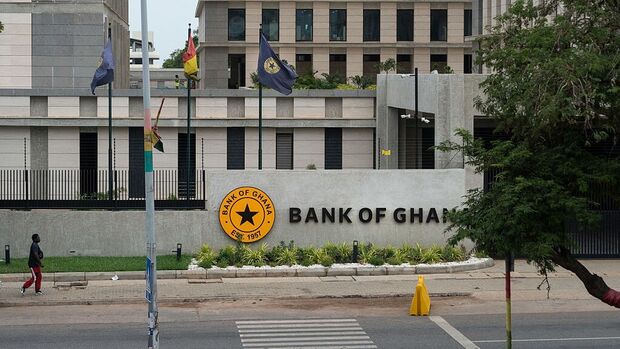
Adding to the week’s developments, the Bank of Ghana unveiled significant new microfinance reforms, raising minimum capital requirements to GH¢100 million in a bid to restore customer trust and strengthen the sector after years of turbulence .
This ASJ article examines these three interconnected stories—the T-bill undersubscription signalling shifting investor preferences, the historic GSE rally and BOPP milestone reflecting renewed confidence in equities, and the regulatory reforms aimed at stabilising the microfinance landscape.
Treasury Bill Auction: A 25.4% Undersubscription
The Numbers
The government’s latest Treasury bill auction, conducted in the week of March 16–20, 2026, revealed a significant weakening in investor appetite for short-term government debt. Against a target of GH¢5.0 billion, the government raised just GH¢3.26 billion—a 25.4 per cent undersubscription .
| Metric | Value |
|---|---|
| Target | GH¢5.0 billion |
| Bids Received | GH¢3.73 billion |
| Amount Accepted | GH¢3.26 billion |
| Undersubscription | 25.4% |
The 91-day bill remained the most popular instrument, attracting GH¢2.23 billion in bids—representing nearly 60 per cent of total submissions—but only GH¢1.76 billion was taken up . The 182-day and 364-day bills recorded bids of GH¢667.12 million and GH¢831.41 million respectively, with all bids accepted .
Interest Rates Rise Marginally
For the first time in several weeks, yields increased across all tenors as the government sought to attract investor interest:
| Tenor | Previous Rate | New Rate | Change |
|---|---|---|---|
| 91-day | 4.71% | 4.78% | +7 basis points |
| 182-day | 6.28% | 6.36% | +8 basis points |
| 364-day | 9.40% | 9.58% | +18 basis points |
The 364-day bill saw the most significant increase, rising 18 basis points to 9.58 per cent . This rise in yields reflects a shift in market conditions following a period of declining rates in recent auctions .
What Caused the Undersubscription?
Analysts point to several factors behind the softening demand :
1. Declining Yields Reduce Attractiveness: After 15 consecutive weeks of strong oversubscriptions, falling yields had begun to temper investor interest in government securities . The yields had dropped to levels that made T-bills less appealing relative to other investment options.
2. Rotation to Equities: Perhaps the most significant factor is the remarkable performance of the Ghana Stock Exchange. With the GSE delivering a 46.74 per cent return in February 2026 and the Financial Stocks Index surging 65.54 per cent, investors are increasingly shifting capital from fixed income to equities . As one market analysis noted, “improving price discovery and strong fundamentals of some stocks in the equities market appear to be drawing some investor interest away from short-term government instruments .

3. Easing Liquidity Conditions: The previously strong liquidity that supported aggressive bidding in the Treasury market is beginning to moderate .
Implications for Government Borrowing
The undersubscription poses challenges for the government’s domestic borrowing programme. The government aims to raise approximately GH¢71 billion from the domestic market in 2026 to finance the budget deficit and refinance maturing debt . If investor appetite remains weak, the government may face a difficult choice: raise interest rates further to attract investors (increasing the cost of debt servicing) or reduce borrowing targets (requiring spending cuts or revenue measures).

Ghana Stock Exchange: Historic Milestones
GSE Composite Index Hits 15,909
While the fixed-income market showed signs of cooling, the Ghana Stock Exchange continued its extraordinary rally. On March 10, 2026, the GSE Composite Index (GSE-CI) smashed through the 15,000-point barrier for the first time in history, closing at 15,185.49 after a breathtaking gain of 598.32 points . Just days later, the index pushed even higher, reaching 15,908.77 points—a new all-time high .
| Metric | Value | Significance |
|---|---|---|
| GSE Composite Index | 15,908.77 | All-time record high |
| Year-to-Date Return | 73.15% | (as of March 10) |
| GSE Financial Stocks Index | 9,538.68 | Up 105.26% YTD |
| Market Capitalisation | GH¢277.97 billion | (as of March 10) |
The market’s performance has been driven by a broad-based rally across sectors, with financial stocks leading the charge. The GSE Financial Stocks Index (GSE-FSI) climbed 252.74 points to settle at 9,538.68, delivering a breathtaking 105.26 per cent return in just over two months .
Standout Performers
Several stocks have delivered exceptional gains during this historic run:
| Company | Price Movement | Notable Performance |
|---|---|---|
| Standard Chartered Bank Ghana (SCB) | +GH¢6.28 to GH¢69.14 | Extended remarkable run |
| SIC Insurance (SIC) | +GH¢0.54 to GH¢5.98 | Strong insurance sector performance |
| MTN Ghana (MTNGH) | +GH¢0.39 to GH¢6.33 | Most actively traded counter |
| GOIL | +GH¢0.21 to GH¢6.60 | Second-highest volume of the session |
| Republic Bank (RBGH) | +GH¢0.29 to GH¢3.26 | Continued upward trajectory |
MTN Ghana remained the most actively traded stock, with 1,187,562 shares changing hands and contributing GH¢7,509,411.87 to total market value . GOIL also emerged as a standout performer, jumping GH¢0.21 to close at GH¢6.60 with an impressive 756,136 shares traded .
What’s Driving the GSE Rally?
The extraordinary performance of the GSE reflects several converging factors:
-
Rotation from fixed income: As Treasury bill yields have fallen, investors have rotated capital into equities
-
Strong corporate earnings: Listed companies, particularly in the financial sector, have reported robust earnings
-
Macroeconomic stability: Inflation at 3.3 per cent and a stable cedi have restored investor confidence
-
Regulatory clarity: New listing rules and frameworks have enhanced market integrity
Benso Oil Palm Plantation: The First GH¢100 Locally-Listed Equity
A Historic Milestone
In a landmark moment for the Ghana Stock Exchange, Benso Oil Palm Plantation PLC (BOPP) became the first locally-listed equity to cross the GH¢100 price threshold . This achievement represents a remarkable journey for the palm oil producer, which has delivered exceptional returns to shareholders over the years.
| Metric | Value |
|---|---|
| Share Price | GH¢100+ (first to cross) |
| 1-Year Return | 218.5% |
| 3-Year Return | 710.6% |
| 5-Year Return | 4,200.0% |
| Market Capitalisation | GH¢3.0 billion |
Performance Snapshot
BOPP’s performance over the past year has been extraordinary:
| Period | Return |
|---|---|
| 7-Day | 16.2% |
| 1-Month | 30.3% |
| 3-Month | 68.6% |
| 1-Year | 218.5% |
| 3-Year | 710.6% |
| 5-Year | 4,200.0% |
The stock has significantly outperformed both its sector and the broader market. Over the past year, BOPP delivered 218.5 per cent returns, compared to 31.5 per cent for the Ghana Food industry and 149.6 per cent for the overall Ghana market .
Company Fundamentals
Founded in 1976 and based in Takoradi, Benso Oil Palm Plantation PLC engages in the cultivation of oil palm and the production of palm oil and palm kernel oil . The company employs 471 people and is led by CEO Santosh Vasu Pillai .
| Fundamental | Value |
|---|---|
| Revenue (TTM) | GH¢369.02 million |
| Earnings (TTM) | GH¢84.22 million |
| P/E Ratio | 35.5x |
| P/S Ratio | 8.1x |
| Dividend Yield | 1.9% |
| Payout Ratio | 54% |
The company maintains a remarkably strong balance sheet with zero long-term debt and a debt-to-equity ratio of 0 per cent . Its gross margin stands at 33.8 per cent, with a net profit margin of 22.8 per cent .

Significance for the GSE
BOPP crossing the GH¢100 threshold is significant for several reasons:
-
Demonstrates local equity potential: It shows that locally-listed companies can deliver world-class returns to patient investors
-
Attracts investor interest: Such milestones draw attention to the GSE from both local and international investors
-
Broadens market appeal: It signals that opportunities exist beyond the usual banking and telecom stocks
Analysts at Databank Brokerage Ltd. have set a price target of GH¢79.24, though the stock has already surpassed this level, trading at GH¢86–100 .
Bank of Ghana Microfinance Reforms: Raising the Bar
New Minimum Capital Requirement
In a significant regulatory move, the Bank of Ghana has unveiled new microfinance reforms aimed at restoring customer trust and strengthening the sector. The key element of the reforms is the increase in minimum capital requirements to GH¢100 million .
| Requirement | Previous | New |
|---|---|---|
| Minimum Capital | Various tiers | GH¢100 million (unified) |
| Purpose | Sector stability | Restore customer trust |
Rationale Behind the Reforms
The microfinance sector in Ghana has faced significant challenges in recent years, with numerous institutions collapsing and leaving customers’ savings stranded. The Bank of Ghana’s reforms are designed to:
-
Strengthen institutional capital buffers to withstand shocks
-
Enhance customer protection by ensuring only well-capitalised operators remain
-
Restore public confidence in the microfinance sector
-
Consolidate the industry by encouraging mergers and acquisitions
Implications for the Sector
The GH¢100 million capital requirement represents a significant increase from previous thresholds and will likely lead to consolidation within the microfinance sector. Smaller institutions may need to:
-
Merge with other operators to meet the new capital requirements
-
Seek new investment from strategic partners
-
Exit the industry if unable to raise the required capital
For customers, the reforms offer greater protection and confidence that their savings are held by well-capitalised, professionally managed institutions. However, the consolidation may also mean fewer microfinance options in the short term, particularly in rural areas where smaller operators have historically played a critical role in financial inclusion.
The Trust Imperative
Bank of Ghana Governor Dr. Johnson Asiama has emphasised that restoring customer trust is paramount. The microfinance sector has suffered from reputational damage following high-profile collapses, and the new capital requirements are designed to ensure that only institutions with sufficient financial strength and governance structures remain in operation .
Market Summary: Key Developments at a Glance
| Sector | Development | Key Details |
|---|---|---|
| Treasury Bills | 25.4% undersubscription | GH¢3.26bn raised vs GH¢5.0bn target; yields rose across tenors |
| Interest Rates | 91-day: 4.78%, 182-day: 6.36%, 364-day: 9.58% | Increases of 7–18 basis points |
| GSE Composite Index | 15,908.77 | All-time record high; 73.15% YTD return |
| Financial Stocks Index | 9,538.68 | 105.26% YTD return |
| BOPP Milestone | First locally-listed equity above GH¢100 | 1-year return: 218.5%; 5-year return: 4,200% |
| Microfinance Reforms | New minimum capital: GH¢100m | Aimed at restoring customer trust |
Frequently Asked Questions (FAQs)
1. What caused the T-bill undersubscription in March 2026?
The undersubscription was driven by declining yields reducing T-bill attractiveness, a rotation of investor capital into the booming equities market, and easing liquidity conditions .
2. How much did the government raise in the latest T-bill auction?
The government raised GH¢3.26 billion against a target of GH¢5.0 billion, representing a 25.4 per cent undersubscription .
3. What are the latest T-bill interest rates?
The 91-day bill now yields 4.78 per cent, the 182-day bill yields 6.36 per cent, and the 364-day bill yields 9.58 per cent .
4. What is the current level of the GSE Composite Index?
The GSE Composite Index reached a record high of 15,908.77 points in March 2026, delivering a year-to-date return of 73.15 per cent .
5. What milestone did Benso Oil Palm Plantation achieve?
BOPP became the first locally-listed equity on the GSE to cross the GH¢100 price threshold .
6. What are the new microfinance capital requirements?
The Bank of Ghana has raised the minimum capital requirement for microfinance institutions to GH¢100 million as part of reforms to restore customer trust .
7. Why are investors rotating from T-bills to equities?
Falling T-bill yields and the exceptional performance of the GSE—with the Composite Index up over 73 per cent and the Financial Index up over 105 per cent year-to-date—have made equities increasingly attractive .
8. What is BOPP’s performance over the past year?
Benso Oil Palm Plantation has delivered a 218.5 per cent return over the past year, significantly outperforming both its sector and the broader market .
9. How will the microfinance reforms affect customers?
The reforms aim to strengthen the sector, protect customer deposits, and restore public confidence by ensuring only well-capitalised, professionally managed institutions operate in the microfinance space .
10. What is the outlook for the Ghana Stock Exchange?
Analysts expect activity to remain strong as investors continue to rebalance portfolios from fixed income to equities, though sustained performance will depend on liquidity conditions and broader macroeconomic stability .
Conclusion: A Financial Sector in Transformation
The week’s developments paint a picture of a Ghanaian financial sector in significant transformation. On one hand, the Treasury bill market—traditionally the safe haven for conservative investors—is showing signs of softening demand as yields compress and capital flows toward more dynamic opportunities . On the other hand, the equities market is delivering historic returns that have captured the imagination of both local and institutional investors .
The milestone achieved by Benso Oil Palm Plantation—crossing the GH¢100 threshold—is particularly symbolic. It demonstrates that locally-listed companies can generate world-class returns and that patient, long-term investment in Ghanaian equities can yield extraordinary results .
Meanwhile, the Bank of Ghana’s microfinance reforms signal a commitment to cleaning up a sector that has suffered from reputational damage and to protecting the savings of ordinary Ghanaians . The GH¢100 million capital requirement will undoubtedly lead to consolidation, but it will also ensure that the institutions that remain are strong enough to withstand shocks and serve their customers reliably.
As Ghana’s financial sector continues to evolve, the message for investors is clear: diversification matters. The T-bill market, while still offering positive real returns given inflation at 3.3 per cent, is no longer the only game in town. The equities market has proven its potential, but with that potential comes volatility. And the microfinance sector, now under stricter regulatory oversight, may offer opportunities for those willing to navigate the consolidation phase.
The coming months will reveal whether the rotation from fixed income to equities continues, whether the GSE can sustain its historic rally, and whether the microfinance reforms successfully restore the trust that is so essential to financial inclusion. For now, Ghana’s financial landscape is dynamic, competitive, and full of opportunity for the discerning investor
Source: Accra Street Journal
Last Updated on March 24, 2026 by Samuel Kwame Boadu
Disclaimer: Some content on Accra Street Journal may be aggregated, summarized, or edited from third-party sources for informational purposes. Images and media are used under fair use or royalty-free licenses. Accra Street Journal is a subsidiary of SamBoad Publishing Hub under SamBoad Business Group Ltd, registered in Ghana since 2014.
For concerns or inquiries, please visit our Privacy Policy or Contact Page.

Samuel Kwame Boadu is a Ghanaian media entrepreneur and storyteller with a passion for amplifying urban voices and uncovering everyday truths. He is the Editor-in-Chief and Founder of Accra Street Journal, a dynamic digital platform dedicated to capturing the pulse of Ghana’s capital—its people, culture, challenges, business, sports and innovations.
Use the following reference when citing or referencing this article.
Your feedback helps us improve our journalism.
Report an Error
Help us maintain accuracy. Let our editorial team know if you spot an issue in this article.
Report a problem with this article