








Introduction: A Week of Critical Developments in Trade and Regulation
The past week has brought significant developments across Ghana’s trade and regulatory landscape. On the international front, Ghana signed a historic maritime agreement to link the Port of Tema directly with Colombia’s Port of Cartagena—a move expected to boost trade volumes, reduce shipping times, and strengthen economic ties between West Africa and South America . On the domestic front, the Driver and Vehicle Licensing Authority (DVLA) launched a nationwide crackdown on vehicles using expired 2025 DV plates and DP stickers, beginning an enforcement drive aimed at improving road safety and regulatory compliance .
Yet amid these positive developments, a looming crisis threatens Ghana’s food supply chain. The Food and Beverage Association of Ghana (FABAG) has warned of a potential tomato supply crisis following Burkina Faso’s ban on tomato exports, urging the government to activate an emergency local production strategy . This warning echoes earlier concerns from the Vegetable Producers and Exporters Association of Ghana, which called for urgent intervention after seven Ghanaian traders were killed in Burkina Faso earlier this year .

This ASJ article examines these three developments—the transformative port agreement, the DVLA enforcement drive, and the tomato supply warning—and their implications for Ghana’s economy, businesses, and households.
📢 GET A DETAILED ARTICLES + JOBS
Join ASJ's WhatsApp Channel and never miss a post or opportunity.

Ghana-Colombia Port Deal: A New Maritime Corridor
The Agreement
In a landmark development for Ghana’s maritime sector, the country has signed a historic agreement to link the Port of Tema directly with the Port of Cartagena in Colombia . The deal establishes a direct maritime corridor between West Africa and South America, significantly reducing transit times and shipping costs between the two regions.
| Key Details | Information |
|---|---|
| Ghana Port | Port of Tema |
| Colombia Port | Port of Cartagena |
| Significance | First direct maritime link between West Africa and Colombia |
| Expected Benefits | Reduced shipping times, lower costs, increased trade volumes |
| Trade Partners | Ghana and Colombia |
Strategic Importance
The Port of Cartagena is one of the largest and most important ports in the Caribbean region, serving as a major hub for trade between the Americas, Europe, and Asia. By establishing a direct link with Tema, Ghana gains:
-
Direct access to South American markets: Ghanaian exporters can now reach Colombian and broader South American markets more efficiently
-
Reduced transshipment costs: Previously, goods moving between West Africa and South America often required transshipment through European or North American ports
-
Shorter transit times: The direct route cuts weeks off shipping times, improving supply chain efficiency
-
Enhanced trade diversification: The agreement supports Ghana’s efforts to diversify export markets beyond traditional European and North American partners
What It Means for Ghanaian Businesses
For Ghanaian businesses, the port deal opens new opportunities:
| Sector | Potential Benefits |
|---|---|
| Exporters | Direct access to Colombian and South American markets |
| Importers | Reduced costs for goods sourced from South America |
| Manufacturers | Access to South American raw materials and intermediate goods |
| Logistics | New opportunities in freight forwarding and shipping services |
The agreement also aligns with Ghana’s broader strategy to position itself as a maritime hub for West Africa, leveraging the Port of Tema’s strategic location and ongoing expansion projects .
DVLA Enforcement: Nationwide Crackdown on Expired Plates
The Enforcement Drive
Beginning today, the Driver and Vehicle Licensing Authority (DVLA) has launched a nationwide enforcement operation targeting vehicles using expired 2025 DV plates and DP stickers . The crackdown is aimed at improving road safety, ensuring regulatory compliance, and reducing the number of unregistered or improperly registered vehicles on Ghana’s roads.
| Enforcement Focus | Details |
|---|---|
| Target | Vehicles with expired 2025 DV plates and DP stickers |
| Scope | Nationwide |
| Effective Date | March 24, 2026 |
| Purpose | Improve road safety, enforce vehicle registration laws |
*Sources: *
Why Now?
The enforcement drive comes after a period of grace following the expiration of 2025 vehicle registration documents. The DVLA has announced that it will no longer tolerate non-compliance, and vehicle owners who have not renewed their registration face:
-
Fines and penalties
-
Vehicle impoundment
-
Legal action for repeat offenders
The DVLA has urged all vehicle owners to ensure their documentation is up to date to avoid sanctions. The Authority has also reminded the public that road safety is a shared responsibility and that compliance with registration laws is essential for maintaining accurate vehicle records, ensuring accountability, and supporting road safety initiatives .
Implications for Vehicle Owners
For vehicle owners, the enforcement drive means:
-
Immediate action required: Owners of vehicles with expired 2025 plates and stickers must renew their documentation without delay
-
Avoiding penalties: Non-compliance could result in fines, vehicle impoundment, and legal consequences
-
Support for road safety: Proper registration helps law enforcement identify vehicles involved in accidents or crimes
The DVLA has provided channels for vehicle owners to verify their registration status and complete renewal processes. Vehicle owners are encouraged to take advantage of these services promptly .
Tomato Supply Warning: Burkina Faso Export Ban Threatens Crisis
The Warning
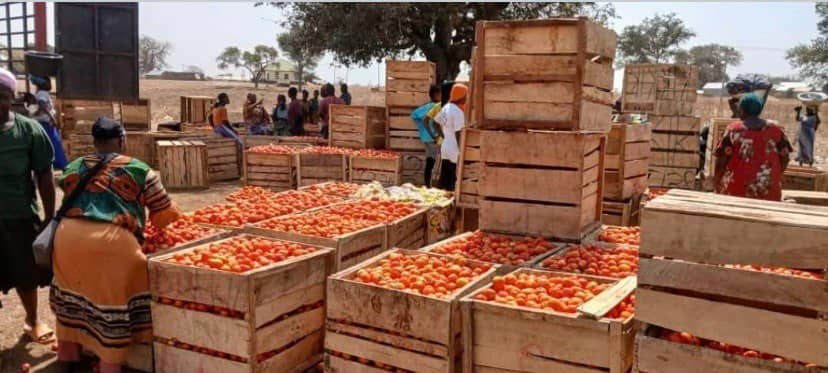
The Food and Beverage Association of Ghana (FABAG) has issued a stark warning about a potential tomato supply crisis following Burkina Faso’s ban on tomato exports . The Association is urging the government to activate an emergency local production strategy to avert shortages and price spikes.
| Warning Details | Information |
|---|---|
| Issuing Body | Food and Beverage Association of Ghana (FABAG) |
| Cause | Burkina Faso ban on tomato exports |
| Risk | Supply shortages, price increases, food processing disruptions |
| Recommended Action | Activate emergency local production strategy |
The Context
The tomato supply warning comes on the heels of an earlier crisis. In February 2026, seven Ghanaian tomato traders were killed and others injured in an ambush by armed militants in the northern Burkinabè town of Titao during a routine trading trip . That attack, combined with Burkina Faso’s subsequent export ban, has severely disrupted the tomato supply chain that Ghana’s market has long relied upon.
Dr. Felix Kamassah, President of the Vegetable Producers and Exporters Association of Ghana, had previously warned that the development posed a significant threat to Ghana’s vegetable supply chain and could trigger price instability if swift interventions were not implemented .
The Economic Impact
Ghana’s reliance on imported tomatoes has long been a point of economic vulnerability:
| Metric | Value |
|---|---|
| Annual Tomato Import Bill | GH¢650–760 million |
| Tomato Paste Imports | ~100,000 metric tons annually |
| Fresh Tomato Imports | ~100,000 metric tons annually |
| Global Ranking | 2nd largest importer of tomato paste |
The disruption could have cascading effects across the economy:
-
Price spikes: Reduced supply will likely drive up tomato prices, affecting household budgets
-
Food processing disruptions: Tomato processing industries rely on consistent supply
-
Employment impacts: Businesses dependent on the tomato trade face uncertainty
FABAG’s Call to Action
FABAG is calling on the government to:
-
Activate emergency local production strategies to boost domestic tomato cultivation
-
Coordinate with relevant ministries to implement a comprehensive response
-
Engage with local agricultural researchers to develop sustainable solutions
-
Support tomato farmers with inputs, irrigation, and market access
The Association emphasized that this is not the first time such a warning has been issued, and that the time for planning is over. Without urgent action, Ghana faces a potential food crisis that could have been prevented .
The Long-Term Solution
Beyond the immediate emergency, industry experts have long called for structural changes to reduce Ghana’s reliance on imported tomatoes:
-
Irrigation infrastructure: Year-round cultivation requires reliable water sources
-
Cold storage facilities: Reducing post-harvest losses estimated at 20–50 per cent
-
Processing capacity: Building domestic tomato paste production
-
Greenhouse farming: Expanding production in suitable areas
-
Coordinated policy: A national tomato strategy involving all stakeholders
As Dr. Kamassah noted: “Policymakers, producers, and researchers must come together and solve this issue once and for all” .
Key Developments at a Glance
| Sector | Development | Key Details | Impact |
|---|---|---|---|
| Maritime Trade | Ghana-Colombia Port Deal | Direct link between Tema and Cartagena | Reduced shipping times, lower costs, expanded markets |
| Regulation | DVLA Nationwide Enforcement | Crackdown on expired 2025 plates and stickers | Improved compliance, road safety |
| Agriculture | Tomato Supply Warning | Burkina Faso export ban | Potential shortages, price spikes, processing disruptions |
| Food Security | FABAG Emergency Call | Urges activation of local production strategy | Need for coordinated government response |
Frequently Asked Questions (FAQs)
1. What is the Ghana-Colombia port deal?
The agreement establishes a direct maritime link between the Port of Tema in Ghana and the Port of Cartagena in Colombia, creating a direct trade corridor between West Africa and South America .
2. How will the port deal benefit Ghanaian businesses?
The deal will reduce shipping times and costs, provide direct access to South American markets, and support Ghana’s efforts to diversify export markets beyond traditional European and North American partners .
3. What is the DVLA enforcement drive about?
The DVLA has launched a nationwide crackdown on vehicles using expired 2025 DV plates and DP stickers. Vehicle owners with expired documents face fines, vehicle impoundment, and potential legal action .
4. Why is the DVLA enforcing now?
The enforcement comes after a period of grace following the expiration of 2025 vehicle registration documents. The DVLA is now moving to ensure full compliance with vehicle registration laws .
5. What is the tomato supply warning from FABAG?
FABAG has warned that Burkina Faso’s ban on tomato exports could trigger a supply crisis in Ghana, leading to shortages and price spikes. The Association is urging the government to activate an emergency local production strategy .
6. What caused the tomato supply disruption?
Burkina Faso imposed an export ban on fresh tomatoes following earlier disruptions, including a February 2026 attack that killed seven Ghanaian tomato traders in Burkina Faso .
7. How much does Ghana spend on tomato imports?
Ghana spends between GH¢650 million and GH¢760 million annually on imported fresh tomatoes and tomato paste, importing approximately 100,000 metric tons of each category .
8. What does FABAG want the government to do?
FABAG is calling for the activation of emergency local production strategies, coordination with relevant ministries, engagement with agricultural researchers, and support for tomato farmers .
9. What is the long-term solution to Ghana’s tomato import dependency?
Long-term solutions include investment in irrigation infrastructure, cold storage facilities, domestic processing capacity, greenhouse farming, and a coordinated national tomato strategy .
10. What is the significance of the Port of Cartagena?
The Port of Cartagena is one of the largest and most important ports in the Caribbean region, serving as a major hub for trade between the Americas, Europe, and Asia. Direct access to this port positions Ghana as a gateway to South American markets .
Conclusion: Navigating Opportunities and Challenges
The past week has highlighted both the opportunities and vulnerabilities inherent in Ghana’s trade and regulatory landscape. The historic port deal with Colombia opens new horizons for Ghanaian businesses, promising shorter shipping times, lower costs, and expanded market access . It represents a strategic investment in Ghana’s position as a maritime hub for West Africa .
Simultaneously, the DVLA enforcement drive underscores the importance of regulatory compliance for road safety and the rule of law. While enforcement may cause temporary inconvenience for some vehicle owners, it is a necessary step toward ensuring that Ghana’s roads are safe and that all vehicles are properly registered .
Yet the tomato supply warning serves as a stark reminder of Ghana’s persistent vulnerabilities. The country’s heavy reliance on imported tomatoes—spending over GH¢700 million annually—leaves it exposed to external shocks . The Burkina Faso export ban, following the tragic killing of Ghanaian traders earlier this year, could trigger a crisis that affects households, food processors, and the broader economy .
As Ghana pursues ambitious trade agreements and enforces domestic regulations, the tomato crisis is a reminder that true economic resilience requires self-sufficiency in critical sectors. The port deal opens doors to South America; the tomato warning reminds us that Ghana must also look inward, investing in irrigation, storage, and processing to ensure that essential goods can be produced at home .
The coming weeks will reveal whether the government responds with the urgency the tomato crisis demands—and whether the DVLA enforcement succeeds in improving compliance without undue hardship. For now, Ghana’s trade and regulatory landscape is dynamic, demanding, and full of both promise and peril .
Last Updated on March 24, 2026 by Samuel Kwame Boadu
Disclaimer: Some content on Accra Street Journal may be aggregated, summarized, or edited from third-party sources for informational purposes. Images and media are used under fair use or royalty-free licenses. Accra Street Journal is a subsidiary of SamBoad Publishing Hub under SamBoad Business Group Ltd, registered in Ghana since 2014.
For concerns or inquiries, please visit our Privacy Policy or Contact Page.

Samuel Kwame Boadu is a Ghanaian media entrepreneur and storyteller with a passion for amplifying urban voices and uncovering everyday truths. He is the Editor-in-Chief and Founder of Accra Street Journal, a dynamic digital platform dedicated to capturing the pulse of Ghana’s capital—its people, culture, challenges, business, sports and innovations.