









Treasury bills give you a guaranteed return in cedis. Gold gives you protection against the cedi losing value. Both can grow your money, but they do it in completely different ways. Understanding the difference is key to choosing the right one for your goals.

The Simple Difference
Treasury bills are short-term loans you give to the Government of Ghana. You lend them money for 91 days, 182 days, or 364 days, and they pay you back with interest. The return is fixed and known from the start .
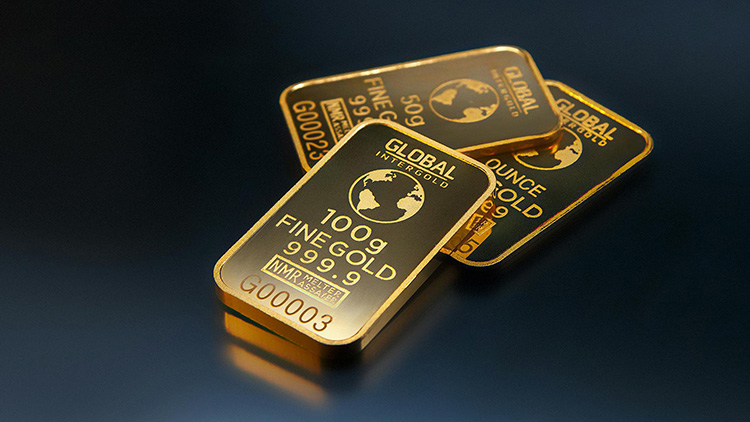
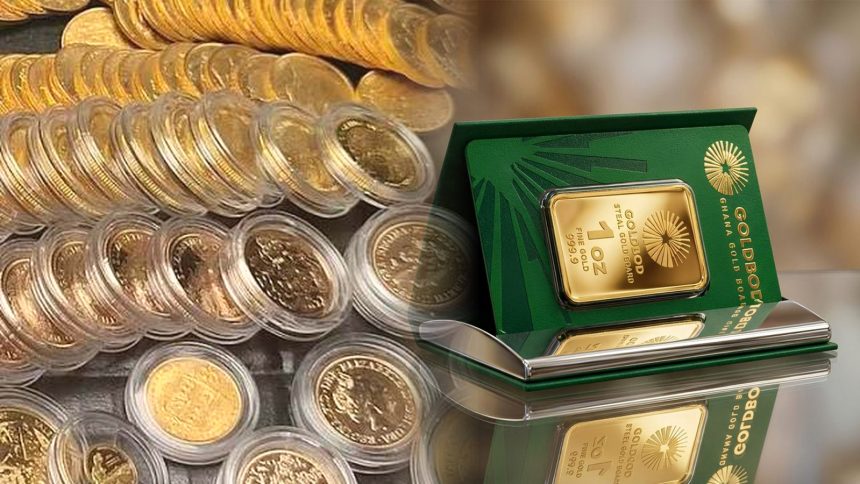
Gold is a physical asset. You buy it, hold it, and its value changes based on global market prices. In Ghana, you can now buy gold through the Ghana Gold Coin issued by the Bank of Ghana.
📢 GET A DETAILED ARTICLES + JOBS
Join ASJ's WhatsApp Channel and never miss a post or opportunity.
One pays you in cedis. The other preserves your wealth regardless of what the cedi is doing.
What Treasury Bills Offer
Current Rates
As of September 2026, Treasury bill rates have fallen significantly. The 91-day bill yields 4.69%, the 182-day bill yields 6.51%, and the 364-day bill yields 10.10% . Just a few months earlier, the 364-day bill was yielding over 12% .
The Guarantee
Treasury bills are backed by the full faith and credit of the Government of Ghana. For a local investor, this is the closest thing to a risk-free investment. You know exactly what you will earn and when you will get your money back .
The Catch: You Are Lending in Cedis
The government pays you back in cedis. If the cedi loses value against the dollar during your investment period, your purchasing power falls, even though the cedi amount is guaranteed.
The cedi depreciated by nearly 9% year-to-date against the dollar as of September 2026 . If you earned 10% on a 364-day bill but the cedi lost 9% of its value, your real return was barely above zero.
What Gold Offers
Current Prices
The Ghana Gold Coin, issued by the Bank of Ghana, is priced based on the London Bullion Market Association (LBMA) gold price converted to cedis. As of September 2, 2026, the 1 oz coin was priced at GH¢50,825.71, the 0.50 oz coin at GH¢25,764.80, and the 0.25 oz coin at GH¢13,257.23 .
The Hedge
Gold is priced in US dollars globally. When the cedi weakens, the cedi price of gold rises. This makes gold a natural hedge against currency depreciation.
Gold climbed to $4,589.42 per ounce globally in January 2026, driven by geopolitical uncertainty . In cedi terms, the gains are even larger when the local currency weakens.
The Catch: No Guarantee
Gold prices can fall. There is no government guarantee. The Bank of Ghana guarantees the authenticity of the Ghana Gold Coin, but not its future price . You buy gold hoping its value rises, but there is no promise.
Head-to-Head Comparison
| Feature | Treasury Bills | Gold (Ghana Gold Coin) |
|---|---|---|
| Return Type | Fixed interest in cedis | Price appreciation in cedis and dollars |
| Current Yield/Price | 4.69% – 10.10% | 1 oz: GH¢50,825.71 |
| Guarantee | Government-backed | No price guarantee |
| Protection Against Cedi Depreciation | None | Strong |
| Liquidity | Locked for term (91–364 days) | Sell back to bank; pricing daily |
| Minimum Investment | Low (can start with small amounts) | 0.25 oz (approx. GH¢13,257) |
| Tax Treatment | Exempt for individuals | Capital gains may apply |
| Best For | Short-term parking, predictable income | Long-term wealth preservation |
Which One Should You Choose?
Choose Treasury bills if:
-
You need a guaranteed return in cedis
-
You are investing for a short period and want certainty
-
You want a predictable income stream
-
You believe the cedi will remain stable
Choose gold if:
-
You want to protect your wealth from cedi depreciation
-
You are investing for the long term
-
You want a tangible asset you can hold
-
You believe global uncertainty will continue to support gold prices
The Hybrid Approach
Many smart investors use both. They park short-term money in Treasury bills for guaranteed returns and hold gold as a long-term hedge. When the cedi weakens, gold gains offset some of the pain. When rates are attractive, Treasury bills deliver steady income.
The key is to understand that they serve different purposes. Treasury bills are your fixed-income tool. Gold is your currency hedge.
Quick Facts
| Topic | Details |
|---|---|
| 91-day T-bill (Sept 2026) | 4.69% |
| 364-day T-bill (Sept 2026) | 10.10% |
| 1 oz Gold Coin (Sept 2026) | GH¢50,825.71 |
| 0.25 oz Gold Coin | GH¢13,257.23 |
| Cedi Depreciation YTD | ~9% |
| Gold Global Price (Jan 2026) | $4,589.42/oz |
| T-Bill Tax | Exempt for individuals |
| Gold Purchase Channel | Commercial banks (for GGC) |
Frequently Asked Questions
1. What is the main difference between gold and Treasury bills?
Treasury bills are loans to the government that pay fixed interest in cedis. Gold is a physical asset whose price changes based on global markets. T-bills offer guaranteed returns; gold offers protection against currency depreciation .
2. Which is safer: gold or Treasury bills?
Treasury bills are safer in terms of guaranteed returns because they are backed by the government. Gold prices can fall. However, gold protects against cedi depreciation, which T-bills do not .
3. What are current Treasury bill rates in Ghana?
As of September 2026, the 91-day bill yields 4.69%, the 182-day bill yields 6.51%, and the 364-day bill yields 10.10% .
4. How much does the Ghana Gold Coin cost?
As of September 2, 2026, the 1 oz coin costs GH¢50,825.71, the 0.50 oz coin costs GH¢25,764.80, and the 0.25 oz coin costs GH¢13,257.23 .
5. Can I lose money with Treasury bills?
If you hold to maturity, you get your principal and interest back. The main risk is that inflation or cedi depreciation erodes your purchasing power .
6. Does gold protect against cedi depreciation?
Yes. Gold is priced in US dollars globally. When the cedi weakens, the cedi price of gold rises, providing a natural hedge .
7. What is the minimum investment for gold in Ghana?
The smallest Ghana Gold Coin is 0.25 oz, priced at approximately GH¢13,257 as of September 2026. You can also buy Goldbod Jewellery Tablets starting from 1 gram.
8. Are Treasury bill returns tax-free in Ghana?
Yes. Interest paid to individuals on Government of Ghana securities, including Treasury bills, is exempt from tax
Source: Accra Street Journal
Last Updated on September 17, 2026 by Samuel Kwame Boadu
Disclaimer: Some content on Accra Street Journal may be aggregated, summarized, or edited from third-party sources for informational purposes. Images and media are used under fair use or royalty-free licenses. Accra Street Journal is a subsidiary of SamBoad Publishing Hub under SamBoad Business Group Ltd, registered in Ghana since 2014.
For concerns or inquiries, please visit our Privacy Policy or Contact Page.

Samuel Kwame Boadu is a Ghanaian media entrepreneur and storyteller with a passion for amplifying urban voices and uncovering everyday truths. He is the Editor-in-Chief and Founder of Accra Street Journal, a dynamic digital platform dedicated to capturing the pulse of Ghana’s capital—its people, culture, challenges, business, sports and innovations.