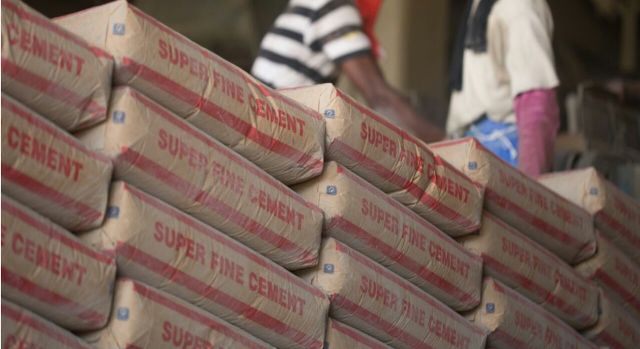
From its 2002 founding in Aflao to its current status as a 1.7 million-tonne producer, the Indian-owned subsidiary of the West African Cement Group (WACEM) has built an unassailable fortress in Ghana‘s Volta Region. With a 25% market share (second only to Ghacem), a $15.75 million annual import turnover, and exports reaching across West Africa, the company is the cement industry’s quiet giant—proving that a strategic location at the Togo border can be a competitive superpower.
Executive Introduction
In Ghana‘s cement industry, the loudest names are often the most visible: Ghacem with its 58-year heritage, CIMAF with its aggressive 25kg bag pricing, and Dangote with its pan-African scale. But operating in the eastern corridor of the country—far from the Accra-Tema industrial belt—is Diamond Cement Ghana Ltd, a company that has quietly built a 1.7 million-tonne production capacity and captured 25% of the national market .

Founded in 2002 and inaugurated by former President John Kufuor in 2004, Diamond Cement is a subsidiary of the West African Cement Group (WACEM) , an Indian-owned conglomerate . The company‘s strategic location in Aflao, in the Volta Region near the border with Togo, is not merely a logistical choice; it is a competitive superpower. From this base, Diamond Cement exports to Togo, Benin, Burkina Faso, and other West African countries, serving as a regional hub for cement distribution.
📢 GET A DETAILED ARTICLES + JOBS
Join ASJ's WhatsApp Channel and never miss a post or opportunity.

The company operates two manufacturing facilities: its original Aflao plant, which started with a capacity of 700,000 tonnes per annum, and the Western Diamond Cement Limited (WDCL) plant in Takoradi, which added a further 1.0 million tonnes of capacity . The Aflao plant uses Programmable Logic Control (PLC) technology for consistency in quality , while the Takoradi plant, which commenced commercial production in September 2013, is equipped with a Vertical Roller Mill (VRM) and specialises in Slag Cement for the oil industry .
For construction executives, cement retailers, and industry analysts, Diamond Cement represents a case study in border-based manufacturing, regional export strategy, and sustained market share in the shadow of giants. This profile examines the company‘s 2002 founding, its 1.7 million-tonne combined capacity, its 25% market share, its $15.75 million import trade, its Aflao and Takoradi plants, its export activity across West Africa, its workforce of 1,300 (including the Takoradi plant‘s 1,200 jobs), its ownership under WACEM, its role in the Chamber of Cement Manufacturers (COCMAG), and the critical question: Can Diamond Cement maintain its 25% market share against the aggressive expansion of Dangote and the capacity growth of CIMAF?

Company Overview: The Indian-Owned, Volta Region-Based Challenger
The Genesis: A 2002 Greenfield Project in Aflao
Diamond Cement Ghana Limited was founded in 2002 as a subsidiary of the West African Cement Group (WACEM) , an Indian-owned conglomerate . The company chose Aflao in the Volta Region as its location—a strategic decision driven by proximity to the Togo border, access to the Lomé port, and the ability to serve both the Ghanaian market and export markets in Togo, Benin, and Burkina Faso.
The plant started production in 2002 with an annual capacity of 700,000 tonnes of cement . The facility was inaugurated by former President John Agyekum Kufuor in 2004 , marking a significant milestone in Ghana‘s industrialisation drive.
The Aflao plant uses the latest technology of Programmable Logic Control (PLC) systems in the cement production process to maintain consistency in quality . The plant complements the government‘s Industrialization Program and economic uplift .
The Takoradi Expansion: Western Diamond Cement Limited
In September 2012, construction began on a second plant in Takoradi, Western Region, under the entity Western Diamond Cement Limited (WDCL) . The plant was established under the Companies Code 1963 (Act 179) and is located in Takoradi, Ghana .
WDCL is a cement-grinding unit equipped with modern technology, specifically a Vertical Roller Mill (VRM) . The plant manufactures PLC cement and Slag Cement, with the Slag Cement product especially meant for the oil industry in the Western Region .
Key details of the Takoradi plant:
| Metric | Value |
|---|---|
| Rated Capacity | 1.0 million MT per year |
| Technology | Vertical Roller Mill (VRM) |
| Primary Products | PLC cement, Slag Cement (for oil industry) |
| Project Cost | US$32 million |
| Construction Start | September 2012 |
| Commercial Production | September 2013 |
| Primary Market | Western Region of Ghana |
| Secondary Market | Export to other West African countries |
Source: ASJ Industry Analysis
The total project cost was estimated at US$32 million . The main objective of the plant is to produce cement for the Ghanaian market, especially the western part of Ghana, and to export to other countries of West Africa .
The West African Cement Group (WACEM) Structure
Diamond Cement Ghana Ltd is part of the West African Cement Group (WACEM) , an Indian-owned cement conglomerate with operations across West Africa. The group‘s portfolio includes:

| Country | Operation |
|---|---|
| Ghana | Diamond Cement Ghana Ltd (Aflao) |
| Ghana | Western Diamond Cement Ltd (Takoradi) |
| Togo | WACEM Togo S.A. (clinker production) |
| Other West African markets | Distribution and trading |
The Integrated Model:
Unlike grinding plants that depend entirely on imported clinker, WACEM has a vertically integrated model. The group owns clinker production facilities in Togo, supplying Diamond Cement‘s Ghana operations with raw materials. This vertical integration is a significant competitive advantage, reducing exposure to global clinker price volatility and supply disruptions.
Key Operational Metrics (2025-2026)
| Metric | Value |
|---|---|
| Year Founded (Aflao) | 2002 |
| Year Inaugurated | 2004 |
| Aflao Plant Capacity | 700,000 tonnes per annum (initial) |
| Takoradi Plant Capacity | 1.0 million tonnes per annum |
| Total Installed Capacity | 1.7 million tonnes per annum |
| Market Share | 25% (second only to Ghacem) |
| Employees (Group) | ~1,300 (Takoradi plant alone to employ 1,200) |
| Ownership | Subsidiary of West African Cement Group (WACEM), Indian-owned |
| Key Location | Aflao, Volta Region (near Togo border) |
| Second Location | Takoradi, Western Region |
| Primary Products | PLC cement, Slag Cement |
| Key Certifications | Not specified in sources |
| GSA Status | Compliant, represented at COCMAG meeting (2025) |
| Industry Association | Chamber of Cement Manufacturers, Ghana (COCMAG) |
| Website | diamondcement.com |
Diamond Cement vs. Other Players: Capacity Comparison
| Company | Capacity (MTA) | Market Share (2013/2015) | Latest Share |
|---|---|---|---|
| Ghacem | ~2.4 | 58% | Market leader |
| Diamond Cement (Ghana) | 1.7 | 25% | ~20-25% |
| CIMAF | 2.3 | — | Growing |
| Dangote Cement | Terminal operation | 11% | Growing |
Source: ASJ Industry Analysis
According to 2013/2015 data, Diamond Cement held 25% market share, second only to Ghacem‘s 58% . By 2024, Diamond Cement‘s market share was estimated between 20% and 25%, still second in the market .
The Aflao Plant: A Strategic Border Asset
Location as Competitive Advantage
The Aflao plant‘s location is its greatest strategic asset. Situated in the Volta Region near the border with Togo, the plant is:
-
Proximity to Lomé Port: The plant is close to the port of Lomé, a major regional hub for clinker imports.
-
Access to Togo Market: Exports to Togo are logistically simple and cost-effective.
-
Access to Benin, Burkina Faso, and Beyond: The eastern corridor provides access to landlocked West African markets.
-
Serving Ghana‘s Volta Region: The plant serves the Volta Region, which has historically been underserved by Accra-based competitors.
Technology: Programmable Logic Control (PLC) System
The Aflao plant uses the latest technology of Programmable Logic Control (PLC) systems in the cement production process . This technology:
-
Enables automated control of the production process
-
Ensures consistency in product quality
-
Reduces human error and variability
-
Improves production efficiency
The plant complements the Government Industrialization Program and economic uplift .
Production Capacity: 700,000 Tonnes Per Annum
The Aflao plant has an initial annual production capacity of 700,000 tonnes of cement . While this is smaller than the Takoradi plant (1.0 million tonnes), the Aflao facility remains operational and serves the eastern corridor market.
Export Orientation
The Aflao plant‘s location makes it ideal for exports. Diamond Cement Ghana Limited recorded export shipments in 2025 , with the company listed as both the shipper and consignee for cement grinding aid exports to Togo .
The Takoradi Plant: Western Diamond Cement Limited (WDCL)
The US$32 Million Investment
Western Diamond Cement Limited (WDCL) is a cement-grinding unit located in Takoradi, Western Region, Ghana . The plant is registered under the Companies Code 1963 (Act 179).
| Metric | Value |
|---|---|
| Rated Capacity | 1.0 million MT per year |
| Technology | Vertical Roller Mill (VRM) |
| Products | PLC cement, Slag Cement |
| Project Cost | US$32 million |
| Construction Start | September 2012 |
| Commercial Production | September 2013 |
Source: ASJ Industry Analysis

Slag Cement for the Oil Industry
The Takoradi plant manufactures PLC cement and Slag Cement, with the Slag Cement product especially meant for the oil industry . The Western Region is Ghana‘s oil and gas hub, hosting the Jubilee, TEN, and OCTP oil fields. Slag cement is used in:
-
Oil well cementing
-
High-temperature and high-pressure environments
-
Corrosion-resistant applications
Export Ambition
The main objective of the plant is to produce cement for the Ghanaian market, especially the western part of Ghana, and export to other countries of West Africa .
Employment Impact
The Takoradi plant was expected to create about 1,200 jobs , significantly contributing to employment in the Western Region. Combined with the Aflao plant‘s workforce, Diamond Cement is a major employer in Ghana‘s industrial sector.
Market Position and Competition
Ghana Cement Market Share (2013/2015 Data)
According to Myjoyonline data cited by News Ghana, the cement market shares were:
| Company | Market Share |
|---|---|
| Ghacem | 58% |
| Diamond Cement | 25% |
| Dangote Cement | 11% |
Source: ASJ Industry Analysis
Latest Estimates (2024-2025)
By 2024, Dangote had announced a $35 million expansion to increase its capacity, projecting a 30% market share . Ghacem‘s share had likely declined from its 58% peak due to the entry of CIMAF and the expansion of Dangote.
Diamond Cement‘s market share is estimated between 20% and 25% , still second in the market . The company‘s strategic location and export capabilities protect its position.
Diamond Cement vs. Competitors
| Company | Strengths | Diamond‘s Advantage |
|---|---|---|
| Ghacem | Brand heritage (58 years), market leader | Lower price point, regional focus |
| CIMAF | Aggressive 25kg bag pricing, 2.3M tonne capacity | Volta Region dominance, export capabilities |
| Dangote | Pan-African scale, aggressive pricing | Established regional presence, lower price point (GH¢75-85) |
| Diamond | Volta Region location, border access, export network, 1.7M tonne capacity | Price advantage (GH¢75-85) |
Diamond Cement‘s Pricing Advantage
In June 2024, cement prices in Ghana varied significantly by brand:
| Brand | Price per Bag (GH¢) |
|---|---|
| Diamond Cement | 75 – 85 |
| Dangote Cement | 92 – 94 |
| Dzata Cement | 108 |
| Ghacem | 110 |
Diamond Cement was the lowest-priced major brand in the market, significantly undercutting Ghacem and Dzata while still below Dangote‘s price . This price advantage is a key competitive weapon, particularly in the price-sensitive Volta Region market.
The $15.75 Million Import Engine: Trade Data Analysis
Diamond Cement Ghana Limited‘s import and export activity provides a window into its scale and supply chain strategy. According to MarketInside trade data covering January 2025 to December 2025 , the company recorded significant international trade activity .
| Metric | Value |
|---|---|
| Import Turnover | $15.75 million |
| Export Turnover | $31,260 |
| Total Import Shipments | 125 |
| Total Export Shipments | 2 |
Source: The High Street Business
Top Import Sources
| Country | Share of Import Value |
|---|---|
| Togo | 52.31% |
| United Arab Emirates | 28.90% |
| China | 9.90% |
| Morocco | 7.41% |
| Belgium | 1.22% |
Source:
Strategic Implications of Import Data
1. Togo as Primary Source (52.31%):
The West African Cement Group (WACEM) owns clinker production facilities in Togo. Diamond Cement‘s imports from Togo likely represent intra-group transfers of clinker from WACEM‘s Togolese operations to its Ghanaian grinding plants. This vertical integration is a significant competitive advantage, reducing exposure to global clinker price volatility.
2. United Arab Emirates (28.90%) as Secondary Source:
The UAE is a major global trading hub for cement and clinker. Diamond Cement likely supplements its intra-group supply with imports from the UAE when demand exceeds WACEM‘s Togolese production capacity.
3. China (9.90%) and Morocco (7.41%) as Supplementary Sources:
China and Morocco are also significant cement and clinker producers. The diversification across multiple sources (Togo, UAE, China, Morocco, Belgium) reduces supply chain risk.
Export Activity
Diamond Cement recorded export shipments to Togo, with the company listed as both the shipper and consignee for cement grinding aid exports . The export turnover of $31,260 is modest compared to its import volume, but the strategic significance lies in the company‘s role as a regional hub for cement distribution.
Primary Import Ports
-
Lomé, Togo (primary)
-
Tema, Ghana
-
Takoradi, Ghana
The use of Lomé port for imports (via Togo) is notable. The Aflao plant‘s proximity to Lomé gives Diamond Cement a logistical advantage over competitors who rely solely on Tema port.
Regulatory Compliance and Industry Standing
Chamber of Cement Manufacturers (COCMAG)
Diamond Cement is a member of the Chamber of Cement Manufacturers, Ghana (COCMAG) , the industry association representing cement producers in the country .
In July 2025, the Minister for Trade, Agribusiness and Industry, Hon. Elizabeth Ofosu-Adjare, met with COCMAG members, including representatives from Ghacem, Cimaf, CBI, Dimond [sic], Dangote, Dzata, and Empire cement . The meeting focused on pricing and standardisation.
The COCMAG members lauded the engagement, pledging to work to ensure price reduction in the coming months and adhere to strict standardisation processes .
GSA Standards Compliance
The Minister announced that from August 2025, inspectors from the Ghana Standards Authority (GSA) would be deployed for quarterly inspections to ensure cement products meet national standards . She cautioned that failure to meet required GSA standards will result in the company‘s shutdown .
Diamond Cement‘s continued operation and its membership in COCMAG indicate that the company meets the required standards.
Labour and Employment
The Takoradi plant was expected to create about 1,200 jobs , significantly contributing to employment in the Western Region. Combined with the Aflao plant‘s workforce and the company‘s distribution network, Diamond Cement is a significant employer in Ghana‘s industrial sector.
Competitive Advantages
1. Strategic Border Location (Aflao):
The Aflao plant‘s location near the Togo border provides access to:
-
Lomé port for clinker imports
-
Togo, Benin, and Burkina Faso export markets
-
The Volta Region market
2. Vertically Integrated Supply Chain (WACEM):
As part of the West African Cement Group (WACEM), Diamond Cement has access to clinker from WACEM‘s Togolese operations, reducing exposure to global price volatility . The Togo source accounts for 52.31% of imports .
3. Dual-Plant Strategy (Aflao + Takoradi):
With plants in Aflao (eastern corridor) and Takoradi (western region), Diamond Cement serves both ends of the country, reducing transportation costs and improving supply reliability.
4. Slag Cement for Oil Industry:
The Takoradi plant‘s production of Slag Cement for the oil industry gives Diamond Cement a niche product that competitors do not offer. This product serves Ghana‘s offshore oil and gas sector.
5. Price Advantage (GH¢75-85 per bag):
Diamond Cement was the lowest-priced major brand in June 2024, selling at GH¢75-85 per bag compared to Ghacem‘s GH¢110 . This price advantage is significant in the price-sensitive Volta Region.
6. 1.7 Million Tonne Capacity:
With a combined capacity of 1.7 million tonnes, Diamond Cement is a major producer, capable of meeting significant domestic and export demand.
7. Export Capability:
Diamond Cement‘s location and capacity enable exports to Togo, Benin, Burkina Faso, and other West African countries. The company is a regional cement hub, not just a domestic supplier.
Challenges and Risks
Risk 1: Clinker Import Dependency (Mitigated by WACEM Integration):
While Diamond Cement imports clinker from Togo (WACEM), it remains dependent on a consistent supply from its parent. Disruptions to WACEM‘s Togolese operations would affect production.
Mitigation: Intra-group transfers provide more stability than open-market purchases.
Risk 2: Currency Volatility:
Diamond Cement‘s costs are partly denominated in foreign currencies (for imported clinker), while revenue is in Ghana cedis. The cedi‘s volatility compresses margins when local currency depreciates.
Mitigation: The company adjusts prices in response to cost movements, but sustained depreciation erodes competitiveness.
Risk 3: Intense Competition:
Ghacem has decades of brand loyalty. CIMAF has aggressive pricing and a popular 25kg bag. Dangote has pan-African scale and aggressive expansion plans (projecting 30% market share). Diamond must defend its 20-25% share against these challengers.
Mitigation: Price advantage (GH¢75-85) and regional focus protect Diamond‘s position.
Risk 4: Dangote‘s Expansion:
Dangote announced a $35 million expansion to increase its capacity, projecting a 30% market share . If Dangote succeeds, Diamond‘s share could be eroded.
Mitigation: Diamond‘s regional focus (Volta Region) and price advantage provide a degree of insulation.
Risk 5: Regulatory Compliance (GSA Standards):
The GSA has announced quarterly inspections starting August 2025 . Any compliance failure could result in shutdown.
Mitigation: Diamond is a COCMAG member and has operated compliantly for over two decades.
Risk 6: Export Market Competition:
Diamond faces competition in export markets from other WACEM operations and from competitors with lower cost bases.
Mitigation: The Aflao plant‘s location provides a logistical advantage.
Risk 7: Price War:
If Ghacem or Dangote lower prices aggressively to capture market share, Diamond‘s price advantage could erode.
Mitigation: Diamond‘s lower cost base (vertical integration, WACEM clinker) provides some protection.
Economic and Industry Impact
Employment
Diamond Cement is a major employer in Ghana‘s industrial sector. The Takoradi plant alone was expected to create about 1,200 jobs , and the Aflao plant employs a significant workforce. Combined with indirect employment through distribution, logistics, and supply chains, the company supports thousands of Ghanaian jobs.
Regional Development (Volta Region)
The Aflao plant is a cornerstone of industrial development in the Volta Region, an area that has historically been less industrialised than Greater Accra and Ashanti. The plant provides employment, tax revenue, and local procurement opportunities.
Export Earnings
Diamond Cement‘s exports to Togo, Benin, Burkina Faso, and other West African countries generate foreign exchange for Ghana, supporting the cedi and reducing the trade deficit.
Competition and Consumer Choice
Diamond Cement‘s presence in the market, particularly its lower price point (GH¢75-85 per bag), puts downward pressure on cement prices, benefiting Ghanaian consumers and the construction industry.
Support for the Oil Industry
The Takoradi plant‘s production of Slag Cement for the oil industry supports Ghana‘s offshore oil and gas sector, providing a locally-produced product for well cementing and other applications.
Future Outlook
As of June 2026, Diamond Cement is in a market defence and regional expansion phase. The company has established capacity (1.7 million tonnes) and must now defend its 20-25% market share against aggressive competitors while expanding its export reach.
The Immediate Agenda (2026-2027)
-
Defend Market Share (20-25%): Protect position against CIMAF and Dangote expansion.
-
Maintain Price Advantage (GH¢75-85): Keep pricing below major competitors.
-
Expand Exports: Leverage Aflao location to increase exports to Togo, Benin, Burkina Faso.
-
Maintain Regulatory Compliance: Ensure continued GSA certification and COCMAG engagement.
-
Maximise Takoradi Plant Utilisation: Ensure the 1.0 million-tonne plant operates at or near full capacity.
-
Deepen WACEM Integration: Strengthen supply chain linkages with Togolese clinker operations.
The Bull Case (Optimistic)
-
Market Share Defended: Diamond Cement maintains 20-25% market share despite Dangote‘s expansion.
-
Exports Grow: The company increases export volumes to Togo, Benin, and Burkina Faso, diversifying revenue.
-
Takoradi Plant Fully Utilised: The 1.0 million-tonne plant operates at 90%+ capacity, serving the Western Region and oil industry.
-
Price Advantage Maintained: Diamond continues to offer the lowest price among major brands (GH¢75-85) .
-
WACEM Synergies Deepen: Clinker supply from Togo remains stable and cost-effective.
The Bear Case (Pessimistic)
-
Dangote Expansion Erodes Share: Dangote achieves its projected 30% market share . Diamond‘s share falls below 15%.
-
Price War: Ghacem or Dangote lower prices aggressively, eroding Diamond‘s price advantage.
-
Clinker Supply Disruption: WACEM‘s Togolese operations face disruptions, affecting Diamond‘s production.
-
Currency Crisis: The cedi depreciates sharply. Imported clinker costs spike. Diamond raises prices, losing its competitive position.
-
Regulatory Setback: GSA inspection identifies compliance issues, leading to shutdown.
The Verdict
Diamond Cement Ghana Ltd is the quiet giant of Ghana‘s cement industry. Operating from its strategic base in Aflao, Volta Region, the company has built a 1.7 million-tonne production capacity and captured 25% of the national market, second only to Ghacem . Its 2002 founding and 2004 inauguration by President Kufuor established it as a pioneer in the eastern corridor .
The company‘s strengths are formidable. Its Aflao location near the Togo border provides access to Lomé port, the Togo market, and export routes to Benin and Burkina Faso . Its Takoradi plant, completed in 2013 at a cost of US$32 million, added 1.0 million tonnes of capacity and produces Slag Cement for the oil industry . Its price of GH¢75-85 per bag in June 2024 was the lowest among major brands . Its import trade of $15.75 million in 2025, primarily from Togo (52.31%), reflects the vertical integration of its parent, the West African Cement Group (WACEM) .
The company is led by a management team that has operated successfully for over two decades. Its 25% market share (as of 2013/2015 data) has likely declined modestly due to the entry of CIMAF and the expansion of Dangote, but it remains the second-largest player in the market .
The risks are real: Dangote‘s $35 million expansion aims to capture 30% market share , and price competition is intense. The GSA‘s quarterly inspections, beginning August 2025, add regulatory pressure . And currency volatility remains a persistent threat to all cement manufacturers.
For the Ghanaian contractor seeking the lowest-priced cement, Diamond offers the best value among major brands. For the oil industry, Diamond offers Slag Cement produced locally in Takoradi. For the Volta Region, Diamond is a cornerstone of industrial development and employment.
Diamond Cement is not trying to be the largest cement manufacturer in Ghana—Ghacem holds that crown. It is not trying to be the cheapest—CIMAF‘s 25kg bag strategy targets a different segment. It is trying to be the most reliable supplier for the eastern corridor, the western oil region, and export markets across West Africa.
With a 1.7 million-tonne capacity, a 25% market share, a price advantage, and the backing of WACEM, it is well-positioned to maintain its place as Ghana‘s second-largest cement manufacturer.
FAQ SECTION
1. Is Diamond Cement a Ghanaian-owned company?
No. Diamond Cement Ghana Ltd is a subsidiary of the West African Cement Group (WACEM) , an Indian-owned conglomerate .
2. When was Diamond Cement Ghana founded?
Diamond Cement Ghana was founded in 2002 and inaugurated by former President John Agyekum Kufuor in 2004 .
3. Where is Diamond Cement‘s headquarters and primary plant located?
The company‘s headquarters and primary plant are located in Aflao, Volta Region, near the border with Togo .
4. Where is the second Diamond Cement plant located?
The second plant, Western Diamond Cement Limited (WDCL) , is located in Takoradi, Western Region .
5. What is Diamond Cement‘s total production capacity?
The Aflao plant has a capacity of 700,000 tonnes per annum, and the Takoradi plant has a capacity of 1.0 million tonnes per annum, for a total of 1.7 million tonnes per annum .
6. What is Diamond Cement‘s market share?
Diamond Cement holds approximately 25% market share (as of 2013/2015 data), making it the second-largest cement manufacturer in Ghana after Ghacem .
7. What products does Diamond Cement manufacture?
The Aflao plant manufactures PLC cement. The Takoradi plant manufactures PLC cement and Slag Cement, with the Slag Cement product especially meant for the oil industry .
8. How much did the Takoradi plant cost to build?
The Takoradi plant cost an estimated US$32 million .
9. How many jobs did the Takoradi plant create?
The Takoradi plant was expected to create about 1,200 jobs .
10. What is Diamond Cement‘s import volume?
Between January and December 2025, Diamond Cement recorded an import turnover of $15.75 million across 125 shipments .
11. Where does Diamond Cement import from?
Diamond Cement imports primarily from Togo (52.31%) , followed by the United Arab Emirates (28.90%), China (9.90%), Morocco (7.41%), and Belgium (1.22%) .
12. How much does Diamond Cement cost per bag?
In June 2024, Diamond Cement was priced at GH¢75–85 per bag, making it the lowest-priced major brand in the market .
QUICK FACTS BOX
| Item | Details |
|---|---|
| Legal Name | Diamond Cement Ghana Limited |
| Year Founded | 2002 |
| Year Inaugurated | 2004 |
| Ownership | Subsidiary of West African Cement Group (WACEM), Indian-owned |
| Headquarters | Aflao, Volta Region, Ghana |
| Aflao Plant Capacity | 700,000 tonnes per annum (initial) |
| Takoradi Plant Capacity | 1.0 million tonnes per annum |
| Total Capacity | 1.7 million tonnes per annum |
| Market Share | 25% (second only to Ghacem) |
| Employees (Takoradi) | ~1,200 jobs created |
| Key Products | PLC cement, Slag Cement (for oil industry) |
| Aflao Technology | Programmable Logic Control (PLC) system |
| Takoradi Technology | Vertical Roller Mill (VRM) |
| Takoradi Project Cost | US$32 million |
| Takoradi Construction Start | September 2012 |
| Takoradi Commercial Production | September 2013 |
| 2025 Import Turnover | $15.75 million |
| Primary Import Source | Togo (52.31%) |
| 2025 Import Shipments | 125 |
| 2025 Export Turnover | $31,260 |
| Price (June 2024) | GH¢75–85 per bag (lowest among major brands) |
| Industry Association | Chamber of Cement Manufacturers, Ghana (COCMAG) |
| GSA Compliance | Compliant; represented at COCMAG meeting (July 2025) |
| Regulator | Ghana Standards Authority (GSA) |
| Website | diamondcement.com |
Last Updated on June 9, 2026 by Samuel Kwame Boadu
Disclaimer: Some content on Accra Street Journal may be aggregated, summarized, or edited from third-party sources for informational purposes. Images and media are used under fair use or royalty-free licenses. Accra Street Journal is a subsidiary of SamBoad Publishing Hub under SamBoad Business Group Ltd, registered in Ghana since 2014.
For concerns or inquiries, please visit our Privacy Policy or Contact Page.

Samuel Kwame Boadu is a Ghanaian media entrepreneur and storyteller with a passion for amplifying urban voices and uncovering everyday truths. He is the Editor-in-Chief and Founder of Accra Street Journal, a dynamic digital platform dedicated to capturing the pulse of Ghana’s capital—its people, culture, challenges, business, sports and innovations.