While Ghana’s state-owned refinery continues to struggle toward revival, a private-sector heavyweight has quietly but decisively reshaped the country’s energy supply structure. New data from the CBOD 2024 Petroleum Sector Report shows that Ghana’s local refinery output surged by 60% in 2024, a headline figure that masks a more profound reality: almost all of that growth came from a single operator.
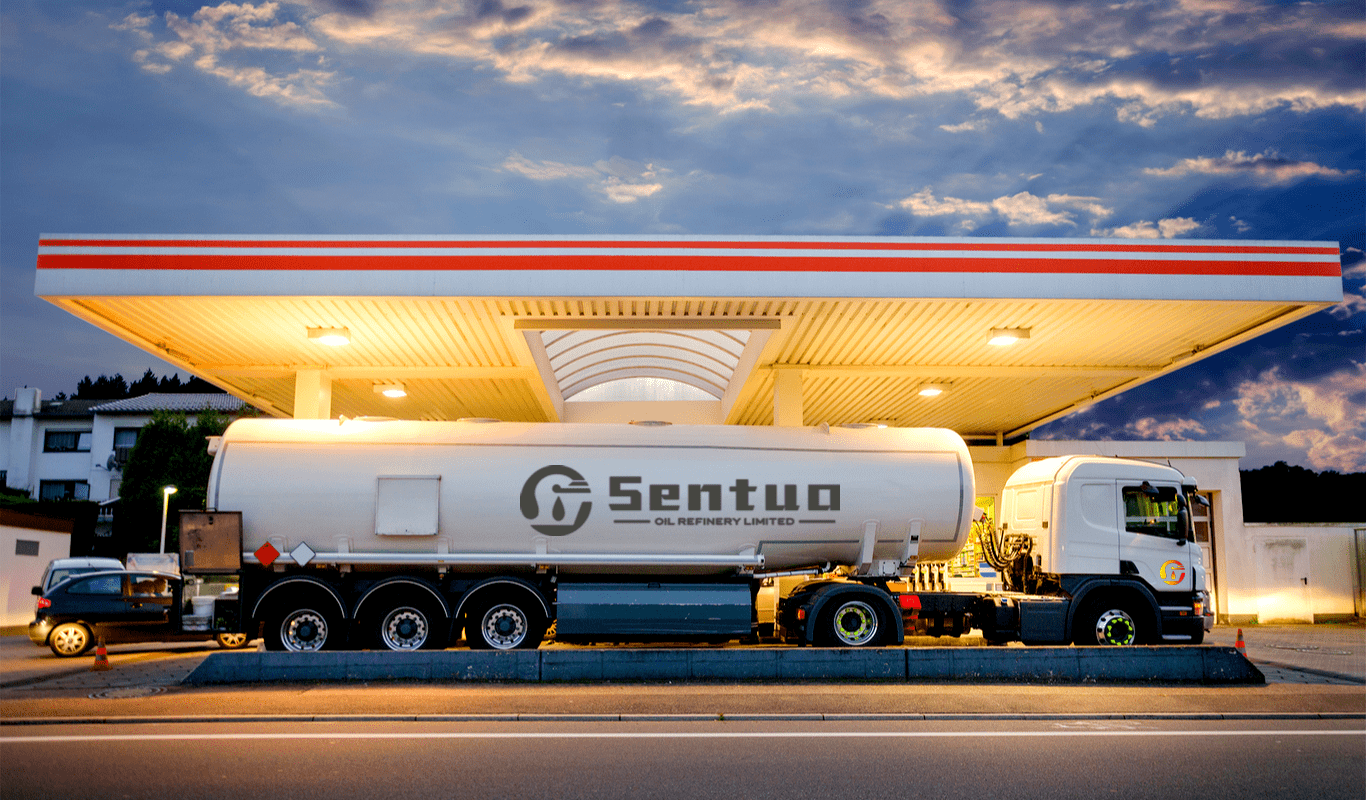
The Sentuo Oil Refinery, a 40,000-barrel-per-day facility commissioned in late 2023, has moved with remarkable speed from start-up status to national dominance. In just one year, it has altered the balance of Ghana’s downstream petroleum sector, redefining who produces fuel, who stores it, and who ultimately anchors energy security.

One Refinery, One Direction of Growth
According to the CBOD report, Sentuo’s production rose from 86,877 metric tonnes in 2023 to 312,070 metric tonnes in 2024. That represents a 260% increase in output, driven largely by the refinery’s transition to full-year operations.
📢 GET A DETAILED ARTICLES + JOBS
Join ASJ's WhatsApp Channel and never miss a post or opportunity.

By the end of 2024, Sentuo alone accounted for approximately 65% of all petroleum products refined within Ghana. In practical terms, this means that most of the fuel refined locally—diesel, petrol, and LPG—came from a single private facility.
This outcome is striking not just for its scale, but for what it reveals about the rest of the sector.

A Production Drought Elsewhere
While Sentuo expanded, every other local refinery recorded declining output in 2024. State-owned and smaller private facilities were constrained by persistent difficulties in securing crude oil feedstock, financing operations, and maintaining consistent throughput.
As these refineries stalled, Sentuo’s access to steady crude supply allowed it to fill the vacuum. The result is what industry observers now describe as a “last-man-standing” scenario in Ghana’s refining space, where capacity exists on paper, but only one player is effectively producing at scale.
This divergence has reshaped market structure. Ghana’s refinery growth in 2024 was not the result of sector-wide recovery, but of concentrated private capacity stepping in where public infrastructure faltered.
Supplying What Ghanaians Actually Use
Sentuo’s output mix reflects domestic consumption realities. According to the report, gasoil (diesel) accounts for 34% of production, gasoline (petrol) for 27%, and LPG for 25%.
The refinery’s strong LPG output is particularly significant. As Ghana pushes for wider adoption of clean cooking fuels, Sentuo has emerged as a critical supplier at a time when other refineries are contributing little or nothing to local LPG availability.
In effect, national clean energy goals are now partly dependent on the operational stability of a privately owned refinery.
Infrastructure Power Shifts to the Private Sector
Beyond refining, Sentuo’s influence extends into fuel storage. The CBOD report shows that private-sector storage capacity expanded from 37% in 2022 to nearly 46% in 2024. Almost all of that increase is attributable to Sentuo’s newly installed storage tanks.
Today, Sentuo controls nearly 24% of all privately held fuel storage capacity in Ghana. This shift is more than numerical. Storage determines supply resilience, pricing behaviour, and the ability to buffer shocks in fuel imports or logistics disruptions.
Infrastructure ownership, once dominated by the state, is now decisively tilting toward private hands.

Praise, With a Caution
The National Petroleum Authority (NPA) has acknowledged Sentuo’s growing role. During a working visit to the refinery in January 2026, NPA Chief Executive Godwin Edudzi Tamakloe praised the company’s contribution to fuel supply stability but urged deeper local content participation.
The message reflects a broader policy tension. On one hand, Sentuo has become indispensable to Ghana’s downstream sector. On the other, dependence on a single dominant operator introduces new risks—market concentration, bargaining power imbalances, and long-term questions about national energy sovereignty.
What This Means for Ghana’s Energy Future
Sentuo Oil’s rise underscores an uncomfortable truth: Ghana’s energy resilience is increasingly being underwritten by private infrastructure rather than public assets. This is not inherently negative. Private capital has delivered capacity, speed, and reliability where the state has struggled.
But it does raise strategic questions. Can Ghana afford to let state refineries remain dormant while private dominance deepens? What happens if commercial incentives shift or operational disruptions occur? And how should regulation evolve in a sector where one player supplies most locally refined fuel?
The commissioning of Sentuo under China’s Belt and Road framework has already altered the ownership map of Ghana’s energy infrastructure. The challenge now is ensuring that this new reality strengthens, rather than compromises, long-term energy security.
In 2024, Sentuo Oil did not just increase output. It redefined the structure of Ghana’s downstream petroleum sector. Whether that transformation becomes a foundation for broader industrial revival or a symbol of institutional imbalance will depend on how policymakers respond next.
Source: Accra Street Journal
Last Updated on January 19, 2026 by Samuel Kwame Boadu
Disclaimer: Some content on Accra Street Journal may be aggregated, summarized, or edited from third-party sources for informational purposes. Images and media are used under fair use or royalty-free licenses. Accra Street Journal is a subsidiary of SamBoad Publishing Hub under SamBoad Business Group Ltd, registered in Ghana since 2014.
For concerns or inquiries, please visit our Privacy Policy or Contact Page.


Samuel Kwame Boadu is a Ghanaian media entrepreneur and storyteller with a passion for amplifying urban voices and uncovering everyday truths. He is the Editor-in-Chief and Founder of Accra Street Journal, a dynamic digital platform dedicated to capturing the pulse of Ghana’s capital—its people, culture, challenges, business, sports and innovations.