






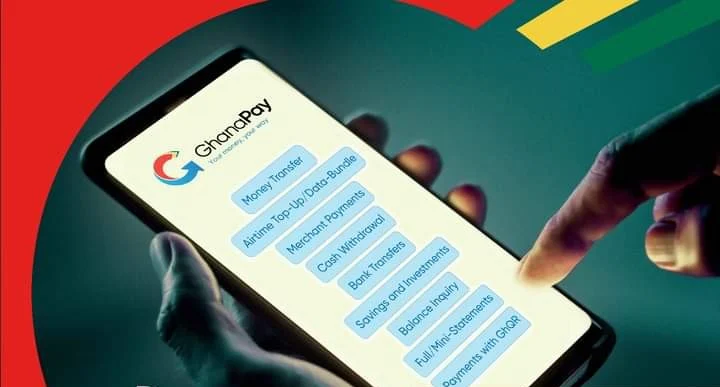

Launched by the Ghana Interbank Payment and Settlement Systems (GhIPSS) and backed by 23 banks, this state-sanctioned mobile wallet has quietly amassed over one million users by doing what the telco giants won’t—offering zero charges on peer-to-peer transfers and integrating directly with the formal banking system .

Executive Introduction
For over a decade, Ghana’s mobile money landscape has been defined by a simple equation: the telcos (MTN, Vodafone, AirtelTigo) own the customer, and everyone else pays them for access. Merchants pay fees to accept mobile money. Banks pay fees to connect to mobile money rails. And consumers pay fees to send money, withdraw cash, and even check their balances.
In 2022, an unlikely challenger entered the arena—not a well-funded fintech startup or a regional telecom giant, but the Ghana Interbank Payment and Settlement Systems (GhIPSS) , the Bank of Ghana’s wholly-owned subsidiary responsible for the country’s financial switching and settlement infrastructure . The product was called GhanaPay, and its proposition was as audacious as it was simple: zero charges on peer-to-peer transfers, direct linkage to bank accounts, and a suite of banking-grade features that no telco-led wallet could match.
📢 GET A DETAILED ARTICLES + JOBS
Join ASJ's WhatsApp Channel and never miss a post or opportunity.
Three years later, the results are impossible to ignore. As of June 2025, GhanaPay had surpassed one million active subscribers, a milestone that validates a fundamentally different approach to digital finance . The platform, accessible via USSD (*707#) or smartphone app, has transformed from an experiment in interoperability into a genuine competitor to MTN MoMo and Telecel Cash .
For investors, policymakers, and banking executives, GhanaPay represents a case study in public-sector-led innovation—a rare example of a state-backed entity successfully competing with private sector giants by leveraging its unique position as the neutral owner of Ghana’s payment infrastructure. The removal of the Electronic Transfer Levy (E-Levy) in 2025 supercharged adoption, making all transactions on the platform completely free . Its high-yield savings wallet, crowdfunding (“susu”) feature, and sponsored wallet functionality offer capabilities that telco-led wallets cannot replicate because they lack direct banking integration .
This profile examines GhanaPay’s origin story, its distinctive features, the strategic advantage of zero charges, its relationship with parent entity GhIPSS and CEO Archie Hesse, the competitive threat it poses to MTN MoMo and Telecel Cash, and the critical question: can a bank-owned, state-adjacent mobile wallet truly scale to challenge the telco duopoly, or will it remain a niche product for the banked elite?
Company Overview
The Genesis: When the Banks Decided to Fight Back
GhanaPay was launched on June 15, 2022 , marking the culmination of years of deliberation by Ghana’s banking sector . The premise was straightforward: if telcos could build billion-dollar businesses on the backs of mobile money, why couldn’t the banks—collectively—do the same?
The answer lay in the Ghana Interbank Payment and Settlement Systems (GhIPSS) , a subsidiary of the Bank of Ghana that already operated the country’s national payment infrastructure. GhIPSS owned the rails; it merely needed to build a consumer-facing product. GhanaPay was that product .
Uniquely, GhanaPay is not the product of a single institution but a shared service offered by 23 universal banks, rural banks, and savings and loans companies . This collective ownership model is GhanaPay’s defining structural characteristic. No single bank (or telco) controls it; the platform is a utility, owned by the industry and operated by GhIPSS on its behalf.
The Parent: GhIPSS and the Bank of Ghana Connection
GhIPSS (Ghana Interbank Payment and Settlement Systems Ltd) is the Bank of Ghana’s technical arm for payment systems development. Under the leadership of CEO Archie Hesse, GhIPSS has rolled out multiple electronic payment systems that have significantly reduced Ghana‘s reliance on cash transactions .
Key GhIPSS Innovations:
| Innovation | Purpose |
|---|---|
| Ghana’s Instant Payment (GIP) System | Real-time interbank transfers |
| Mobile Money Interoperability (MMI) | Cross-network mobile money transfers |
| GhQR | Universal QR code payments |
| GhanaPay | Bank-owned mobile money service |
| Ghana Automated Clearing House | Bulk payment processing |
In 2025, GhIPSS was named Payment Interoperability Leader of the Year at the Digital Innovation Awards, while CEO Archie Hesse was crowned Digital Payment Trailblazer of the Year . The recognition reflects GhIPSS‘s success in building a genuinely interoperable payment ecosystem—a feat that has attracted international attention, including a study tour by the Central Bank of Kenya to learn from Ghana’s experience .
Leadership: Samuel Darko-Head and the GhIPSS Team
Samuel Darko-Head serves as the Head of GhanaPay Mobile Money, leading the day-to-day operations of the platform . Under his management, GhanaPay has expanded its feature set, grown its user base, and maintained operational stability across both USSD and mobile app channels.
The broader GhIPSS leadership team, under CEO Archie Hesse, provides strategic direction. Hesse’s vision has been central to GhanaPay’s development; he has consistently advocated for a payment ecosystem that prioritizes interoperability, financial inclusion, and affordability .
Operations and Footprint
GhanaPay is available nationwide, accessible through two primary channels:
-
USSD: Dial
*707#on any mobile phone (feature phone or smartphone) -
Mobile App: Available on iOS and Android via the Apple App Store and Google Play Store
The platform’s USSD accessibility is strategically critical. Unlike app-only fintechs that exclude feature phone users, GhanaPay reaches the full spectrum of Ghanaian mobile phone owners—a design choice that reflects its financial inclusion mandate.
The app, developed by GHANA INTERBANK PAYMENT AND SETTLEMENT SYSTEMS LIMITED, requires iOS 12.0 or later (iPhone) and is free to download . The developer’s privacy practices include data handling for financial transactions; users are advised to review the privacy policy before registration .
Key Operational Metrics (as of June 2025):
| Metric | Value |
|---|---|
| Launch Date | June 15, 2022 |
| Active Subscribers | 1 million+ |
| Participating Banks | 23 |
| USSD Code | *707# |
| Channels | USSD, iOS App, Android App |
| Key Leadership | Samuel Darko-Head (Head, GhanaPay) |
| Parent Organization | GhIPSS (Bank of Ghana subsidiary) |
Registration Requirements
To register for a GhanaPay wallet, users require:
-
A valid national ID (Ghana Card)
-
A mobile phone number (any network)
-
The registration process can be completed either through the GhanaPay app or by dialling
*707#
Notably, users can register for a GhanaPay wallet with or without a bank account . Those with bank accounts can link them to the wallet for seamless transfers; those without can still use GhanaPay as a standalone mobile money wallet.
This flexibility is critical. By accommodating both banked and unbanked users, GhanaPay avoids the elitism that plagues many “digital financial inclusion” initiatives.
Business Model: The Bank-Owned Utility
GhanaPay’s business model is fundamentally different from telco-led mobile money services. Where MTN MoMo and Telecel Cash are profit centres designed to generate revenue for their parent telecom companies, GhanaPay is designed as a utility—a shared service that benefits the entire banking ecosystem.
The Collective Ownership Advantage
GhanaPay is provided by 23 universal banks, rural banks, and savings and loans companies acting in concert . These institutions collectively absorb costs that telcos pass on to consumers. The result is a pricing structure that competitors cannot feasibly match without sacrificing profitability.
As one analysis noted: “The 23 universal banks, savings and loan as well as rural banks, based on the strength of numbers, are able to absorb these transfer charges” . This collective absorption of transaction costs is GhanaPay’s superpower.
The E-Levy Repeal: A Turning Point
A major turning point in GhanaPay‘s adoption came with the scrapping of the Electronic Transfer Levy (E-Levy) in 2025 . With the E-Levy removed, all transactions on GhanaPay became completely free of charge .
Zero Charges on GhanaPay (Post-E-Levy Removal):
| Transaction Type | Charge | Competitor Typical Charge |
|---|---|---|
| Peer-to-Peer Transfers | GH¢0 | 1-2% of transaction value |
| Cash-in at Partner Bank | GH¢0 | Not applicable |
| Cash-out at Partner Bank | GH¢0 | 1% of withdrawal amount |
| Send to other networks | GH¢0 | Variable fees |
| Receive from other networks | GH¢0 | Variable fees |
This pricing advantage is not merely promotional; it is structural. GhanaPay can offer zero charges because its parent institutions are not dependent on transaction fees for revenue. The banks benefit indirectly—through increased deposit mobilization, reduced cash handling costs, and customer loyalty—rather than directly through per-transaction fees.
How GhanaPay Generates (Indirect) Value
GhanaPay does not need to turn a profit on each transaction to be successful. Its value to the banking ecosystem is realized through:
-
Low-cost deposit mobilization: Funds held in GhanaPay wallets are deposits that banks can lend out
-
Digital onboarding: GhanaPay serves as an entry point for unbanked users who may later open full bank accounts
-
Reduced cash handling: Digital transactions are cheaper for banks to process than cash
-
Customer retention: GhanaPay gives bank customers a reason to maintain their banking relationship
-
Competitive pressure: GhanaPay forces telcos to keep their fees reasonable
This model is similar to how the Ghana Automated Clearing House operates—not as a profit centre, but as essential infrastructure that the entire industry relies on.
The Subsidy Strategy
Essentially, GhanaPay is subsidized by the banking sector. The 23 participating institutions collectively absorb the transaction costs that would otherwise be passed to consumers . This is economically rational for the banks because:
-
They already incur the fixed costs of payment infrastructure
-
Marginal cost per additional digital transaction is very low
-
The alternative—cash—is far more expensive to handle
-
Losing deposit market share to telcos is far costlier than subsidizing GhanaPay
This subsidy model is sustainable as long as the banks view GhanaPay as strategic infrastructure rather than a profit centre. So far, the evidence suggests they do.
Features and Functionality
GhanaPay distinguishes itself from telco-led wallets not through promotional gimmicks but through substantive features that leverage its direct linkage to the banking system .
Feature Comparison: GhanaPay vs. Telco-Led Wallets
| Feature | GhanaPay | MTN MoMo / Telecel Cash |
|---|---|---|
| Peer-to-Peer Transfer Fees | GH¢0 | 1-2% of transaction value |
| Interoperability | Send/receive to all networks and bank accounts | Limited to own network (plus interoperability for transfers) |
| Bank Account Linkage | Direct, seamless, no charges for wallet↔bank transfers | Requires third-party integration; fees apply |
| Interest on Wallet Balance | Yes—competitive interest on daily balances | No |
| High-Yield Savings Wallet | Yes—dedicated savings pot with interest | No |
| Crowdfunding (Susu) | Yes—built-in group savings | No |
| Sponsored Wallet | Yes—send funds with spending limits and time controls | No |
| Standing Instructions | Yes—automate recurring payments | Limited |
| USSD Access | Yes (*707#) |
Yes |
| Smartphone App | Yes | Yes |
| GhQR Merchant Payments | Yes | Yes |
Detailed Feature Breakdown
1. Zero-Charge Peer-to-Peer Transfers
This is GhanaPay‘s headline feature. Users can send money to any mobile money wallet (MTN MoMo, Telecel Cash, AT Money, or another GhanaPay wallet) or to any bank account without paying transaction fees . The only charge that may apply is the statutory E-Levy (removed as of 2025) .
2. Direct Bank Account Linkage
GhanaPay wallets can be linked directly to the user‘s bank account, allowing seamless, charge-free transfers between the wallet and the account . This integration is not an afterthought; it is core to GhanaPay’s design, reflecting its origins in the banking sector.
3. High-Yield Savings Wallet
Unlike telco-led wallets, GhanaPay offers a dedicated savings wallet that allows users to move funds from their main wallet and earn competitive interest . The daily wallet balance also earns interest, meaning users are rewarded simply for holding funds in the account—a feature no telco offers .
4. Crowdfunding (Susu)
GhanaPay has a built-in crowdfunding feature that supports individuals and communities in raising funds for causes such as education, health, or emergencies . This digitises the traditional “susu” (rotating savings) model, bringing it into the formal financial system.
5. Sponsored Wallet
The sponsored wallet allows a user (the sponsor) to allocate funds to a beneficiary with spending limits and time controls, offering a safe and flexible way to support dependents, employees, or contractors . This feature has no equivalent in telco-led wallets.
6. Standing Instructions
Users can automate recurring payments—such as loan repayments, bills, or savings contributions—through standing instructions, encouraging financial discipline and convenience .
7. GhQR Merchant Payments
GhanaPay supports payments to merchants via GhQR, the universal QR code standard adopted by GhIPSS . This allows users to pay at thousands of merchants nationwide simply by scanning a QR code.
8. Token/Voucher Generation
If a beneficiary does not have a GhanaPay wallet, the sender can generate a token or voucher that the beneficiary can use to withdraw funds from any GhanaPay agent or bank branch .
9. Free Statements and Complaints
Users can request account statements instantly via the app or USSD at no charge—a small but meaningful differentiator in a market where fee-free services are rare .
10. Airtime and Data Purchase
Users can buy airtime and data for all networks (MTN, Telecel, AT) directly from the GhanaPay wallet .
11. Bill Payments
The platform supports bill payments for electricity, water, cable TV, and other utilities .
12. International Remittances
GhanaPay users can receive remittances from selected countries outside Ghana, though this feature is not yet available for all corridors .
Market Position and Competition
Industry Standing: The State-Backed Challenger
Three years after launch, GhanaPay has established itself as a credible alternative to the telco duopoly. One million subscribers is still far fewer than MTN MoMo‘s estimated 15+ million active users, but the growth trajectory—and the zero-charge proposition—makes GhanaPay a genuine threat to the incumbents.
The platform‘s user base grew rapidly following the removal of the E-Levy in 2025, which made all transactions on the platform completely free . This policy change, combined with GhanaPay’s existing zero-charge structure, created an unbeatable value proposition for cost-sensitive consumers.
Competitive Landscape: GhanaPay vs. The Telco Duopoly
| Dimension | GhanaPay | MTN MoMo | Telecel Cash |
|---|---|---|---|
| Ownership | Bank-owned (GhIPSS/23 banks) | MTN Ghana | Telecel Ghana |
| Launch Date | 2022 | 2009 | 2010 |
| User Base | 1 million+ | ~15 million (est.) | ~3 million (est.) |
| P2P Transfer Fee | GH¢0 | ~1% | ~1% |
| Interest on Balance | Yes | No | No |
| Bank Integration | Seamless | Third-party | Third-party |
| Savings Wallet | Yes | No | No |
| Crowdfunding (Susu) | Yes | No | No |
| Sponsored Wallet | Yes | No | No |
Why the Telcos Can‘t Easily Match GhanaPay‘s Pricing:
MTN MoMo and Telecel Cash are profit centres for their parent telecom companies. Transaction fees are a significant revenue stream; eliminating them would require either absorbing losses or raising prices elsewhere. GhanaPay, by contrast, is a shared utility that the banks subsidize collectively because they benefit indirectly from its existence.
This structural advantage is GhanaPay‘s greatest competitive weapon—and one that the telcos cannot replicate without fundamentally changing their business models.
Competitive Advantages
-
Zero-Charge Transfers: The headline feature. On a typical transaction of GH¢200, a telco-led wallet would charge approximately GH¢2 in fees. For a user who sends money frequently, GhanaPay can save them tens of cedis per month .
-
Direct Bank Integration: Unlike telco-led wallets, GhanaPay is designed to work seamlessly with bank accounts. Transfers between wallet and bank account are charge-free and instantaneous .
-
Interest-Bearing Balances: Users earn interest on their daily wallet balances—a feature that no telco offers and that rewards users simply for holding funds in the account .
-
Bank-Grade Security: Because GhanaPay is operated by GhIPSS (a Bank of Ghana subsidiary) and backed by licensed financial institutions, the platform offers a level of security, reliability, and trust that fintech startups cannot match .
-
Financial Inclusion Mandate: GhanaPay is designed to reach unbanked and underbanked populations, not just profitable urban customers. This mission alignment with the Bank of Ghana’s objectives ensures continued regulatory support .
-
Collective Ownership: The participation of 23 banks creates a “strength in numbers” effect that allows GhanaPay to absorb costs that would be prohibitive for a single institution .
Competitive Disadvantages
-
Smaller User Base: One million subscribers is a fraction of MTN MoMo‘s 15 million. Network effects favour the larger platform; users prefer to use the wallet their contacts already use.
-
Limited Agent Network: While GhanaPay agents exist, their number is far smaller than MTN MoMo‘s extensive network of merchants who offer cash-in/cash-out services.
-
Brand Recognition: MTN MoMo is synonymous with mobile money in Ghana. GhanaPay, as a newer entrant, lacks this brand equity.
-
Slower Transaction Speeds (Potential): Because GhanaPay routes transactions through the banking system (rather than a telco‘s closed loop), there may be marginal latency differences, particularly during peak periods.
-
Feature Discoverability: GhanaPay offers a richer feature set than any telco-led wallet, but many users may be unaware of features like the savings wallet, crowdfunding, or sponsored wallets.
Technology and Infrastructure
USSD Accessibility (*707#)
GhanaPay‘s USSD channel is its most important technology asset . By dialling *707# on any mobile phone, users can:
-
Register for a wallet
-
Send and receive money
-
Buy airtime and data
-
Pay bills
-
Check balances
-
Perform other basic functions
USSD works on feature phones (not just smartphones), ensuring that GhanaPay is accessible to the full spectrum of Ghanaian mobile phone owners. This design choice reflects GhanaPay’s financial inclusion mandate and distinguishes it from app-only fintechs .
Mobile App (iOS and Android)
For smartphone users, GhanaPay offers a dedicated mobile app with a richer interface and additional features. The app is available on the Apple App Store (requires iOS 12.0 or later) and the Google Play Store .
The app is published by GHANA INTERBANK PAYMENT AND SETTLEMENT SYSTEMS LIMITED, confirming GhIPSS’s direct operational role . The app‘s copyright notice reads “© 2022 GhiPSS Ltd” .
Interoperability: GhanaPay’s Technical Backbone
GhanaPay‘s ability to send and receive funds across multiple mobile money networks and bank accounts is enabled by GhIPSS‘s interoperability infrastructure.
Key components:
-
Mobile Money Interoperability (MMI): Allows transfers between different mobile money networks (MTN MoMo, Telecel Cash, AT Money)
-
Ghana’s Instant Payment (GIP) System: Enables real-time interbank transfers, including between wallets and bank accounts
-
GhQR: Standardised QR code payments accepted by all banks and fintechs
These systems were built by GhIPSS before GhanaPay existed. GhanaPay is simply the consumer-facing product that leverages this underlying infrastructure.
API Ecosystem for Developers
While GhanaPay itself is a consumer product, the broader GhIPSS ecosystem provides APIs for developers. One example is the MyGHPay Checkout payment gateway, which provides an Omnipay implementation for integrating Ghanaian payment methods into Laravel applications .
Key API Features :
-
Authentication Management with token caching (one-hour validity)
-
Payment session creation with support for itemized purchases
-
Payment status checking
-
Callback handling for real-time status updates
-
Environment support (test and live)
For businesses integrating with Ghana’s payment ecosystem, these APIs provide a standardised way to accept payments through GhanaPay, mobile money, and bank transfers .
The Kenyan Central Bank Study Tour
In March 2025, a seven-member delegation from the Central Bank of Kenya visited Ghana to study GhIPSS’s payment systems innovations—including GhanaPay . The delegation was led by Deputy Governor Gerald Nyaoma and spent time at both the Bank of Ghana and GhIPSS learning about innovations such as the instant payment system, mobile money interoperability, and GhanaPay implementation .
That Ghana—a country far smaller than Kenya in both population and mobile money history—is now teaching Kenya about payment interoperability is a remarkable reversal. Kenya pioneered mobile money with M-Pesa, but Ghana has leapfrogged in interoperability and institutional cooperation.
As the GhIPSS report noted: “Kenya, a pioneer in mobile money through platforms like M-Pesa, has a robust mobile money ecosystem. However, Ghana is one of the leaders in terms of the diversification of payment platforms” .
Economic and Industry Impact
Financial Inclusion
GhanaPay’s most significant contribution to the Ghanaian economy is advancing financial inclusion . The platform‘s design choices reflect this mission:
-
USSD accessibility for feature phone users
-
No minimum balance requirements
-
Zero charges for peer-to-peer transfers
-
Registration with or without a bank account
By lowering the cost and increasing the accessibility of digital financial services, GhanaPay encourages previously unbanked Ghanaians to enter the formal financial system.
Competitive Pressure on Telco Fees
Perhaps GhanaPay‘s most consequential impact is indirect: the competitive pressure it places on MTN MoMo and Telecel Cash. The existence of a zero-charge alternative forces telcos to justify their transaction fees. If GhanaPay continues to grow, the telcos may be compelled to reduce their own fees—benefiting all mobile money users, regardless of which wallet they use.
As one analysis argued, “if we opt to move in droves to use GhanaPay, it will force competition to react. Other service providers will have little option but to bring down their charges or also remove all the charges. It is a win for us” .
Strengthening the Banking Sector
GhanaPay strengthens Ghana‘s banking sector by:
-
Reducing cash handling costs: Digital payments are cheaper for banks to process
-
Increasing low-cost deposits: Funds held in GhanaPay wallets are deposits that banks can lend out
-
Onboarding new customers: GhanaPay serves as a gateway to full banking relationships
-
Retaining existing customers: GhanaPay gives bank customers a reason to stay
International Recognition
The Central Bank of Kenya‘s study tour is a significant validation of GhIPSS‘s work . That a country with a longer mobile money history (Kenya‘s M-Pesa launched in 2007) is now learning from Ghana suggests that Ghana has genuinely pioneered something worth replicating.
Employment
GhanaPay indirectly supports employment through:
-
Agent network positions (cash-in/cash-out points)
-
Customer support staff at GhIPSS and participating banks
-
Technology and operations teams
While the platform itself is capital-light, its operations rely on human support at multiple levels.
Challenges and Risks
No analysis of GhanaPay is complete without acknowledging the headwinds that accompany its ambitious mission.
Risk 1: Network Effects favour MTN MoMo
Mobile money is a network business: the more users a platform has, the more valuable it becomes to each user. MTN MoMo‘s estimated 15 million users dwarf GhanaPay‘s 1 million . This gap means that even if GhanaPay offers zero fees, many users will continue using MTN MoMo because that‘s where their contacts, merchants, and agents are.
GhanaPay‘s interoperability partially mitigates this risk (users can still send money to MTN users), but the sender must still have GhanaPay installed and funded to initiate the transfer.
Risk 2: Limited Agent Network
Cash-in and cash-out remain essential for mobile money users, particularly the unbanked. MTN MoMo‘s extensive agent network gives it a significant advantage in physical accessibility. GhanaPay‘s agent network is smaller, limiting its utility for users who need to convert cash to digital funds or vice versa.
Risk 3: The Subsidy Model‘s Sustainability
GhanaPay is subsidized by the 23 participating banks . If these banks decide that the subsidy is no longer justified—because adoption hasn‘t met expectations, because telco fees have become more competitive, or because their own digital products have gained traction—the zero-charge model could collapse.
There is no guarantee that the collective willingness to subsidize GhanaPay will persist indefinitely.
Risk 4: Feature Discoverability
GhanaPay offers a richer feature set than any telco-led wallet—savings pots, crowdfunding, sponsored wallets, standing instructions—but these features are only valuable if users know they exist. GhIPSS‘s marketing budget is a fraction of MTN‘s, and feature discoverability remains a challenge.
Risk 5: Regulatory Dependency
GhanaPay‘s value proposition improved dramatically with the removal of the E-Levy in 2025 . A future government could reimpose the levy or introduce new taxes that affect the platform’s pricing advantage.
Conversely, regulatory changes that favour telcos (e.g., reduced fees for their interoperability obligations) could erode GhanaPay‘s competitive position.
Risk 6: Technology Stability
As a platform operated by a public-sector entity (GhIPSS), GhanaPay must compete with private-sector technology teams at MTN and Telecel for engineering talent and system reliability. Any perception that GhanaPay is less reliable or slower than the alternatives could permanently damage its brand.
Risk 7: Leadership Transition Risk
The departure of key leaders—Samuel Darko-Head or Archie Hesse—could affect the platform‘s strategic direction and operational competence .
Future Outlook
As of May 2026, GhanaPay is executing a growth strategy built on zero charges, feature differentiation, and interoperability. The removal of the E-Levy has eliminated the last barrier to zero-cost transactions, and the platform‘s user base is growing rapidly.
The Immediate Agenda
GhanaPay‘s priorities for 2026-2027 are likely to include:
-
Expanding the agent network to compete with MTN MoMo on physical accessibility
-
Marketing the feature set (savings, crowdfunding, sponsored wallets) to improve feature discoverability
-
Deepening integration with participating banks to offer more seamless experiences
-
Exploring international remittance corridors to reduce reliance on Western Union and MoneyGram
-
Maintaining operational stability as transaction volumes grow
The Bull Case (Optimistic)
-
Network effects tip in GhanaPay‘s favour: As more users adopt GhanaPay, the platform becomes more valuable; a virtuous cycle develops, and MTN MoMo loses its network advantage.
-
Zero charges drive mass adoption: Cost-sensitive consumers (the majority of Ghana‘s population) migrate to GhanaPay in large numbers; the platform surpasses 5 million users within 2-3 years.
-
Agent network scales: Participating banks leverage their branch networks and existing merchant relationships to rapidly scale the GhanaPay agent network.
-
International remittances integrate: GhanaPay partners with major IMTOs (Western Union, MoneyGram, WorldRemit) to receive remittances directly to GhanaPay wallets, eliminating the need for cash pickup.
-
Regulatory tailwinds continue: The Bank of Ghana continues to support GhanaPay as a strategic priority, ensuring favourable treatment in interoperability requirements and regulatory policies.
The Bear Case (Pessimistic)
-
Network effects favour MTN MoMo: GhanaPay‘s smaller user base limits its utility; users continue using MTN MoMo because their contacts are there; growth stalls below 2 million users.
-
Agent network fails to scale: Participating banks do not adequately invest in agent recruitment and training; GhanaPay remains difficult to use for cash-in/cash-out.
-
Subsidy model erodes: Banks question the value of subsidizing GhanaPay; funding is reduced; the zero-charge model becomes unsustainable.
-
Telcos reduce fees in response: MTN MoMo and Telecel Cash cut their transaction fees to compete with GhanaPay; GhanaPay loses its pricing advantage.
-
Technology stability issues: As transaction volumes grow, GhanaPay‘s infrastructure experiences outages or slowdowns; user trust erodes.
The Verdict
GhanaPay is the most consequential public-sector-led fintech experiment in Ghana‘s history. Launched three years ago as a collective response to telco dominance of mobile money, it has quietly amassed over one million users by doing what the telcos cannot or will not: offering zero-charge peer-to-peer transfers .
The platform‘s feature set—savings pots, crowdfunding, sponsored wallets, standing instructions—is richer than any telco-led wallet . Its direct linkage to the banking system is something fintechs can only dream of . And its USSD accessibility ensures that no Ghanaian with a mobile phone is excluded .
The risks are real. Network effects favour MTN MoMo‘s larger user base. The agent network is smaller. The subsidy model, while sustainable for now, depends on the continued goodwill of 23 participating banks .
But the trajectory is unmistakable. GhanaPay has proven that a bank-owned, state-sanctioned mobile wallet can compete with telco giants. The removal of the E-Levy has supercharged adoption. And the international recognition—including a study tour by the Central Bank of Kenya—validates that GhanaPay is more than a local curiosity .
For consumers, GhanaPay offers the cheapest mobile money service in Ghana—period. For the banking sector, GhanaPay offers a strategic defence against telco encroachment. For the Ghanaian economy, GhanaPay offers the promise of a genuinely interoperable, inclusive, affordable digital payments ecosystem.
GhanaPay is not trying to be the only mobile money service in Ghana. It is trying to be the best—and by the only metric that truly matters to consumers (total cost of usage), it already is.
FAQ SECTION
1. What is GhanaPay Mobile Money?
GhanaPay is a mobile money service launched on June 15, 2022 by the Ghana Interbank Payment and Settlement Systems (GhIPSS), a subsidiary of the Bank of Ghana. It is provided by 23 universal banks, rural banks, and savings and loans companies, and offers mobile money services with direct linkage to bank accounts and zero charges on peer-to-peer transfers .
2. Who owns GhanaPay?
GhanaPay is owned collectively by the Ghanaian banking sector. The platform is operated by GhIPSS (Ghana Interbank Payment and Settlement Systems Ltd) and provided by 23 participating financial institutions, including universal banks, rural banks, and savings and loans companies .
3. How do I register for GhanaPay?
You can register for GhanaPay by dialling *707# on any mobile phone or by downloading the GhanaPay Customer App from the Apple App Store or Google Play Store. You will need a valid national ID (Ghana Card) to complete registration. You can register with or without a bank account .
4. Is GhanaPay free to use?
Following the removal of the Electronic Transfer Levy (E-Levy) in 2025, all peer-to-peer transfers on GhanaPay are completely free of charge. Other transactions (bill payments, airtime purchases) may have minimal charges, but GhanaPay remains the most affordable mobile money service in Ghana .
5. What is the USSD code for GhanaPay?
The USSD code for GhanaPay is *707#. You can dial this code on any mobile phone (feature phone or smartphone) to access GhanaPay services including sending money, buying airtime, paying bills, and checking balances .
6. Does GhanaPay earn interest on my balance?
Yes. GhanaPay wallets earn interest on daily wallet balances. Additionally, GhanaPay offers a dedicated high-yield savings wallet where users can move funds from their main wallet to earn higher interest—a feature that no telco-led mobile money service offers .
7. Can I send money from GhanaPay to MTN MoMo or Telecel Cash?
Yes. GhanaPay is fully interoperable, meaning you can send money from GhanaPay to any mobile money network (MTN MoMo, Telecel Cash, AT Money) and to any bank account. There are no additional charges for sending to other networks .
8. What is a GhanaPay sponsored wallet?
A sponsored wallet allows a user (the sponsor) to allocate funds to a beneficiary with spending limits and time controls. This feature is useful for supporting dependents (children, elderly parents), managing employee expense accounts, or disbursing contractor payments with oversight .
9. Does GhanaPay have crowdfunding (susu)?
Yes. GhanaPay has a built-in crowdfunding feature that supports individuals and communities in raising funds for causes such as education, health, or emergencies. This digitises the traditional “susu” (rotating savings) model within the formal financial system .
10. Can I pay merchants with GhanaPay?
Yes. GhanaPay supports payments to merchants via GhQR, the universal QR code standard adopted by GhIPSS. You can scan any GhQR code at participating merchants and pay directly from your GhanaPay wallet .
11. How many people use GhanaPay?
As of June 2025, GhanaPay had surpassed one million active subscribers nationwide. The platform was launched in June 2022, meaning it reached this milestone in three years .
12. Who is the head of GhanaPay?
Samuel Darko-Head serves as the Head of GhanaPay Mobile Money, leading day-to-day operations. The broader GhIPSS organization is led by CEO Archie Hesse, who was named Digital Payment Trailblazer of the Year at the Digital Innovation Awards 2025 .
QUICK FACTS BOX
| Item | Details |
|---|---|
| Launch Date | June 15, 2022 |
| Parent Organization | GhIPSS (Ghana Interbank Payment and Settlement Systems Ltd) |
| Regulatory Parent | Bank of Ghana |
| Participating Banks | 23 (universal banks, rural banks, savings and loans) |
| USSD Code | *707# |
| Mobile App | iOS (requires iOS 12.0 or later) and Android |
| Active Subscribers (2025) | 1 million+ |
| Head, GhanaPay | Samuel Darko-Head |
| GhIPSS CEO | Archie Hesse |
| P2P Transfer Fee | GH¢0 (following E-Levy removal) |
| Key Features | Savings wallet, crowdfunding (susu), sponsored wallet, standing instructions, GhQR payments |
| Interoperability | Send/receive to all mobile money networks and bank accounts |
| E-Levy Status | Removed in 2025 |
| Key Award (GhIPSS) | Payment Interoperability Leader of the Year 2025 |
| Key Award (Archie Hesse) | Digital Payment Trailblazer of the Year 2025 |
| International Recognition | Central Bank of Kenya study tour (March 2025) |
| Website | ghipss.net (GhIPSS) |
Source: Accra Street Journal
Last Updated on May 4, 2026 by Samuel Kwame Boadu
Disclaimer: Some content on Accra Street Journal may be aggregated, summarized, or edited from third-party sources for informational purposes. Images and media are used under fair use or royalty-free licenses. Accra Street Journal is a subsidiary of SamBoad Publishing Hub under SamBoad Business Group Ltd, registered in Ghana since 2014.
For concerns or inquiries, please visit our Privacy Policy or Contact Page.

Samuel Kwame Boadu is a Ghanaian media entrepreneur and storyteller with a passion for amplifying urban voices and uncovering everyday truths. He is the Editor-in-Chief and Founder of Accra Street Journal, a dynamic digital platform dedicated to capturing the pulse of Ghana’s capital—its people, culture, challenges, business, sports and innovations.