










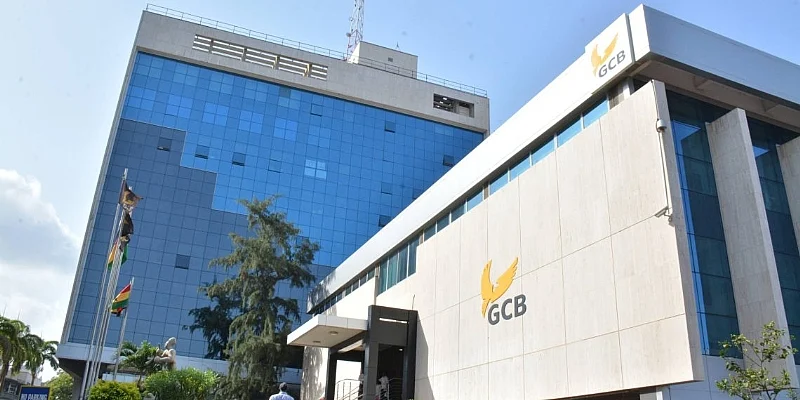
Investing in bank stocks can be lucrative, but whether a specific bank is a strong long-term investment depends on several factors — including financial performance, competitive position, dividend track record, risk profile, and broader economic conditions.
One of Ghana’s most prominent financial stocks is GCB Bank Limited (often traded as GCB on the Ghana Stock Exchange). GCB Bank is a systemically important bank with a large retail and corporate client base, and for many investors, it is considered a core financial sector stock.

But is GCB Bank a good long-term investment? This ASJ guide walks through the key considerations.
📢 GET A DETAILED ARTICLES + JOBS
Join ASJ's WhatsApp Channel and never miss a post or opportunity.

1. Strong Market Position and Brand Recognition
GCB Bank is one of the largest and most recognized banks in Ghana with a long history and expansive branch network. Its strengths include:
-
Extensive branch and ATM footprint nationwide
-
Strong retail and commercial client base
-
Established brand trust among consumers and businesses
A leading market position often supports sustainable long-term earnings and growth — a key consideration for long-term investors.

2. Financial Performance and Profitability Trends
Long-term investment quality depends heavily on consistent profit growth.
Key performance indicators investors usually assess include:
-
Net interest income: The margin collected on loans vs cost of funds
-
Non-interest income: Fees, transaction revenue, and other services
-
Asset quality: Especially loan portfolios and non-performing loans
-
Cost-to-income ratio: Operational efficiency
-
Return on equity (ROE): How effectively the bank uses shareholder capital
Historically, GCB Bank has demonstrated profitability with periodic growth in earnings. However, banking profitability can be cyclical, influenced by interest rate changes, economic growth, and credit demand.
Investors should review recent annual reports and quarterly financials to understand performance trajectories.
3. Dividend History and Shareholder Returns
Dividend payments are an important part of long-term returns for bank investors.
GCB Bank has a track record of paying dividends regularly, although amounts can vary year to year based on profitability and retained earnings policies.
Why dividends matter:
-
Cash returns even when share prices are flat
-
Compounding potential if dividends are reinvested
-
Signal of management confidence and financial stability
A history of consistent or rising dividends can be a positive indicator for a long-term investor.
4. Ghana’s Economic Environment
A bank’s prospects are closely tied to its operating economy.

Ghana’s economic outlook — including GDP growth, inflation, exchange rates, and credit growth — directly affects:
-
Loan demand
-
Default rates
-
Interest margins
-
Banking sector stability
For example:
-
Strong economic growth → higher loan uptake and revenue
-
High inflation or currency volatility → increased risk exposure
Long-term investors must consider macroeconomic stability and projected growth trends.
5. Regulatory Environment and Banking Sector Risks
Banks operate in a highly regulated environment. In Ghana, the banking sector is overseen by the Bank of Ghana, which sets prudential standards, capital ratios, and compliance requirements.
Regulatory risk factors include:
-
Banking license conditions
-
Customer protection rules
-
Loan classification standards
While regulation promotes stability, changes can affect profitability and capital allocation.
A strong regulatory framework protects investors — but also requires banks to maintain cautious lending policies.
6. Competition and Digital Transformation
The financial services landscape in Ghana is competitive.
GCB Bank faces competition from:
-
Other commercial banks (e.g., Standard Chartered Ghana, Ecobank, Stanbic)
-
Digital banks and fintech platforms
-
Microfinance and savings institutions
Competitive pressure can squeeze margins, but GCB Bank’s scale and diversified services help mitigate risk.
Additionally, digital transformation — mobile banking, digital wallets, and online platforms — is shaping the future of customer interaction.
Banks that adapt effectively to digital trends may retain or grow market share over time.
7. Asset Quality & Risk Management
For banks, asset quality — especially loan portfolios — is a critical risk factor.
A high proportion of non-performing loans (NPLs) can weaken financial strength and reduce profit because:
-
Provisioning reduces net income
-
Capital buffers are stretched
-
Investor confidence declines
GCB Bank’s risk management strategy and credit controls play a major role in long-term sustainability.
8. Long-Term Growth Strategies
Sustainable long-term investments are often tied to strategy. GCB Bank has pursued:
-
Expansion of retail and SME lending
-
Diversification of fee-based income
-
Branch modernization and service improvements
-
Digital banking adoption
Investors should assess whether the bank’s strategic vision aligns with market opportunities.
For example, growth in digital banking and retail lending may provide earnings expansion, while weak segments could constrain growth.
9. Share Price Performance and Market Sentiment
Long-term investors should evaluate share price history alongside fundamental performance.
Key observations include:
-
How GCB Bank’s share price has performed relative to the broader market
-
Correlation with earnings growth
-
Sensitivity to economic news and sector developments
Share price trends reflect both fundamentals and investor sentiment.
A stock that consistently outperforms may indicate strong confidence, while erratic performance could reflect volatility.
10. Risk Considerations Every Investor Should Know
Even strong companies carry risk, and long-term investing requires understanding these:
-
Interest rate fluctuations: Affect net interest margins
-
Economic downturns: Can lead to higher loan defaults
-
Regulatory changes: May require higher capital reserves
-
Currency volatility: Impacts international earnings components
-
Competition from fintech: Could disrupt traditional services
Risk management and diversification remain essential.
Long-Term Investment Checklist
Before deciding whether GCB Bank is a good long-term investment, consider:
✔ Review the latest financial statements
✔ Analyze dividend history and payout consistency
✔ Check asset quality (NPL ratios)
✔ Compare profitability metrics with peers
✔ Understand economic trends in Ghana
✔ Assess management strategy and digital adoption
✔ Evaluate share price trends over multiple years
Frequently Asked Questions (FAQs)
1. Does GCB Bank pay dividends regularly?
Yes — the bank has historically paid dividends, but amounts vary with profitability.
2. Are bank stocks good long-term investments?
Often yes, because they earn income from interest and fees, but they are sensitive to economic cycles.
3. Should I buy GCB Bank shares for dividends or growth?
Both — dividends provide income, while share price appreciation offers capital gains.
4. Does the economy affect bank stock performance?
Yes — GDP growth, inflation, and interest rates all influence bank earnings.
5. How can I reduce risk when investing in GCB Bank?
Invest diversified across sectors and hold for the long term with a focus on fundamentals.
Conclusion: Is GCB Bank a Good Long-Term Investment?
Overall, GCB Bank has several characteristics that make it an appealing long-term investment:
-
Strong market position
-
Track record of profitability
-
Dividend payments
-
Large customer base
-
Diversified revenue streams
However, like all bank investments, it carries risks tied to the economy, asset quality, and market competition. Long-term investors should focus on fundamentals and stay informed about Ghana’s economic outlook.
For those willing to hold shares for multiple years and withstand normal market cycles, GCB Bank can be a solid component of a long-term investment portfolio — provided it aligns with individual risk tolerance and financial goals.
Source: Accra Street Journal
Last Updated on March 14, 2026 by Samuel Kwame Boadu
Disclaimer: Some content on Accra Street Journal may be aggregated, summarized, or edited from third-party sources for informational purposes. Images and media are used under fair use or royalty-free licenses. Accra Street Journal is a subsidiary of SamBoad Publishing Hub under SamBoad Business Group Ltd, registered in Ghana since 2014.
For concerns or inquiries, please visit our Privacy Policy or Contact Page.

Samuel Kwame Boadu is a Ghanaian media entrepreneur and storyteller with a passion for amplifying urban voices and uncovering everyday truths. He is the Editor-in-Chief and Founder of Accra Street Journal, a dynamic digital platform dedicated to capturing the pulse of Ghana’s capital—its people, culture, challenges, business, sports and innovations.





