The Government of Ghana has signed a bilateral debt restructuring agreement with Belgium, marking another step in the country’s ongoing efforts to stabilise its economy following the severe financial crisis that forced it to default on much of its external debt in 2022.
The agreement forms part of Ghana’s broader strategy to renegotiate obligations with external creditors as the West African nation works to rebuild fiscal stability, restore investor confidence and strengthen its economic outlook.

Officials say the deal reflects continued international support for Ghana’s recovery programme and signals progress toward completing a complex restructuring process that began after the country’s economic turmoil.
📢 GET A DETAILED ARTICLES + JOBS
Join ASJ's WhatsApp Channel and never miss a post or opportunity.

A Milestone in Ghana’s Debt Restructuring Process
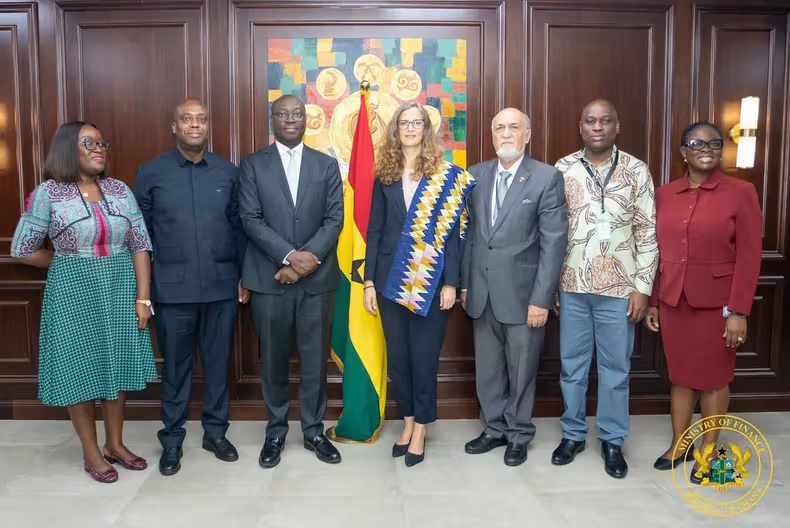
Speaking during the signing ceremony, Ghana’s Finance Minister Cassiel Ato Forson described the agreement as another important milestone in the country’s restructuring efforts.
According to him, the deal brings Ghana closer to finalising agreements with members of the Official Creditor Committee (OCC), a group of bilateral lenders involved in the negotiations.

Belgium becomes the eighth member of the committee to conclude a bilateral restructuring agreement with Ghana.
The minister noted that the progress demonstrates the government’s determination to rebuild the country’s financial credibility after the economic shock of recent years.
“Ghana went through a very difficult period in 2022–2023,” he said during the event. “It was a financial crisis and the government of the day had to declare a default. Today we are recovering and seeing a significant turnaround, and we are putting systems in place to ensure we do not return to that situation again.”
The 2022 Financial Crisis
Ghana’s economic challenges reached a peak in late 2022 when the government suspended payments on much of its external debt.
The decision came after a combination of rising global interest rates, high inflation, currency depreciation and mounting debt repayments created severe pressure on public finances.
At the time, the International Monetary Fund and other development partners stepped in to support the country’s recovery programme as Ghana launched a comprehensive restructuring effort involving both domestic and external creditors.
The crisis triggered sharp economic adjustments, including fiscal reforms and negotiations with lenders to reduce the country’s debt burden and restore sustainability.
Belgium Signals Continued Support
Belgium’s Ambassador to Ghana, Carole van Eyll, said her country remains committed to supporting Ghana’s economic recovery and long-term stability.
“We are happy to continue supporting Ghana, and we are pleased that this restructuring has been concluded,” she said during the signing ceremony.

The ambassador added that Belgium hopes to deepen its cooperation with Ghana in the years ahead, particularly as the country works to rebuild economic momentum and strengthen growth.
Rebuilding Investor Confidence
For policymakers, the series of bilateral agreements with creditor nations is an important step toward restoring Ghana’s reputation in global financial markets.
Debt restructuring negotiations are often closely watched by investors, as successful agreements can signal improved fiscal discipline and a clearer path toward economic recovery.
The Ghanaian government has repeatedly stressed that reforms are being implemented to ensure the country does not return to the conditions that triggered the crisis.
These measures include improved fiscal management, strengthened revenue mobilisation and efforts to stabilise the national currency.
The Road Ahead
Although significant progress has been made, economists note that Ghana’s economic recovery will depend on sustained fiscal discipline, continued support from international partners and stronger economic growth.
Completing the restructuring process is expected to ease debt-servicing pressures and allow the government to redirect more resources toward development priorities.
Officials say the agreement with Belgium reflects growing momentum in that effort and signals continued confidence among international partners in Ghana’s reform programme.
As the country moves closer to concluding its debt negotiations, policymakers hope the reforms underway will create a more resilient economic foundation for the years ahead.
Source: Accra Street Journal

Last Updated on March 6, 2026 by Samuel Kwame Boadu
Disclaimer: Some content on Accra Street Journal may be aggregated, summarized, or edited from third-party sources for informational purposes. Images and media are used under fair use or royalty-free licenses. Accra Street Journal is a subsidiary of SamBoad Publishing Hub under SamBoad Business Group Ltd, registered in Ghana since 2014.
For concerns or inquiries, please visit our Privacy Policy or Contact Page.

Samuel Kwame Boadu is a Ghanaian media entrepreneur and storyteller with a passion for amplifying urban voices and uncovering everyday truths. He is the Editor-in-Chief and Founder of Accra Street Journal, a dynamic digital platform dedicated to capturing the pulse of Ghana’s capital—its people, culture, challenges, business, sports and innovations.