
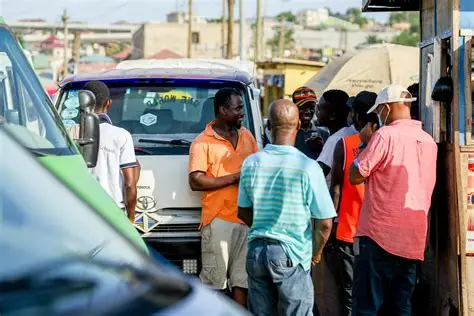
From GH¢4.5 billion in economic losses to the quiet erosion of family time — the true price of Accra’s traffic crisis
Executive Introduction
Ask any Accra resident about their morning commute, and you will likely hear the same weary answer: “I left home at 5:30 a.m. just to get to work by 8.” The Spintex Road, the Circle-Achimota stretch, the Madina–37 corridor. These are not merely roads — they are daily battlegrounds where time, money, and dignity are lost in slow-moving traffic.
The numbers are staggering. A 2026 study by Glima Research found that traffic congestion costs Ghana’s economy an estimated GH¢4.5 billion annually . Beyond the immediate financial cost, the environmental and human toll is equally alarming: idling vehicles generate approximately 73,000 metric tons of excess carbon dioxide annually, the climate equivalent of cutting down three million trees every year . This report examines the hidden costs of Accra’s daily commute — the financial drain, the productivity losses, the human consequences, and the environmental damage.

Part 1: The Financial Burden — What Commuters Actually Pay
The GH¢4.5 Billion Economic Drain
The economic cost of traffic congestion in Accra is not abstract. It is measurable, and it is growing. The breakdown of the GH¢4.5 billion annual loss reveals where the money is going:
📢 GET A DETAILED ARTICLES + JOBS
Join ASJ's WhatsApp Channel and never miss a post or opportunity.

| Cost Component | Annual Impact (GH¢) | Share |
|---|---|---|
| Time lost in traffic | 3.2 billion | 71% |
| Wasted fuel | 434 million | 10% |
| Productivity losses (stress & fatigue) | 815 million | 18% |
Sources:
The research centered on the heavily congested Madina–37 corridor in Accra as a case study, analyzing time losses, fuel waste, and productivity impacts . Other heavily congested routes — Spintex Road, Mallam–Kasoa, and Circle–Achimota — face similar or even worse gridlock, particularly during peak hours .

What Workers Actually Spend on Transport
For middle-income workers in Accra, the daily commute is a major household expense. Workers earning between GH¢2,000 and GH¢3,000 monthly face transport costs of approximately GH¢440 per month for basic trotro rides between home and workplace . This consumes up to 22 percent of monthly salaries for middle-income workers .
The financial burden is more intense for satellite-town residents, who must navigate longer distances and multiple connections. The average monthly transport spending ranges between GH¢200 and GH¢600, depending on car ownership and commute frequency . Daily commuters spend GH¢15–20 on transport alone, and a typical trotro fare ranges from GH¢5 to GH¢10 per trip .
When regular trotro services are inadequate or unavailable, alternative transport through taxis or ride-hailing apps can cost between GH¢30 and GH¢100 per trip, potentially eliminating entire days of careful budget planning with a single unexpected journey . This cost disparity has contributed to the rise of alternative modes of transportation, such as motorcycles (“okadas”), though these come with higher fares and road accident fears .
The Commuter’s Arithmetic
Compare this to a modest monthly salary. The average monthly net salary in Accra is approximately £122 (around GH¢1,500–1,800) . A monthly transport pass is typically priced at £26 (around GH¢350) . With a GH¢1,000 monthly salary, average trotro fares of GH¢5–10 per trip can lead to expenses of GH¢250–300 per month — a significant portion of income .
The result: for low- and middle-income workers, transportation costs are not a variable expense; they are a fixed cost that determines what is left for food, housing, and healthcare.
Part 2: The Human Cost — Time, Family, and Health
The Time Sink
Transport expert Godfred Akyea Darkwa described the situation: “People have to leave their homes as early as five o’clock, four o’clock before they can get to the center of the city. And when it happens like that, when they close, they have to run home; they will not wait for the closing time. So, if you’re closing at five o’clock, they will leave their workplace at three o’clock at the expense of productive hours” .
On the Madina–37 corridor alone, congestion-induced stress and fatigue reduce effective productivity by about 30 minutes per commuter per day — translating into an annual loss of GH¢72.8 million in reduced work output on that single corridor .
The transportation burden quietly dictates residential choices, spending patterns, and lifestyle possibilities across the metropolitan area . Extended commuting affects life decisions beyond immediate financial considerations: workers often purchase meals near offices rather than local markets, postpone errands until weekends, and sacrifice family time or leisure activities . When workers arrive exhausted and return home late, their contribution to business operations and family responsibilities diminishes, creating ripple effects throughout the economy .
The Productivity Drain
Workers are leaving their workplaces at 3 p.m. to avoid peak traffic, even though their official closing time is 5 p.m. — losing two hours of productive work time each day . Over a week, that’s 10 hours of lost productivity per worker. Over a year, it adds up to GH¢815 million in stress-related productivity losses across the national economy .

One commuter, Kojo, spends an average of 6 hours a day commuting to and from work — 30 hours a week, 120 hours a month stuck in traffic . He says he is struggling to cope. “It worries a lot because of the time you are going to get to work and also close from work to home,” he said .
The Disparity Problem
Lower-income workers face disproportionate impacts compared to wealthier colleagues who can absorb transportation costs more easily. This disparity exacerbates economic inequality within the city, widening gaps between social classes and limiting opportunities for economic mobility among working families . The transportation crisis is not just an infrastructure problem — it is a driver of inequality.
Part 3: The Environmental Cost — Pollution That Cannot Be Ignored
73,000 Metric Tons of Excess CO₂
The environmental impact of Accra’s traffic congestion is often overlooked. The Glima Research study estimates that preventable fuel waste from vehicles idling in traffic results in approximately 73,000 metric tons of excess carbon dioxide emissions each year nationwide — an environmental burden equivalent to wiping out the climate benefit of three million trees annually .
The Air Quality Crisis
Traffic emissions in Accra have remained unchanged over the last two decades despite significantly increased activity in the capital . Professor Raphael Arku of the University of Massachusetts Amherst found that while pollution from biomass burning (firewood for cooking, fish smoking) has reduced significantly as more people switch to gas and charcoal, gains have been offset by pollution from improper waste disposal . “People are now burning the trash, so it’s making up for the gains that we make in biomass burning. That means we are not making much progress anymore,” he said .
However, Arku noted a potential solution: tackling traffic emissions, waste burning, and biomass fuel combustion could cut air pollution in Accra by 50 percent .
Part 4: The Structural Causes — Why the Crisis Persists
The crisis is not a capacity problem — it is a governance and strategy problem . The tro-tro, the backbone of Accra’s transport system, carries approximately 70 per cent of daily commuters . Privately owned minibuses governed by trade unions, tro-tros are organically efficient but structurally fragile: vehicles are poorly maintained, safety standards are essentially unenforced, and the “fill-and-run” model means passengers wait indefinitely . No government system has ever matched their coverage, but their dominance is also a symptom of a formal system that has never consistently shown up .
Key structural problems:
-
Poor road networks — “You see, when you go to Accra, there are so many routes within Accra that are not motorized because the government has not constructed them. So, everybody has to use the main route”
-
Weak public transport infrastructure — Inadequate systems force reliance on informal tro-tro systems and expensive private alternatives
-
Lack of planning integration — Urban development and transport planning are handled in isolation
-
Rapid urban population growth — Greater Accra is home to over five million people, and that number keeps climbing
Part 5: Policy Recommendations — What Could Fix It
The Glima Research report proposed several interventions to address the crisis :
-
Road infrastructure upgrades — Widening roads along critical segments and upgrading inner and feeder roads to reduce pressure on major highways
-
Smart traffic management — Deployment of AI-driven smart traffic lights
-
Alternative routes — Construction of link roads to reduce reliance on main corridors
-
Land-use planning — Encouraging workers to live within catchment areas of their workplaces, as is common in places like the US
-
Efficient public transport — Investing in public transportation systems that are reliable and affordable
ASJ Conclusion
The hidden costs of the daily commute in Accra are not just financial. They are human, environmental, and systemic. GH¢4.5 billion in annual economic losses, 73,000 metric tons of excess CO₂, 30 minutes of lost productivity per commuter per day, and countless hours stolen from families .
As the Glima Research report stated: “Urban mobility investments are no longer optional but urgent, high-return economic priorities essential to safeguarding Ghana’s productivity, environmental sustainability, and long-term development” .
The cost of inaction is not just a line item in a national budget. It is the time a parent loses with their child, the health effects of polluted air, the productivity lost to exhaustion, and the income spent on moving slowly through an overcrowded city. Accra cannot afford to keep paying it.

Source: Accra Street Journal
Last Updated on July 21, 2026 by Samuel Kwame Boadu
Disclaimer: Some content on Accra Street Journal may be aggregated, summarized, or edited from third-party sources for informational purposes. Images and media are used under fair use or royalty-free licenses. Accra Street Journal is a subsidiary of SamBoad Publishing Hub under SamBoad Business Group Ltd, registered in Ghana since 2014.
For concerns or inquiries, please visit our Privacy Policy or Contact Page.

Samuel Kwame Boadu is a Ghanaian media entrepreneur and storyteller with a passion for amplifying urban voices and uncovering everyday truths. He is the Editor-in-Chief and Founder of Accra Street Journal, a dynamic digital platform dedicated to capturing the pulse of Ghana’s capital—its people, culture, challenges, business, sports and innovations.