







From new residential developments to high-rise apartments, gated communities, and renovated family homes, the city’s property landscape continues to evolve. As property values rise and urban density increases, so does financial exposure.

For many years, home insurance was not widely discussed among households in Accra. It was often viewed as optional or necessary only for luxury properties.
📢 GET A DETAILED ARTICLES + JOBS
Join ASJ's WhatsApp Channel and never miss a post or opportunity.

Today, that perception is gradually changing.
Economic shifts, environmental risks, urban development pressures, and rising construction costs are making home insurance more relevant than ever for property owners and tenants in Accra.
Urban Growth and Rising Property Values
Accra’s rapid urban expansion has transformed neighborhoods across the city.
As infrastructure improves and demand for housing increases:
-
Property prices have risen
-
Construction costs have escalated
-
Rental rates have climbed
With higher property values comes greater financial risk. Damage that might once have been manageable can now result in significant loss.
Home insurance helps protect against that exposure by covering repair or replacement costs within policy limits.
Increased Exposure to Climate Risks
Climate variability has become a growing concern in Accra.
Heavy rainfall, flash flooding, and unpredictable weather patterns can cause:
-
Structural damage
-
Roof leakage
-
Water damage to interiors
-
Electrical system issues
In flood-prone areas, homes and personal belongings are particularly vulnerable.
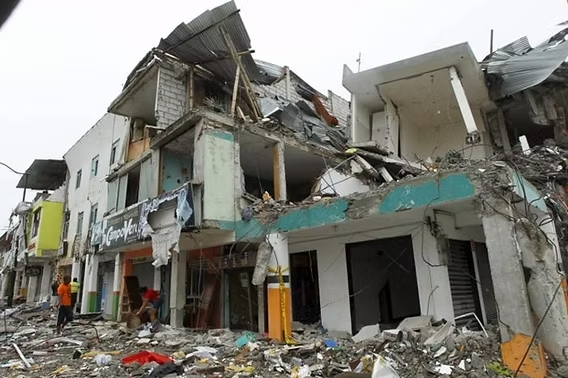
As climate-related incidents increase in frequency and severity, the financial consequences of being uninsured become more serious.
Home insurance offers protection against certain weather-related risks, depending on policy coverage.
Rising Construction and Repair Costs
Building materials, labor, and imported fittings have become more expensive over time.
If a home is damaged by fire or severe weather:
-
Repair costs may exceed expectations
-
Replacement of fixtures and fittings may be costly
-
Reconstruction expenses can strain savings
Without insurance, homeowners must absorb these costs directly.
Insurance spreads this risk, making recovery more financially manageable.
Fire Risks in Dense Urban Areas
Urban density increases certain risks.
Electrical faults, gas leaks, and accidental fires can spread quickly in tightly packed neighborhoods.
Even if a fire begins in a neighboring property, adjacent homes may suffer damage.
Home insurance policies often include fire protection, helping homeowners recover from such incidents.
In high-density residential zones, this coverage becomes increasingly valuable.
Mortgage and Financing Requirements
Financial institutions often require insurance for properties financed through loans.
Banks and mortgage providers typically mandate building insurance to protect their interest in the property.
As more Ghanaians access home financing, insurance becomes part of responsible property ownership.
This requirement also contributes to growing awareness about the importance of coverage.
Protecting Household Contents
Many households invest significantly in:
-
Electronics
-
Furniture
-
Appliances
-
Personal belongings
Replacing these items after theft, fire, or flooding can be expensive.
Home insurance does not only cover the structure of the building; certain policies also protect contents inside the home.
For renters, contents insurance can provide valuable protection even if they do not own the building itself.
Theft and Security Concerns
Urban growth can bring security challenges.
Burglary and property theft remain concerns in some areas of Accra.
Without insurance, stolen items must be replaced at personal expense.
Home insurance policies that include theft coverage can reduce the financial impact of such incidents.
Changing Lifestyles and Asset Accumulation
As incomes rise for some segments of the population, households accumulate more assets.
Modern homes may include:
-
Smart devices
-
High-value electronics
-
Imported furnishings
-
Home office equipment
The higher the asset concentration within a home, the greater the financial loss if damage occurs.
Insurance provides a safety net against unexpected disruption.
The Cost of Being Uninsured
Many homeowners assume “nothing will happen.”
However, when unexpected events occur:
-
Savings may be depleted
-
Loans may be required
-
Financial plans may be disrupted
Home insurance helps stabilize recovery by reducing out-of-pocket expenses.
It transforms large, unpredictable losses into manageable premium payments.
Increasing Awareness and Financial Literacy
Financial literacy efforts are gradually improving public understanding of risk management.
More homeowners now recognize that:
-
Protection extends beyond motor vehicles
-
Risk exists even in secure neighborhoods
As awareness grows, home insurance is becoming part of broader financial planning.
Insurance as Part of Urban Responsibility
As Accra develops into a modern metropolitan center, financial protection mechanisms must evolve alongside physical infrastructure.
Responsible homeownership increasingly includes:
-
Property maintenance
-
Security planning
-
Risk mitigation
Insurance complements these efforts by providing structured financial support when damage occurs.
Common Misconceptions About Home Insurance
“Home insurance is only for expensive houses.”
All homes carry risk, regardless of size or value.
“It is too expensive.”
Premiums are often small compared to the cost of rebuilding or replacing household contents.
“My area is safe.”
Unexpected events can occur in any neighborhood.
“It only covers fire.”
Many policies offer broader coverage, depending on the terms selected.
Evaluating Whether You Need Home Insurance
Consider:
-
The value of your property
-
The cost of replacing your belongings
-
Your ability to absorb sudden repair expenses
-
Environmental risks in your area
-
Whether your home is financed
If replacing your home or contents would create financial strain, insurance becomes a practical solution.
The Future of Home Insurance in Accra
As urbanization continues and property ownership expands, home insurance is likely to become more mainstream.
Digital platforms, improved claims processes, and increased transparency may further drive adoption.
In a city where real estate represents a major investment, protecting that investment becomes essential.
Final Thoughts
Homeownership in Accra represents stability, investment, and long-term planning.
But every property carries risk.
From flooding and fire to theft and accidental damage, unexpected events can create significant financial strain.
Home insurance is no longer a niche product reserved for luxury properties.
In a rapidly growing city like Accra, it is becoming an important component of responsible property management and financial security.
Protection is not about expecting disaster.
It is about preparing wisely.
FAQs
1. Is home insurance mandatory in Accra?
It is not legally mandatory in all cases, but lenders may require it for financed properties.
2. Does home insurance cover flooding?
Some policies include flood coverage, but it depends on the specific terms.
3. Can renters get home insurance?
Yes. Renters can purchase contents insurance to protect personal belongings.
4. How are premiums calculated?
Premiums depend on property value, location, construction type, and selected coverage.
5. Is home insurance expensive?
Premium costs are generally small compared to potential rebuilding or replacement expenses
Source: Accra Street Journal
Last Updated on March 14, 2026 by Samuel Kwame Boadu
Disclaimer: Some content on Accra Street Journal may be aggregated, summarized, or edited from third-party sources for informational purposes. Images and media are used under fair use or royalty-free licenses. Accra Street Journal is a subsidiary of SamBoad Publishing Hub under SamBoad Business Group Ltd, registered in Ghana since 2014.
For concerns or inquiries, please visit our Privacy Policy or Contact Page.

Samuel Kwame Boadu is a Ghanaian media entrepreneur and storyteller with a passion for amplifying urban voices and uncovering everyday truths. He is the Editor-in-Chief and Founder of Accra Street Journal, a dynamic digital platform dedicated to capturing the pulse of Ghana’s capital—its people, culture, challenges, business, sports and innovations.