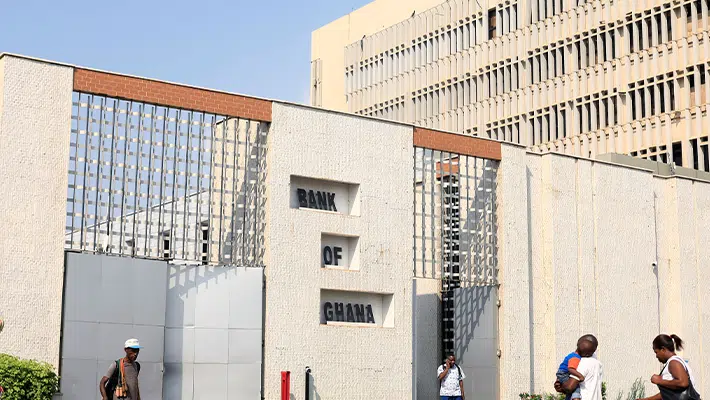
The Bank of Ghana has rolled out a sweeping new regulatory framework for International Money Transfer Operators (IMTOs), marking a decisive move to strengthen oversight of one of the country’s most vital financial lifelines—remittances.
The guidelines, released in December 2025, set out comprehensive rules for foreign remittance companies sending money into Ghana, as well as for local banks, Payment Service Providers (PSPs), and other regulated institutions that partner with them. With remittance inflows playing a central role in household welfare and domestic financial activity, the central bank signaled that tighter governance is now essential to safeguarding confidence in the system.

“Remittances are a critical pillar of Ghana’s economy, supporting household incomes and broader financial activity,” the Bank of Ghana said in the directive. “These guidelines are designed to ensure that funds sent from abroad are delivered securely, efficiently, and in compliance with international standards.”
📢 GET A DETAILED ARTICLES + JOBS
Join ASJ's WhatsApp Channel and never miss a post or opportunity.

Under the new regime, IMTOs must formally register with the Bank of Ghana and submit extensive documentation, including proof of licensing in their home jurisdictions, details of corporate ownership and governance structures, internal risk controls, and cybersecurity certifications. Applications will be assessed within 90 days, while rejected applicants will have a 30-day window to appeal.
Once approved, IMTOs will be confined strictly to inward remittance services. They may receive funds from abroad and disburse them to beneficiaries through approved channels such as bank accounts, mobile money wallets, or over-the-counter cash payments. The central bank drew a clear red line around prohibited activities, barring IMTOs from outward transfers, deposit-taking, lending, or investment operations.

Consumer protection features prominently in the new framework. IMTOs are required to keep transaction records for a minimum of six years and to establish robust systems for handling customer complaints, including issues escalated from local agents.
“Consumers must have confidence that their money is safe and that any issues will be addressed promptly,” the Bank of Ghana said, underscoring its focus on trust and accountability in cross-border payments.
The guidelines also tighten obligations for agents—such as banks, savings and loans companies, and PSPs—who act on behalf of IMTOs. These agents must operate under clearly defined service level agreements that spell out responsibilities, transaction procedures, and data protection standards. Crucially, the central bank clarified that all customer information collected by agents is deemed to be collected on behalf of the IMTO, reinforcing ultimate accountability at the principal level.
For companies already operating in Ghana, the Bank of Ghana has introduced a three-month transitional period to regularize their status under the new rules. During this window, existing operators may continue to provide remittance services while aligning with the updated requirements.
Regulators warned that failure to comply could result in penalties ranging from fines and operational suspensions to full de-registration. The central bank said enforcement would be firm, reflecting the importance of remittances to financial stability and foreign exchange flows.
Beyond consumer protection, the Bank of Ghana linked the new guidelines to its broader strategy to preserve the integrity of the financial system and protect the cedi from abuse, leakages, and illicit financial activity.
By formalizing registration, tightening operational boundaries, and clarifying accountability across the remittance value chain, the central bank aims to foster what it described as a “transparent, fair, and competitive remittance market”—one that supports Ghanaian households while reinforcing confidence in the country’s financial architecture.
Source: Accra Street Journal

Last Updated on January 6, 2026 by Samuel Kwame Boadu
Disclaimer: Some content on Accra Street Journal may be aggregated, summarized, or edited from third-party sources for informational purposes. Images and media are used under fair use or royalty-free licenses. Accra Street Journal is a subsidiary of SamBoad Publishing Hub under SamBoad Business Group Ltd, registered in Ghana since 2014.
For concerns or inquiries, please visit our Privacy Policy or Contact Page.

Samuel Kwame Boadu is a Ghanaian media entrepreneur and storyteller with a passion for amplifying urban voices and uncovering everyday truths. He is the Editor-in-Chief and Founder of Accra Street Journal, a dynamic digital platform dedicated to capturing the pulse of Ghana’s capital—its people, culture, challenges, business, sports and innovations.