



15 min read
Introduction
Ghana’s ports are busier than they have ever been. Tema Port handled 2.5 million containers in 2026, up from just 700,000 in 2020 . The new Terminal 3, a $1.5 billion investment, can handle 3 million containers a year and receive the largest ships on the sea . On paper, Ghana has built one of the most modern port complexes in West Africa.
But ask any importer, trader, or manufacturer in Accra, and they will tell you a different story. Goods still take too long to clear. Costs remain stubbornly high. And the journey from the port to the shop shelf is full of bottlenecks that no amount of concrete and cranes can fix.
Key Takeaways
- Tema Port handled 2.5 million containers in 2026, up from just 700,000 in 2020 .
- The Eastern Trade Corridor, which links Tema to landlocked neighbours like Burkina Faso and Niger, suffers from delays at border crossings, too many checkpoints, inconsistent customs procedures, and poor road conditions .
- Meridian Port Services (MPS), a joint venture involving APM Terminals and Africa Global Logistics, operates Terminal 3 at Tema.
This is the paradox at the heart of Ghana’s logistics industry. The hardware has improved dramatically. The software—the systems, processes, and people that move goods from ship to door—has not kept pace.
This article explains how Ghana’s logistics business actually works. It covers the major players, the money flow, the real reasons goods are expensive to move, and why this matters to every Ghanaian who buys imported rice, building materials, or medicine.
Background: From Port Expansion to Process Problems
Ghana’s logistics story over the past decade has been dominated by one project: the expansion of Tema Port.
For years, Tema was congested and shallow, unable to receive the largest container ships. Cargo had to be transshipped through other ports, adding cost and time. The government and its private partners—APM Terminals and Africa Global Logistics—decided to change that. Terminal 3 opened in 2025, with 127 hectares of yard space, 1.4 kilometres of quay, and 16 metres of water depth .
The result was a massive jump in capacity. Tema went from handling 800,000 containers a year to a design capacity of 3 million. By 2026, it was handling 2.5 million, more than 80 percent of its capacity, within a year of opening .
But as the containers flowed in faster, the process of getting them out did not speed up. In September 2026, the Ghana Shippers’ Authority conducted a fact-finding mission to Tema and found a troubling statistic. About 70 percent of containers were undergoing full physical inspection—opened, unpacked, checked, repacked, and resealed. The global standard recommended by the World Customs Organization is 10 percent .
That single number explains much of the cost problem in Ghana’s logistics chain.
Beyond the port, the challenges continue. The Eastern Trade Corridor, which links Tema to landlocked neighbours like Burkina Faso and Niger, suffers from delays at border crossings, too many checkpoints, inconsistent customs procedures, and poor road conditions . Truckers face unofficial charges that push up transport costs. And the last mile—getting goods from a warehouse to a customer’s door—is complicated by traffic congestion and a lack of formal addressing systems in many parts of Accra .

How the Logistics Business Works
Logistics is not one business. It is a chain of services, each with its own costs and players.
Port handling. The Ghana Ports and Harbours Authority (GPHA) owns the ports. Meridian Port Services (MPS), a joint venture involving APM Terminals and Africa Global Logistics, operates Terminal 3 at Tema. The port earns from terminal handling charges, storage fees, and other services. When a ship arrives, containers are offloaded, stacked in the yard, and eventually released to clearing agents.

Clearing and forwarding. This is where the real bottleneck lies. Clearing agents navigate customs procedures, pay duties, and arrange for containers to be released. The Ghana Integrated Cargo Clearance System (GICCS) is meant to digitise this process, but in practice, many steps remain manual or require physical presence . The high inspection rate means more containers are held, more paperwork is required, and more time is spent.
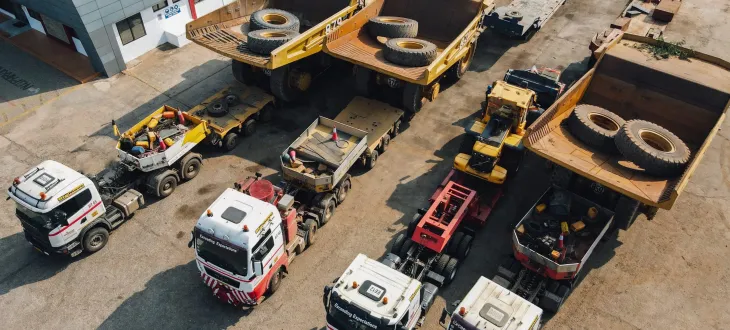
Transport and haulage. Once cleared, goods must move from the port to warehouses or markets. This is dominated by road transport. Companies like Baj Freight, Jon Moore, Bollore Logistics, and DHL operate large fleets of trucks and trailers . They move containers from Tema to Accra, Kumasi, and beyond, and also handle cross-border haulage to Burkina Faso, Mali, and Niger. The cost of fuel, the condition of roads, and the number of checkpoints all affect the price.
Warehousing and storage. Goods that are not immediately sold or transported need to be stored. Warehousing is a growing segment, with both local and international companies offering storage space. But the cost of warehousing in Ghana is high, partly because of the delays in clearing goods. A container that sits in the port for weeks because of inspection also incurs storage charges .
Last-mile delivery. For e-commerce and retail, the final step is getting goods to the customer. This is the most visible part of logistics to ordinary consumers. Companies like Shaq Express use electric motorcycles for deliveries in Accra, trying to reduce costs and emissions . But last-mile delivery in Ghana is hard: traffic is terrible, addresses are often informal (“behind the blue kiosk near the junction”), and customers expect cash on delivery, which slows down transactions .
The money flow. Shippers pay freight charges to shipping lines. Clearing agents charge fees for their services. Truckers charge for haulage. Warehouses charge for storage. The government collects duties, port charges, and other levies. Each player takes a cut, and each delay adds cost. When a container is inspected, the cost is borne by the importer, who passes it on to the consumer.
The Major Players
Ghana’s logistics sector is a mix of state agencies, multinational logistics firms, and local transport companies.
State agencies. The Ghana Ports and Harbours Authority (GPHA) owns the ports. The Ghana Shippers’ Authority (GSA) regulates and advocates for shippers. The Ghana Revenue Authority (GRA) collects customs duties. The Ghana Institute of Freight Forwarders (GIFF) represents clearing agents. These agencies are not competitors in the commercial sense, but their decisions shape the cost and speed of every shipment.
Port operator. Meridian Port Services (MPS) operates Terminal 3 at Tema. It is a joint venture between GPHA, APM Terminals (a subsidiary of Maersk), and Africa Global Logistics (formerly Bollore). MPS earns from terminal handling charges and has invested heavily in equipment, including electric cranes and ship-to-shore gantries .
International logistics companies. Companies like Bollore Logistics, DHL, DAMCO (Maersk’s logistics arm), and Savino Del Bene have a strong presence in Ghana . They offer freight forwarding, customs clearance, warehousing, and transport services. They serve multinational clients and large importers who need end-to-end solutions.
Local transport and haulage. Baj Freight, Jon Moore, Shams Logistics, and Tarzan Enterprise are among the local companies that provide trucking and haulage services . They own fleets of trucks, trailers, and specialised equipment for moving containers, bulk cargo, and heavy machinery. These companies are the backbone of inland transport.

E-commerce and last-mile. Shaq Express is a Ghanaian startup using electric motorcycles for last-mile delivery. It was founded in 2020 and is backed by MEST Express . It competes with other delivery services and with the logistics arms of e-commerce platforms like Jumia and Melcom’s NOW app.
The Real Cost Problem: Inspection and Dwell Time
If you want to understand why moving goods in Ghana is expensive, look at the inspection rate.
At Tema Port, seven out of every ten containers are subjected to full physical inspection . This means the container is moved from the stack, taken to an inspection yard, opened, unpacked, checked by customs officials, repacked, and resealed. Every step takes time and labour. Every day the container sits in the port incurs storage charges. And every inspection carries the risk of damage or theft.
The global benchmark is 10 percent. Ghana is at 70 percent. The gap is not because Ghanaian customs officials are lazy or incompetent. It is because the risk classification system is skewed toward “Red Lane” consignments, meaning most shipments are flagged as high-risk and require physical inspection . Ineffective joint inspections and poor coordination among state agencies make the problem worse.
The Ghana Shippers’ Authority has proposed reforms. A GRA-Customs-led review of the risk classification system, stricter penalties for wrong declarations, and better coordination of concurrent inspections among agencies are all on the table . But these reforms require political will and administrative discipline. They are not as visible as a new port terminal, but they matter more for the cost of goods.
Dwell time—how long a container stays in the port—is the other side of the same coin. When inspection is slow, dwell time rises. When dwell time rises, storage costs increase. When storage costs increase, importers pass them on to consumers. The result is that Ghanaians pay more for imported goods than they should, not because the goods are expensive, but because the process of moving them is inefficient.
Challenges Beyond the Port
The port is the most visible bottleneck, but it is not the only one.
The Eastern Corridor. The route from Tema to Burkina Faso and beyond is a critical trade artery. But it is plagued by delays at border crossings, too many checkpoints, inconsistent customs procedures, and poor road infrastructure . Shippers have complained about unofficial charges and administrative bottlenecks that increase costs and reduce Ghana’s competitiveness. The Ghana Shippers’ Authority has held stakeholder meetings to address these issues, but progress is slow.
Last-mile delivery. Accra’s traffic is notorious. A delivery that should take 20 minutes can take two hours. The lack of formal addressing makes it hard for drivers to find customers. Many e-commerce companies rely on phone calls to locate buyers, which adds time and cost. Research using machine learning to optimize routes in Accra found that better routing could reduce delivery time by 28 percent and fuel consumption by 22 percent . But most logistics companies do not have the capacity to implement such systems.
Fuel and exchange rates. Transport costs are heavily influenced by fuel prices and the cedi’s value. When fuel prices rise, truckers charge more. When the cedi weakens, imported spare parts and equipment become more expensive. These costs flow through the entire chain. A surcharge announced by Maersk in November 2026—$600 per refrigerated container to Tema—shows how external factors can suddenly increase costs for Ghanaian importers .
Infrastructure gaps. While Tema’s port infrastructure is world-class, the roads leading to and from the port are not. The supporting infrastructure, particularly roads and inland depots, has not kept pace with the port’s expansion . This creates bottlenecks even when the port itself is operating efficiently.
Why It Matters to Ordinary Ghanaians
Logistics is not an abstract business. It affects the price of almost everything Ghanaians buy.
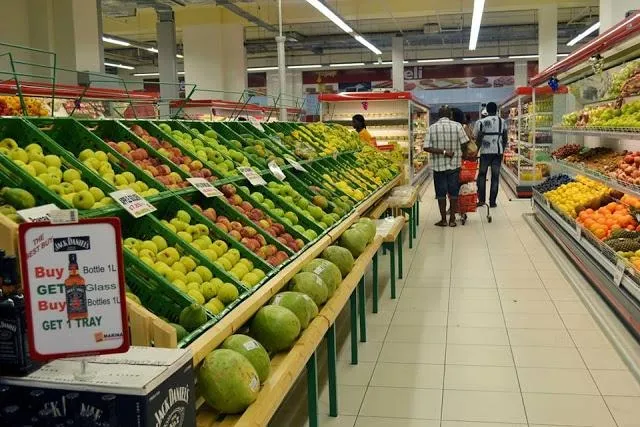
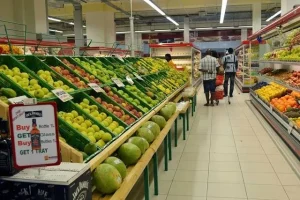
Food prices. Most of Ghana’s rice, poultry, and cooking oil is imported. The cost of moving these goods from the port to the market is embedded in the price on the shelf. When inspection is slow and storage is expensive, the price goes up. When fuel costs rise, the price goes up again. A bag of rice that costs GH¢500 at Makola includes not just the cost of the rice and the shipping, but the cost of clearing it through Tema and trucking it to Accra.
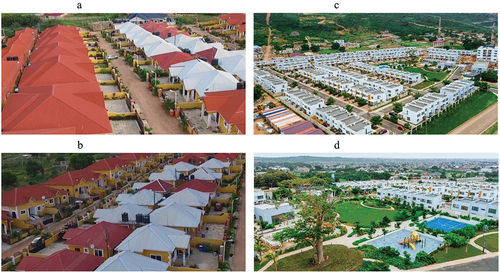
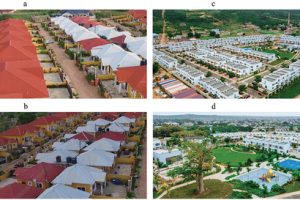
Building materials. Cement, iron rods, tiles, and roofing sheets are often imported or made with imported inputs. The logistics cost of moving these materials affects the cost of building a house. For a country with a 1.8 million housing deficit, every cedi added to the cost of materials makes housing less affordable.
Medicine and healthcare. Pharmaceuticals and medical equipment are time-sensitive and often require special handling. Delays at the port can mean shortages in hospitals and pharmacies. The cost of cold-chain logistics and expedited clearance is passed on to patients.
Jobs. The logistics sector employs thousands of Ghanaians: truck drivers, clearing agents, warehouse workers, delivery riders, and port staff. When the sector is inefficient, these jobs are less secure and less well-paid. When it works, it supports employment across the economy.
The cost of doing business. For manufacturers and retailers, logistics is a major cost. When it is expensive and unreliable, Ghanaian businesses struggle to compete with imports. This undermines the “Made in Ghana” push and makes it harder to create jobs.
Future Outlook
The future of Ghana’s logistics industry depends on whether the country can fix the soft infrastructure—the systems, processes, and coordination—that determines how efficiently goods move.
If reforms succeed, Tema could become a true regional hub, attracting transshipment cargo from landlocked neighbours and competing with ports in Togo and Côte d’Ivoire. The inspection rate could fall, dwell times could shrink, and costs could come down. The Eastern Corridor could become a reliable trade route, boosting exports to Burkina Faso and beyond.
The risks are significant. If the risk classification system is not reformed, the inspection rate will remain high, and the benefits of the new terminal will be limited. If the Eastern Corridor bottlenecks are not addressed, Ghana will lose trade to competing routes. If fuel prices rise or the cedi weakens, transport costs will increase.
The most likely scenario is gradual improvement. The port infrastructure is already in place. The GSA is pushing for reforms. Some logistics companies are investing in technology and better processes. But systemic change in customs procedures and inter-agency coordination is slow. Costs will come down, but not dramatically.
The wild card is digitalisation. The Ghana Integrated Cargo Clearance System (GICCS) and other digital platforms could, if properly implemented, reduce manual steps and speed up clearance . But digital systems only work if the agencies using them are coordinated and the processes they support are rational. Technology cannot fix a broken process; it can only make a good process faster.
ASJ Conclusion
Ghana has built a world-class port. The cranes are electric, the berths are deep, and the capacity is enormous. But the business of moving goods does not end at the port gate. It continues through customs, onto trucks, along roads, and into markets and homes.
That part of the chain is where Ghana’s logistics industry still struggles. The 70 percent inspection rate is not a hardware problem. It is a process problem. The delays on the Eastern Corridor are not about the quality of the road. They are about checkpoints and procedures. The difficulty of last-mile delivery is not about the number of motorcycles. It is about traffic and addresses.
For ordinary Ghanaians, the stakes are clear. Every inefficiency in the logistics chain adds to the price of what they buy. Every delay means goods are scarcer and more expensive. Every cedi of unnecessary cost is a cedi that could have been spent on something else.
The hardware is done. The software is the next challenge. Until Ghana fixes the way goods move, the benefits of its impressive new port will not fully reach the people who need them most.
Quick Facts
Topic: Ghana’s Logistics Industry
Tema Port Container Throughput (2026): 2.5 million TEU (up from 700,000 in 2020)
Terminal 3 Capacity: 3 million TEU annually
Container Inspection Rate: ~70% (global benchmark: 10%)
Key Port Operator: Meridian Port Services (MPS)
Major Transport Companies: Baj Freight, Jon Moore, Bollore Logistics, DHL
Key Challenge: Customs inspection delays, Eastern Corridor bottlenecks
Key Opportunity: Digitalisation, risk classification reform
Last-Mile Innovation: Electric motorcycles (Shaq Express)
External Cost Pressure: Maersk $600 reefer surcharge (Nov 2026)
FAQ Section
1. How big is Ghana’s logistics industry?
The freight and logistics market is a significant part of the economy, driven by trade through Tema and Takoradi ports. Tema alone handled 2.5 million containers in 2026 .
2. Why is clearing goods at Tema Port so slow?
About 70% of containers undergo full physical inspection, compared to the global standard of 10%. This is due to a risk classification system that flags most shipments as high-risk, along with ineffective joint inspections and poor coordination among agencies .
3. What is the Ghana Shippers’ Authority doing about it?
The GSA has intervened, proposing a review of the risk classification system, stricter penalties for wrong declarations, and better coordination of inspections. It is also engaging stakeholders along the Eastern Corridor to address bottlenecks .
4. Who operates Tema Port?
The Ghana Ports and Harbours Authority owns the port. Meridian Port Services (MPS), a joint venture of GPHA, APM Terminals, and Africa Global Logistics, operates Terminal 3 .
5. What are the major logistics companies in Ghana?
International companies include Bollore Logistics, DHL, DAMCO, and Savino Del Bene. Local transport companies include Baj Freight, Jon Moore, Shams Logistics, and Tarzan Enterprise .
6. What is the Eastern Trade Corridor?
A trade route linking Tema Port to inland markets and landlocked neighbours like Burkina Faso. It suffers from delays at border crossings, too many checkpoints, and poor road conditions .
7. How does logistics affect food prices in Ghana?
The cost of moving imported food from the port to the market is embedded in the price. Inspection delays, storage charges, and transport costs all add up, making food more expensive for consumers.
8. What is being done to improve last-mile delivery?
Companies like Shaq Express are using electric motorcycles to reduce costs and emissions. Research suggests that better routing could cut delivery times by 28% . But traffic and informal addressing remain major challenges.
9. Why did Maersk introduce a surcharge on cargo to Ghana?
Maersk announced a $600 peak season surcharge on refrigerated containers to Tema in November 2026. This reflects global shipping dynamics and adds to costs for importers of temperature-sensitive goods .
10. Is Ghana’s logistics infrastructure improving?
Yes. Tema Port’s Terminal 3 is world-class. But the supporting infrastructure—roads, inland depots, and digital systems—has not kept pace. The port can handle more ships, but the processes for clearing goods are the bottleneck .
11. How does logistics affect ordinary Ghanaians?
It determines the price of imported goods, the availability of medicines and food, and the cost of building materials. When logistics is inefficient, everyone pays more.
12. What is the single biggest fix needed in Ghana’s logistics sector?
Reforming the customs risk classification system to reduce the inspection rate from 70% to closer to the global benchmark of 10%. This would reduce dwell times, lower costs, and speed up the entire chain
Source: Accra Street Journal
Last Updated on November 20, 2026 by Samuel Kwame Boadu
Disclaimer: Some content on Accra Street Journal may be aggregated, summarized, or edited from third-party sources for informational purposes. Images and media are used under fair use or royalty-free licenses. Accra Street Journal is a subsidiary of SamBoad Publishing Hub under SamBoad Business Group Ltd, registered in Ghana since 2014.
For concerns or inquiries, please visit our Privacy Policy or Contact Page.

Samuel Kwame Boadu is a Ghanaian media entrepreneur and storyteller with a passion for amplifying urban voices and uncovering everyday truths. He is the Editor-in-Chief and Founder of Accra Street Journal, a dynamic digital platform dedicated to capturing the pulse of Ghana’s capital—its people, culture, challenges, business, sports and innovations.
Use the following reference when citing or referencing this article.
Your feedback helps us improve our journalism.
Report an Error
Help us maintain accuracy. Let our editorial team know if you spot an issue in this article.
Report a problem with this article