




16 min read
Introduction
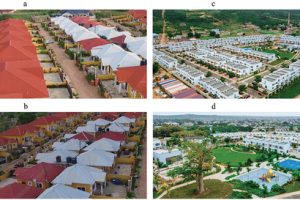
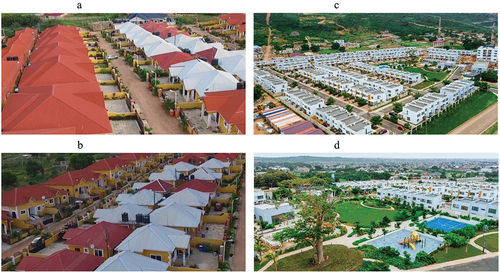
Drive through East Legon or Cantonments on any weekday morning and you will see the signs. Cranes. Half-finished apartment blocks. Gated communities with names like “Royal Palms” and “Executive Heights.” Ghana’s real estate sector is busy. Builders are building. Landlords are renting. And developers are selling.
But look closer, and the picture becomes more complicated.
Key Takeaways
- About 90 percent of Ghanaians build their homes through personal savings over an average of ten years, because mortgage financing is almost nonexistent .
- The Ghana Real Estate Developers Association, formed in 1988.
- The Lands Commission is digitising records, expanding its Enterprise Land Information System, reviewing the 1999 National Land Policy (new policy expected 2027), and bringing Land Act regulations before Parliament.
Ghana has a housing deficit estimated at 1.8 million units . Yet houses sit empty in some parts of Accra because the people who need homes cannot afford them. About 90 percent of Ghanaians build their homes through personal savings over an average of ten years, because mortgage financing is almost nonexistent . Mortgage penetration is just 0.3 percent of GDP . In the most expensive parts of Accra, a house can rent for GH¢71,000 a month, while a one-bedroom apartment in East Legon might go for GH¢5,000 .
This is the paradox at the heart of Ghana’s real estate business. There is demand. There is money. But the system connecting the two is broken.
This article explains how Ghana’s real estate industry actually works. It covers who builds, who buys, who rents, how the money flows, the challenges that keep prices high and supply low, and why this matters to every Ghanaian who needs a roof.
Background: From State Housing to Private Developers
Ghana’s real estate sector has not always been dominated by private developers.
After independence, the state took the lead in housing. The State Housing Company and the Tema Development Corporation built estates for workers. But by the 1980s and 1990s, structural adjustment policies reduced the state’s role. The private sector stepped in, but without the framework needed to serve the majority of Ghanaians.
The Ghana Real Estate Developers Association (GREDA) was formed in 1988 to bring developers together. Its members build everything from modest estates to luxury gated communities. But GREDA’s reach has been concentrated in southern Ghana, particularly Accra and Tema, a limitation the Deputy Works and Housing Minister recently called out .
The result is a market that serves the top of the pyramid well and the middle and bottom poorly. Developers build for those who can pay in dollars or in large lump sums. The formal sector accounts for only about 10 percent of Ghana’s housing delivery . The rest comes from individuals building slowly, piece by piece, as money becomes available.
That is the foundation on which today’s real estate business sits. And it explains almost everything about how the sector behaves.

How the Real Estate Business Works in Ghana
Real estate is not one business. It is several, each with its own economics.
Land. Everything starts with land. In Ghana, land is held under a dual system: state lands and customary lands controlled by chiefs, families, and stools. Acquiring land is often the hardest and riskiest part of any project. Land disputes are common, and litigation can drag on for years. GREDA has met with the Chief Justice to discuss how protracted land disputes increase project costs and discourage investment . The Lands Commission is digitising records and expanding its online search system, reducing search times from a month to about seven working days in areas where it works . But the system remains fragmented, and fraudulent land transactions are a persistent problem.

Development. Once land is secured, developers raise capital, hire contractors, and build. The money comes from a mix of sources: personal equity, loans from banks, pre-sales to buyers, and sometimes financing from institutions like the National Housing Fund. Developer financing is available at 10.4 percent through the NHFL . But access is limited, and many smaller developers rely on their own resources or informal arrangements.
Sales and rentals. Developers sell completed units or rent them out. In the luxury segment, prices are denominated in dollars and targeted at expatriates, diaspora Ghanaians, and the wealthy. In the middle market, buyers often pay in installments or use mortgage schemes. At the lower end, most Ghanaians rent or build incrementally.
The rental market. Renting is how most urban Ghanaians access housing. In Accra’s prime areas, rents are staggeringly high. Cantonments averages GH¢71,000 a month for houses. Airport Residential averages GH¢40,136 for apartments. Trasacco Valley averages GH¢43,033 for houses . These are advertised prices, not necessarily what tenants pay. But they show what landlords expect. Even in less prestigious areas, rents consume a large share of income for many households.
Property management. For landlords, especially those in the diaspora, property management companies handle tenants, maintenance, and rent collection. This is a growing service industry, though it remains largely informal and unregulated.
The money flow. Developers earn from selling or renting units. Landlords earn from rent. Banks earn from mortgage interest and construction loans. Contractors earn from building. Suppliers earn from selling materials. The government earns from ground rent, stamp duty, and taxes on property transactions. When any link in this chain breaks — a land dispute, a financing gap, a construction delay — everyone loses.
Market Position: Who Builds and Who Buys
Ghana’s real estate market is segmented by price and location.
Luxury and prime. This is the most visible segment. Cantonments, Airport Residential, Ridge, Labone, East Legon, and Trasacco Valley are the names that come up when people talk about expensive Accra . These areas attract diplomats, executives, and wealthy diaspora Ghanaians. Developers in this segment include established firms affiliated with GREDA, though the association does not publish market share data. The buyers and renters are a small slice of the population, but they drive the headlines.
Middle income. This is the growth segment. Developments in areas like Adjiringanor, Dzorwulu, and parts of East Legon target professionals and returning diaspora. Prices are lower than prime areas but still out of reach for most salaried workers. The National Mortgage Scheme, with its 8.4 percent interest rate, is aimed at this group, though the salary requirements are steep. A GH¢500,000 mortgage would require a net monthly income of about GH¢8,741 . Many middle-income earners fall short.
Affordable and incremental. This is where the majority of Ghanaians live. The formal sector barely touches this segment. The government’s Greenville District Housing Programme, piloted in eight districts with 20 two-bedroom units per district, is an attempt to address this gap, but the scale is tiny compared to the need . Most affordable housing is self-built, financed through savings, remittances, and informal credit.
Competition. The real estate market is competitive at the top and almost absent at the bottom. Developers compete for prime land, wealthy buyers, and access to finance. But there is little competition to serve the millions of Ghanaians who need affordable homes. The reason is simple: the margins are thin, the financing is hard, and the risks are high.

The Financing Problem
If you want to understand why Ghana’s housing market does not work for most people, look at the financing.
Mortgage penetration is 0.3 percent of GDP . That is one of the lowest rates in the world. In a country of over 30 million people, only a tiny fraction have ever taken a mortgage.
The reasons are not mysterious. Interest rates on commercial mortgages have historically been high. Repayment periods are short. Banks demand formal employment documents that exclude the majority of Ghanaians who work in the informal sector. And the cedi’s instability makes long-term lending in local currency risky for banks.
The National Housing Fund and the National Mortgage Scheme are trying to change this. The scheme has resumed lending at 8.4 percent, down from 13.5 percent . President Mahama has called for longer-term, local-currency financing that reflects Ghanaian incomes, and has directed GH¢1 billion in the 2027 Budget toward a proposed GH¢3 billion revolving fund . The NHFL CEO has noted that the informal sector needs products based on savings history and business cash flows, not just payslips .
These are sensible steps. But the scale of the problem is enormous. The NHFL has helped just over 1,000 people own homes through government-backed schemes . Ghana needs hundreds of thousands of new homeowners each year to make a dent in the deficit.
For developers, the financing challenge is different but related. Building requires capital upfront. Bank loans are expensive. Pre-sales help, but they depend on buyer confidence. The result is that developers build what they can finance, which usually means luxury units with high margins, not affordable homes with thin ones.
Construction Costs and Materials
Building costs have been volatile, but the trend in 2026 is toward stability.
Building cost inflation fell from 18.1 percent in June 2025 to 3.1 percent in June 2026, according to the Ghana Statistical Service. Materials account for the vast majority of that inflation. Plumbing recorded the highest increase at 23.9 percent, followed by roofing sheets at 21.4 percent . But cement and steel prices actually declined, which helped keep overall costs down .
By August 2026, building cost inflation had edged up to 4.6 percent, driven by materials and equipment . Iron rods rose from GH¢7,300 to GH¢7,500 per tonne. Sand increased slightly. These are manageable increases compared to the shocks of previous years, but they still affect project budgets.
The bigger story is demand. Cement sales fell 10.3 percent between January and July 2026 compared to the same period in 2025 . That suggests construction activity is slowing. Higher costs, tighter financing, and cautious buyers are all playing a role. When cement sales fall, it means fewer projects are moving forward. For an industry that needs to build millions of homes, that is not a good sign.
Challenges
The obstacles holding back Ghana’s real estate sector are well known and stubborn.
Land. The dual land tenure system creates uncertainty. Titles are disputed. Records are incomplete. Fraud is common. The Lands Commission is reforming, but progress is slow. GREDA’s engagement with the judiciary shows how seriously developers take the problem .
Finance. Mortgage penetration is almost nonexistent. Developer financing is expensive. The informal sector, which makes up most of the workforce, is poorly served by formal financial products.
Infrastructure. Roads, water, and electricity are not always available where land is cheap. Developers must either pay to extend infrastructure or build in areas that already have it, which drives up land costs. The Greenville programme includes “requisite infrastructure” in its design, but scaling that model is expensive .
Regulation and coordination. Multiple agencies are involved in land, construction, and housing. The processes are not always joined up. The Lands Commission is reviewing the 1999 National Land Policy, with a new policy expected in 2027 . Proposed regulations for the Land Act are before Parliament. These reforms could help, but they take time.
Affordability. The gap between what it costs to build and what most Ghanaians can pay is the fundamental problem. Luxury units sell because the wealthy can afford them. Affordable units do not get built because the margins are too thin without subsidy or cheap finance. Until that equation changes, the deficit will persist.
Rent-seeking and speculation. In prime areas, land and property are treated as stores of value. Owners hold land vacant, waiting for prices to rise, rather than developing it. This restricts supply and pushes prices higher. The ground rent enforcement the Lands Commission is pursuing is one attempt to address this, but it is a small lever .
Why It Matters to Ordinary Ghanaians
Real estate is not just about developers and landlords. It affects everyone.
Rent. For urban households, rent is often the largest single expense. In Accra’s prime areas, the numbers are extreme, but even in less expensive neighborhoods, rent consumes a large share of income. When rents rise, families have less to spend on food, school fees, healthcare, and transport. For businesses, high rents mean higher overheads and higher prices for customers.
Homeownership. The dream of owning a home is out of reach for most Ghanaians through formal channels. The 90 percent who build incrementally take an average of ten years to complete their houses . That is a decade of saving, building, and waiting. It ties up capital that could be invested in businesses or education. It creates uncertainty and stress.
Jobs. The construction industry employs thousands of Ghanaians: masons, carpenters, electricians, plumbers, labourers. When construction slows, as the cement sales data suggests it is, those jobs are at risk . Real estate also supports jobs in property management, sales, legal services, and finance.
The economy. Real estate is a major sector. It drives demand for cement, steel, timber, and other materials. It generates revenue for government through taxes and fees. A healthy real estate sector supports economic growth. A dysfunctional one holds it back.
The housing deficit. The 1.8 million unit deficit is not just a number . It represents millions of people living in overcrowded, inadequate, or insecure housing. It represents young families unable to afford a decent home. It represents a gap between Ghana’s aspirations and its reality.
Future Outlook
The direction of Ghana’s real estate sector will be shaped by three things: finance, land reform, and government policy.
If financing improves, the middle market could grow. The National Mortgage Scheme at 8.4 percent is a start, but it needs to reach more people and offer longer terms. The proposed National Housing Fund could mobilise pension funds, insurance companies, and diaspora capital for housing. If these sources are tapped, developers could build for a broader market.
If land reform delivers, costs could fall and disputes could decrease. The digitisation of land records, the expansion of the Enterprise Land Information System, and the new National Land Policy expected in 2027 are all steps in the right direction . But implementation will determine whether they make a real difference.
If government policy is consistent, the Greenville programme could be scaled. The pilot in eight districts is small, but the model — two-bedroom units with infrastructure, extended to all 261 districts — could work if funded and executed well . The risk is that it becomes another underfunded, abandoned initiative.
The most likely scenario is gradual, uneven progress. Luxury and middle-income development will continue. Affordable housing will remain a struggle. Some reforms will work; others will stall. The deficit will grow more slowly, but it will still grow.
The wild card is the broader economy. If inflation stays low, the cedi stabilises, and interest rates fall further, the conditions for a real estate recovery will improve. If the economy falters, construction will slow and the housing crisis will deepen.
ASJ Conclusion
Ghana’s real estate sector is a business of contrasts. It builds luxury apartments that sell for hundreds of thousands of dollars while millions of Ghanaians cannot afford a decent home. It generates profits for developers and landlords while most families build their houses slowly, over years, with their own savings. It is a sector with enormous potential and deep structural problems.
The solutions are not secrets. Cheaper, longer-term finance. Secure land titles. Infrastructure that reaches where people live. Government policy that supports affordable housing, not just luxury development. These are the things that would transform the sector.
What is missing is not knowledge. It is execution, at scale, consistently, over time.
For ordinary Ghanaians, the stakes are simple. A home is not an investment. It is a place to live, to raise a family, to feel secure. The real estate industry either helps make that possible, or it does not. Right now, for most people, it does not. Changing that is the challenge of the next decade.
Quick Facts
Topic: Ghana’s Real Estate Industry
Housing Deficit: ~1.8 million units
Mortgage Penetration: 0.3% of GDP
Housing Financed by Personal Savings: ~90%
Average Time to Complete Self-Built Home: ~10 years
Formal Sector Share of Housing Delivery: ~10%
National Mortgage Scheme Rate: 8.4%
Developer Financing Rate (NHFL): 10.4%
Prime Accra Rent (Cantonments houses): ~GH¢71,000/month
Building Cost Inflation (June 2026): 3.1%
Cement Sales Change (Jan-Jul 2026): -10.3%
Key Regulator: Lands Commission, Ministry of Works and Housing
Key Industry Body: GREDA
FAQ Section
1. What is the housing deficit in Ghana?
The housing deficit is estimated at 1.8 million units. This means there are 1.8 million more households than adequate housing units available .
2. Why is housing so expensive in Accra?
Land costs, construction costs, limited financing options, and high demand in prime areas all push prices up. Luxury areas like Cantonments and Airport Residential cater to expatriates and wealthy Ghanaians, with rents averaging tens of thousands of cedis per month .
3. Why don’t more Ghanaians use mortgages?
Mortgage penetration is only 0.3% of GDP. High interest rates, short repayment periods, and requirements for formal employment documents exclude most Ghanaians, especially those in the informal sector. About 90% of housing is financed through personal savings over an average of ten years .
4. What is the National Mortgage Scheme?
A government-backed scheme administered through the National Housing Fund. It offers mortgages at 8.4% interest, down from 13.5%. A worker earning GH¢2,500 net monthly could qualify for a GH¢143,000 mortgage .
5. What is the National Housing Fund?
A proposed fund to mobilise long-term financing for affordable housing. President Mahama has directed GH¢1 billion in the 2027 Budget toward a proposed GH¢3 billion revolving fund .
6. What is GREDA?
The Ghana Real Estate Developers Association, formed in 1988. It represents developers and engages with government on land, financing, and regulation. Its activities have been concentrated in southern Ghana .
7. Why is land so difficult to acquire in Ghana?
Ghana has a dual land tenure system: state lands and customary lands controlled by chiefs and families. Records are often incomplete, titles are disputed, and fraud is common. The Lands Commission is digitising records and reducing search times, but reforms are ongoing .
8. How much does it cost to build a house in Ghana?
Costs vary widely depending on location, size, and materials. Building cost inflation was 3.1% in June 2026, down from 18.1% a year earlier. Plumbing and roofing materials saw the highest increases. Cement and steel prices declined slightly .
9. What is the Greenville Housing Programme?
A government initiative to build 20 two-bedroom housing units per district, piloted in eight districts. The plan is to extend it to all 261 districts, but scale and funding remain uncertain .
10. How does real estate affect ordinary Ghanaians?
Rent is often the largest household expense. High rents reduce spending on food, education, and healthcare. The difficulty of homeownership forces most people to build slowly over years, tying up savings. Construction also provides jobs for thousands of workers .
11. Is it better to rent or buy in Ghana?
It depends on your circumstances. Buying requires significant capital or access to a mortgage, which most people cannot get. Renting is more accessible but offers no equity and exposes you to rent increases. For most Ghanaians, incremental building is the only path to ownership.
12. What reforms are underway in Ghana’s land sector?
The Lands Commission is digitising records, expanding its Enterprise Land Information System, reviewing the 1999 National Land Policy (new policy expected 2027), and bringing Land Act regulations before Parliament. It is also enforcing ground rent collection and pursuing legal action against defaulters
Source: Accra Street Journal
Last Updated on November 20, 2026 by Samuel Kwame Boadu
Disclaimer: Some content on Accra Street Journal may be aggregated, summarized, or edited from third-party sources for informational purposes. Images and media are used under fair use or royalty-free licenses. Accra Street Journal is a subsidiary of SamBoad Publishing Hub under SamBoad Business Group Ltd, registered in Ghana since 2014.
For concerns or inquiries, please visit our Privacy Policy or Contact Page.

Samuel Kwame Boadu is a Ghanaian media entrepreneur and storyteller with a passion for amplifying urban voices and uncovering everyday truths. He is the Editor-in-Chief and Founder of Accra Street Journal, a dynamic digital platform dedicated to capturing the pulse of Ghana’s capital—its people, culture, challenges, business, sports and innovations.
Use the following reference when citing or referencing this article.
Your feedback helps us improve our journalism.
Report an Error
Help us maintain accuracy. Let our editorial team know if you spot an issue in this article.
Report a problem with this article