










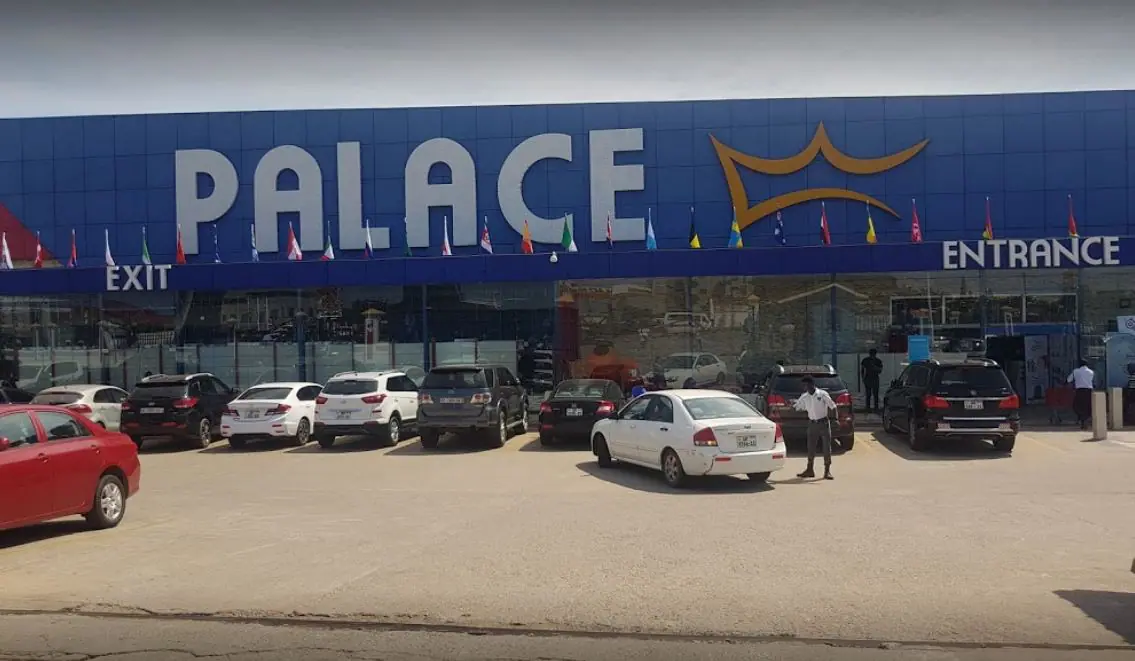
Founded in 2005 by the Ezzeddine brothers, this homegrown giant has built a billion-cedi empire spanning hypermarkets, department stores, a fast-growing online delivery app, and strategic partnerships with Egyptian and Turkish brands. As Shoprite retreats from Ghana, Palace is stepping into the vacuum—proving that the most successful retail model in Accra isn’t imported, it’s Lebanese-Ghanaian.
Executive Introduction
In Ghana‘s fiercely competitive retail sector, the conventional wisdom has long been that foreign capital and global supply chains would eventually overwhelm local players. Shoprite arrived in 1999 and dominated for two decades. Game, Melcom, and MaxMart fought for share. But as of 2026, the most fascinating success story belongs to a family-run enterprise that began with a single store in 2005: Palace Hypermarket.

Founded by brothers Abbas and Nidal Ezzeddine, the Palace Group has grown into a multi-brand conglomerate with over 1,000 employees and a reputation for doing “business differently” —prioritising “ethics and morals” alongside aggressive expansion . Today, Palace Hypermarket is the anchor tenant of several major Accra malls, including the R800 million Achimota Retail Centre , and has successfully launched an online shopping app that competes directly with Jumia and Melcom’s upcoming ‘NOW’ platform .
📢 GET A DETAILED ARTICLES + JOBS
Join ASJ's WhatsApp Channel and never miss a post or opportunity.

But 2026 has brought a seismic shift in the competitive landscape. Africa‘s largest supermarket group, Shoprite, announced its exit from Ghana, citing currency volatility, high import costs, and—crucially—rising competition from MaxMart, Melcom, and Turkish-backed Palace Mall . The irony is rich: a Lebanese-Ghanaian family business is now one of the primary reasons a South African retail giant decided to pull the plug.
For business analysts, investors, and competitors, Palace Hypermarket represents a case study in diaspora entrepreneurship and vertical integration. It has successfully captured the loyalty of Accra’s large Arab and Lebanese expatriate communities by stocking authentic Middle Eastern products . It has leveraged real estate partnerships (Atterbury Property) to secure prime locations . And it has built an omnichannel presence just as the market pivots to digital.

This ASJ profile examines the Palace Group‘s founding, its expansive real estate footprint, its innovative online platform, its strategic advantage with international brands (Egypt‘s “Taste of Egypt” campaign), the recent Shoprite exit, and the critical question: Can a family-owned hypermarket chain survive the dual pressures of currency devaluation and intensifying local competition?
Company Overview: The Ezzeddine Brothers’ Vision
The Genesis (2005)
The Palace Group was founded in 2005 by Abbas and Nidal Ezzeddine . Unlike multinational retailers that import their management culture, the Ezzeddine brothers built their business from the ground up in Accra, leveraging their Lebanese heritage and deep understanding of the Ghanaian consumer.
Key Founding Principles:
-
“Ethics and morals above all else” —a stated priority that has shaped the company‘s brand identity .
-
Hypermarket format: Large-format stores combining grocery, household items, electronics, furniture, and fashion .
-
Community focus: Catering specifically to the large Arab and Lebanese expatriate communities in Ghana by stocking diverse Arabic products .
Ownership and Leadership
| Item | Details |
|---|---|
| Founded | 2005 |
| Founders | Abbas Ezzeddine, Nidal Ezzeddine |
| Ownership | Private / Family-owned (Palace Group) |
| Employees | Over 1,000 |
| Headquarters | Accra, Ghana |
| Website | palacestores.com |
The Anchor Tenant Strategy
Palace Hypermarket has successfully positioned itself as the anchor tenant for major retail developments in Accra. The most significant of these is the Achimota Retail Centre, an R800 million (approximately $57 million) development by South Africa‘s Atterbury Property, which opened in November 2015 .
Achimota Retail Centre Tenant Mix :
| Anchor/Retailer | Type |
|---|---|
| Shoprite | Supermarket (South African) |
| Palace | Hypermarket (Local) |
| Jet | Apparel |
| Mr Price | Apparel |
| MTN | Telecom |
| Nallem | Unknown |
| Foods Inn | Restaurant |
| CompuGhana | Electronics |
| KFC | Fast Food |
The coexistence of Shoprite and Palace under one roof was always an experiment. One decade later, Shoprite has exited, and Palace remains—a testament to the local player‘s resilience.
The “Palace Mall” Distinction
Confusingly, the Palace Group is also associated with the Turkish-backed Palace Mall . This indicates a broader strategy of not just operating hypermarkets but also developing or partnering in mall infrastructure. The competition from this mall is explicitly cited as a factor in Shoprite‘s exit .
The Online Pivot: Palace Online App
In a market increasingly defined by convenience, Palace has launched its own e-commerce platform: Palace Online .
App Metrics (as of 2026):

| Metric | Value |
|---|---|
| Downloads | 17,931 |
| Last Updated | October 4, 2025 |
| Version | 4.1.1 |
| App Size | 81.86 MB |
| Platform | Android |
| Publisher Country | Ghana |
User Feedback:
The app has received mixed reviews, with a significant complaint regarding delivery logistics. One user review noted:
“Didn‘t like the app, it‘s worse than the least played game, literally. I ordered today and after an entire hour they told me ’there was no rider‘ took me a very long time to order on the app as well, expensive as hell” .
Strategic Significance:
Despite the negative feedback, the existence of the app is strategically critical. Analysts have identified Palace as one of the Ghanaian retailers that has successfully “expanded their traditional stores into online platforms, offering delivery and pickup options” . This omnichannel approach is considered essential for surviving the current retail downturn, as consumer spending increasingly depends on convenience and accessibility.
The Competitive Landscape: Palace vs. Melcom vs. The Exiting Giant
The Big Three of Ghanaian Retail
Until 2026, the formal retail sector was dominated by three major players: Melcom, MaxMart, and Palace . With Shoprite‘s announced exit, the local players are now poised to absorb the market share.
| Chain | Ownership | Strengths | Palace‘s Advantage |
|---|---|---|---|
| Melcom | Indian-Ghanaian | Massive scale (65+ stores), manufacturing (plastics/electronics), brand ubiquity | Palace offers a more curated, premium “one-stop” household experience |
| MaxMart | Ghanaian | Strong local value, bakery, fewer locations but loyal following | Palace has larger hypermarket square footage |
| Palace | Lebanese-Ghanaian | Hypermarket format, real estate assets, international product sourcing (Egypt/Turkey) | Anchor tenant status in prime malls |
The Shoprite Exit: A Vacuum for Palace to Fill
In 2026, Shoprite announced it would exit Ghana after 20 years, citing :
-
Currency volatility (eroding the value of repatriated profits).
-
High import costs (Shoprite imported nearly everything, including fruits and vegetables).
-
Rising competition from MaxMart, Melcom, and Turkish-backed Palace Mall.
Why Shoprite couldn‘t win:
-
Import dependency: Unlike Melcom (which manufactures locally) or Palace (which leverages Lebanese supply chains), Shoprite‘s South African supply chain became a liability when the Cedi crashed.
-
Local preferences: Ghanaians often prefer local brands they grew up with for basic items. As analysts noted, “Almost all of Shoprite‘s products were imported, even fruits and veges” .
The Opportunity:
With Shoprite exiting, the Achimota Retail Centre (and other malls) will have a massive retail space vacancy. Palace, already an anchor tenant, is the natural beneficiary .
The “Taste of Egypt” Advantage: Leveraging the Arab Diaspora
One of Palace‘s most distinctive competitive advantages is its deep connection to the Arab and Lebanese expatriate communities in Ghana.
The Egyptian Trade Mission (November 2025)
In November 2025, the Egyptian Commercial Service in Accra partnered with Palace Hypermarket to host a “Taste of Egypt” promotional day .
Event Highlights:
-
The event was coordinated with the Egyptian Embassy and aimed to boost Egyptian exports to Ghana.
-
Palace Hypermarket is described as “one of the largest retail chains in Ghana” and noted for attracting “Arab communities due to the variety of Arabic products it offers” .
-
The event showcased Pharaonic heritage and offered Egyptian food tastings to Ghanaian shoppers.
-
It was attended by the Egyptian Ambassador and several other Arab ambassadors .
The Strategic Genius:
While Melcom chases the mass market and Shoprite chased expatriate South Africans, Palace has successfully captured the Arab wallet. By stocking goods from Lebanon, Egypt, and Turkey, Palace has become the default shopping destination for a wealthy and influential demographic.
Trade Data Context:
Egypt-Ghana trade reached **305millionin2024∗∗,withEgyptexporting296 million worth of goods to Ghana . Fresh and frozen fruit and vegetable exports alone were $2.4 million. Palace is a key distribution channel for these goods.
The Turkish Connection
Analysts explicitly cite the “Turkish-backed Palace Mall” as a factor in Shoprite‘s exit . This suggests the Palace Group has strong business ties to Turkish manufacturers and investors, allowing it to import competitive hard goods (furniture, appliances, textiles) at prices that undercut Shoprite‘s South African supply chain.
The Omni-Channel Model: Palace Online (2026 Update)
In 2026, Palace finds itself at the forefront of Ghana‘s retail digitisation. According to sector analysis, “Retailers like Melcom, Palace Hypermarket, and Orca Deco have expanded their traditional stores into online platforms, offering delivery and pickup options” .
Palace Online App Assessment
| Aspect | Evaluation |
|---|---|
| Tech Stack | Established Android app (4.1.1), 81.86 MB size |
| User Base | ~18,000 downloads (modest but growing) |
| User Sentiment | Negative regarding delivery speed (“no rider” complaints) |
| Strategic Role | Essential for competing against Jumia and Melcom‘s upcoming ‘NOW‘ app |
The Challenge:
The delivery complaint—”there was no rider”—points to a critical logistical hurdle. Unlike Melcom, which is building a proprietary cold-chain fleet for its “NOW” app, Palace appears to be relying on a less reliable third-party rider model. To scale online, Palace must solve last-mile logistics.
Consumer Positioning: The “Household Stock-Up” Destination
According to the Accra Street Journal (2026 Guide) , Palace‘s positioning is distinct :
-
Strengths: “Great for bulk shopping, household items alongside groceries.”
-
Best for: “If you‘re furnishing a home or stocking up, consider visiting Palace for both food and non-food items in one go.”
This differentiates it from MaxMart (value grocery) and Shoprite (general supermarket). Palace is the project store —where you go when you need 10 chairs and a month‘s worth of rice.
Financial Footprint & Employment
Revenue Estimates:
Palace is a private company and does not publish its financials. However, with over 1,000 employees and multiple prime real estate anchors, its annual revenue is estimated to be in the hundreds of millions of cedis (tens of millions of dollars).
Workforce:
-
Employees: Over 1,000 .
-
Nature: Formal retail jobs with steady hours, contributing significantly to Accra‘s middle-class employment.
Real Estate Value:
As an anchor tenant of the Achimota Retail Centre, a property valued at R800 million in 2015 , Palace operates within a very high-value asset base.
Challenges and Risks
No analysis of a retail operation in Ghana is complete without acknowledging the brutal headwinds.
Risk 1: The Cedi Crisis
This is the single biggest threat. The Cedi has depreciated significantly against the Dollar and Euro. If Palace imports goods (especially electronics, specialty foods, and furniture), costs are exploding. While they can pass some costs to consumers, Ghanaian purchasing power is limited.
Risk 2: The “App Gap”
Melcom is about to launch a massive 20-minute delivery app . Palace‘s app currently suffers from “no rider” delivery failures. If Palace cannot close the technology and logistics gap, they will lose the digital grocery war before it starts.
Risk 3: Competition from MaxMart & Melcom
-
MaxMart is known for better value on fresh produce and bakery items .
-
Melcom is dominant in electronics and hard goods, with 65+ stores.
Risk 4: Shoprite Vacancy & Mall Dynamics
The exit of Shoprite from the Achimota Retail Centre is a double-edged sword. While Palace gains more foot traffic, the reduction in overall mall quality (losing an anchor) could depress property values and footfall over time if a suitable replacement is not found.
Risk 5: Supply Chain Disruptions
Red Sea shipping disruptions (ongoing since 2023/2024) affect the cost and timing of goods imported from Asia and the Middle East. As a Lebanese-Ghanaian business, Palace‘s supply chain is vulnerable to these geopolitical shocks.
Future Outlook
As of May 2026, Palace Hypermarket is positioned as the survivor of the retail wars. With Shoprite retreating, Palace has a clear runway to capture the premium hypermarket segment.
The Immediate Agenda (2026-2027):
-
Fix the App: Solve the last-mile delivery issue to compete with Melcom‘s ‘NOW‘ app.
-
Expand the Turkish/Lebanese Supply Chain: Double down on importing unique goods that Melcom and MaxMart do not carry.
-
Anchor New Malls: Explore opportunities to anchor new developments in Kumasi and Takoradi.
The Bull Case (Optimistic):
-
Shoprite‘s Exit: Palace absorbs Shoprite‘s market share in the Achimota and Tema catchments.
-
The ‘Rider‘ Problem Solved: Palace partnerships with logistics startups (e.g., Yango Delivery) fix the “no rider” issue, making online sales explode.
-
Currency Stabilisation: The Cedi finds its floor, easing pressure on import costs.
The Bear Case (Pessimistic):
-
The Currency Death Spiral: The Cedi crashes again. Palace‘s import-heavy model becomes unsustainable.
-
Lost to Melcom Online: Melcom‘s new app dominates the digital grocery space, rendering Palace Online irrelevant.
-
Lebanese Capital Flight: Economic pressure on Lebanon leads to capital withdrawal from Ghanaian operations.
The Verdict
Palace Hypermarket is the most resilient “second generation” retailer in Ghana. Unlike the Indian-owned Melcom (1989) or the South African-owned Shoprite (1999), Palace represents the wave of Lebanese-Ghanaian entrepreneurship that took over in the 2000s.
The company‘s success is built on real estate intelligence (anchoring the Achimota Retail Centre) and cultural specificity (capturing the Arab expatriate market) . In a market where brand loyalty is fickle, having the loyalty of a specific diaspora community is a fortress.
The exit of Shoprite is a landmark moment. It signals that the era of foreign retailers assuming they can dominate Ghana is over. Palace, alongside Melcom and MaxMart, has proven that local knowledge, import agility, and patient family capital can defeat the multinational model.
For the consumer, Palace offers the “project” shopping experience—the place to stock up on bulk goods and furniture . For the investor, it represents a stable, privately-held asset with significant real estate backing.
However, the digital era poses an existential question: Will Palace fix its app? If they do not solve “no rider,” they risk being left behind by a more tech-savvy Melcom. If they do, they could become the default online retailer for household goods.
Palace Hypermarket is not trying to be the cheapest. It is trying to be the most comprehensive. And with Shoprite gone, it just got a lot closer to that goal.
FAQ SECTION
1. Who owns Palace Hypermarket?
Palace Hypermarket is owned by the Palace Group, a private family business founded in 2005 by brothers Abbas and Nidal Ezzeddine .
2. Where are Palace Hypermarket stores located?
Palace operates several large-format hypermarkets in Accra, notably anchoring the Achimota Retail Centre alongside brands like Mr Price, Jet, and KFC .
3. Does Palace Hypermarket have an online delivery app?
Yes. Palace has launched the Palace Online Android app, which allows customers to order groceries and household items for delivery. However, user reviews have cited issues with “no rider” availability for deliveries .
4. Why did Shoprite leave Ghana, and how does it affect Palace?
Shoprite cited currency volatility, high import costs, and competition from Melcom, MaxMart, and Turkish-backed Palace Mall . This exit reduces competition for Palace, particularly as an anchor tenant in major malls.
5. What makes Palace different from Melcom?
Palace focuses on the hypermarket format (grocery + household + furniture in one go), while Melcom focuses on department store hard goods (electronics, plastics) with a separate grocery component . Palace also has a stronger focus on catering to Arab and Lebanese expatriates .
6. What is the ‘Taste of Egypt‘ initiative?
In November 2025, Palace partnered with the Egyptian Commercial Service to host a promotional day for Egyptian products, highlighting Palace‘s role as a key distributor for Arab goods in Ghana .
7. Is there a Palace Mall in Ghana?
Yes. Analysts cite the “Turkish-backed Palace Mall” as a competitor to Shoprite, indicating that the Palace Group is involved in broader real estate development beyond the hypermarket chain .
8. How many people work at Palace?
The Palace Group employs over 1,000 people across its various subsidiaries and stores .
9. What is the contact number for Palace Hypermarket?
Palace Hypermarket in Accra can be reached at +233 50 083 3444 .
10. What is the rating of the Palace Online App?
The app has received mixed reviews, with specific criticism regarding the speed and reliability of delivery logistics, though it is frequently updated (latest update October 2025) .
QUICK FACTS BOX
| Item | Details |
|---|---|
| Founded | 2005 |
| Founders | Abbas & Nidal Ezzeddine |
| Ownership | Private / Palace Group |
| Employees | Over 1,000 |
| Key Anchor Location | Achimota Retail Centre (Accra) |
| Key Competitors | Melcom, MaxMart, Jumia |
| Delivery App | Palace Online (Android) |
| Known For | Hypermarket format (Household + Grocery), Arabic products, “bulk shopping” |
| Notable Event | Hosted “Taste of Egypt” with Egyptian Embassy (2025) |
| Role in Industry | Survivor of the Shoprite exit; Anchor tenant leader |
| Website | palacestores.com |
Source: Accra Street Journal
Last Updated on May 31, 2026 by Samuel Kwame Boadu
Disclaimer: Some content on Accra Street Journal may be aggregated, summarized, or edited from third-party sources for informational purposes. Images and media are used under fair use or royalty-free licenses. Accra Street Journal is a subsidiary of SamBoad Publishing Hub under SamBoad Business Group Ltd, registered in Ghana since 2014.
For concerns or inquiries, please visit our Privacy Policy or Contact Page.

Samuel Kwame Boadu is a Ghanaian media entrepreneur and storyteller with a passion for amplifying urban voices and uncovering everyday truths. He is the Editor-in-Chief and Founder of Accra Street Journal, a dynamic digital platform dedicated to capturing the pulse of Ghana’s capital—its people, culture, challenges, business, sports and innovations.





