










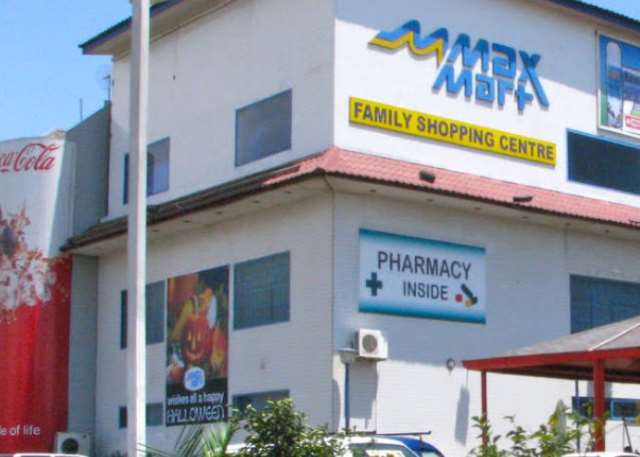
As a wholly-owned subsidiary of Kwatsons Ghana Ltd, this family-owned grocery retailer has grown from a single-store pioneer at the A&C Mall in 2001 to a multimillion-dollar chain spanning Accra, Tema, and Takoradi. Now, with estimated revenues of $79.6 million, a newly launched online app, and a prominent place on the Bolt Food platform, MaxMart is positioned as the local champion that outlasted Shoprite—proving that when it comes to value and fresh bakery, foreign giants cannot compete with a homegrown promise of excellence.
Executive Introduction
In the wake of Shoprite‘s announced exit from Ghana in 2026, much has been written about the supermarket giant‘s struggle with currency volatility and high import costs. But a deeper analysis reveals a more specific story: Shoprite did not just lose to the economy. It lost to local competition—namely, MaxMart, Melcom, and Turkish-backed Palace Mall .

Among these, MaxMart occupies a unique position. Unlike Melcom (a department store giant) or Palace (a Lebanese-Ghanaian hypermarket chain), MaxMart is a 100% Ghanaian-owned enterprise, born from a wholesale trading company . It has spent 25 years perfecting the art of the “Family Shopping Centre”: a retail experience anchored by an in-house bakery, an extensive fresh produce and butcher section, and a focus on “affordable prices” for everyday Ghanaian families .
📢 GET A DETAILED ARTICLES + JOBS
Join ASJ's WhatsApp Channel and never miss a post or opportunity.

For business analysts and investors, MaxMart represents a case study in vertically integrated local sourcing. The company is a subsidiary of Kwatsons Ghana Ltd, a wholesale distributor that handles over 200 world-class brands . This structure gives MaxMart a critical advantage over international players: direct access to supply chains, the ability to source basic items locally (unlike Shoprite, which imported everything) , and the flexibility to adjust to currency volatility without collapsing.
This ASJ profile examines MaxMart‘s founding as a subsidiary of Kwatsons in 2001, its evolution into a three-store chain (Liberation Road, A&C Mall, and Tema Central Mall) , its expansion into online delivery via the MaxMart app and Bolt Food partnerships , its estimated $79.6 million revenue , and the critical question: Can a 100% Ghanaian retailer scale beyond Accra without losing the “family shopping centre” magic?

Company Overview: The Kwatsons Subsidiary
The Genesis (2001)
MaxMart Limited was born from the need to “fill the vacuum of a World-Class Standard facility of retail services in Ghana” . Its parent company, Kwatsons Ghana Limited, has deep roots in Ghanaian wholesale, distributing over 200 leading international brands to retailers across the country .
Key Founding Details:
| Metric | Value |
|---|---|
| Incorporation | 2001 (as MaxMart Limited) |
| First Store Opening | August 8, 2001 |
| First Location | 37 Liberation Road, Opposite Golden Tulip Hotel, Accra |
| Parent Company | Kwatsons Ghana Limited |
| Ownership | 100% Ghanaian-owned |
| Trade Name (2003) | “MaxMart Family Shopping Centre” |
The founding philosophy, established in 2003, remains the company‘s guiding principle: “A promise of shopping excellence” . This promise is not merely marketing. It is operationalised through:
-
Direct sourcing from internationally acclaimed brands and suppliers .
-
In-house bakery producing fresh bread, meat pies, pita bread, rye, multigrain, cakes, and cookies .
-
Full-service departments: Butcher, fishmonger, grocery, household items, electrical appliances .
Leadership and Workforce
MaxMart operates under the management of “highly skilled, professional, and motivated Ghanaian and expatriate staff” . The company currently employs approximately 400 people .
Management Philosophy:
The company prioritises loyalty and dedication, which it credits for its ability to maintain “quality standards you so much deserve” . The leadership team is not publicly named, but the decision-making is understood to rest with the founding family of Kwatsons Ghana Limited.
Store Locations
MaxMart operates three major shopping centres, strategically positioned to capture different segments of the Accra-Tema metropolitan area:
| Location | Address | Year Opened | Significance |
|---|---|---|---|
| Liberation Road (Headquarters) | 37 Liberation Road, Opposite Golden Tulip Hotel, Accra | 2001 | Original flagship store |
| East Legon (A&C Mall) | A&C Square, East Legon | 2006 (approx.) | Anchored the prestigious A&C Mall since its opening |
| Tema (Tema Central Mall) | Near the Oil Refinery, Tema | Unknown (recent) | Expansion into industrial hub |
The A&C Mall Anchor Tenant Status:
When the A&C Mall was officially opened in 2006 by President John Agyekum Kufuor, it had just 14 retail shops. The sole anchor tenant was MaxMart . Industry observers at the time doubted the mall’s viability, but MaxMart‘s presence provided the foot traffic necessary for the mall to survive and thrive. Today, MaxMart remains a central feature of the A&C Square shopping experience, described by recent visitors as having “a clean and well-lit environment” .

Business Model: The “Family Shopping Centre”
MaxMart operates under a supermarket business model, distinct from the hypermarket (Palace) or department store (Melcom) formats.
Core Value Proposition
| Element | Description |
|---|---|
| In-House Bakery | Freshly baked bread, meat pies, pita bread, rye, multigrain, cakes, cookies. A key differentiator. |
| Butcher & Fishmonger | Fresh prime cuts of meat, chicken, lamb, turkey, and frozen products. |
| Grocery Range | Legumes (kidney beans, chickpeas), frozen products, household items, electrical appliances. |
| Pricing | “Most affordable prices” . |
The “Family” Focus
The “Family” in MaxMart Family Shopping Centre is intentional. The store is designed to serve the entire household‘s needs in one trip: groceries, cleaning supplies, electronics, and fresh baked goods. This positioning appeals to Accra’s growing middle class, who value convenience and quality over the lowest possible price.
Wholesale Synergy with Kwatsons
MaxMart‘s business model is fundamentally different from standalone retailers because of its relationship with Kwatsons Ghana Limited. As a wholesale distribution company, Kwatsons imports and distributes hundreds of brands to retailers across Ghana. MaxMart effectively acts as the retail arm of this wholesale empire, capturing margin at both the distribution and retail levels.
Import Data (2025):
According to trade intelligence data, Maxmart Limited recorded 1.82millioninimports∗∗betweenJanuary2025andDecember2025,sourcing∗∗9,820shipments∗∗[citation:6].Thecompanyalsorecorded∗∗786.29 in exports during the same period .
Strategic Implications:
-
Volume leverage: 9,820 shipments in a single year demonstrates significant import volume, allowing MaxMart to negotiate favourable terms with suppliers.
-
Vertical integration: The parent company‘s distribution network lowers MaxMart‘s cost of goods sold, allowing it to offer “affordable prices” while maintaining margins .
The Bakery: A Competitive Fortress
MaxMart‘s in-house bakery is arguably its greatest competitive advantage. While competitors import baked goods or rely on third-party suppliers, MaxMart produces fresh bread, pita, meat pies, and cakes daily .
Customer Sentiment:
User reviews consistently highlight the bakery as a reason to visit. At the A&C Mall location, customers specifically mention:
-
“Bakery section, get your freshly baked Sliced bread, Meat pies, Pita bread, Rye, Multigrain, cakes etc” .
-
“For the best Fresh Prime Cuts of Meat, Chicken, Lamb, Turkey etc, Legumes (Kidney Beans, Chickpeas), Frozen products” .
Strategic Implications:
-
Foot traffic driver: Fresh bread is a high-frequency purchase. Customers who come for bread often leave with a full cart of groceries.
-
Price control: By producing its own baked goods, MaxMart avoids the import costs and currency risks that affect competitors’ supply chains.
-
Quality differentiation: The bakery provides a sensory experience (smell, taste) that cannot be replicated by packaged goods.
The Digital Pivot: MaxMart Online
In 2026, MaxMart is executing an omnichannel strategy, combining physical stores with online delivery.
The MaxMart Online App
MaxMart has launched its own e-commerce application, available on the Google Play Store .
App Details:
| Metric | Value |
|---|---|
| Name | MaxMart Online Shopping |
| Description | “E-extension of your favorite MaxMart Mall” |
| Features | Advanced search, email login, better order management, new interface design |
| Availability | Delivery to your door or pickup from 37 Liberation Road |
| Pitch | “Today’s smart shoppers save time by shopping with MaxMart Online!” |
Bolt Food Partnership (September 2025)
In a major strategic move, MaxMart signed a partnership with Bolt Food Ghana to list its products on the Bolt Food platform .
The Partnership:
Bolt Food has successfully signed partnerships with “all major retail and grocery brands, solidifying its expansion into the grocery and retail space” . These brands include:
-
Melcom
-
Maxmart
-
Fairway
-
Palace
-
Sneda
-
Kwikmart
Why This Matters:
-
Third-party logistics: By partnering with Bolt Food, MaxMart gains access to an established delivery fleet, solving the “last mile” problem that plagues many retail apps .
-
Bolt‘s 5th anniversary: The partnership coincides with Bolt Food‘s 5th anniversary in Ghana, indicating a mature, reliable delivery network .
-
Multi-category expansion: Bolt Food customers can also order electronics, pharmacies, flowers, pet care, alcohol, and frozen food .
Bolt Food‘s Statement:
Ali Zaryab, General Manager of Bolt Food Ghana, noted:
“This milestone shows how far we‘ve come since announcing our entry into the grocery and retail space last year. By bringing Ghana’s leading retail and grocery brands onto the platform, we‘re proving that Bolt Food is more than a food delivery app. It‘s becoming the go-to platform for everyday essentials.”
Delivery Radius:
For guests staying at the Legacy Unit (A&C Mall area), MaxMart is just a 2-minute walk away . For online orders, Bolt Food delivers to the broader Accra metropolitan area.
Market Position and Competition
Industry Standing: The Resilient Local
According to ZoomInfo‘s March 2026 ranking of top grocery retail companies in Ghana by revenue:
| Rank | Company | Revenue |
|---|---|---|
| 1 | Melcom | $289.8M |
| 2 | MaxMart | $79.6M |
| 3 | Fan Milk | $46.9M |
| 4 | Shoprite | N/A (exiting) |
| 5 | Palace Hypermarket | N/A (private) |
Source: The High Street Business
Key Takeaways:
-
Second-largest revenue among grocery retailers in Ghana, behind only the 65-store Melcom giant.
-
$79.6 million in estimated revenue positions MaxMart as a significant mid-tier player.
-
Private vs. public: Unlike Melcom (which is also private), MaxMart does not disclose exact figures, but ZoomInfo‘s estimates are derived from market data.
The “Shoprite Killer” Narrative
In the wake of Shoprite‘s exit, analysts have identified the specific factors that allowed local retailers to outcompete the South African giant .
Why Shoprite failed:
-
Import dependency: “Almost all of Shoprite‘s products were imported, even fruits and veges” .
-
Local brand loyalty: “For some of these basic items, Ghanaians tend to go for trusted local brands that they have used since childhood” .
Why MaxMart succeeded:
-
Local sourcing through Kwatsons: As a subsidiary of a Ghanaian wholesale company, MaxMart has deep relationships with local manufacturers.
-
In-house bakery: Shoprite imported baked goods; MaxMart bakes fresh daily.
-
Currency resilience: By sourcing locally wherever possible, MaxMart reduces exposure to cedi depreciation.
The Competitive Landscape (2026)
| Competitor | Type | Strengths | MaxMart‘s Advantage |
|---|---|---|---|
| Melcom | Department Store | 65+ stores, manufacturing (plastics/electronics), brand ubiquity | MaxMart focuses exclusively on grocery & household; superior bakery |
| Palace Hypermarket | Lebanese-Ghanaian hypermarket | Anchor tenant in major malls; strong Arab expatriate loyalty | MaxMart is 100% Ghanaian-owned; appeals to local patriotism |
| Shoprite | South African multinational | Global supply chain, economies of scale | Exiting Ghana in 2026; MaxMart wins by default |
| Fairway | Premium grocery | High-end fresh produce | MaxMart is more affordable; wider household range |
Challenges and Risks
Risk 1: Geographic Concentration (The Accra Trap)
MaxMart operates three stores, all within the Greater Accra Region. While this concentration allows for operational efficiency, it also means the company is heavily exposed to Accra‘s real estate prices, traffic congestion, and localised economic shocks. Competitors like Melcom have already expanded to Kumasi, Takoradi, and Tamale.
The Question: Can MaxMart successfully expand beyond Accra without diluting its “Family Shopping Centre” quality?
Risk 2: The Online Logistics Learning Curve
While the Bolt Food partnership solves the last-mile problem, MaxMart‘s own app has received mixed user feedback. One review noted a frustrating experience: “Didn‘t like the app, it‘s worse than the least played game, literally” .
The Risk: If MaxMart cannot fix the user experience of its proprietary app, it will become entirely dependent on Bolt Food for digital sales, ceding customer data and relationship management to a third party.
Risk 3: Currency Volatility (Import Exposure)
Despite local sourcing advantages, MaxMart still imports a significant volume of goods—$1.82 million in 2025 alone . The Ghanaian cedi‘s volatility remains a threat. When the cedi depreciates, MaxMart faces a choice: raise prices (losing customers) or absorb costs (losing margins).
Risk 4: Intensifying Competition from Melcom
Melcom‘s upcoming ‘NOW‘ app, promising 20-minute delivery , poses a direct threat to MaxMart‘s online ambitions. Melcom has the scale (65 stores) to offer faster delivery than MaxMart‘s three-store network. If Melcom successfully captures the quick-commerce grocery market, MaxMart could be squeezed.
Risk 5: The Bakery‘s Capacity Limits
The in-house bakery is a strength, but it is also a constraint. Fresh baking is labour-intensive and difficult to scale. If MaxMart expands to new locations, it must replicate the bakery infrastructure in each store—a capital-intensive process.
Risk 6: Employee Retention
With 400 employees , MaxMart relies on the “loyalty and dedication” of its staff. The retail sector is notorious for high turnover. Any deterioration in employee morale could affect the “clean and well-lit” environment that customers value .
Risk 7: Private Ownership Constraints
As a private, family-owned company, MaxMart does not have access to public equity markets for expansion capital. If the owners decide to expand beyond Accra, they must fund it through retained earnings or debt—both of which are slower than raising equity from institutional investors.
Economic and Industry Impact
The Local Champion Effect
MaxMart‘s success is a counter-narrative to the idea that African retail requires foreign capital. As a 100% Ghanaian-owned enterprise, MaxMart demonstrates that local entrepreneurs can build world-class retail infrastructure.
Employment and Skills Development
With 400 employees, MaxMart is a significant private-sector employer . The company‘s management structure—incorporating both Ghanaian and expatriate staff—facilitates skills transfer, building local capacity for retail management.
The “Anchor Tenant” Legacy
MaxMart‘s role as the anchor tenant of the A&C Mall since 2006 catalysed the development of East Legon‘s commercial real estate market. The mall‘s success demonstrated that local retailers could drive foot traffic, paving the way for other developments.
Supply Chain Integration
As a subsidiary of Kwatsons Ghana Limited, MaxMart is part of a vertically integrated wholesale-retail ecosystem. This model reduces the number of intermediaries between manufacturer and consumer, lowering costs and improving supply chain efficiency.
Consumer Choice
MaxMart‘s presence in Accra provides consumers with an alternative to both international chains (Shoprite, Game) and other local retailers (Melcom, Palace). This competition keeps prices competitive and quality high.
Future Outlook
As of May 2026, MaxMart is executing a dual strategy: defend its physical store dominance while expanding its digital footprint through the MaxMart app and Bolt Food.
The Immediate Agenda (2026-2027)
-
Fix the MaxMart App: Address user complaints about app functionality to reduce dependency on Bolt Food for digital sales.
-
Expand Store Network: Consider opening a fourth location in Kumasi or Takoradi to reduce geographic concentration.
-
Deepen Bolt Food Integration: Leverage the partnership for marketing and customer acquisition.
-
Expand Bakery Offerings: Introduce new product lines (e.g., gluten-free bread, pastries) to differentiate further.
-
Explore B2B Wholesale: Leverage the Kwatsons parent to supply other retailers, not just MaxMart stores.
The Bull Case (Optimistic)
-
Shoprite Vacuum: MaxMart captures 30%+ of the market share vacated by Shoprite in Accra and Tema. Revenue grows to $120 million within 2 years.
-
App Redemption: MaxMart invests in a major app overhaul. User ratings improve. The app becomes the primary channel for 20% of sales.
-
Expansion to Kumasi: A new store in Kumasi (Adum or Asokwa) replicates the A&C Mall model, becoming an anchor tenant for a new development.
-
Kwatsons Synergy Deepens: MaxMart gains exclusive distribution rights for several international brands through Kwatsons, creating a unique product selection that competitors cannot match.
-
Fresh Bakery Dominance: MaxMart‘s bakery becomes the leading fresh bread brand in Accra, with the store selling bread to other retailers (a shift from retail to wholesale).
The Bear Case (Pessimistic)
-
The Accra Trap: MaxMart fails to expand beyond Accra. Melcom and Palace capture the Kumasi and Takoradi markets unchallenged.
-
App Failure: User complaints about the MaxMart app go unaddressed. Customers migrate to Bolt Food for ordering, and MaxMart loses direct customer relationships.
-
Currency Crisis: The cedi depreciates sharply. MaxMart‘s $1.82 million import bill spikes. The company cannot pass costs to price-sensitive customers; margins collapse.
-
Melcom Quick-Commerce Threat: Melcom‘s ‘NOW‘ app (20-minute delivery) captures the Accra grocery delivery market. MaxMart‘s 2-3 day delivery (via Bolt) cannot compete.
-
Bakery Scaling Challenges: Expansion to new locations is delayed by the cost of replicating the bakery infrastructure. Competitors launch competing fresh bakery sections.
The Verdict
MaxMart Limited is the most successful 100% Ghanaian-owned supermarket chain in the country. It has proven that a local enterprise can not only survive but thrive in a market once dominated by South African giants.
The company‘s strengths are formidable:
-
Vertical integration with Kwatsons Ghana Limited provides a wholesale distribution advantage that standalone retailers cannot match .
-
The in-house bakery is a genuine differentiator, creating a sensory shopping experience that drives foot traffic and loyalty .
-
The A&C Mall anchor tenant status validates the company‘s real estate intelligence and its ability to drive foot traffic .
-
The Bolt Food partnership provides a ready-made digital delivery channel without the capital expense of building a proprietary fleet .
However, the company‘s weaknesses are equally clear:
-
Geographic concentration in Accra limits growth and exposes the company to localised economic shocks .
-
App user experience issues threaten the digital pivot .
-
Competition from Melcom‘s ‘NOW‘ app poses a direct threat to MaxMart‘s online ambitions.
For the Ghanaian consumer, MaxMart offers the best of both worlds: the quality and selection of an international supermarket, with the pricing and local sourcing of a family-owned business. For the investor, MaxMart represents a stable, profitable, family-owned enterprise—but one whose private ownership limits outside participation.
MaxMart is not trying to be the biggest retailer in Ghana—Melcom holds that crown . It is trying to be the most beloved retailer in Ghana. With a 25-year track record, a fresh bakery, and a 100% Ghanaian ownership structure, it has earned that position.
The next five years will determine whether MaxMart remains Accra‘s favourite supermarket or whether it can translate that local loyalty into a national footprint.
FAQ SECTION
1. Is MaxMart a Ghanaian-owned company?
Yes. MaxMart Limited is a 100% Ghanaian-owned company. It is a subsidiary of Kwatsons Ghana Limited, a wholly Ghanaian wholesale distribution company .
2. When was MaxMart founded?
MaxMart opened its first store on August 8, 2001, at 37 Liberation Road, opposite the Golden Tulip Hotel in Accra .
3. How many MaxMart locations are there?
MaxMart operates three major shopping centres:
-
Liberation Road (Headquarters), Accra
-
A&C Square, East Legon, Accra
-
Tema Central Mall, Tema
4. What is MaxMart‘s estimated revenue?
According to ZoomInfo‘s March 2026 ranking, MaxMart has estimated revenue of **79.6million∗∗,makingitthesecond−largestgroceryretailcompanyinGhanabyrevenue,behindonlyMelcom(289.8M) .
5. Does MaxMart have an online delivery app?
Yes. MaxMart has launched the MaxMart Online Shopping app, available on the Google Play Store. Customers can order groceries and household items for delivery or pickup from the Liberation Road store .
6. Is MaxMart on Bolt Food?
Yes. In September 2025, MaxMart partnered with Bolt Food Ghana, making its products available on the Bolt Food platform alongside other major retailers including Melcom, Palace, and Fairway .
7. What is MaxMart‘s connection to Kwatsons Ghana Limited?
MaxMart is a subsidiary company of Kwatsons Ghana Limited, a 100% Ghanaian-owned wholesale company that distributes over 200 international brands to retailers across Ghana .
8. Does MaxMart have an in-house bakery?
Yes. MaxMart operates its own bakery unit, producing freshly baked bread, meat pies, pita bread, rye, multigrain, cakes, and cookies daily .
9. How many employees does MaxMart have?
MaxMart employs approximately 400 people .
10. Why did Shoprite exit Ghana, and how does it affect MaxMart?
Shoprite cited currency volatility, high import costs, and rising competition from MaxMart, Melcom, and Turkish-backed Palace Mall as reasons for its exit . This reduces competition for MaxMart, particularly in Accra.
11. What is MaxMart‘s import volume?
Between January 2025 and December 2025, Maxmart Limited recorded $1.82 million in imports and 9,820 import shipments .
12. Where is MaxMart‘s headquarters?
MaxMart‘s headquarters is located at 37 Liberation Road, Accra, Ghana (opposite the 37 Military Hospital) .
QUICK FACTS BOX
| Item | Details |
|---|---|
| Founded | August 8, 2001 |
| Headquarters | 37 Liberation Road, Opposite Golden Tulip Hotel, Accra |
| Industry | Retail (Supermarket / Grocery) |
| Ownership | 100% Ghanaian-owned (Subsidiary of Kwatsons Ghana Limited) |
| Parent Company | Kwatsons Ghana Limited |
| Number of Stores | 3 (Liberation Road, A&C Mall East Legon, Tema Central Mall) |
| Employees | 400 |
| Estimated Revenue (2026) | $79.6 million |
| Key Differentiator | In-house bakery; 100% Ghanaian ownership |
| Trade Name (since 2003) | “MaxMart Family Shopping Centre” |
| Digital Platforms | MaxMart Online App ; Bolt Food partnership |
| Import Volume (2025) | $1.82 million (9,820 shipments) |
| Key Real Estate Asset | Anchor tenant at A&C Mall (East Legon) since 2006 |
| Regulator | Ghana Standards Authority (product quality) |
| Website | maxmartghana.com |
Source: Accra Street Journal
Last Updated on May 31, 2026 by Samuel Kwame Boadu
Disclaimer: Some content on Accra Street Journal may be aggregated, summarized, or edited from third-party sources for informational purposes. Images and media are used under fair use or royalty-free licenses. Accra Street Journal is a subsidiary of SamBoad Publishing Hub under SamBoad Business Group Ltd, registered in Ghana since 2014.
For concerns or inquiries, please visit our Privacy Policy or Contact Page.

Samuel Kwame Boadu is a Ghanaian media entrepreneur and storyteller with a passion for amplifying urban voices and uncovering everyday truths. He is the Editor-in-Chief and Founder of Accra Street Journal, a dynamic digital platform dedicated to capturing the pulse of Ghana’s capital—its people, culture, challenges, business, sports and innovations.





