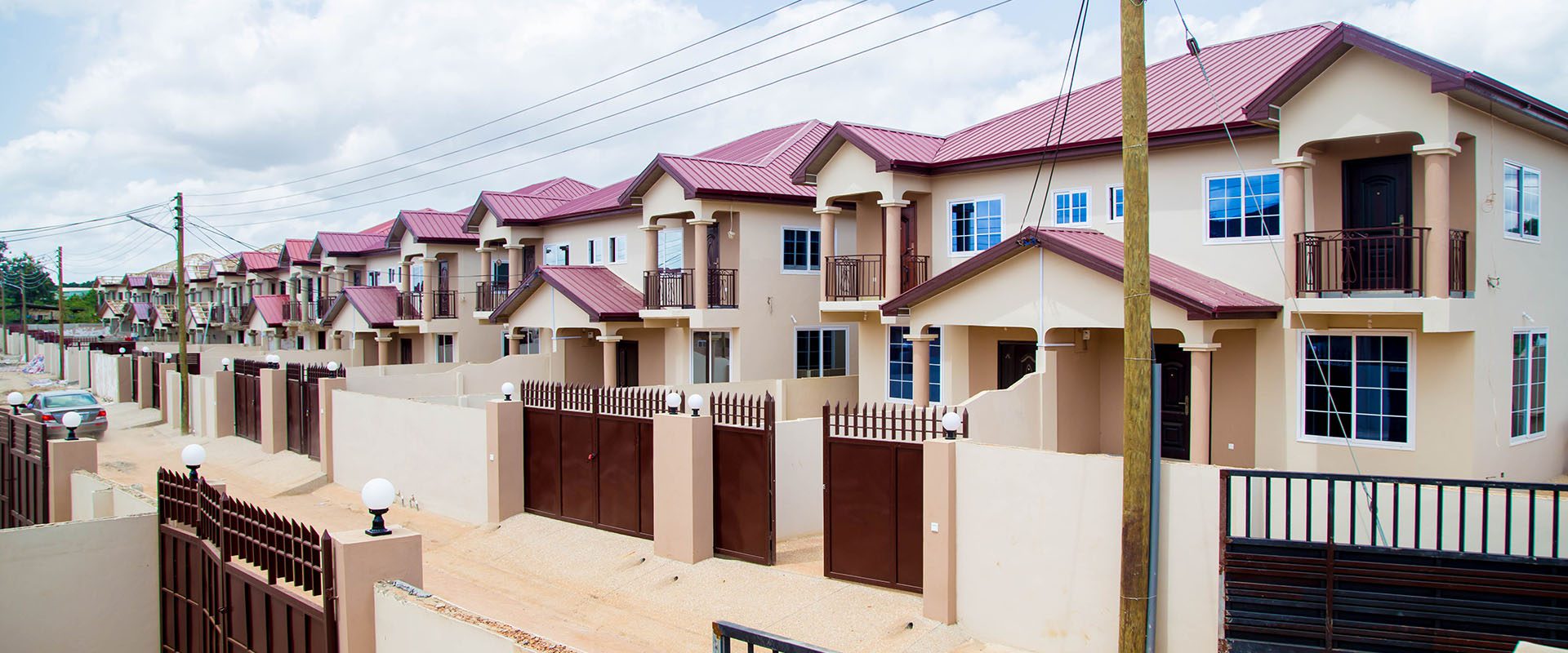
Accra’s real estate market has become one of the most competitive urban property markets in West Africa. Whether renting a single room, leasing a shop, or purchasing a family home, demand consistently outpaces supply. Prices rise rapidly, listings disappear quickly, and buyers and tenants often find themselves in bidding situations that were once rare in Ghana’s housing landscape.
This competitiveness is not accidental. It is the product of long-term demographic shifts, economic concentration, structural supply constraints, and changing perceptions of property as both shelter and investment.

Accra as Ghana’s Economic Magnet
Accra occupies a unique position in Ghana’s economy. It is the administrative capital, the primary commercial hub, and the centre of political decision-making. Most major institutions—corporate headquarters, government ministries, embassies, and multinational firms—are located within the city or its immediate surroundings.
📢 GET A DETAILED ARTICLES + JOBS
Join ASJ's WhatsApp Channel and never miss a post or opportunity.

This concentration of opportunity continuously attracts:
-
Job seekers
-
Entrepreneurs
-
Investors
-
Students
-
Professionals
As long as Accra remains the country’s dominant economic magnet, demand for property will remain intense.

Population Growth and Urbanisation
Accra’s population growth is a central driver of real estate competition. Rural-to-urban migration, natural population increase, and internal movement from smaller towns all add pressure to the housing market.
Each year, thousands of new residents enter the city, all requiring accommodation. Housing supply, however, expands at a slower pace. This imbalance creates a seller’s and landlord’s market, where competition among seekers is inevitable.
Urbanisation has turned housing into a scarce and highly contested resource.
Limited Land Availability
Land scarcity significantly intensifies competition. Accra is bounded by the ocean, neighbouring municipalities, and already-developed communities. Unlike cities with vast undeveloped hinterlands, Accra’s expansion is constrained.
Available land within desirable locations is limited, fragmented, and often expensive. As a result:
-
Prime areas command premium prices
-
Redevelopment replaces affordable housing
-
Competition shifts toward suburbs
Scarcity naturally fuels competition.
Complex Land Ownership Systems
Land tenure complexity adds another layer of pressure. Customary ownership, multiple claims, and prolonged litigation discourage rapid development and increase costs.
Developers factor legal risk into pricing, which ultimately raises property values and rents. These inefficiencies reduce effective supply and intensify competition for verified, litigation-free properties.
For buyers and tenants, verified properties become highly sought-after assets.

Housing Supply Lag
Accra’s housing supply has struggled to keep pace with demand. While private developers continue to build, most new developments target middle- and upper-income segments.
Affordable housing production remains limited due to:
-
High construction costs
-
Imported building materials
-
Infrastructure expenses
-
Financing constraints
The result is a narrow supply funnel serving a broad and growing population.
Real Estate as an Investment Asset
Property in Accra is increasingly viewed as an investment rather than merely a place to live. Both local and diaspora investors see real estate as a hedge against inflation and currency volatility.
This investment demand competes directly with residential demand. Homes that could house families are sometimes held as rental investments or long-term assets, reducing available stock.
Competition intensifies when shelter and capital accumulation intersect.
Diaspora Influence on the Market
Ghanaians living abroad play a significant role in Accra’s real estate competitiveness. With stronger purchasing power, diaspora buyers often acquire property for future relocation, retirement, or rental income.
Their participation injects capital into the market but also raises price benchmarks. Local buyers must then compete at levels influenced by foreign-earned incomes.
This dynamic reshapes affordability across the city.
Rental Market Pressures
The rental market reflects the broader competitiveness of real estate in Accra. Rent advance requirements, limited vacancy rates, and high demand place tenants at a disadvantage.
Landlords face little pressure to negotiate when multiple applicants are available. Tenants compete not only on price but also on ability to pay upfront.

Renting becomes a competitive process rather than a simple transaction.
Location Premiums
Not all competition is evenly distributed. Areas with:
-
Good road networks
-
Proximity to workplaces
-
Reliable utilities
-
Quality schools and healthcare
Command intense interest. Properties in these locations attract higher demand regardless of size or age.
Location, more than structure, often determines competitiveness.
Infrastructure and Accessibility
Infrastructure plays a decisive role in shaping competition. Neighbourhoods with improved roads, drainage, and utilities experience rapid price escalation.
As infrastructure expands outward, competition follows. Suburbs once considered remote quickly become contested spaces once accessibility improves.
Infrastructure development effectively redraws real estate boundaries.
Regulatory and Planning Constraints
Planning approval processes, zoning regulations, and infrastructure coordination affect development timelines. Delays increase holding costs for developers, which are passed on to buyers and tenants.
Slow regulatory processes reduce the speed at which new supply enters the market, sustaining competitive pressure.
Efficiency gaps become price drivers.
Informal Market Dynamics
A significant portion of Accra’s housing market operates informally. While this provides flexibility, it also creates uncertainty.
Verified, formally documented properties therefore attract premium interest. Competition increases around properties with clear titles, proper layouts, and predictable tenure conditions.
Formality becomes a scarce advantage.
Income Inequality and Segmented Competition
Competition manifests differently across income groups. High-income buyers compete over premium properties, while low- and middle-income households compete intensely for limited affordable options.
This segmentation creates multiple overlapping markets, each experiencing pressure in distinct ways.
Competition is universal, but its impact is unequal.
Psychological Effects of Scarcity
Scarcity alters behaviour. Buyers rush decisions, tenants compromise standards, and investors act defensively to secure assets early.
Fear of missing out becomes a powerful force, further intensifying competition and accelerating price movements.
Market psychology reinforces structural scarcity.
Long-Term Outlook
Accra’s real estate market is unlikely to become less competitive in the near future. Population growth, economic centralisation, and investment demand will continue to exert pressure.
Meaningful change would require:
-
Expanded affordable housing supply
-
Improved transport networks
-
Decentralised economic growth
-
Efficient land administration
Without these shifts, competition will remain a defining feature.
Final Reflection From ASJ
Accra’s real estate competitiveness is not the result of a single factor, but the convergence of demand, scarcity, investment behaviour, and structural inefficiencies.
Property in Accra represents opportunity, security, and status—all highly contested values. As long as the city remains Ghana’s primary economic engine, its real estate market will continue to reflect that reality.
Competition, in this sense, is not a market failure—it is a mirror of Accra’s central role in national life.
FAQs
Why is it hard to find affordable property in Accra?
Demand far exceeds supply, especially in well-located areas.
Do investors contribute to competition?
Yes, investment demand reduces available housing stock.
Are suburbs less competitive?
Initially yes, but competition increases as infrastructure improves.
Is renting more competitive than buying?
Both are competitive, though renting affects more households immediately.
Will competition reduce in the future?
Only with major policy, infrastructure, and supply changes.
Source: Accra Street Journal
Last Updated on June 19, 2026 by Samuel Kwame Boadu
Disclaimer: Some content on Accra Street Journal may be aggregated, summarized, or edited from third-party sources for informational purposes. Images and media are used under fair use or royalty-free licenses. Accra Street Journal is a subsidiary of SamBoad Publishing Hub under SamBoad Business Group Ltd, registered in Ghana since 2014.
For concerns or inquiries, please visit our Privacy Policy or Contact Page.

Samuel Kwame Boadu is a Ghanaian media entrepreneur and storyteller with a passion for amplifying urban voices and uncovering everyday truths. He is the Editor-in-Chief and Founder of Accra Street Journal, a dynamic digital platform dedicated to capturing the pulse of Ghana’s capital—its people, culture, challenges, business, sports and innovations.