






June 24, 2025 – Accra, Ghana

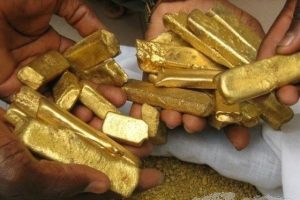
Ghana has been ranked 63rd globally in gold reserve holdings, with 31.7 tonnes as of April 2025, according to newly released data from the International Financial Statistics (IFS) report compiled by the International Monetary Fund and published in its June 2025 edition.
While the volume of Ghana’s gold holdings remains modest by global standards, the data reveals a more significant insight: gold accounts for 48.6% of Ghana’s total external reserves, a ratio that places the country among the most gold-reliant economies worldwide in terms of reserve composition.
📢 GET A DETAILED ARTICLES + JOBS
Join ASJ's WhatsApp Channel and never miss a post or opportunity.
“This isn’t just about how much gold a country holds,” said a senior Ghanaian economist with the Bank of Ghana. “It’s about how much of your reserves you’re willing to anchor on an asset like gold — which signals monetary discipline and long-term hedging strategy.”
Strategic Weight of Gold in Ghana’s Reserve Policy
The United States leads the global rankings with 8,133.5 tonnes of gold, accounting for 78.6% of its reserves, followed by Germany (3,381.1t), Italy (2,451.8t), and France (2,437.4t). Yet in terms of gold’s proportionate role in national reserves, Ghana stands out among African and developing economies.
In Africa, Ghana ranks fifth, following Algeria (173.6t), Libya (146.7t), Egypt (125.6t), and South Africa (125.4t) — but well ahead of regional peers such as Nigeria (21.5t) and Morocco (22.1t). For a country where gold is also the largest export earner, Ghana’s dual strategy of monetizing gold production and integrating it into its reserve management reflects a broader economic hedging policy.
“Ghana is not just exporting gold; it’s also banking on it — literally,” remarked a resource analyst at Accra-based economic think tank IESR (Institute for Economic & Strategic Reserves).
Global Gold Trends Reshaping Reserve Portfolios
The trend comes amid a global pivot toward gold by central banks — especially in emerging markets — seeking insulation from currency volatility, geopolitical instability, and inflationary shocks.
According to the World Gold Council’s 2025 Central Bank Gold Survey, global central bank purchases have reached record highs, driven largely by countries aiming to diversify away from the U.S. dollar and euro amid increasing skepticism about fiat currencies.
Ghana’s case is unique: despite having a smaller economy, it boasts a relatively high gold-to-reserves ratio — positioning the country favorably as gold prices top $3,300 per ounce, marking an all-time high.
“There’s virtually no default risk with gold,” a senior policy advisor at Ghana’s Ministry of Finance told Accra Street Journal. “It doesn’t rely on the solvency of any government or the stability of a currency. It’s tangible security.”
What It Means for Ghana’s Macroeconomic Strategy
With the country navigating post-COVID fiscal recovery, a volatile cedi, and uncertain global credit markets, gold is increasingly being treated as a stabilizer within Ghana’s external balance sheet.
Economists argue that this growing emphasis on gold, while symbolic of Ghana’s identity as Africa’s leading gold producer, also marks a prudent monetary hedge — one that could shield the nation from future shocks in the global capital market.
Meanwhile, the Bank of Ghana has signaled ongoing interest in increasing gold-backed instruments and expanding domestic gold purchase programs to shore up reserves.
“We expect gold’s role in Ghana’s financial system to deepen over the next decade,” said a former IMF consultant. “It may very well become the foundation for future monetary innovation, such as commodity-backed digital reserves.”
As Ghana continues to push for economic resilience through structural reforms and international partnerships, its reliance on gold is both a historical continuity and a forward-looking strategy. In a world increasingly riddled with economic fault lines, Ghana’s golden bet may be one of its most enduring.
Last Updated on June 24, 2025 by Samuel Kwame Boadu
Disclaimer: Some content on Accra Street Journal may be aggregated, summarized, or edited from third-party sources for informational purposes. Images and media are used under fair use or royalty-free licenses. Accra Street Journal is a subsidiary of SamBoad Publishing Hub under SamBoad Business Group Ltd, registered in Ghana since 2014.
For concerns or inquiries, please visit our Privacy Policy or Contact Page.

Samuel Kwame Boadu is a Ghanaian media entrepreneur and storyteller with a passion for amplifying urban voices and uncovering everyday truths. He is the Editor-in-Chief and Founder of Accra Street Journal, a dynamic digital platform dedicated to capturing the pulse of Ghana’s capital—its people, culture, challenges, business, sports and innovations.