









5 min read
Young entrepreneurs and business operators in the Volta Region are urging government to use the 2027 Budget to reduce the cost of doing business, improve access to affordable credit and create stronger incentives for private sector investment, arguing that high taxes, import duties, electricity costs and limited financing are throttling enterprise growth.
Young entrepreneurs and business operators in the Volta Region are urging government to use the 2027 Budget to reduce the cost of doing business, improve access to affordable credit and create stronger incentives for private sector investment.
Key Takeaways
- They say high taxes, import duties, electricity costs and limited financing are making it difficult for emerging businesses to expand and absorb more young people into employment.
- The appeals place pressure on the Ministry of Finance to address the business conditions facing small enterprises as it prepares the 2027 Budget Statement and Economic Policy, scheduled for presentation on November 12, 2026.
- The cedi has faced sustained depreciation pressure through 2026, and while reserves have provided a buffer, import-dependent businesses — particularly in the regions — absorb currency movements directly through input costs.
They say high taxes, import duties, electricity costs and limited financing are making it difficult for emerging businesses to expand and absorb more young people into employment.
The appeals place pressure on the Ministry of Finance to address the business conditions facing small enterprises as it prepares the 2027 Budget Statement and Economic Policy, scheduled for presentation on November 12, 2026.
The Employment Argument
Joshua Ayayi, Founder of the Youth Alliance for Sustainability, said the private sector could not absorb the growing number of unemployed young people if businesses remained constrained by heavy tax obligations and regulatory costs.
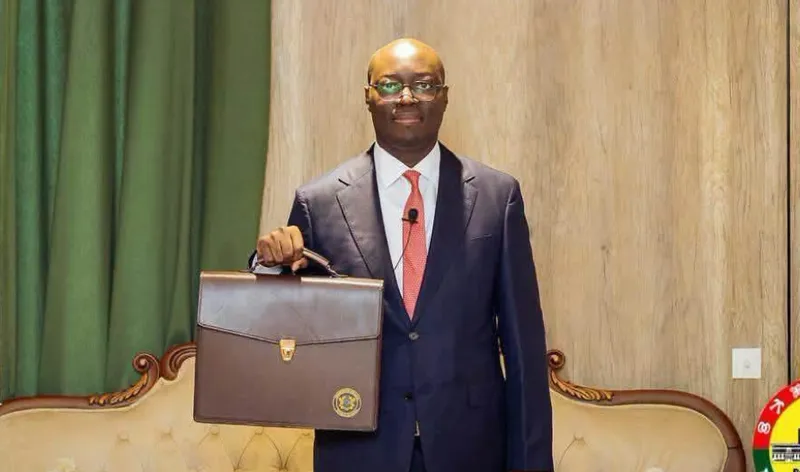
He called on Finance Minister Dr Cassiel Ato Forson to pursue a tax regime that rewards enterprise expansion and supports self-employment, rather than placing additional pressure on young entrepreneurs at the early stages of building their businesses.
For emerging businesses, the cost of formal operations can influence decisions on whether to register, employ workers, invest in equipment or expand into new markets. Mr Ayayi argued that fiscal incentives should make business growth more attractive and improve the private sector’s capacity to generate jobs.
The logic is one that has gained traction in Ghanaian policy debates: in an economy where the formal sector employs a minority of the workforce, the decision to formalise or expand is itself a tax-sensitive choice. A business that calculates registration, compliance and duty costs against uncertain margins may simply remain small — or remain informal.
Credit Remains the Binding Constraint
Mr Ayayi also called for targeted policy support to help local businesses withstand prevailing economic pressures, particularly through cheaper and more accessible credit for small and medium sized enterprises.
Access to affordable financing remains important for businesses seeking working capital, purchasing equipment and increasing production. Without suitable credit, young entrepreneurs may struggle to move beyond small-scale operations, limiting their ability to create sustainable employment.
His appeal echoes a diagnosis made repeatedly this year by the Bank of Ghana and industry groups: that Ghana’s SME financing gap — estimated at close to US$4.8 billion annually — reflects an architecture problem rather than a shortage of capital.

Debt, Prices and the Cedi
Mr Ayayi further urged government to provide a clear roadmap for managing public debt without transferring excessive financial pressures to citizens and businesses.
He also called for measures to sustain price stability and prevent further deterioration of the cedi, noting the importance of a stable economic environment for business planning and investment.

That concern is grounded in recent experience. The cedi has faced sustained depreciation pressure through 2026, and while reserves have provided a buffer, import-dependent businesses — particularly in the regions — absorb currency movements directly through input costs.
Mobile Phones as a Cost-of-Living Issue
The concerns extend beyond general business taxation to the cost of specific products that support commercial activity and household connectivity.
Lucky Adzah, a mobile phone dealer at Dzemeni in the South Dayi District, appealed for reductions in taxes and import duties on mobile devices, arguing that the charges had increased retail prices and made communication tools less affordable for residents.
For phone dealers, higher import costs can affect sales volumes, inventory turnover and the ability to serve price-sensitive customers. Consumers also face higher costs when purchasing devices used for communication, digital payments, education and business transactions.
Mr Adzah urged government to introduce measures to reduce the overall cost of living, with particular attention to electricity affordability.
Electricity costs affect both household spending and the operating expenses of businesses, especially small retailers and service providers that depend on reliable power to operate.
The Fiscal Balancing Act
The appeals highlight the connection between fiscal policy and employment creation. While taxes provide revenue for government spending, the structure and cost of taxation can also influence business expansion, consumer demand and the willingness of entrepreneurs to invest.
For the 2027 Budget, the challenge will be to balance revenue mobilisation with measures that improve the capacity of local businesses to grow, employ workers and contribute to the economy.
That balance is especially delicate this year. The government is simultaneously preparing a US$10 billion New Economy programme, reducing its primary surplus target from 1.5% to 0.5% of GDP, and pursuing an ambitious reserve accumulation strategy — all while businesses in regions like the Volta are asking for relief on the very taxes that fund them.
Whether the Budget answers those appeals, or asks Volta entrepreneurs to wait for the growth the New Economy promises, will be one of the clearer tests of the government’s stated commitment to private-sector-led job creation.

Quick Facts
Young entrepreneurs in the Volta Region are asking the 2027 Budget, to be presented by Finance Minister Dr Cassiel Ato Forson on November 12, 2026, to reduce business taxes, import duties and electricity costs while expanding affordable credit for SMEs. Joshua Ayayi, Founder of the Youth Alliance for Sustainability, is leading the call, arguing the private sector cannot absorb unemployed youth under heavy tax and regulatory costs.
Mr Ayayi also wants a clear public debt roadmap, price stability and measures to prevent further cedi depreciation. Lucky Adzah, a mobile phone dealer at Dzemeni in the South Dayi District, is pressing for lower taxes and import duties on mobile devices, which he says have raised retail prices and made communication tools less affordable, alongside electricity affordability measures.
The appeals land as government prepares a US$10 billion New Economy programme and cuts its primary surplus target from 1.5% to 0.5% of GDP.
Source: Accra Street Journal
Last Updated on November 11, 2026 by Samuel Kwame Boadu
Disclaimer: Some content on Accra Street Journal may be aggregated, summarized, or edited from third-party sources for informational purposes. Images and media are used under fair use or royalty-free licenses. Accra Street Journal is a subsidiary of SamBoad Publishing Hub under SamBoad Business Group Ltd, registered in Ghana since 2014.
For concerns or inquiries, please visit our Privacy Policy or Contact Page.

Samuel Kwame Boadu is a Ghanaian media entrepreneur and storyteller with a passion for amplifying urban voices and uncovering everyday truths. He is the Editor-in-Chief and Founder of Accra Street Journal, a dynamic digital platform dedicated to capturing the pulse of Ghana’s capital—its people, culture, challenges, business, sports and innovations.
Use the following reference when citing or referencing this article.
Your feedback helps us improve our journalism.
Report an Error
Help us maintain accuracy. Let our editorial team know if you spot an issue in this article.
Report a problem with this article