








Energy & Investment Report
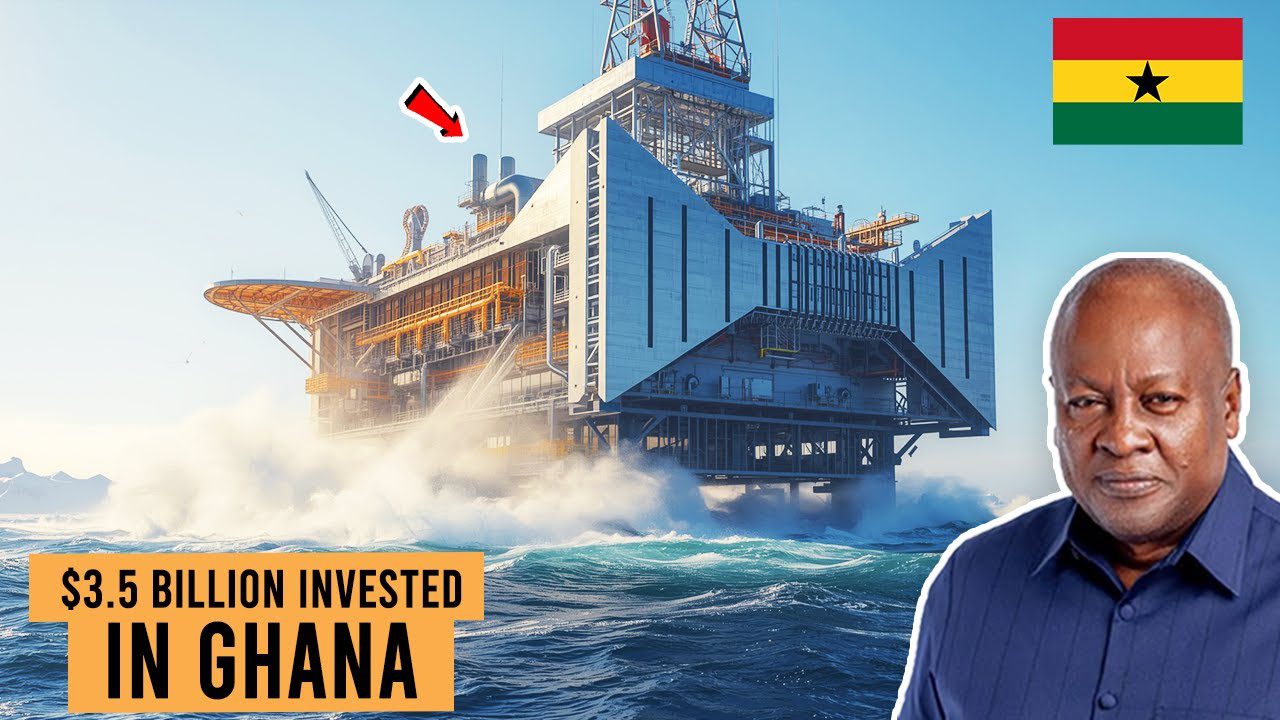
Ghana is ramping up efforts to attract fresh investment into its oil, gas and electricity sectors with a $3.5 billion upstream reinvestment plan, as African policymakers prepare to present new energy projects at the upcoming African Energy Week 2026 in Cape Town.

The strategy will form a central part of discussions during the high-level ministerial roundtable at the conference, where energy ministers from across the continent will present investment pipelines, regulatory reforms and infrastructure plans shaping Africa’s evolving energy landscape.
Ghana’s Energy Investment Strategy
Leading Ghana’s delegation will be John Abdulai Jinapor, the country’s Minister for Energy and Green Transition. He is expected to outline policies designed to strengthen upstream exploration, expand gas infrastructure and accelerate Ghana’s gas-to-power transition.
📢 GET A DETAILED ARTICLES + JOBS
Join ASJ's WhatsApp Channel and never miss a post or opportunity.
The investment push follows the recent extension of production licences for two of Ghana’s most important offshore assets—the Jubilee Oil Field and the TEN Oil Field—to 2040.
Energy analysts say the licence extension provides long-term regulatory certainty for investors and ensures continued production from Ghana’s flagship offshore petroleum operations.
Strengthening the Downstream Sector
Ghana is also rebuilding momentum in the downstream petroleum sector following the restart of the Tema Oil Refinery in late 2025.
The refinery’s return to operations is expected to support domestic fuel supply while reducing reliance on imported refined petroleum products.
At the same time, the government has begun clearing roughly $500 million in gas sector arrears, a move intended to stabilise the energy value chain and restore investor confidence.
Industry observers say resolving these financial bottlenecks is essential to unlocking new investment across the country’s energy infrastructure.
Expanding Gas and Power Capacity
A key pillar of Ghana’s strategy is the expansion of domestic gas processing and electricity generation capacity.
The Atuabo Gas Processing Plant is expected to play a central role in increasing the availability of processed natural gas for power generation.
Meanwhile, the government is planning the development of a 1,200-megawatt state thermal power plant, which could significantly strengthen electricity supply for industrial activity.
Officials say these investments are designed to reduce Ghana’s reliance on imported fuels while supporting long-term industrial growth.
Exploration in the Voltaian Basin
Beyond current offshore production, Ghana is also renewing exploration efforts in the Voltaian Basin, an underexplored geological region believed to contain potential hydrocarbon reserves.
If successful, new discoveries in the basin could help extend Ghana’s oil and gas production outlook well beyond the next decade.
Energy analysts note that developing additional reserves would strengthen the country’s position as one of West Africa’s important emerging petroleum producers.
Africa’s Broader Energy Expansion
Ghana’s strategy forms part of a broader wave of energy investments across the continent.
In Algeria, Energy Minister Mourad Adjal is expected to outline a $60 billion transformation programme aimed at expanding exploration, refinery capacity and renewable energy production.
The North African producer is pursuing an ambitious 500-well drilling campaign, alongside a 1.48-gigawatt solar initiative known as the “Project of the Century.”
Meanwhile, Senegal has rapidly emerged as a new oil and gas producer following the success of the Sangomar Oil Field, which delivered 36.1 million barrels of oil in 2025.
The country’s Greater Tortue Ahmeyim LNG Project has also reached approximately 2.9 million tonnes per year in output after the start of first gas production.
Senegal is now focusing on expanding domestic gas utilisation, including refinery upgrades at the SAR Refinery and development of Sangomar Phase Two, which aims to raise production above 100,000 barrels per day.
Power Expansion Across Southern Africa
Elsewhere, Zambia is accelerating electricity sector diversification after drought conditions reduced hydroelectric generation.
Energy Minister Makozo Chikote is expected to outline plans to add 2,500 megawatts of new capacity, including solar projects such as the Chisamba Solar Project expansion and the Itimpi Phase Two Power Plant.
The country aims to increase total generation capacity to 10 gigawatts by 2030, with renewable sources such as solar and wind expected to supply roughly one-third of electricity production.
Niger Expands Oil Export Capacity
In Niger, Petroleum Minister Hamadou Tinni will highlight the country’s growing role as an oil exporter following the completion of the Niger–Benin Oil Pipeline.
The 1,950-kilometre pipeline now transports up to 90,000 barrels of crude oil per day to international markets, significantly boosting Niger’s export capacity.
Officials say digital monitoring systems are also being introduced to improve operational transparency and regulatory oversight in the petroleum sector.
Africa’s Energy Investment Moment
According to NJ Ayuk, Executive Chairman of the African Energy Chamber, the presence of multiple ministers at the upcoming conference reflects the scale of opportunities emerging across Africa’s energy sector.
He noted that the continent is increasingly moving from policy discussions to real project execution, creating opportunities for investors to engage directly with governments shaping the next phase of development.
With new oil production, gas infrastructure and electricity generation projects advancing simultaneously across several countries, the discussions at African Energy Week 2026 are expected to highlight how energy investment is becoming a central driver of industrial growth and economic transformation across Africa.
Source: Accra Street Journal
Last Updated on March 14, 2026 by Samuel Kwame Boadu
Disclaimer: Some content on Accra Street Journal may be aggregated, summarized, or edited from third-party sources for informational purposes. Images and media are used under fair use or royalty-free licenses. Accra Street Journal is a subsidiary of SamBoad Publishing Hub under SamBoad Business Group Ltd, registered in Ghana since 2014.
For concerns or inquiries, please visit our Privacy Policy or Contact Page.

Samuel Kwame Boadu is a Ghanaian media entrepreneur and storyteller with a passion for amplifying urban voices and uncovering everyday truths. He is the Editor-in-Chief and Founder of Accra Street Journal, a dynamic digital platform dedicated to capturing the pulse of Ghana’s capital—its people, culture, challenges, business, sports and innovations.