


Introduction: A Deeply Corrosive Crisis
Ghana’s insurance industry is facing what veteran business leader Sir Sam Jonah has described as a “deeply corrosive” crisis, driven by political interference, unethical conduct, and systemic distortions. The president of the Insurance Brokers Association of Ghana (IBAG), Stephen Kwarteng Yeboah, has now warned that the broker segment of the industry is the hardest hit, with the situation described as “absolutely terrible”.
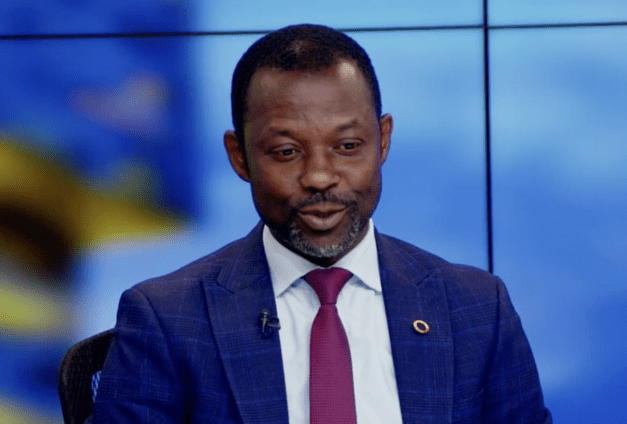
Speaking on PM Express on Joy News, Mr Yeboah did not mince words about the severity of the crisis. He questioned why state institutions are terminating brokerage contracts and dealing directly with selected insurance companies, suggesting that the only plausible explanation is the pursuit of kickbacks.

The warnings come against the backdrop of deepening political polarization in Ghana, where industry leaders now say that “you need to have either a blue or green hat to be able to do insurance business in Ghana”. This ASJ article examines the crisis facing Ghana’s insurance industry, the role of political interference, and the urgent calls for reform.
📢 GET A DETAILED ARTICLES + JOBS
Join ASJ's WhatsApp Channel and never miss a post or opportunity.

The Warning from Sir Sam Jonah
At IBAG’s annual conference in Accra on March 26, 2026, Sir Sam Jonah—a veteran business leader who also started an insurance company—delivered a stark warning about the state of the industry. He spoke about the need to build resilience in the sociopolitical environment, noting that Ghana has become dangerously polarised .
Mr Yeboah recalled the impact of Sir Sam’s address:
“So Sam Jonah spoke about a number of things. He spoke about the geopolitical issues, and then he being a player in the industry… he started insurance company…we were actually also very shocked with the level of knowledge that he had in the industry. So he actually emphasised that aspect” .
Sir Sam Jonah’s warning of a “deeply corrosive” crisis facing the industry, driven by interference, unethical conduct, and systemic distortions, has now been echoed by IBAG leadership with specific concerns about the broker sector .
The Broker’s Role: Critical and Undermined
Mr Yeboah explained the critical role that insurance brokers play in the industry, particularly in complex reinsurance transactions:
“When the premium is paid, we get paid our commission out. So there’s a lot of work that you do. Sometimes we need to even travel outside the country when we don’t have the capacity to negotiate terms with reinsurance outside the country .
Brokers act as intermediaries between clients and insurance companies, securing the best terms, especially for large or complex risks that require international reinsurance. Their expertise and international networks are essential for ensuring that Ghanaian clients receive competitive rates and appropriate coverage.
Against this backdrop, Mr Yeboah found it difficult to justify the termination of brokerage contracts by state institutions:
“So why will a state institution probably cancel the contract of a broker, and decide to go direct and deal with some selected insurance companies?”
He argued that such decisions bypass the competitive process and deprive clients of the benefits that brokers provide, including market-wide competition, expert advice, and claims advocacy .
The Real Problem: Kickbacks and Political Affiliation
Mr Yeboah did not mince words about what he believes is the underlying problem driving the politicisation of the insurance sector.
“The problem is the kickback, so when we see infiltration of politicians in the sector, there’s only one thing: how do we get kickback?”
He suggested that the actions of some actors in the sector are otherwise difficult to explain:
“Other than that, sometimes you don’t see what the interest is. Why is the push?”
He linked the situation to a broader environment where political affiliation is increasingly seen as a factor in doing business:
“Hitherto, we didn’t use to have this level of polarisation, but it’s crept into the insurance industry too. Now you need to have either a blue or green hat to be able to do insurance business in Ghana, and that’s not healthy .
This reference to “blue or green hat” is a clear allusion to the colours associated with Ghana’s two major political parties—the New Patriotic Party (NPP) and the National Democratic Congress (NDC). The implication is that business is increasingly awarded based on political loyalty rather than merit, competence, or competitive pricing .
The SIGA Directive and State Interference
A particular point of contention is the directive from the State Interests and Governance Authority (SIGA) to the insurance industry. SIGA, which oversees state-owned enterprises, has reportedly issued directives that interfere with the normal functioning of the insurance market.
Mr Yeboah said the issue is more severe within the broker space:
“And as I tell you, we are even talking about this directive from SIGA to the insurance industry, when you come to the broker sector, it’s worse, it is absolutely terrible” .
Referencing ongoing public discussions, he pointed to comments by Franklin Cudjoe of Imani Africa regarding the SIC matter, noting that there may be attempts to justify certain decisions under the guise of promoting state institutions:
“For example, I think Franklin Cudjoe of Imani Africa was talking about something regarding the SIC matter, which is really my main focus. So maybe there’s an intention. SIGA is a state institution, and they want to promote that. But that’s wrong, because we are all players in this country” .
He stressed that the insurance ecosystem is interconnected and collectively sustained by its stakeholders:
“The National Insurance Commission is one of the state institutions that is fully funded by us, the players. All of us contribute to the subscription to the National Insurance Commission” .
The Industry’s Collaborative Nature
Mr Yeboah further underscored the industry’s collaborative nature:
“And the insurance industry is one of the few industries where you find a closer relationship between the regulator and players, brokers and the individual” .
This close relationship has historically been a strength of Ghana’s insurance sector, enabling responsive regulation and market development. However, the growing political interference threatens to undermine this collaborative model, replacing professionalism with patronage .
The SIC Matter: A Case Study in State Interference
While Mr Yeboah did not elaborate on the specifics of the “SIC matter,” the reference is significant. SIC Insurance Company Limited is a state-owned insurance company that has been at the centre of controversies regarding the award of government insurance contracts.
Industry observers have noted that state-owned enterprises and government agencies have increasingly directed insurance business to SIC and other state-linked insurers without going through competitive tender processes or involving brokers. This practice, if widespread, would directly undermine the role of brokers and distort competition in the market.
The comments by Franklin Cudjoe of Imani Africa, referenced by Mr Yeboah, suggest that there may be attempts to justify these practices as a way to strengthen state institutions. However, Mr Yeboah firmly rejected this rationale, arguing that it is “wrong, because we are all players in this country” .
The Broader Context: Polarisation and Its Effects
The warnings from Sir Sam Jonah and Mr Yeboah come against the backdrop of deepening political polarisation in Ghana. The country has experienced increasingly heated political competition in recent years, with elections becoming more closely contested and political divisions more pronounced.
This polarisation has not spared the business community. Across multiple sectors, there are growing concerns that political affiliation is becoming a prerequisite for accessing government contracts, regulatory approvals, and even private sector opportunities.
The insurance industry appears to be particularly vulnerable to these pressures due to the significant role that state-owned enterprises and government agencies play as buyers of insurance. When government entities direct business to politically connected insurers, the competitive playing field is distorted, and professionalism is undermined .
What This Means for the Insurance Industry
For Brokers
The growing political interference poses an existential threat to independent insurance brokers. If state institutions continue to bypass brokers and deal directly with selected insurance companies, brokers will lose a significant portion of their business. This would reduce competition, increase costs for clients, and diminish the quality of advice and advocacy available to consumers .
For Insurance Companies
Even insurance companies that benefit from political patronage may find the situation unsustainable in the long term. When business is awarded based on political connections rather than competence, there is little incentive to improve service quality, pricing, or innovation. This undermines the long-term competitiveness of the industry.
For Consumers
Consumers—including state institutions themselves—are ultimately the losers when political interference distorts the insurance market. Without competitive bidding and independent broking, clients may pay higher premiums, receive less comprehensive coverage, and face greater difficulties when filing claims .
For the Economy
A politicised insurance industry cannot fulfil its essential role in the economy. Insurance is the foundation of risk management for businesses, enabling investment, innovation, and growth. When the insurance market is distorted, the entire economy suffers .
The Way Forward: Calls for Reform
Industry Voices
IBAG has made clear that the current situation is unsustainable. Mr Yeboah’s public statements are a call to action, urging regulators, policymakers, and industry stakeholders to address the growing political interference.
Regulatory Response
The National Insurance Commission (NIC), as the industry regulator, has a critical role to play in ensuring that the insurance market operates fairly and transparently. The NIC must investigate allegations of kickbacks and political interference and take enforcement action where appropriate.
Government Action
The government must send a clear signal that political affiliation is not a factor in the award of government insurance contracts. Competitive tendering processes must be followed, and the role of brokers should be respected.
Industry Self-Regulation
Industry associations, including IBAG and the Ghana Insurers Association (GIA), must work together to uphold professional standards and resist political pressures. Collective action may be necessary to protect the integrity of the industry.
Key Takeaways
| Aspect | Summary |
|---|---|
| Crisis Warning | Sir Sam Jonah described a “deeply corrosive” crisis facing Ghana’s insurance industry, driven by interference, unethical conduct, and systemic distortions |
| Brokers Most Affected | IBAG President Stephen Kwarteng Yeboah says the broker segment is “absolutely terrible,” with state institutions cancelling brokerage contracts |
| Kickbacks Identified | Mr Yeboah stated bluntly: “The problem is the kickback” |
| Political Polarisation | “Now you need to have either a blue or green hat to be able to do insurance business in Ghana” |
| SIGA Directive | A directive from the State Interests and Governance Authority (SIGA) is a particular point of contention |
| SIC Matter | The state-owned insurance company is at the centre of concerns about government contract awards |
| Industry Collaboration | The insurance industry has historically had close relationships between regulators, players, and brokers—now under threat |
Frequently Asked Questions (FAQs)
1. What did Sir Sam Jonah say about Ghana’s insurance industry?
Sir Sam Jonah warned of a “deeply corrosive” crisis facing the industry, driven by political interference, unethical conduct, and systemic distortions at IBAG’s annual conference on March 26, 2026 .
2. What is the main concern of the Insurance Brokers Association?
IBAG President Stephen Kwarteng Yeboah says brokers are being bypassed as state institutions terminate brokerage contracts and deal directly with selected insurance companies, which he attributes to the pursuit of kickbacks .
3. How is political polarisation affecting the insurance industry?
Mr Yeboah stated that “now you need to have either a blue or green hat to be able to do insurance business in Ghana,” referring to the colours associated with the NPP and NDC .
4. What is the role of SIGA in the controversy?
SIGA (State Interests and Governance Authority) has issued directives that interfere with the normal functioning of the insurance market, with Mr Yeboah describing the situation in the broker sector as “absolutely terrible” .
5. What is the “SIC matter” referenced by Mr Yeboah?
The “SIC matter” refers to controversies regarding the award of government insurance contracts to SIC Insurance Company Limited, a state-owned insurer, without competitive processes .
6. What did Mr Yeboah identify as the underlying problem?
Mr Yeboah bluntly stated: “The problem is the kickback, so when we see infiltration of politicians in the sector, there’s only one thing: how do we get kickback?”
7. Why are brokers important to the insurance industry?
Brokers negotiate terms with reinsurers, sometimes traveling internationally, and secure the best terms for clients. They are essential for complex reinsurance transactions .
8. What is the National Insurance Commission’s role?
The NIC is the industry regulator, fully funded by industry players. It has a critical role in ensuring fair and transparent market operations .
9. How does political interference harm consumers?
Without competitive bidding and independent broking, clients may pay higher premiums, receive less comprehensive coverage, and face greater difficulties when filing claims .
10. What is being called for to address the crisis?
Industry voices are calling for regulatory enforcement, government action to ensure competitive tendering, and industry self-regulation to resist political pressures .
Conclusion: A Call to Protect the Industry’s Integrity
The warnings from Sir Sam Jonah and Stephen Kwarteng Yeboah could not be more urgent. Ghana’s insurance industry—a critical pillar of the financial system and the economy—is facing a crisis of integrity. Political interference, kickbacks, and systemic distortions are undermining the role of brokers, distorting competition, and eroding professionalism.
Mr Yeboah’s testimony that “you need to have either a blue or green hat to be able to do insurance business in Ghana” is a damning indictment of the state of the industry. If political affiliation determines who wins business, then merit, competence, and value for money no longer matter. That is not only unfair—it is economically destructive.
The industry’s collaborative model, which has historically enabled close relationships between regulators, players, and brokers, is under threat. The National Insurance Commission, funded by industry players, must act decisively to investigate allegations of kickbacks and enforce fair market practices.
The government, too, must send a clear signal that competitive tendering processes will be respected and that political affiliation is not a factor in the award of contracts. The SIC matter and the SIGA directive must be reviewed to ensure they do not undermine the broader market.
For the brokers who are the hardest hit, the situation is “absolutely terrible.” For the industry as a whole, the crisis is “deeply corrosive.” And for Ghana, the stakes could not be higher. An insurance industry that is politicised and distorted cannot fulfil its essential role in enabling investment, managing risk, and driving economic growth.
The time for action is now.
Frequently Asked Questions (FAQs)
1. What did Sir Sam Jonah say about Ghana’s insurance industry?
Sir Sam Jonah warned of a “deeply corrosive” crisis facing the industry, driven by political interference, unethical conduct, and systemic distortions .
2. What is the main concern of the Insurance Brokers Association?
IBAG President Stephen Kwarteng Yeboah says brokers are being bypassed as state institutions terminate brokerage contracts and deal directly with selected insurance companies, which he attributes to the pursuit of kickbacks .
3. How is political polarisation affecting the insurance industry?
Mr Yeboah stated that “now you need to have either a blue or green hat to be able to do insurance business in Ghana” .
4. What is the role of SIGA in the controversy?
SIGA has issued directives that interfere with the normal functioning of the insurance market, with Mr Yeboah describing the situation in the broker sector as “absolutely terrible” .
5. What is the “SIC matter” referenced by Mr Yeboah?
The “SIC matter” refers to controversies regarding the award of government insurance contracts to SIC Insurance Company Limited without competitive processes .
6. What did Mr Yeboah identify as the underlying problem?
Mr Yeboah bluntly stated: “The problem is the kickback” .
7. Why are brokers important to the insurance industry?
Brokers negotiate terms with reinsurers, sometimes traveling internationally, and secure the best terms for clients .
8. What is the National Insurance Commission’s role?
The NIC is the industry regulator, fully funded by industry players, with a critical role in ensuring fair and transparent market operations .
9. How does political interference harm consumers?
Without competitive bidding and independent broking, clients may pay higher premiums and receive less comprehensive coverage .
10. What is being called for to address the crisis?
Regulatory enforcement, government action to ensure competitive tendering, and industry self-regulation to resist political pressures
Source: Accra Street Journal
Last Updated on April 8, 2026 by Samuel Kwame Boadu
Disclaimer: Some content on Accra Street Journal may be aggregated, summarized, or edited from third-party sources for informational purposes. Images and media are used under fair use or royalty-free licenses. Accra Street Journal is a subsidiary of SamBoad Publishing Hub under SamBoad Business Group Ltd, registered in Ghana since 2014.
For concerns or inquiries, please visit our Privacy Policy or Contact Page.

Samuel Kwame Boadu is a Ghanaian media entrepreneur and storyteller with a passion for amplifying urban voices and uncovering everyday truths. He is the Editor-in-Chief and Founder of Accra Street Journal, a dynamic digital platform dedicated to capturing the pulse of Ghana’s capital—its people, culture, challenges, business, sports and innovations.