





Introduction: A Story of Ghanaian Connectivity
The history of Telecel Ghana is not merely the story of a single telecommunications company. It is, in many ways, the story of modern Ghana itself—a chronicle of technological evolution, corporate transformation, and the enduring quest to connect a nation.
From the clatter of colonial telegraph keys to the silent pulse of 5G data, the entity now known as Telecel has been at the heart of Ghana’s communication journey for over a century. It has worn many masks: a government postal department, a state-owned monopoly, a British telecom giant’s African outpost, and now, an African-born challenger brand.

This is the full Accra Street Journal history of Telecel Ghana—a journey through the evolution of telecommunications in Ghana and the birth of a new telecoms era .
📢 GET A DETAILED ARTICLES + JOBS
Join ASJ's WhatsApp Channel and never miss a post or opportunity.

Part 1: The Early Years – Posts and Telecommunications (P&T)
The Colonial Foundation
The story begins not with mobile phones or fibre optics, but with stamps and telegraph wires. For decades, Ghana’s communication needs were served by a single government entity known as the Posts and Telecommunications Department (P&T) . This department was the sole provider of postal services, fixed-line telephone connections, and telegraphic communications across the Gold Coast and later independent Ghana .
For most of the 20th century, this monopoly was the standard model worldwide. Getting a phone line meant months of waiting, and making an international call required booking time at a central exchange. However, by the late 20th century, it became clear that this model was unsustainable. The demand for faster, more reliable telecommunications was outpacing the capacity of a state-run department.

The Birth of Ghana Telecom
In a landmark move toward modernization, the Ghanaian government decided to commercialise its telecom operations. The Posts and Telecommunications Department (P & T) was split, with the postal functions remaining under government control and the telecommunications functions forming a new corporate entity: Ghana Telecom (GT) .
This was a revolutionary step. Ghana Telecom was tasked with running the country’s fixed-line network and, crucially, introducing mobile telephony to Ghana. It was under this banner that Ghanaians were first introduced to the magic of wireless communication through the mobile brand “OneTouch.” For many Ghanaians, OneTouch was their first mobile number, a brand synonymous with the dawn of the mobile era .
Part 2: The Vodafone Era (2008–2023)
A New Global Partner
In 2008, the global telecommunications giant Vodafone Group Plc made a strategic entry into the Ghanaian market. It purchased a controlling 70% stake in Ghana Telecom (GT), with the Government of Ghana retaining the remaining 30% . The state-owned enterprise was rebranded as Vodafone Ghana.
The arrival of Vodafone was a game-changer. It brought massive investment, international expertise, and a global brand presence. Under Vodafone, the company expanded 3G and 4G coverage, enhanced fibre connectivity, and developed its mobile money service, Vodafone Cash .
Challenges and a Strategic Shift
Despite its strong brand, Vodafone Ghana faced persistent challenges. The telecom landscape was intensely competitive, and MTN Ghana maintained a dominant lead with roughly 70% market share . Sustaining profitability required heavy capital investment—investment that Vodafone Group, shifting its focus back to European markets, was increasingly reluctant to make .
By 2022, Vodafone Group began formal discussions to sell its stake . The stage was set for a new owner.
Part 3: The Telecel Acquisition (2022–2023)
Who Is Telecel Group?
Telecel Group is not a newcomer. Founded in 1986, it is an Africa-focused telecommunications and digital services company operating in several African markets. Unlike Vodafone, a global giant based in the UK, Telecel is unapologetically African. Its business model converges traditional telecom with fintech, e-commerce, and tech startups .
The Deal is Sealed
In February 2023, Telecel Group completed the acquisition of Vodafone’s 70% majority stake in Vodafone Ghana. The deal received all necessary regulatory approvals, including the agreement of the Government of Ghana, which retained its 30% minority stake .
At the time of the acquisition, Telecel Group’s COO, Malek Atrissi, stated:

This acquisition is a testament to our enthusiasm and positive outlook for the Ghanaian market, which we view as a vital market with unlimited potential for digitalisation and innovation in Africa .
For the next year, the company continued operating as “Vodafone Ghana” while the new owners assessed operations and planned a massive rebrand and network rollout .
Part 4: The Rebrand and Launch of Telecel (2024)
A New Brand for a New Era
On March 11 and 12, 2024, Telecel Ghana officially unveiled its new brand to employees, stakeholders, and the public . The rebrand was more than just a name change—it was a strategic repositioning. Telecel Group CEO Moh Damush explained:
“This evolution represents more than just a name change; it signifies our commitment to advancing telecommunications in Ghana with a renewed focus on meeting the evolving needs of our customers” .
The rebranding covered not just the main telecom business but all its subsidiaries:
-
Vodafone Ghana became Telecel Ghana
-
National Communication Backbone Company Limited became Telecel Wholesale
-
Vodafone Ghana Mobile Financial Services Limited became Telecel Cash
-
The Vodafone Ghana Foundation became the Telecel Foundation .
Cultural Engagement: The Visit to Asantehene
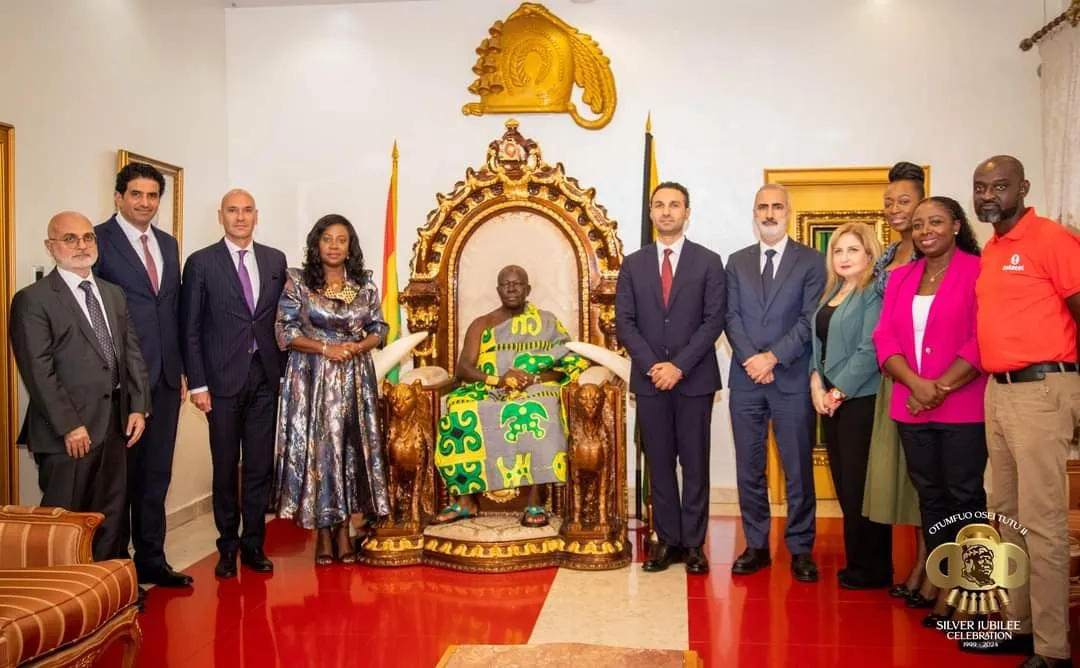
To honor the company’s rich legacy and connect with local leadership, Telecel Group executives, led by CEO Moh Damush, paid a courtesy visit to Otumfuo Osei Tutu II, the Asantehene. During the visit, the Asantehene remarked on the company’s long history, noting its evolution “starting as Post and Telecommunication, to Ghana Telecom – One Touch, transitioning to Vodafone and now Telecel” .
Demonstrating its commitment to community, Telecel also contributed GHC 200,000 to the renovation of the Komfo Anokye Teaching Hospital, a key project championed by the Asantehene .
Part 5: Telecel Today – Investments and Growth (2024–2026)
Aggressive Network Expansion
Telecel’s core promise has been aggressive investment in Ghana. Key milestones include:
-
$70 million network modernization project in partnership with Huawei (November 2025)
-
500+ new 4G sites deployed within the first year of ownership
-
Target of 2,500 4G sites within three years
-
150% increase in network investment planned for 2026
-
Satellite connectivity agreement with Lynk Global for nationwide coverage
By the end of 2025, Telecel had increased its number of sites to about 9,000, up from around 5,000 previously .
Market Recovery
Telecel’s market share has shown improvement. It recovered from 18.41% in February 2023 (at the time of acquisition) to 20.17% at the end of December 2025 .
The AT Ghana Restructuring (Ongoing)
In 2025, the government initiated a restructuring of AT Ghana (the state-owned operator formerly known as AirtelTigo), directing Telecel to provide operational support and roaming access to stabilise the struggling company . This technical integration has already seen 3.2 million AT Ghana customers migrated to Telecel’s infrastructure . The long-term plan aims to create a stronger, combined operator with about 26% market share to better compete with MTN Ghana .
Timeline Summary
| Year | Milestone |
|---|---|
| Pre-1980s | Posts and Telecommunications Department (P&T) operates as government monopoly |
| 1990s | Ghana Telecom (GT) formed; “OneTouch” mobile brand launched |
| 2008 | Vodafone Group acquires 70% stake; rebrands to Vodafone Ghana |
| Feb 2023 | Telecel Group completes acquisition of Vodafone’s 70% stake |
| Late 2023 | Internal transition and systems migration begin |
| March 2024 | Official rebrand from Vodafone Ghana to Telecel Ghana |
| 2024-2025 | 500+ 4G sites deployed; $70M Huawei partnership launched |
| Sept 2025 | Government announces AT Ghana restructuring with Telecel support |
| Dec 2025 | Market share recovers to 20.17%; site count reaches ~9,000 |
| 2026 | 150% investment increase planned; ongoing AT integration |
Frequently Asked Questions (FAQs)
1. What was the name of Telecel Ghana before it became Telecel?
Before Telecel, the company was known as Vodafone Ghana. Prior to that, it was called Ghana Telecom (GT) with the mobile brand OneTouch .
2. When did Telecel Group acquire Vodafone Ghana?
Telecel Group received regulatory approval and completed the acquisition in February 2023 .
3. What is Telecel Group?
Telecel Group is an Africa-focused telecommunications company founded in 1986, operating in multiple African countries and converging telecom with fintech, e-commerce, and tech startups .
4. What is the ownership structure of Telecel Ghana?
Telecel Group owns 70%, while the Government of Ghana retains a 30% minority stake .
5. Did Vodafone completely leave Ghana?
Yes. Vodafone sold its entire 70% stake and no longer operates in Ghana .
6. Is Telecel Ghana merging with AT Ghana?
The government has initiated a restructuring of AT Ghana, with Telecel providing operational support and technical integration. This is not a full merger or sale, but a strategic partnership to stabilise AT Ghana .
7. What investments has Telecel made in Ghana?
Telecel has deployed over 500 new 4G sites, launched a $70 million network modernization project with Huawei, and plans a 150% investment increase for 2026 .
8. Who is the CEO of Telecel Ghana?
Ing. Patricia Obo-Nai is the Chief Executive Officer of Telecel Ghana .
9. What is Telecel Cash?
Telecel Cash is the rebranded mobile money service, formerly known as Vodafone Cash .
10. What is the Telecel Foundation?
The Telecel Foundation is the company’s corporate social responsibility arm, formerly known as the Vodafone Ghana Foundation .
Conclusion: A Century of Connecting Ghana
From its earliest days as a government postal department to its current status as an African-born challenger, the company now known as Telecel Ghana has witnessed and enabled the evolution of Ghana’s communication landscape. The journey from Ghana Telecom to Vodafone and now to Telecel represents not just a series of corporate handovers, but a continuous commitment to connecting the people of Ghana.
With aggressive investment in 4G expansion, satellite connectivity, and digital financial services, Telecel is positioning itself as a formidable competitor in Ghana’s telecom market. As the company writes its next chapter, it carries with it over a century of legacy and the promise of an innovative, connected future.
Frequently Asked Questions (FAQs)
1. What was the name of Telecel Ghana before it became Telecel?
Vodafone Ghana; prior to that, Ghana Telecom (GT) with mobile brand OneTouch .
2. When did Telecel Group acquire Vodafone Ghana?
February 2023 .
3. What is Telecel Group?
An Africa-focused telecommunications company founded in 1986 .
4. What is the ownership structure of Telecel Ghana?
Telecel Group 70%, Government of Ghana 30% .
5. Did Vodafone completely leave Ghana?
Yes .
6. Is Telecel Ghana merging with AT Ghana?
No. The government has initiated a restructuring of AT Ghana with Telecel providing operational support .
7. What investments has Telecel made in Ghana?
500+ 4G sites, $70M Huawei partnership, 150% investment increase planned for 2026 .
8. Who is the CEO of Telecel Ghana?
Ing. Patricia Obo-Nai .
9. What is Telecel Cash?
Telecel’s mobile money service, formerly Vodafone Cash .
10. What is the Telecel Foundation?
Telecel’s CSR arm, formerly Vodafone Ghana Foundation
Source: Accra Street Journal
Last Updated on April 10, 2026 by Samuel Kwame Boadu
Disclaimer: Some content on Accra Street Journal may be aggregated, summarized, or edited from third-party sources for informational purposes. Images and media are used under fair use or royalty-free licenses. Accra Street Journal is a subsidiary of SamBoad Publishing Hub under SamBoad Business Group Ltd, registered in Ghana since 2014.
For concerns or inquiries, please visit our Privacy Policy or Contact Page.

Samuel Kwame Boadu is a Ghanaian media entrepreneur and storyteller with a passion for amplifying urban voices and uncovering everyday truths. He is the Editor-in-Chief and Founder of Accra Street Journal, a dynamic digital platform dedicated to capturing the pulse of Ghana’s capital—its people, culture, challenges, business, sports and innovations.