


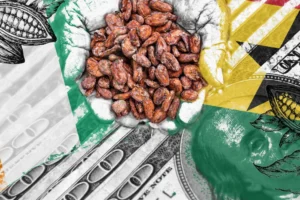





ACCRA — Ghana’s export sector has posted a strong recovery in the first quarter of 2025, recording more than a 60% year-on-year increase, largely fueled by higher earnings from gold, cocoa, and oil. But despite the upbeat figures, the country’s central bank is urging caution.

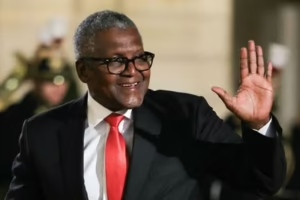
Delivering the keynote address at the Graphic Business/Stanbic Bank Breakfast Meeting in Accra, Bank of Ghana Governor Dr. Johnson P. Asiama revealed that Ghana recorded a trade surplus of US$4.14 billion between January and April 2025.
“This performance reflects a 60% growth in exports during the first four months of the year, supported by global commodity price trends,” Dr. Asiama said. The export boom has also contributed to Ghana’s growing external buffers, with gross international reserves reaching US$11.1 billion, up from US$8.98 billion at the end of 2024. The current stock provides 4.8 months of import cover, he noted.
📢 GET A DETAILED ARTICLES + JOBS
Join ASJ's WhatsApp Channel and never miss a post or opportunity.
Import Risks Remain
While celebrating the numbers, Dr. Asiama called attention to structural vulnerabilities on the import side, especially Ghana’s dependency on energy, machinery, and essential commodities. These items, he said, generate cyclical foreign exchange demand and could erode recent gains if not balanced by export diversification.
“We are still overly reliant on a narrow base of export commodities,” he said. “This exposes the Cedi to external shocks, particularly when global prices shift or demand contracts.”
The Governor warned that the second half of the year typically sees spikes in import demand, particularly for refined petroleum and capital inputs. “If global sentiment changes or there’s volatility in commodity prices, pressure could re-emerge on the local currency,” he said.
Beyond Stability: The Call for Transformation
Dr. Asiama stressed that foreign exchange stability is only the first step in rebuilding economic momentum.
“It is not enough to stabilize the Cedi. The true success lies in transforming forex stability into broad-based, structural growth—one that supports job creation, enterprise development, and long-term productivity,” he said.
He urged policymakers and the private sector to leverage the strong forex position to invest in manufacturing, agriculture, and local industry, so Ghana can reduce its exposure to external risks over time.
As Ghana heads into the second half of 2025, the challenge, according to the central bank, will be turning a trade-driven currency boost into a foundation for sustainable development.
Last Updated on July 16, 2025 by Samuel Kwame Boadu
Disclaimer: Some content on Accra Street Journal may be aggregated, summarized, or edited from third-party sources for informational purposes. Images and media are used under fair use or royalty-free licenses. Accra Street Journal is a subsidiary of SamBoad Publishing Hub under SamBoad Business Group Ltd, registered in Ghana since 2014.
For concerns or inquiries, please visit our Privacy Policy or Contact Page.

Samuel Kwame Boadu is a Ghanaian media entrepreneur and storyteller with a passion for amplifying urban voices and uncovering everyday truths. He is the Editor-in-Chief and Founder of Accra Street Journal, a dynamic digital platform dedicated to capturing the pulse of Ghana’s capital—its people, culture, challenges, business, sports and innovations.