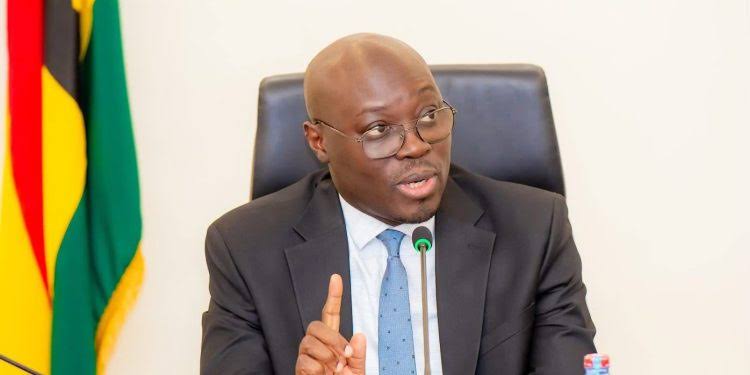
ACCRA — The Bank of Ghana (BoG) is finalizing a regulatory framework to bring cryptocurrency exchanges and digital asset platforms under formal supervision, signaling a new phase in Ghana’s financial oversight and digital economy strategy.
Governor Dr. Johnson P. Asiama announced the move during a keynote speech at the Graphic Business/Stanbic Bank Breakfast Meeting, emphasizing that the central bank intends to ensure financial innovation does not compromise forex controls, currency stability, or anti-money laundering compliance.

“We are finalizing a regulatory framework for Virtual Asset Service Providers (VASPs),” Dr. Asiama said. “This will align crypto exchanges with AML/CFT rules and support Ghana’s broader efforts to protect the integrity of the financial system.”
📢 GET A DETAILED ARTICLES + JOBS
Join ASJ's WhatsApp Channel and never miss a post or opportunity.
📲 Join ASJ Channel Now
Anchoring Innovation to FX Control
The initiative is part of the central bank’s wider strategy to preserve the recent 42% appreciation of the Ghanaian Cedi. Authorities believe that unregulated crypto flows and offshore forex leakages pose systemic risks to the country’s monetary sovereignty.
The framework will strengthen legal tender enforcement, especially in sectors like real estate and education, where dollar pricing has become entrenched. It will also support the rollout of the eCedi, Ghana’s proposed central bank digital currency, while enhancing traceability in forex transactions.
“Digital innovation must support—not undermine—monetary and economic transformation,” Dr. Asiama stressed.
Balancing Innovation and Control
Although full details of the VASP regulations are pending, BoG’s approach appears calibrated: open to innovation but firm on risk mitigation.

Expected provisions include:
-
Mandatory AML/CFT compliance
-
Licensing for digital asset platforms
-
Transaction monitoring for cross-border crypto activity
-
Prohibitions on currency substitution or tax evasion via digital assets
BoG also hinted at the potential of blockchain-based platforms to enhance SME access to trade finance, retain export earnings, and deepen financial inclusion, particularly in Ghana’s growing digital services sector.

What It Means
If enacted, Ghana would join countries like Nigeria and South Africa in introducing formal crypto regulations. For digital asset firms, this represents a shift from informal operations to licensed status—one that could unlock new partnerships but will demand full transparency.
For policy watchers, this marks a decisive pivot: crypto in Ghana will be permitted, but on the central bank’s terms.
“The goal is to sustain forex gains and translate them into structural economic growth,” Dr. Asiama said. “This means building an ecosystem where innovation is aligned with stability.”
Last Updated on July 16, 2025 by Samuel Kwame Boadu
Disclaimer: Some content on Accra Street Journal may be aggregated, summarized, or edited from third-party sources for informational purposes. Images and media are used under fair use or royalty-free licenses. Accra Street Journal is a subsidiary of SamBoad Publishing Hub under SamBoad Business Group Ltd, registered in Ghana since 2014.
For concerns or inquiries, please visit our Privacy Policy or Contact Page.

Samuel Kwame Boadu is a Ghanaian media entrepreneur and storyteller with a passion for amplifying urban voices and uncovering everyday truths. He is the Editor-in-Chief and Founder of Accra Street Journal, a dynamic digital platform dedicated to capturing the pulse of Ghana’s capital—its people, culture, challenges, business, sports and innovations.