









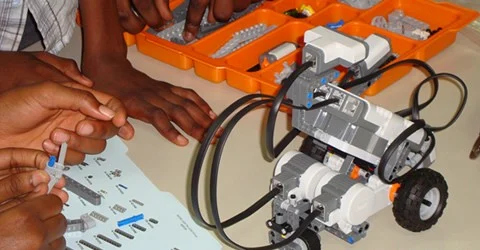
Ghana stands at the edge of a technological shift that will reshape how work is performed, how businesses operate, and how industries compete. Robotics—once seen as a distant, futuristic concept—is steadily becoming part of the global economic landscape. As automation technologies advance and become more accessible, Ghana’s labor market will inevitably feel the impact.
The question is no longer whether robotics will affect jobs in Ghana. The real issue is how this transformation will unfold, which sectors will change the most, and how the country can position itself to benefit from this technological evolution.

Robotics will not simply eliminate jobs; it will redefine them. It will create new opportunities, demand new skills, and challenge traditional employment models across multiple industries.
📢 GET A DETAILED ARTICLES + JOBS
Join ASJ's WhatsApp Channel and never miss a post or opportunity.

Understanding Robotics in the Ghanaian Context
Robotics refers to programmable machines capable of carrying out tasks automatically or semi-autonomously. These machines can range from simple mechanical systems used in manufacturing to advanced AI-powered systems capable of learning and adapting.
In Ghana, robotics adoption is still emerging, but elements of automation are already visible. Manufacturing facilities use automated packaging systems. Financial institutions rely on automated digital platforms. Agricultural innovations incorporate mechanized processes. Even service industries are integrating forms of process automation.
As technology costs decrease and digital infrastructure expands, robotics will become more accessible to Ghanaian businesses.
Impact on Manufacturing and Industrial Jobs
Manufacturing is one of the sectors most likely to experience significant transformation through robotics. Automated assembly lines, packaging machines, and quality control systems can increase efficiency and reduce production errors.
In Ghana’s developing industrial sector, robotics could boost productivity and enhance competitiveness, particularly in food processing, textiles, pharmaceuticals, and consumer goods production.
However, automation may reduce demand for repetitive manual labor. Jobs that involve predictable, routine tasks—such as sorting, packaging, and assembly—could be partially replaced by machines.
At the same time, new roles will emerge. Robotics technicians, maintenance specialists, systems programmers, and industrial engineers will be needed to manage and repair automated systems. This shift will require a transition from purely manual roles to technical and supervisory positions.
Agriculture and Smart Farming
Agriculture remains a vital sector in Ghana’s economy. Robotics and automation in agriculture—often referred to as smart farming—can significantly improve efficiency.
Mechanized planting systems, automated irrigation technologies, and drone-assisted crop monitoring can help farmers increase yields and reduce waste. These tools can enhance productivity while minimizing labor-intensive processes.
While certain manual farming roles may decline, robotics will also create demand for agritech specialists, equipment operators, drone technicians, and agricultural data analysts.
The key shift will be from physically demanding agricultural labor to technology-supported farm management.
Construction and Infrastructure Development
Ghana’s rapid urbanization has fueled growth in construction and infrastructure projects. Robotics in construction—such as automated bricklaying machines, surveying drones, and 3D printing technologies—can accelerate project timelines and improve precision.
Although large-scale robotics adoption in Ghana’s construction sector may take time, gradual integration of automation tools will likely occur. Skilled machine operators, robotics-assisted surveyors, and technical supervisors will become increasingly important.
Rather than replacing workers entirely, robotics in construction may enhance safety and efficiency, reducing hazardous manual tasks.
Service Sector Transformation
The service sector, including banking, retail, hospitality, and customer support, will also experience automation-driven changes.
Digital kiosks, automated payment systems, chat-based customer service tools, and process automation software are already reshaping service delivery. Robotics in this context may not always be physical machines but software-based systems that automate administrative tasks.
Clerical roles involving repetitive data entry or transaction processing could decline. However, new opportunities in digital system management, cybersecurity, data analytics, and customer experience strategy will expand.
Human interaction, emotional intelligence, and creative problem-solving will remain valuable skills in service industries.
Education and Skills Realignment
Perhaps the most significant impact of robotics on jobs in Ghana will be felt in education and skills development.
As automation increases, the labor market will prioritize technical skills, digital literacy, engineering knowledge, and analytical thinking. Educational institutions will need to integrate robotics, coding, artificial intelligence, and technical training into curricula.
Technical and vocational education will become critical in preparing the workforce for robotics-assisted industries. Youth entering the job market will need adaptability and continuous learning capabilities.
The focus will shift from preparing students for static roles to preparing them for evolving, technology-driven careers.
Entrepreneurship and Innovation Opportunities
Robotics does not only affect employment within established companies. It also opens new entrepreneurial pathways.
Ghanaian innovators can develop locally adapted robotics solutions for agriculture, manufacturing, waste management, and healthcare. Startups focused on automation technologies, machine maintenance, and robotics consulting services may emerge.
The growth of a robotics ecosystem can create jobs in research, design, sales, training, and technical support.
Entrepreneurship will play a crucial role in ensuring that Ghana becomes a creator—not merely a consumer—of robotics technology.
Addressing Job Displacement Concerns
One of the main concerns surrounding robotics is job displacement. Automation can reduce demand for low-skill, repetitive roles. This reality cannot be ignored.
However, historical patterns show that technological revolutions often shift employment structures rather than eliminate work entirely. The introduction of computers transformed office work but also created entire industries in software, IT services, and digital communications.
For Ghana, proactive planning will be essential. Workforce retraining programs, technical education expansion, and digital skill development initiatives can help workers transition into new roles.
Public and private sector collaboration will be key to ensuring inclusive adaptation.
The Role of Policy and Strategic Planning
Government policy will influence how robotics impacts Ghana’s labor market. Investment in digital infrastructure, incentives for technology-driven industries, and support for technical training institutions will shape outcomes.
Policies that encourage local manufacturing of robotics components, technology partnerships, and research initiatives can help Ghana strengthen its competitive position.
A balanced approach is necessary—one that promotes innovation while safeguarding social stability and employment opportunities.
A Future of Collaboration Between Humans and Machines
The future of work in Ghana will likely involve collaboration between humans and machines rather than complete replacement.
Robotics can handle precision tasks, repetitive processes, and hazardous activities. Humans will focus on oversight, creativity, leadership, and complex decision-making.
This partnership model can enhance productivity while preserving meaningful employment opportunities.
Preparing Ghana for the Robotics Era
Ghana’s youthful population is one of its greatest assets. With proper investment in education, digital literacy, and technical training, the country can harness robotics as a tool for economic growth.
The transition will not be without challenges. Certain job categories will decline. New ones will rise. Adaptability will determine who thrives.
Robotics represents both disruption and opportunity. The ultimate impact on jobs in Ghana will depend on how institutions, businesses, and individuals respond to technological change.
Frequently Asked Questions (FAQs)
1. Will robotics eliminate jobs in Ghana?
Robotics may reduce some repetitive manual jobs, but it will also create new technical, supervisory, and innovation-based roles.
2. Which sectors in Ghana will be most affected by robotics?
Manufacturing, agriculture, construction, and service industries are likely to experience the most noticeable changes.
3. What new jobs could robotics create in Ghana?
Roles such as robotics technicians, software developers, agritech specialists, automation engineers, and data analysts are likely to grow.
4. How can Ghana prepare for robotics-driven changes?
By investing in technical education, vocational training, digital literacy programs, and innovation-driven policies.
5. Is robotics only relevant to large companies?
No. Small and medium-sized enterprises can also benefit from automation tools that improve efficiency and competitiveness.
6. Will robotics benefit Ghana’s economy overall?
If managed strategically, robotics can increase productivity, attract investment, and support long-term economic growth.
Robotics will not simply change how work is done in Ghana—it will reshape the very definition of work itself. The path forward depends on readiness, adaptability, and a commitment to building skills for a technology-driven future.
Source: Accra Street Journal
Last Updated on February 11, 2026 by Samuel Kwame Boadu
Disclaimer: Some content on Accra Street Journal may be aggregated, summarized, or edited from third-party sources for informational purposes. Images and media are used under fair use or royalty-free licenses. Accra Street Journal is a subsidiary of SamBoad Publishing Hub under SamBoad Business Group Ltd, registered in Ghana since 2014.
For concerns or inquiries, please visit our Privacy Policy or Contact Page.

Samuel Kwame Boadu is a Ghanaian media entrepreneur and storyteller with a passion for amplifying urban voices and uncovering everyday truths. He is the Editor-in-Chief and Founder of Accra Street Journal, a dynamic digital platform dedicated to capturing the pulse of Ghana’s capital—its people, culture, challenges, business, sports and innovations.