









11 min read
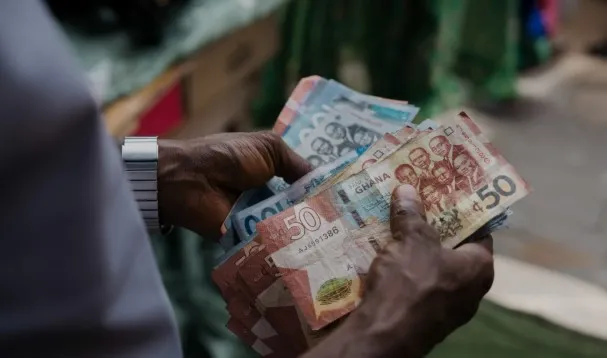
The Ghana cedi extended its year-to-date loss against the US dollar to 10.11% in the interbank market, closing at GH¢11.63 to the dollar, GH¢15.62 to the pound, and GH¢13.49 to the euro over a two-week period ending May 26, 2026. The corresponding losses were 3.01% against the dollar, 1.65% against the pound, and 1.56% against the euro. Similar trends were observed in the retail market, where the currency weakened by 3.07% against the American greenback, 1.56% against the pound, and 1.49% against the euro, closing at mid-rates of GH¢12.20 to the dollar, GH¢16.05 to the pound, and GH¢14.10 to the euro.
Database Research noted that the cedi’s depreciation exceeded its upper-band forecast of GH¢11.40 against the US dollar, as the central bank remained cautious about forex intermediation despite assurances from the International Monetary Fund of a likely US$385 million disbursement. This cautious posture may reflect a deliberate effort to preserve reserves while awaiting clearer and more sustainable inflow visibility, particularly amid lingering demand pressures.
Key Takeaways
- The ongoing Hormuz crisis has kept oil prices above $105 per barrel, increasing the cedi cost of fuel imports.
- The cedi's depreciation is driven by fundamental factors: high import demand (energy, manufactured goods, food) and modest export earnings (gold, cocoa, oil).
- The Bank of Ghana's policy rate of 14% is intended to anchor inflation expectations, but if depreciation pressures persist, the central bank may be forced to raise rates—which would slow economic growth.
Looking ahead, Database Research expects the cedi to trade within a range of GH¢11.35 to GH¢11.86 per dollar over the next two weeks in the interbank market, with the path shaped by the balance between FX demand and the magnitude of supply into the market. The retail market began the week at GH¢12.20 to the dollar, bringing the year-to-date loss to 0.20%—a figure that appears inconsistent with the 10.11% interbank loss, reflecting differences in base periods or calculation methodologies.
Key Developments: Interbank vs. Retail Divergence, IMF Disbursement, and Reserve Preservation
The cedi’s depreciation has accelerated in recent weeks, driven by persistent demand pressures that have overwhelmed modest supply. Importers, particularly those in the energy sector (oil, refined products), manufacturing (raw materials), and agriculture (fertilizer, machinery), continue to require dollars to pay for essential goods. The ongoing Hormuz crisis has kept oil prices above $105 per barrel, increasing the cedi cost of fuel imports. Gold exports, which typically provide dollar inflows, have not been sufficient to offset the demand.
The divergence between interbank and retail rates—GH¢11.63 vs. GH¢12.20—reflects the spread that banks and forex bureaus charge. The retail rate is the rate most Ghanaians encounter when buying dollars for travel, online purchases, or other personal transactions. The interbank rate is the rate at which banks trade among themselves. A spread of approximately 5% (GH¢0.57) is typical, reflecting transaction costs, risk premiums, and profit margins.
The central bank’s cautious posture is the key variable. Despite the IMF’s assurance of a likely US$385 million disbursement, presumably from the new Policy Coordination Instrument or related facilities, the Bank of Ghana has not actively intervened in the forex market. According to Database Research, the central bank appears to be conserving its reserves while waiting for clearer signs of sustainable inflows. With reserves at about $14.4 billion, the bank has a comfortable buffer but seems unwilling to draw them down just to defend a particular exchange rate level..
The IMF disbursement, if confirmed, would provide a temporary boost. However, the amount (385 million) is modest compared to Ghana’s annual import bill (around 15 billion to 20 billion) and the stock of reserves (14.4 billion). The disbursement would show IMF confidence in Ghana’s policies, which might attract other inflows, but on its own, it wouldn’t reverse the depreciation trend.
The year-to-date loss figures require clarification. Database Research reports a 10.11% loss in the interbank market, but the retail market loss is reported as 0.20%—a discrepancy that likely reflects different base periods. The 0.20% figure appears inconsistent with the recent depreciation; it may refer to a different time frame (e.g., the past week only) or may be an error. The more reliable figure is the interbank loss of 10.11%, which aligns with the cedi’s weakness since the beginning of 2026.
The outlook range of GH¢11.35 to GH¢11.86 per dollar suggests that Database Research expects the cedi to stabilize or even appreciate modestly from the current GH¢11.63. The lower end of the range (GH¢11.35) would represent an appreciation; the upper end (GH¢11.86) would represent further depreciation. The wide range reflects uncertainty about the balance between demand and supply.
Analysis & Implications: Demand Pressures, Reserve Management, and Policy Trade-offs
The cedi’s depreciation is driven by fundamental factors: high import demand (energy, manufactured goods, food) and modest export earnings (gold, cocoa, oil). Gold exports have been strong, reaching $6.8 billion in the first four months of 2025, though gold prices, while still high, have dropped from their peaks. Cocoa exports remain flat at $1.8 billion, and oil exports are stable at $1.2 billion. The trade surplus of $5.2 billion through April 2025 shows that Ghana is earning more foreign exchange than it spends overall, but the timing of inflows and outflows is important. If import payments happen earlier and export receipts come later, the cedi can still weaken even in a surplus year.

The central bank faces a classic policy trade-off: intervene aggressively to defend the cedi, depleting reserves, or allow the cedi to depreciate, preserving reserves but fueling inflation. The Bank of Ghana has chosen the latter, at least for now. The cautious posture reflects a judgement that the depreciation is manageable and that reserves are better kept as a buffer against a larger shock (e.g., a further spike in oil prices, a drought that reduces cocoa production, or a political crisis that triggers capital flight).
The IMF’s likely disbursement of $385 million provides some comfort, but it is not a game-changer. The funds will add to reserves, but they will not eliminate the demand pressures. The disbursement is also conditional on Ghana’s continued implementation of reforms under the PCI. Any sign of backsliding—pre-election spending, loosening of monetary policy, re-emergence of arrears—could delay or cancel the disbursement.

The import cover remains strong at approximately 6 months Reserves of 14.4 billion, divided by monthly imports of about 2.4 billion, put the figure well above the IMF’s recommended benchmark of three months. The depreciation isn’t a crisis; it’s simply an adjustment. The cedi is settling at a new equilibrium, shaped by terms of trade, relative inflation rates, and interest rate differentials..
The inflation implications are significant. A weaker cedi increases the cedi cost of imports, including fuel, food, and manufactured goods. The pass-through is not immediate, but it will feed into inflation over time. The Bank of Ghana’s policy rate of 14% is intended to anchor inflation expectations, but if depreciation pressures persist, the central bank may be forced to raise rates—which would slow economic growth.
The Accra Street Journal notes that the cedi’s depreciation is also a function of election-year uncertainty. The December 2026 elections are seven months away. Investors are wary of pre-election spending, policy reversals, and political instability. The cedi typically weakens in election years; the current trend is consistent with historical patterns. The central bank’s caution may reflect a desire to preserve reserves for the post-election period, when the outcome is known and uncertainty is resolved.
What This Means for Businesses, Consumers, and Policymakers
For businesses, the weaker cedi increases the cost of imported inputs. Manufacturers that rely on imported raw materials will see their costs rise; some will pass the increases on to consumers, while others will absorb them, reducing profits. Importers of finished goods (electronics, clothing, machinery) will face higher costs, which will be reflected in retail prices. Exporters (gold, cocoa, oil) will benefit from higher cedi revenues for each dollar earned, but most export receipts are priced in dollars, so the benefit is automatic.
For consumers, the weaker cedi means higher prices for imported goods. Petrol and diesel prices are already elevated due to global oil prices; the cedi’s depreciation adds to the pressure. Food prices will rise as imported inputs (fertilizer, machinery) become more expensive and as transport costs increase. The government’s diesel subsidy (GHS1.07 per litre) cushions some of the impact, but not all.
For policymakers, the cedi’s depreciation is a reminder of Ghana’s vulnerability to external shocks. The government’s strategy of building reserves ($14.4 billion) has created a buffer, but it has not eliminated the vulnerability. The long-term solution is to diversify the economy, reduce import dependence, and increase export competitiveness. The Sankofa gas expansion, the mining localization policy, and the garment sector catalytic capital scheme are steps in that direction, but they will take years to bear fruit.
The central bank’s communication strategy is important. The Bank of Ghana should provide clear guidance on its intervention policy. Is it targeting a specific exchange rate level, or is it allowing the market to determine the rate? If it is intervening, at what threshold? Clarity reduces uncertainty, which can reduce speculative pressure. The current ambiguity may be exacerbating the depreciation.
The Accra Street Journal’s advice to businesses: hedge your forex exposure. If you have dollar-denominated liabilities (loans, payables), consider buying dollars forward to lock in a rate. If you have dollar-denominated receivables, consider selling dollars forward. The forward market is shallow, but it exists. For consumers: budget for higher prices. The depreciation will feed through to inflation over the coming months.
Wider Context: African Currency Performance and the Dollar’s Strength
The cedi’s 10.11% year-to-date loss against the dollar is not unusual by African standards. The Nigerian naira has depreciated approximately 15% year-to-date, despite the central bank’s efforts to defend it. The Kenyan shilling has depreciated approximately 8%. The South African rand has depreciated approximately 5%. The Ugandan shilling has depreciated approximately 6%. The cedi is in the middle of the pack.
The dollar has strengthened against most currencies, not just African ones. The euro has depreciated approximately 3% against the dollar year-to-date; the pound, approximately 4%; the yen, approximately 10%. The dollar’s strength reflects the Federal Reserve’s higher interest rates (5.25% to 5.50%) relative to other central banks, as well as safe-haven demand due to geopolitical tensions (Hormuz, Ukraine, Taiwan).

The cedi’s performance against the pound and the euro reflects both dollar strength and the specific dynamics of those currency pairs. The pound weakened against the dollar, but the cedi weakened even more against the pound, resulting in a net depreciation of 1.65%. The euro weakened against the dollar, and the cedi weakened against the euro, resulting in a net depreciation of 1.56%.
The IMF’s role in stabilizing African currencies is limited. The Fund provides financing and policy advice, but it does not intervene directly in forex markets. The $385 million disbursement to Ghana, if confirmed, will add to reserves, but it will not directly support the cedi unless the Bank of Ghana uses it to intervene. The central bank’s cautious posture suggests that it may not do so.
The long-term outlook for the cedi depends on Ghana’s ability to attract foreign investment, boost exports, and maintain fiscal discipline. The recent Fitch upgrade to “B” with a positive outlook is a positive signal, but it is not a guarantee. The December elections are a test. If the government maintains discipline, the cedi could stabilize. If it loosens the purse strings, the cedi could weaken further.
Outlook / What Happens Next
Over the next two weeks, Database Research expects the cedi to trade within a range of GH¢11.35 to GH¢11.86 per dollar in the interbank market. The wide range reflects uncertainty about the balance between demand and supply. The central bank’s intervention policy—whether it chooses to step in or stay on the sidelines—will be the determining factor.
The IMF disbursement of $385 million is expected soon. The timing will affect market sentiment. A quick disbursement would signal IMF confidence and could stabilize the cedi. A delay would signal concerns and could trigger further depreciation.
The Bank of Ghana’s Monetary Policy Committee is scheduled to meet in June. The committee will review inflation data (currently 5.4%) and the cedi’s performance. If the cedi continues to weaken, the committee may raise rates to attract foreign capital and anchor expectations. A rate hike would support the cedi but would slow economic growth.
For the Accra Street Journal’s readers, the cedi’s depreciation is a concern but not a crisis. The reserves buffer is strong, the IMF programme is on track, and the economy is growing. The depreciation is an adjustment, not a collapse. However, vigilance is required. The next few months—leading up to the December elections—will test Ghana’s resilience. The cedi will be a barometer of that resilience.
Source: Accra Street Journal
Last Updated on May 26, 2026 by Samuel Kwame Boadu
Disclaimer: Some content on Accra Street Journal may be aggregated, summarized, or edited from third-party sources for informational purposes. Images and media are used under fair use or royalty-free licenses. Accra Street Journal is a subsidiary of SamBoad Publishing Hub under SamBoad Business Group Ltd, registered in Ghana since 2014.
For concerns or inquiries, please visit our Privacy Policy or Contact Page.

Samuel Kwame Boadu is a Ghanaian media entrepreneur and storyteller with a passion for amplifying urban voices and uncovering everyday truths. He is the Editor-in-Chief and Founder of Accra Street Journal, a dynamic digital platform dedicated to capturing the pulse of Ghana’s capital—its people, culture, challenges, business, sports and innovations.
Use the following reference when citing or referencing this article.
Your feedback helps us improve our journalism.
Report an Error
Help us maintain accuracy. Let our editorial team know if you spot an issue in this article.
Report a problem with this article