







9 min read
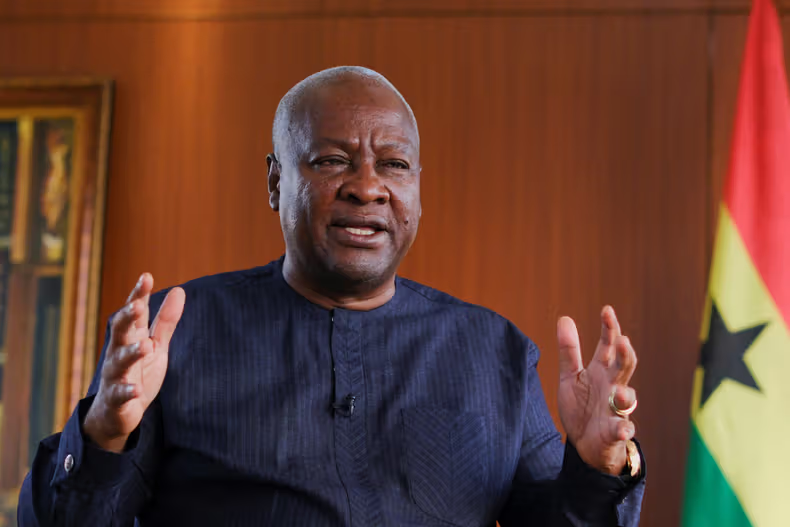
Ghana is set to begin refining crude from its own oil fields locally, becoming the latest African producer seeking to capture more value from its petroleum resources rather than exporting raw crude and importing refined fuels. Speaking at a Ghana Diaspora Town Hall Meeting in London, President John Dramani Mahama announced that Ghana would deliver crude from its offshore oil fields to a domestic refinery for processing in June. “We are about to make history again. We did it during my first term, but after we left office it did not continue. In June, we will deliver a parcel of Ghanaian crude from our own oil fields to a refinery in Ghana for processing,” Mahama said.
The planned delivery is expected to mark the first time in years that crude extracted from Ghana’s offshore fields will be refined domestically, a development that could help the country retain a larger share of the value generated by its petroleum sector. Ghana’s refining ambitions are centred on the Tema Oil Refinery (TOR), which restarted operations in late 2025. The refinery currently operates at about 28,000 barrels per day and is working to increase output to 45,000 barrels per day through the integration of an additional processing unit.
Key Takeaways
- Ghana's refining ambitions are centred on the Tema Oil Refinery (TOR), which restarted operations in late 2025.
- For years, Ghana has exported virtually all its crude oil production—approximately 180,000 barrels per day from the Jubilee, TEN, and Sankofa fields—while importing refined products.
- Longer-term plans envision increasing TOR's capacity to 60,000 barrels per day and developing an additional refinery capable of processing 100,000 barrels per day.
The country also hosts the privately owned Sentuo Oil Refinery in Tema, which has expanded Ghana’s refining capacity. President Mahama also disclosed that Ghana had secured about $1.5 billion in new investment from Italy’s Eni in the Offshore Cape Three Points (OCTP) field to boost oil and natural gas production, arguing that value addition should become a central pillar of Ghana’s development strategy.
Key Developments: The June Crude Delivery, TOR’s Expansion, and Sentuo’s Role
The planned June delivery of Ghanaian crude to a domestic refinery is symbolically and practically significant. For years, Ghana has exported virtually all its crude oil production—approximately 180,000 barrels per day from the Jubilee, TEN, and Sankofa fields—while importing refined products. The domestic refining of Ghanaian crude breaks that cycle. The crude will likely be processed at TOR or Sentuo; the announcement did not specify which refinery.
TOR’s revival is central to the strategy. The refinery restarted operations in late 2025 after a four-year closure. It currently operates at about 28,000 barrels per day, well below its 45,000-barrel-per-day nameplate capacity. The integration of an additional processing unit should enable it to reach full capacity. Longer-term plans envision increasing TOR’s capacity to 60,000 barrels per day and developing an additional refinery capable of processing 100,000 barrels per day.
The privately owned Sentuo Oil Refinery, also in Tema, adds capacity. Sentuo is a Chinese-owned refinery that began operations in 2024 with a capacity of 40,000 barrels per day, later expanding to 100,000 barrels per day. The refinery processes both imported crude and, now potentially, Ghanaian crude. Its presence gives Ghana two operational refineries for the first time in decades.
The Eni investment of $1.5 billion in the OCTP field will boost oil and natural gas production. The Sankofa and Gye Nyame fields currently produce approximately 270 million cubic feet per day of gas, with plans to increase to 350 MMcfd by 2028. The additional crude production from the OCTP expansion will provide feedstock for domestic refineries.
President Mahama’s framing of value addition as a central pillar of development strategy extends beyond oil and gas. He explicitly linked refining to broader industrial policy, including mining, agriculture, and manufacturing. The message is that Ghana should not be a raw material exporter; it should process its resources domestically and capture the value-added margin.
The challenge is not unique to Ghana. Many African oil-producing countries have historically exported crude while relying on imports of petrol, diesel, and aviation fuel, limiting the economic benefits derived from their petroleum resources. Mahama’s argument that local refining would help Ghana retain more foreign exchange, strengthen domestic supply chains, create jobs, and support industrial growth applies across the continent.
Analysis & Implications: The Value Retention Calculus, Import Substitution, and Forex Savings
The economic logic of domestic refining is straightforward. Refining crude oil produces a basket of products (petrol, diesel, kerosene, LPG, aviation fuel, fuel oil). The value of that basket exceeds the value of the crude by the refining margin. When a country exports crude and imports refined products, it sells low and buys high. The refining margin accrues to foreign refiners. When a country refines domestically, it retains the refining margin.
The savings are substantial. Ghana currently imports approximately 80% of its refined petroleum products. A 2025 estimate put the annual import bill for refined products at $2.5 billion to $3 billion. If TOR and Sentuo together can meet domestic demand, the import bill would be drastically reduced, saving foreign exchange and improving the trade balance.

The June delivery is a small first step; one parcel of crude will not transform the sector. But it establishes the principle that domestic refining is possible. The government must ensure that TOR has the working capital, maintenance capability, and feedstock security to operate consistently. The tolling arrangement with Triangle Commodities Trading (which supplied 1 million barrels of Nigerian crude to TOR) is a model that could be replicated for Ghanaian crude.
The competition with the Dangote Refinery is a factor. Dangote’s 650,000 bpd (expanding to 1.4 million bpd) dwarfs Ghana’s combined capacity of approximately 100,000 to 140,000 bpd. Dangote can produce refined products at lower cost due to economies of scale. Ghana’s refineries must find a niche—perhaps serving the domestic market (avoiding transport costs) or processing crudes that Dangote does not use.

The environmental dimension is also relevant. Refining is energy-intensive and produces emissions. Ghana’s refineries must comply with environmental regulations and invest in pollution control equipment. The use of low-sulphur crudes helps, but the overall environmental footprint must be managed.
The Accra Street Journal notes that Ghana’s refining push aligns with a continental trend. Nigeria (Dangote), Angola (Lobito refinery), and other producers are expanding domestic refining capacity. The goal is to end the absurdity of exporting crude and importing refined products. The success of this strategy depends on execution: building and maintaining refineries, securing feedstock, and managing costs.
What This Means for Ghana’s Energy Security, Foreign Exchange, and Industrial Development
For energy security, domestic refining reduces the risk of fuel shortages. Ghana currently relies on imports; any disruption to global supply chains or port operations could cause shortages. Domestic refining provides a buffer. The June delivery is a step toward that buffer.
For foreign exchange, the savings from reduced imports would ease pressure on the cedi. Every barrel of refined product produced domestically is a barrel that does not need to be imported with dollars. The Bank of Ghana would welcome the reduced demand for hard currency.
For industrial development, domestic refining supports downstream industries: petrochemicals, plastics, lubricants, and others. A refinery that produces LPG can supply the domestic market, reducing the need for imported cooking gas. A refinery that produces naphtha can supply petrochemical plants. The value-added chain extends beyond the refinery gate.
For TOR, the challenge is sustained operation. The refinery has a history of breakdowns, maintenance issues, and feedstock shortages. The government must provide consistent support—working capital, maintenance funding, and management stability. TOR cannot succeed if it is starved of resources.
For Sentuo, the challenge is integration. The Chinese-owned refinery operates independently; the government must ensure that it does not create an unfair advantage for Chinese imports or undermine local content. Sentuo should be encouraged to source locally, employ Ghanaians, and pay taxes.
The Accra Street Journal’s assessment: the June delivery is a milestone, but the refining push will take years to fully materialize. The 28,000 bpd current capacity is a fraction of domestic demand (estimated at 80,000 to 90,000 bpd). The planned expansions to 45,000 bpd (TOR) and Sentuo’s 100,000 bpd could eventually meet demand, but those expansions require capital, time, and political will. The government must stay the course.
Wider Context: Africa’s Domestic Refining Renaissance
Across Africa, the shift toward domestic refining is accelerating. Nigeria’s Dangote Refinery is the flagship, but other countries are also expanding. Angola’s Lobito Refinery (200,000 bpd) is under construction. Côte d’Ivoire’s SIR is being upgraded. Egypt and Algeria have long-standing refining industries. The trend is clear: African countries want to capture more value from their oil.
The drivers are economic (retaining refining margins, saving foreign exchange) and strategic (reducing import dependence). The COVID-19 pandemic and the Hormuz crisis exposed the vulnerability of import-dependent economies. Domestic refining is a hedge against global supply disruptions.

The challenges are equally clear. Refineries are capital-intensive (billions of dollars), technically complex, and environmentally sensitive. Many African refineries have failed due to mismanagement, underfunding, and corruption. The success of the new wave of refineries depends on governance, maintenance, and market access.
The comparison with Europe and Asia is instructive. Europe’s refineries are sophisticated but ageing; Asia’s are newer and more efficient. Africa’s refineries must compete with these established players. The Dangote Refinery’s scale gives it a competitive advantage; smaller refineries like TOR must find their niche.
The role of the private sector is growing. Dangote is privately owned; Sentuo is privately owned. The era of state-owned refineries that are political footballs may be ending. Private ownership brings discipline, efficiency, and access to capital. Ghana should encourage private investment in refining.
The Accra Street Journal’s conclusion: Ghana’s refining push is necessary and overdue. The June delivery of domestic crude to a local refinery is a historic step. But the step must be followed by many more. TOR must be rehabilitated, expanded, and sustainably managed. Sentuo must be integrated into the national energy strategy. The government must provide consistent policy support. If Ghana succeeds, it will join the ranks of African countries that have broken the cycle of exporting raw materials and importing finished goods. If it fails, the June delivery will be remembered as another false start. The outcome depends on execution.
Source: Accra Street Journal
Last Updated on June 3, 2026 by Samuel Kwame Boadu
Disclaimer: Some content on Accra Street Journal may be aggregated, summarized, or edited from third-party sources for informational purposes. Images and media are used under fair use or royalty-free licenses. Accra Street Journal is a subsidiary of SamBoad Publishing Hub under SamBoad Business Group Ltd, registered in Ghana since 2014.
For concerns or inquiries, please visit our Privacy Policy or Contact Page.

Samuel Kwame Boadu is a Ghanaian media entrepreneur and storyteller with a passion for amplifying urban voices and uncovering everyday truths. He is the Editor-in-Chief and Founder of Accra Street Journal, a dynamic digital platform dedicated to capturing the pulse of Ghana’s capital—its people, culture, challenges, business, sports and innovations.
Use the following reference when citing or referencing this article.
Your feedback helps us improve our journalism.
Report an Error
Help us maintain accuracy. Let our editorial team know if you spot an issue in this article.
Report a problem with this article