







11 min read
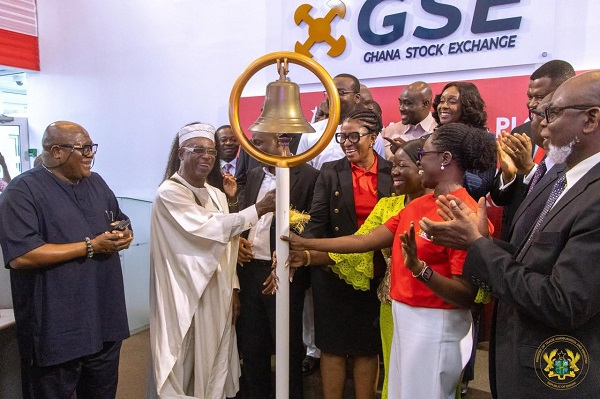
The Ghana Stock Exchange has a main hall and a side room. The main hall is where the banks, the multinationals, and the miners trade. The side room is the Ghana Alternative Market—the GAX—and it was built for the small and medium businesses that the main market was never designed to serve. Five companies are listed there. On some days, not a single share changes hands. This is the story of the GAX, and of the five businesses waiting for the market to notice them.
What the GAX Is For
The Ghana Alternative Market is a parallel market operated by the Ghana Stock Exchange. It was created with deliberately relaxed, SME-friendly admission criteria compared to the Main Market, with the explicit intention of helping high-growth startups and small-to-medium enterprises access public capital.
Key Takeaways
- The GAX listing gives Hords access to public capital without the stringent profitability history required by the Main Market.
- In 2026, financial investment and support from CCM Healthcare Investments helped the company address working capital needs, replenish raw materials, and resume production across major manufacturing lines.
- Ltd acquired a 17.31% stake in IIL through open-market purchases on the GAX, describing it as a strategic long-term investment in Ghana's healthcare and pharmaceutical manufacturing sector .
The requirements are lighter. A company needs a minimum stated capital of GH¢1 million after its public flotation, a public float of at least 20% of issued shares, and a minimum of 20 public shareholders at the close of the initial public offer. Shares must be fully paid for prior to listing.
Crucially, a GAX applicant does not need a historical record of profits. It must instead demonstrate a clear potential to become profitable by at least the end of its third year of listing. A company needs at least one year of operating history, or, for pure start-ups, a comprehensive three-year business plan demonstrating commercial viability. It must be registered as a Public Limited Liability Company under Ghana’s Companies Act.
Every GAX company must work with a Licensed Dealing Member, investment advisor, or issuing house as a Sponsor or Corporate Advisor, retained for at least three years post-listing. Sponsoring brokers or appointed liquidity providers are used to help maintain active trading.
The logic is sound. The reality has been difficult. As of mid-2026, the number of companies listed on the GAX remained unchanged at five . The market has struggled to attract issuers and to build liquidity. In one trading week in August 2026, the GAX saw no trading activity at all . The alternative market’s slow development highlights the challenge of attracting emerging companies to public listings and building liquidity in smaller-cap securities.
What follows is a profile of the five companies that are there.
Digicut Production & Advertising PLC (DIGICUT)
Digicut provides advertising agency and public relations consultancy services in Ghana. It offers event planning and consultancy, event management, advertising, marketing, public relations, PVC ID card production, digital imaging, flexy production, and general printing . The company was founded in 2010 and is based in Accra.
Digicut is a small business by any measure. Its trailing twelve-month revenue as of June 2026 was approximately GH¢932,450, up 10.41% year-over-year . In the last twelve months, the company recorded a net loss of about GH¢381,133 .
The company’s market capitalisation has been reported at around GH¢55.88 million, with 118.89 million shares outstanding . Its return on equity was negative 21.31%, and return on invested capital was negative 35.89% . These are the numbers of a business that is still finding its footing, not one that is generating the kind of returns that would attract institutional investors.
Digicut’s presence on the GAX is a test of whether a small services firm can use the public market as a platform for growth, or whether the costs and disclosure obligations of being listed outweigh the benefits at this scale.

Hords Limited (HORDS)
Hords researches, develops, produces, and sells cereals, detergents, and other food supplements in Ghana. It also provides disinfectants and laundry starch products, offers agricultural consultancy, and engages in the import and export of goods .
Its brands include Brown Gold, Soyabetix, Cocobetix, and SparyStarch . The company was incorporated in 1999 and is based in Accra. Harold Otabil is the Chief Executive Officer .

Hords is an agro-processing business that adds value to local agricultural products such as cocoa, cassava, and soya. It is the kind of company the GAX was designed for: a Ghanaian-owned manufacturer with a product line, a brand, and a domestic market.
The GAX listing gives Hords access to public capital without the stringent profitability history required by the Main Market. Whether it can translate that access into growth is the question that every small manufacturer considering the GAX will be watching.
Intravenous Infusions PLC (IIL)
Intravenous Infusions is the most established business on the GAX, and its story is the most consequential.
The company was incorporated in 1969 and began operations in 1974 as the first pharmaceutical company producing intravenous infusions in Ghana . It was set up to take advantage of the total lack of local production and the country’s dependence on imports. It is listed on the GAX and is based in Koforidua, where it employs over 150 people, making it one of the largest private-sector employers in the Eastern Region.
IIL manufactures intravenous fluids and is the sole producer of Pethidine in the West African sub-region . Its production is regulated by the Food and Drugs Authority and the Factory Inspectorate Division, and its distribution is regulated by the Pharmacy Council.
But the company has had a difficult period. In 2025, it recorded a net loss of GH¢4.63 million, compared with GH¢640,000 in 2024, while revenue declined by about 15% . The Board Chairman attributed the performance to reduced production, working capital constraints, and operational difficulties that affected the company’s ability to meet customer demand.
In 2026, financial investment and support from CCM Healthcare Investments helped the company address working capital needs, replenish raw materials, and resume production across major manufacturing lines. Preliminary management accounts showed improved revenue and profitability indicators. The Managing Director, Moukhtar M. Soalihu, said the company expected to improve revenue and profitability in 2027 and resume dividend payments when its financial position strengthened .
In May 2026, Zagadat Capital GH. Ltd acquired a 17.31% stake in IIL through open-market purchases on the GAX, describing it as a strategic long-term investment in Ghana’s healthcare and pharmaceutical manufacturing sector .
IIL is the GAX company with the strongest strategic rationale. It produces essential medical products, it has a domestic manufacturing base, and it has attracted a strategic investor. Its recovery is the most closely watched story on the alternative market.
Meridian-Marshalls Holdings (MMH)
Meridian-Marshalls Holdings engages in education and research businesses, and imports and exports educational materials . The company was incorporated in 2013 and listed on the GAX on 7 July 2015 . It is based in Accra, with 42 employees .

The company’s financial history is thin. For the year ended 31 July 2024, it reported no tuition fees or registration income, compared with GH¢1,027,000 in 2023, and an operating and administrative expense line of GH¢24.19 million, producing a loss before tax of GH¢24.19 million . The prior years showed small losses or modest profits.
MMH is a small education business with a listing that has not yet translated into a visible operating scale. Its presence on the GAX reflects the market’s willingness to admit companies with a business plan and a public limited company structure, even where the financial track record is modest.
Samba Foods Limited (SAMBA)
Samba Foods is a Ghanaian-owned food processing and preservation company based in Tema. It specialises in condiments and seasonings and is credited with commercialising the traditional Ghanaian pepper sauce, shito . It was incorporated in 1993 and listed on the GAX in 2015.
Samba Foods is the GAX company that has most visibly turned its fortunes around. In 2025, it returned to profitability, with total income of approximately GH¢1.62 million, up from GH¢802,000 in 2024—a 102% increase. Gross profit margin improved from about 7% in 2024 to 42% in 2025. The company moved from a loss after tax of about GH¢245,000 in 2024 to a profit after tax of about GH¢265,000 in 2025 .
The recovery was driven largely by its arrangement with Unifa Brothers, under which Samba manufactures pepper sauce in sachets for the Unifa brand. Samba provides the production facility, technical expertise, manufacturing oversight, food processing, quality assurance, and regulatory compliance. Unifa provides funding and operational support for raw materials, packaging, machinery, working capital, and agreed production expenses. Samba produced approximately 11 million sachets under the arrangement in 2025 .
The Unifa relationship accounted for approximately two-thirds of Samba’s reported income in 2025, making the partnership a major contributor to the recovery. Management cautioned shareholders against viewing the 2025 performance as a completed turnaround, and the Board did not recommend a dividend for 2025, choosing to retain resources to support production and strengthen working capital .
Samba Foods is the GAX’s proof of concept. A small food processor, listed on the alternative market, returned to profit through a strategic manufacturing partnership. If the GAX is to grow, it needs more stories like this one.
The Problem With the Side Room
The GAX was designed to solve a real problem: small and medium businesses in Ghana cannot easily access public equity through the Main Market. The relaxed criteria were supposed to open the door.
Five companies have walked through it. The market has not yet built the liquidity to make the listing meaningful for them. In one week in August 2026, the GAX saw zero trading activity . A listing that does not trade is a listing that does not raise follow-on capital, does not provide exit opportunities for founders, and does not reward shareholders with a liquid market.
The companies on the GAX are not failures. Intravenous Infusions is a strategic manufacturer of essential medical products. Samba Foods has returned to profit. Hords has brands and a manufacturing base. They are real businesses doing real things.
But the market around them is thin. The GAX needs more issuers, more liquidity providers, and more investors willing to look at smaller companies. It needs the kind of patient capital that pension funds and collective investment schemes could provide, if the regulatory and operational barriers were lowered.
Until then, the five companies in the side room will keep trading when they can, waiting for the market to notice them.
Quick Facts
| Topic | Details |
|---|---|
| GAX Listed Companies (2026) | 5 |
| Minimum Stated Capital | GH¢1 million after flotation |
| Minimum Public Float | 20% of issued shares |
| Minimum Public Shareholders | 20 |
| Historical Profitability | Not required; profitability expected by year 3 |
| Sponsor Retention | Minimum 3 years post-listing |
| Digicut TTM Revenue | ~GH¢932,450 |
| IIL 2025 Net Loss | GH¢4.63 million |
| Samba Foods 2025 Profit | ~GH¢265,000 |
| Zagadat Stake in IIL | 17.31% |
Last Updated on November 9, 2026 by Samuel Kwame Boadu
Disclaimer: Some content on Accra Street Journal may be aggregated, summarized, or edited from third-party sources for informational purposes. Images and media are used under fair use or royalty-free licenses. Accra Street Journal is a subsidiary of SamBoad Publishing Hub under SamBoad Business Group Ltd, registered in Ghana since 2014.
For concerns or inquiries, please visit our Privacy Policy or Contact Page.

Samuel Kwame Boadu is a Ghanaian media entrepreneur and storyteller with a passion for amplifying urban voices and uncovering everyday truths. He is the Editor-in-Chief and Founder of Accra Street Journal, a dynamic digital platform dedicated to capturing the pulse of Ghana’s capital—its people, culture, challenges, business, sports and innovations.
Use the following reference when citing or referencing this article.
Your feedback helps us improve our journalism.
Report an Error
Help us maintain accuracy. Let our editorial team know if you spot an issue in this article.
Report a problem with this article