





4 min read
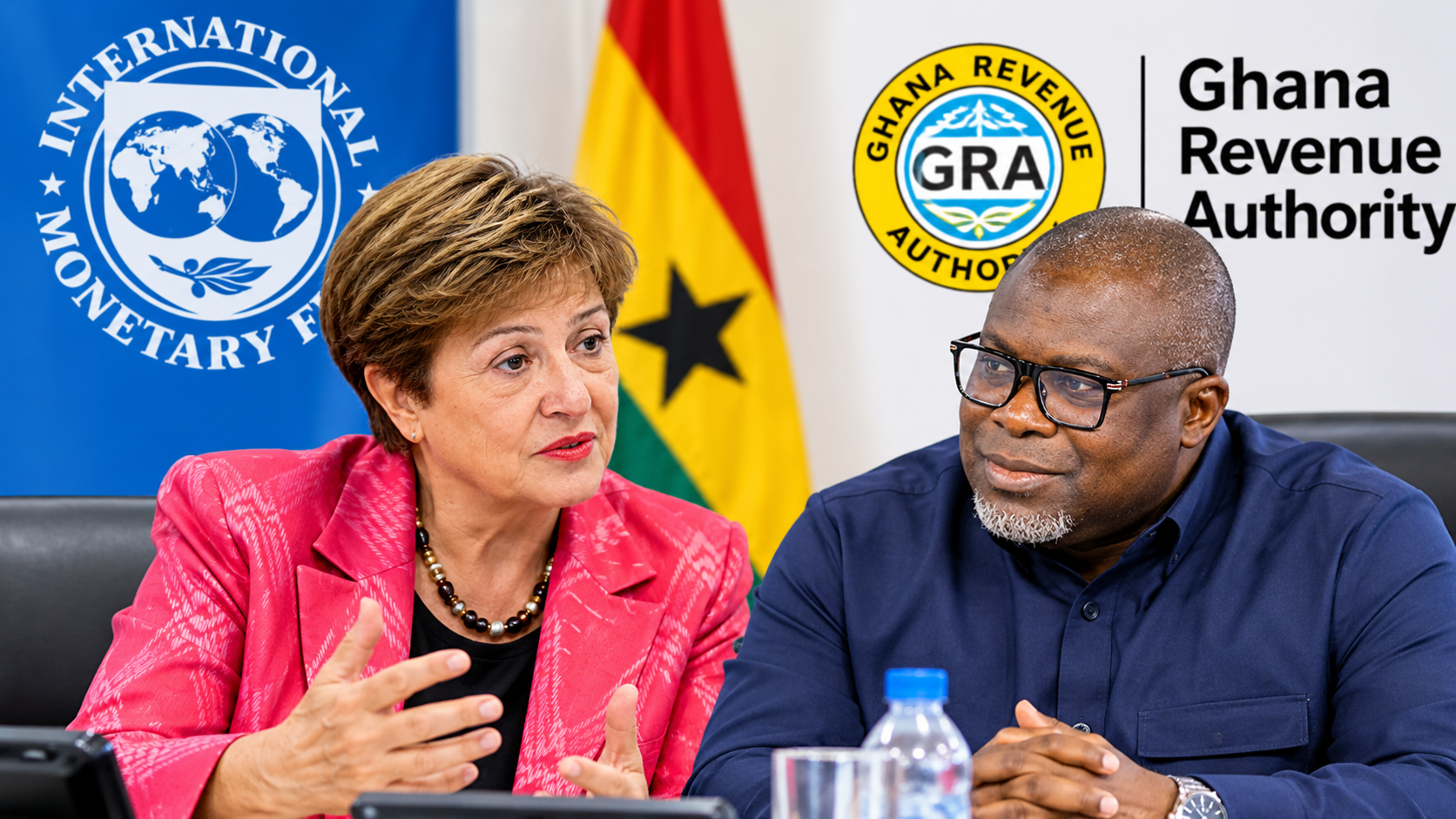
The International Monetary Fund has recognised Ghana’s strong revenue performance in 2026 and progress on key tax administration reforms, reinforcing the Ghana Revenue Authority’s contribution to the country’s fiscal consolidation efforts.
The International Monetary Fund (IMF) has recognised Ghana’s strong revenue performance in 2026 and progress in key tax administration reforms, reinforcing the contribution of the Ghana Revenue Authority (GRA) to the country’s fiscal consolidation efforts.
Key Takeaways
- The International Monetary Fund has recognised Ghana's strong revenue performance in 2026 and progress on key tax administration reforms, reinforcing the Ghana Revenue Authority's contribution to the country's fiscal consolidation efforts.
- The Fund also said Ghana's macroeconomic stability was becoming entrenched, with the fiscal position remaining strong and the primary surplus on track to meet the programme's end-year target.
- Responding to the IMF's assessment, GRA Commissioner-General Anthony Kwasi Sarpong said the recognition reinforced the Authority's contribution to Ghana's economic recovery and fiscal stability.
The recognition came after an IMF staff team concluded discussions with the Ghanaian authorities on the first review of the country’s 36-month Policy Coordination Instrument (PCI), reaching a staff-level agreement subject to approval by IMF Management and the Executive Board.
The Revenue Outlook
Commenting on the outlook for government revenue, the IMF said: “Building on strong 2026 collections, non-oil revenue is projected to further increase in 2027, supported by the tax measures announced in July 2026, the review of customs and excise legislation, and gains from revenue administration reforms, including the Integrated Tax Administration System and electronic fiscal devices.
The Fund also said Ghana’s macroeconomic stability was becoming entrenched, with the fiscal position remaining strong and the primary surplus on track to meet the programme’s end-year target.
Reforms Highlighted
Among the reforms highlighted by the IMF were:
-
The early completion of a comprehensive review of customs and excise legislation
-
The ongoing rollout of the Integrated Tax Administration System (ITAS)
-
The introduction of electronic fiscal devices
These measures sit at the operational core of Ghana’s domestic revenue mobilisation strategy — moving collection away from discretionary enforcement and towards systemised, auditable processes.
GRA Responds
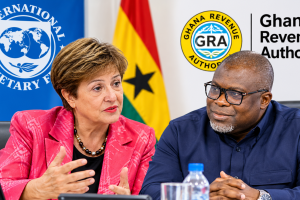
Responding to the IMF’s assessment, GRA Commissioner-General Anthony Kwasi Sarpong said the recognition reinforced the Authority’s contribution to Ghana’s economic recovery and fiscal stability.
Our focus remains on strengthening revenue mobilisation, improving taxpayer services, modernising customs operations and investing in the technical competence, leadership development and working conditions of our staff,” he said.
He commended GRA staff for their contribution to the Authority’s performance and expressed appreciation to taxpayers for their continued contribution to national development.
Together, we are building a more efficient, transparent and service-oriented GRA for a stronger Ghana,” Mr Sarpong added.

The 2027 Budget Target
The IMF’s positive assessment comes as the government prepares to implement its 2027 Budget, which targets a primary surplus of 0.5 per cent of Gross Domestic Product (GDP), in line with commitments under the PCI.
The Fund said the fiscal space created through Ghana’s consolidation efforts would support investment in priority areas, including job creation and infrastructure, while stressing the need for rigorous project appraisal, competitive procurement and strict expenditure controls.

The continued rollout of digital systems and tax administration reforms is expected to support the GRA’s efforts to expand the revenue base and strengthen domestic revenue mobilisation.
The Risks
The IMF, however, cautioned that vulnerabilities remain, particularly from volatility in gold, cocoa and oil prices, alongside geopolitical tensions and tighter global financial conditions, making sustained reforms and stronger fiscal buffers important to protecting Ghana’s recent economic gains.
That warning is not abstract. Ghana’s revenue performance in 2026 has been supported by elevated gold prices and a recovering trade position; a reversal in either would test the durability of the gains the Fund is now crediting.
Quick Facts
The IMF reached a staff-level agreement with Ghana on the first review of the 36-month Policy Coordination Instrument, subject to approval by IMF Management and the Executive Board. The Fund credited Ghana’s strong 2026 revenue collections and projected further non-oil revenue growth in 2027, supported by tax measures announced in July 2026, the customs and excise legislation review, the Integrated Tax Administration System (ITAS) rollout and electronic fiscal devices.
Ghana’s primary surplus is on track to meet the programme’s end-year target, and the 2027 Budget targets a primary surplus of 0.5 per cent of GDP. GRA Commissioner-General Anthony Kwasi Sarpong credited staff and taxpayers for the performance, while the IMF cautioned that gold, cocoa and oil price volatility, geopolitical tensions and tighter global financial conditions remain risks to the gains.
Source: Accra Street Journal
Last Updated on November 8, 2026 by Samuel Kwame Boadu
Disclaimer: Some content on Accra Street Journal may be aggregated, summarized, or edited from third-party sources for informational purposes. Images and media are used under fair use or royalty-free licenses. Accra Street Journal is a subsidiary of SamBoad Publishing Hub under SamBoad Business Group Ltd, registered in Ghana since 2014.
For concerns or inquiries, please visit our Privacy Policy or Contact Page.

Samuel Kwame Boadu is a Ghanaian media entrepreneur and storyteller with a passion for amplifying urban voices and uncovering everyday truths. He is the Editor-in-Chief and Founder of Accra Street Journal, a dynamic digital platform dedicated to capturing the pulse of Ghana’s capital—its people, culture, challenges, business, sports and innovations.

Use the following reference when citing or referencing this article.
Your feedback helps us improve our journalism.
Report an Error
Help us maintain accuracy. Let our editorial team know if you spot an issue in this article.
Report a problem with this article