





More than eight in ten Ghanaian adults now hold a financial account, yet only 22 per cent were financially healthy according to the 2021 Financial Inclusion and Demand-Side Survey — a gap that has prompted the Ministry of Finance to reframe its inclusion agenda around resilience rather than access.
Ghana’s financial inclusion drive is facing a new test. The gap between access to financial services and actual financial well-being is raising questions about whether the country’s expanding banking and mobile money ecosystem is translating into improved household financial security.

Although more than eight in every 10 Ghanaian adults now own a financial account, only 22 per cent were financially healthy, according to the 2021 Financial Inclusion and Demand-Side Survey. The figure highlights a significant gap between account ownership and the ability of households to manage money, withstand financial shocks and build long-term financial security.
📢 GET A DETAILED ARTICLES + JOBS
Join ASJ's WhatsApp Channel and never miss a post or opportunity.

The disparity is prompting the Ministry of Finance to shift the country’s financial inclusion agenda towards measurable improvements in financial health, with implications for banks, mobile money operators, insurance companies, pension providers and other financial service businesses.
The Numbers Behind the Gap
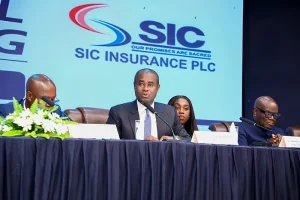
Deputy Finance Minister Thomas Ampem Nyarko disclosed the figures at the inauguration of a National Technical Working Committee tasked with developing Ghana’s second National Financial Inclusion and Development Strategy for 2027 to 2031.

He said data from the World Bank’s Global Findex 2025 showed that more than 80% of Ghanaian adults held financial accounts, but access alone had not guaranteed financial resilience or improved economic well-being.
We have become good at opening accounts. We must now become better at making accounts improve lives,” he said.
The arc of Ghana’s inclusion story is itself instructive. Queen Máxima of the Netherlands, the UN Secretary-General’s Special Advocate for Inclusive Finance for Development, noted that Ghana had increased financial inclusion from approximately 30 per cent in 2011 to about 80 per cent currently — one of the more dramatic expansions in West Africa. The task now is to ensure that expansion converts into security.
A Strategy Built Around Resilience
The new strategy, being developed in collaboration with Queen Máxima, is expected to provide a framework for strengthening financial resilience, expanding responsible financial services and improving economic empowerment.
For financial institutions, the proposed shift could require a rethink of product development — moving beyond customer acquisition and transaction volumes towards savings mobilisation, affordable credit, insurance coverage and retirement planning.
This is particularly relevant for Ghana’s large informal economy, where many workers may operate mobile money or bank accounts without having adequate savings, insurance or pension arrangements to protect their livelihoods against unexpected financial pressures. The distinction matters: an active mobile money wallet is not the same as a buffer against a hospital bill, a poor harvest or a lost job.
Mr Nyarko said the strategy would prioritise responsible financial services, digital innovation, consumer protection, financial literacy and resilience, particularly among women, young people, farmers, informal sector workers and small businesses.
Government also plans to establish a Financial Inclusion Council to improve coordination and accountability among stakeholders, alongside a financial health framework to measure the financial well-being of households.
The strategy is expected to be launched in the first half of 2027.

Queen Máxima: “An Account Is Not the Destination”
Queen Máxima said Ghana must recognise that financial inclusion was a means of improving people’s lives rather than an achievement measured solely by the number of accounts opened.
She argued that access to financial services must translate into practical protection against economic shocks, including illness, accidents, droughts and other emergencies that could destabilise household finances.
“Financial inclusion is a means to an end, not an end in itself. You don’t become better by having an account. You’re going to become better when you have an insurance that is going to protect you when there’s drought,” she said.
She identified four essential dimensions of financial health:
-
Pursuing financial goals
-
Maintaining confidence in one’s financial future
These, she said, required households to have access to appropriate savings products, affordable insurance, pension schemes and financial tools that supported effective income and expenditure management.
Queen Máxima urged financial institutions to develop products that reflected the financial realities of different customer groups, including women, older persons and rural and urban households. She cited automated savings products that set aside portions of customers’ income as one approach to encouraging consistent savings and improving financial discipline — a model already deployed in several African markets through mobile money platforms.
She also called for stronger collaboration among financial sector regulators to expand affordable insurance and pension coverage, while leveraging digital payments and data sharing to improve service delivery.
My partners and I are going to be accompanying you along the way in order to develop this financial health and make it a reality,” she said.
The Committee
The National Technical Working Committee brings together financial sector regulators, financial institutions, development partners and other stakeholders to guide the development of the 2027–2031 strategy.
Key Figures at a Glance
| Metric | Figure |
|---|---|
| Financial Account Ownership (Adults) | 80%+ |
| Financially Healthy Adults | 22% |
| Financial Inclusion (2011) | ~30% |
| Financial Inclusion (Current) | ~80% |
| Strategy Period | 2027–2031 |
| Strategy Launch Target | First half of 2027 |
| Proposed Coordinating Body | Financial Inclusion Council |
| Source of Account Data | World Bank Global Findex 2025 |
| Source of Health Data | 2021 Financial Inclusion and Demand-Side Survey |
Source: Accra Street Journal

Last Updated on November 6, 2026 by Samuel Kwame Boadu
Disclaimer: Some content on Accra Street Journal may be aggregated, summarized, or edited from third-party sources for informational purposes. Images and media are used under fair use or royalty-free licenses. Accra Street Journal is a subsidiary of SamBoad Publishing Hub under SamBoad Business Group Ltd, registered in Ghana since 2014.
For concerns or inquiries, please visit our Privacy Policy or Contact Page.

Samuel Kwame Boadu is a Ghanaian media entrepreneur and storyteller with a passion for amplifying urban voices and uncovering everyday truths. He is the Editor-in-Chief and Founder of Accra Street Journal, a dynamic digital platform dedicated to capturing the pulse of Ghana’s capital—its people, culture, challenges, business, sports and innovations.